
Fully cool system
The vehicle has been parked long enough for the engine, hoses, radiator, and reservoir to cool. Read the level against the COLD MIN/MAX, MIN/MAX, or COLD FILL RANGE markings specified for your vehicle.
Vehicle Care from Chuck Anderson Ford
Coolant helps control operating temperature, prevent freezing, resist corrosion, and protect the engine and related systems. Checking the level is simple—but opening a hot, pressurized cooling system can cause severe burns.
Hot coolant can be above its normal boiling point and remain under pressure. Loosening a cap can release scalding liquid and steam without warning. Wait until the vehicle is fully cool under the conditions specified in the owner's manual.
Temperature changes the reading
Coolant expands as it heats and contracts as it cools. Reservoir markings and procedures vary, so use the temperature condition and waiting time in the owner's manual.
The vehicle has been parked long enough for the engine, hoses, radiator, and reservoir to cool. Read the level against the COLD MIN/MAX, MIN/MAX, or COLD FILL RANGE markings specified for your vehicle.
Do not open the cap or add coolant. A warm-looking reservoir may still contain pressurized, scalding coolant. If the vehicle overheated, keep your distance and obtain assistance.
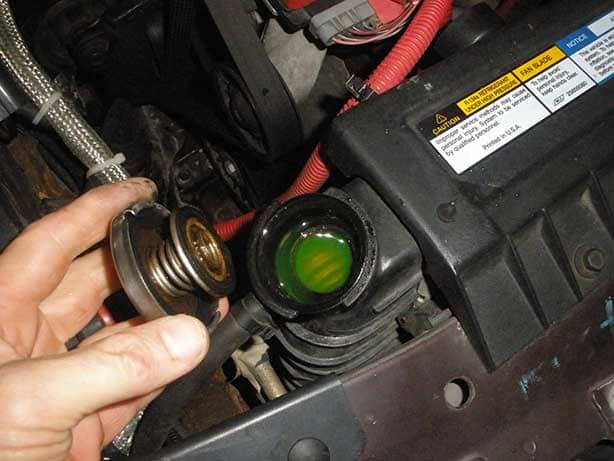
Whenever possible, read the level through the closed translucent reservoir. You normally do not need to remove the cap just to check the level.
Step-by-step
This is a general procedure. Reservoir locations, pressure caps, temperature requirements, coolant types, and fill methods vary by vehicle and powertrain.
Identify the correct engine-coolant reservoir, cold-fill markings, required coolant specification, cooling-system capacity, and top-off procedure. Some vehicles use multiple reservoirs for the engine, turbocharger, hybrid electronics, traction battery, or other components.
Do not assume every translucent tank contains engine coolant, and never open a high-voltage-system cooling circuit unless the manufacturer specifically authorizes customer access.
Park on a firm, level surface, shift into Park, apply the parking brake, and turn the vehicle off. Keep the key or phone away from vehicles that can start automatically. Wait until the cooling system is fully cool according to the owner's manual—often several hours after driving.
Before approaching, look and listen for steam, hissing, bubbling, spraying fluid, or an unusually hot odor. If any are present, do not open the hood until the vehicle has cooled and it is safe. When safe, secure the hood with its struts or prop rod.
Keep hands, clothing, and tools away from fans, belts, pulleys, hot exhaust parts, and electrical components. Some cooling fans can operate after the vehicle is switched off.
Use the diagram in the owner's manual rather than relying only on cap color. Confirm the tank's label and cap warnings. Do not confuse engine coolant with brake fluid, windshield- washer fluid, power-steering fluid, or another coolant loop.
Without opening the cap, compare the visible coolant level with the designated cold marks. Depending on the vehicle, these may say MIN/MAX, COLD MIN/COLD MAX, FULL COLD, or COLD FILL RANGE. Use a flashlight from the side if the plastic is difficult to see through.
If no fluid is visible or the reservoir is empty, do not assume a simple top-off will make the vehicle safe. A leak, trapped air, or significant loss may require professional filling, bleeding, pressure testing, and diagnosis.
Look without touching for wetness, dried crusty residue, colored staining, cracks in the reservoir, damaged caps, swollen or split hoses, loose connections, puddles beneath the vehicle, or coolant odor. Check for recurring low level rather than viewing one top-off as a permanent repair.
Coolant is poisonous to people and animals. Keep children and pets away from spills and have leaks cleaned and repaired promptly.
If the system is fully cool, the level is only slightly low, no major leak or overheating is present, and the owner's manual permits customer top-offs, use the exact coolant specification and mixture required. Clean around the cap, open it only as directed, use a clean funnel, and add small amounts.
Stop at the specified cold maximum or fill range. Do not overfill, mix products based only on color, or add stop-leak products unless the manufacturer expressly approves them.
Reinstall the correct cap completely, remove the funnel, wipe away any spill, check that nothing was left in the engine compartment, and close the hood. Record what was added. Recheck when fully cold and schedule service if the level drops again, warning messages appear, or you notice leakage, overheating, or unusual heater behavior.
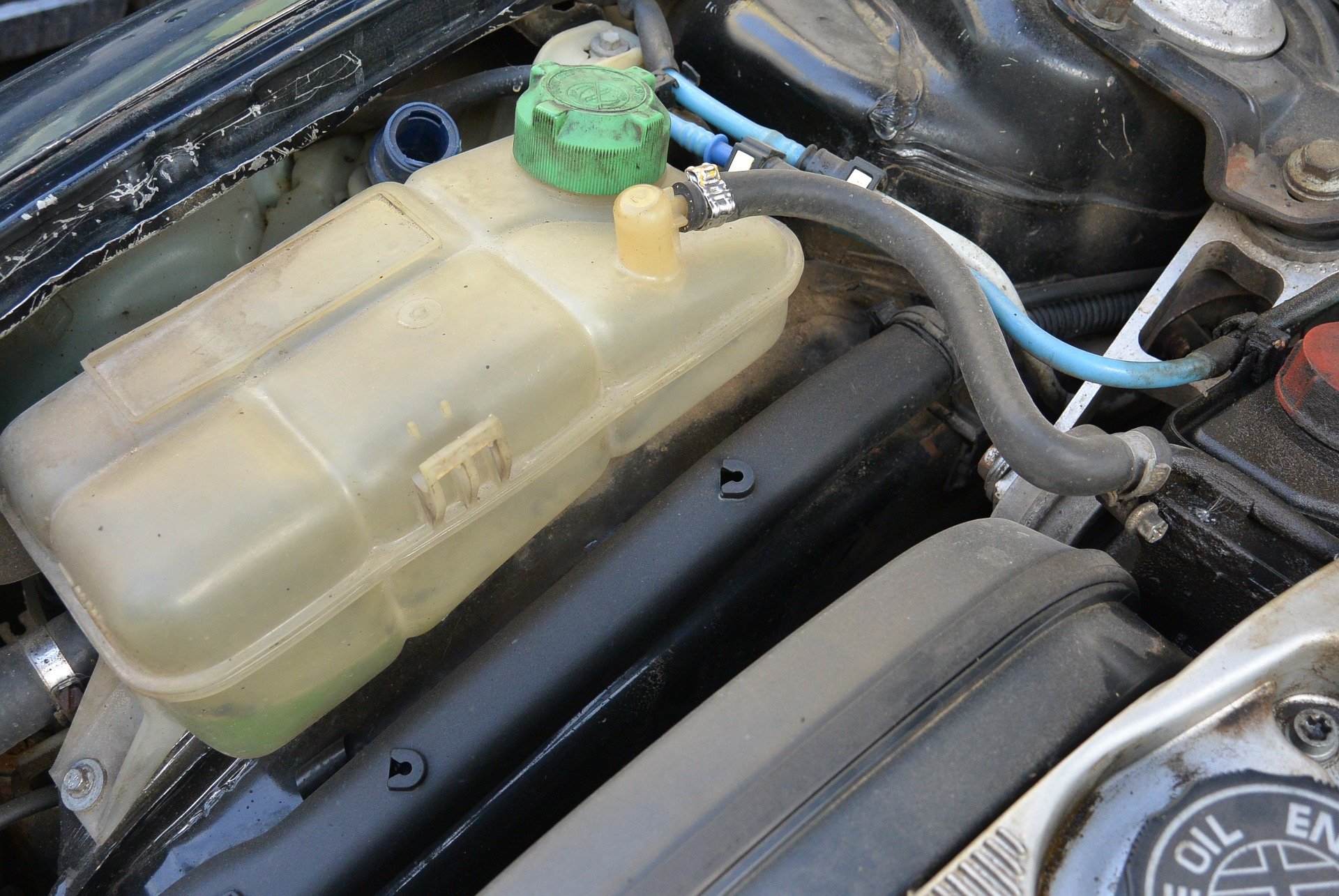
Only add coolant to the reservoir and under the conditions identified in the owner's manual. Use a clean funnel and avoid overfilling.
Compatibility matters
Coolants contain different base fluids and additive packages. Using an incompatible product can reduce corrosion protection, create deposits, damage seals, or shorten component life.
Overheating is different from a routine check
Continuing to operate an overheating vehicle can cause severe engine, cylinder-head, turbocharger, emissions-system, battery, or electrical-component damage.
Catch trouble early
Coolant should not require frequent additions. Repeated loss can indicate an external leak, internal leak, failing cap, or trapped air.
Wet spots, dried staining, crusty deposits, or a sweet odor around the vehicle can indicate a cooling-system leak.
A rising gauge, warning message, frequent fan operation, weak cabin heat, or temperature fluctuation deserves inspection.
Common questions
Check it under the conditions specified by the owner's manual, which is commonly when the entire system is fully cold. Never remove a pressure cap while hot. The reservoir may have different hot and cold marks, but a visual hot reading does not make opening the cap safe.
Use the coolant mixture required by the manufacturer. Water alone lacks the complete freeze, boil, corrosion, and lubrication protection of the specified mixture. Emergency procedures vary, so consult the owner's manual or roadside assistance rather than improvising.
Color does not reliably identify chemistry or compatibility. Use the exact specification listed for your vehicle. If the existing coolant is unknown, have the system evaluated rather than mixing products based on appearance.
Normal expansion raises the level when hot and contraction lowers it when cold. That is why temperature and level markings matter. A continuing downward trend when checked under the same cold conditions is not normal and should be diagnosed.
Some vehicles have separate cooling circuits for the engine, turbocharger, hybrid electronics, traction battery, inverter, or other systems. They may use different fill procedures or even different coolants. Identify the exact reservoir before touching anything.
That depends on the reason for the loss, actual level, vehicle warnings, temperature, and manufacturer guidance. A small top-off may be appropriate when fully cold and no leak or overheating exists, but an empty reservoir, recurring loss, warning message, or temperature increase needs professional attention.
Do not open or remove coolant while the system is hot. When fully cold, follow the owner's manual or have a technician correct the level. Overfilling can leave too little expansion space and may force coolant out as the system heats.
Use the maintenance schedule for the exact model, engine, coolant specification, mileage, time, and operating conditions. Testing and replacement intervals vary, and topping off does not replace scheduled coolant service.
The service team at Chuck Anderson Ford can identify the correct coolant, pressure-test the system, inspect hoses, radiator, water pump, thermostat, reservoir and cap, diagnose warning messages, and properly fill and bleed the cooling system.
Schedule Cooling-System Service