

How Often Should an F-150 Get an Oil Change?
How Often Should an F-150 Get an Oil Change?
A modern Ford F-150 should generally have its engine oil and filter changed when the Intelligent Oil-Life Monitor says service is due, with Ford's current guidance saying not to exceed one year or 10,000 miles between oil changes. An F-150 used for towing, heavy hauling, extended idling, frequent short trips, off-road driving, dusty conditions, or other severe use may need an oil change considerably sooner.
For the 2026 Ford F-150, Ford says that when the oil-change message appears, the oil and filter should be changed within two weeks or 500 miles. If the oil-life monitor is accidentally reset or becomes inoperative, Ford calls for an oil change at six months or 5,000 miles from the previous service.
That means the best answer is not simply "change an F-150 every 5,000 miles" or "wait until 10,000 miles." The truck's engine, operating conditions, towing frequency, idle time, driving habits, and oil-life calculation all matter.
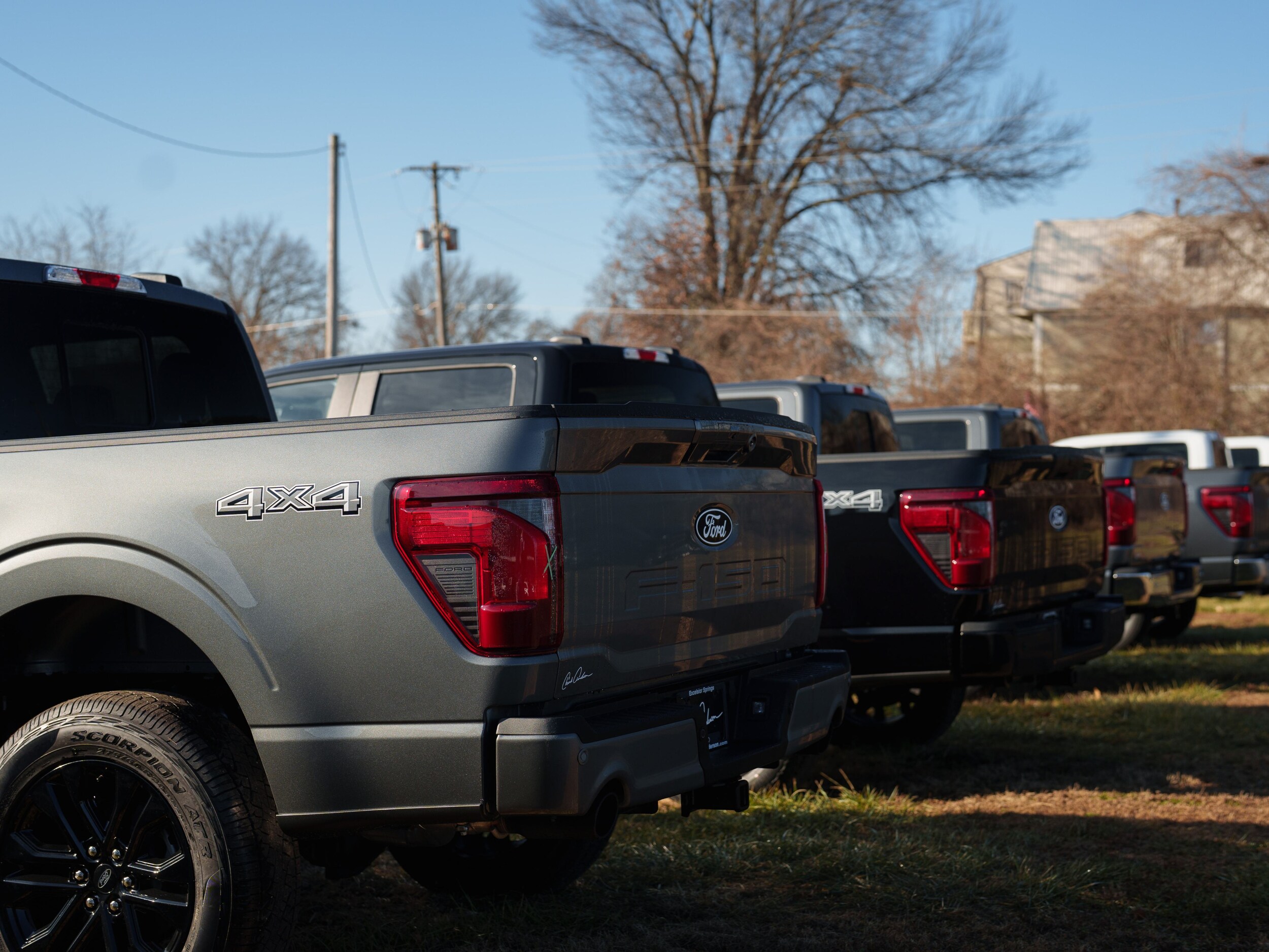
F-150 Oil Change Interval at a Glance
| Situation | F-150 Oil Change Guidance |
|---|---|
| Normal Driving | Follow the Intelligent Oil-Life Monitor. Many late-model F-150s may approach roughly 7,500-10,000 miles under favorable normal use. |
| Maximum Current Interval | Do not exceed one year or 10,000 miles on current F-150 maintenance guidance. |
| Oil-Change Message Appears | Current 2026 guidance says complete the oil change within two weeks or 500 miles. |
| Oil-Life Monitor Reset or Inoperative | Current 2026 guidance: six months or 5,000 miles from the previous oil change. |
| Frequent Towing or Heavy Loads | Expect the oil-life monitor to potentially call for service earlier. |
| Frequent Idling or Short Trips | Engine operating time and difficult operating conditions can shorten oil life even when mileage remains low. |
| Dusty, Off-Road or Severe Use | Follow severe-use guidance for your exact model year and monitor oil condition and level carefully. |
The Owner's Manual and maintenance information for your exact F-150 model year, engine, and VIN should always take priority over a generic mileage recommendation.
Does Ford Recommend Changing F-150 Oil Every 5,000 Miles?
Not for every F-150.
A 5,000-mile interval can be a reasonable conservative schedule for trucks that operate under demanding conditions, but Ford's modern maintenance system does not simply require every F-150 owner to change the oil every 5,000 miles.
Instead, late-model F-150 trucks use the Intelligent Oil-Life Monitor to determine when oil service is necessary.
The system allows a lightly used truck to potentially go longer while calling for earlier service when operating conditions place greater demands on the oil.
A 5,000-mile interval may be particularly relevant for an F-150 that regularly:
- Tows heavy trailers
- Hauls substantial payloads
- Idles for long periods
- Operates on jobsites
- Drives primarily short trips
- Operates in dusty conditions
- Spends significant time off-road
- Experiences repeated extreme-temperature operation
Can an F-150 Go 10,000 Miles Between Oil Changes?
Some late-model F-150 trucks can approach 10,000 miles between oil changes under normal operating conditions, but 10,000 miles should be treated as a maximum rather than a target.
Ford's current maintenance guidance says not to exceed one year or 10,000 miles between oil-change intervals.
If your truck requests an oil change at:
- 5,800 miles
- 6,500 miles
- 7,200 miles
- 8,400 miles
then that is the appropriate interval for that period of vehicle use.
You should not ignore the truck's oil-change message simply because another F-150 made it to 10,000 miles.
What Is the F-150 Intelligent Oil-Life Monitor?
The Ford Intelligent Oil-Life Monitor estimates when the F-150's engine oil should be changed based on how the truck is actually operated.
Instead of using mileage alone, the system considers operating conditions that affect oil life.
The exact calculation is handled by the vehicle, but oil life can be affected by factors associated with:
- Engine operating time
- Engine temperature
- Vehicle load
- Driving patterns
- Trip length
- Towing
- Hauling
- Idling
- Stop-and-go operation
- Temperature extremes
- Other operating conditions
This is particularly useful on an F-150 because two identical trucks can be used in completely different ways.
Why Can Two F-150s Have Different Oil Change Intervals?
Imagine two identical F-150 trucks that have both accumulated 7,000 miles.
F-150 Number One
The first truck spends most of its time commuting on the highway with little cargo and rarely tows.
F-150 Number Two
The second truck regularly:
- Pulls a camper
- Hauls tools
- Idles at construction sites
- Drives gravel roads
- Makes repeated short trips
Those trucks may have the same odometer mileage but their engines and oil have experienced very different operating conditions.
That is why Ford uses calculated oil life rather than requiring one fixed mileage number for every truck.
What Does "Oil Change Required" Mean on an F-150?
If your F-150 displays an oil-change-required message, it means the truck has determined that engine oil service is due.
Ford's current 2026 F-150 guidance says to complete the oil change within two weeks or 500 miles of the message appearing.
That message should not be treated as something to clear and forget.
The proper service generally includes:
- Changing the engine oil
- Replacing the oil filter
- Using oil meeting the correct Ford specification
- Checking the oil level after service
- Checking for leaks
- Resetting the Intelligent Oil-Life Monitor
What Happens if the F-150 Oil-Life Monitor Gets Reset by Accident?
This is one situation where Ford provides a useful backup interval.
For the current 2026 F-150, Ford says that if the instrument-cluster oil-life information is prematurely reset or becomes inoperative, perform the oil change at:
Six months or 5,000 miles from the previous oil change.
This prevents owners from unknowingly running an extremely long interval because the monitor no longer knows how long the oil has been in service.
Does Towing Shorten an F-150 Oil Change Interval?
It can.
Towing makes the engine work harder, particularly when the truck is pulling significant weight, climbing grades, operating in hot weather, or traveling long distances.
Additional engine load can increase:
- Oil temperature
- Coolant temperature
- Turbocharger workload on EcoBoost engines
- Transmission temperature
- Overall powertrain demand
That does not mean every truck that occasionally pulls a small trailer immediately needs a 5,000-mile oil schedule.
The important distinction is how frequently and how heavily the F-150 is being used for towing.
Should I Change My F-150 Oil Before Towing a Camper?
If the truck is approaching its oil-change interval, completing the service before a major towing trip can be a smart maintenance decision.
At minimum, check the engine oil level before a substantial towing trip.
Before leaving with a camper or large trailer, it is also wise to inspect:
- Coolant level
- Tires
- Truck tire pressures
- Trailer tires
- Brake condition
- Trailer brake operation
- Trailer lighting
- Hitch equipment
- Fluid leaks
- Payload and tongue weight
Does Hauling Heavy Payloads Affect F-150 Oil Life?
It can.
An F-150 regularly carrying heavy loads asks more from its engine than the same truck commuting empty.
Heavy payload can increase engine load during:
- Acceleration
- Hill climbing
- Stop-and-go driving
- Hot-weather operation
If the truck routinely operates near its payload limits, pay close attention to the oil-life monitor rather than assuming the longest possible interval will apply.

Does Idling Shorten F-150 Oil Life?
Yes, extended idling can contribute to shorter oil-service intervals.
Mileage is a poor measurement of engine use when a truck spends substantial time sitting still with the engine running.
For example, an F-150 used by a contractor might accumulate only 5,000 road miles but also spend many hours idling at jobsites.
The engine has still been operating throughout that time.
Frequent idle use is common among trucks used for:
- Construction
- Utility work
- Security
- Delivery work
- Winter warmup
- Mobile job sites
- Equipment operation
Owners of heavily idled trucks should pay attention to both mileage and engine usage.
Do Short Trips Affect F-150 Oil Life?
Repeated short trips can be relatively demanding on engine oil because the engine may repeatedly start cold without staying at full operating temperature for long periods.
An F-150 used for a five-mile commute twice a day can experience different operating conditions than one that regularly travels 50 miles at highway speed.
Low annual mileage does not automatically mean the oil can remain in the engine indefinitely.
Does Stop-and-Go Driving Affect F-150 Oil Changes?
Frequent stop-and-go driving increases operating time relative to mileage.
Compared with steady highway operation, urban or heavy-traffic use can involve:
- More idling
- More acceleration
- More low-speed operation
- More frequent temperature cycling
The Intelligent Oil-Life Monitor helps account for how the truck is actually being driven.
Does Missouri Weather Affect F-150 Oil Change Intervals?
Missouri can expose an F-150 to both hot summers and freezing winter conditions.
Temperature extremes can affect vehicle operation, especially when combined with towing, short trips, idling, or heavy loads.
During winter, repeated cold starts and long warm-up periods can contribute to demanding service.
During summer, towing or hauling in high temperatures can increase engine and cooling-system load.
Rather than changing oil based solely on the calendar season, monitor your F-150's oil-life percentage and follow the maintenance guidance for the way you actually use the truck.
Does Driving Gravel Roads Affect F-150 Maintenance?
Frequent dusty-road operation can require additional maintenance attention.
Owners who frequently use their F-150 on:
- Gravel roads
- Farm roads
- Construction sites
- Unpaved job sites
- Off-road trails
should pay particular attention to the engine air filter as well as routine oil service.
Keeping dirt out of the engine is just as important as maintaining clean engine oil.
Does Off-Road Driving Change F-150 Oil Maintenance?
Regular off-road use can place additional stress on the truck.
In addition to engine oil, inspect:
- Engine air filter
- Tires
- Wheels
- Suspension
- Underbody
- Skid plates where equipped
- Cooling-system airflow
- Driveline components
- Fluid leaks
After significant off-road use, remove accumulated mud and debris and inspect the truck rather than simply waiting for the next scheduled maintenance interval.
How Often Should an EcoBoost F-150 Get an Oil Change?
An EcoBoost F-150 should follow the Intelligent Oil-Life Monitor and the maximum interval specified for its model year.
That includes popular F-150 engines such as the:
- 2.7L EcoBoost V6
- 3.5L EcoBoost V6
- High-Output 3.5L EcoBoost in applicable Raptor models
Oil maintenance is particularly important on an EcoBoost engine because the turbochargers rely on engine oil for lubrication.
Why Is Oil Important for an EcoBoost Turbo?
Turbochargers operate at very high rotational speeds and temperatures.
The engine oil helps lubricate critical turbocharger components.
That makes several things important:
- Correct Ford oil specification
- Correct oil level
- Timely oil changes
- Proper oil filter
- Healthy cooling system
Allowing oil level to become dangerously low or repeatedly stretching intervals beyond Ford's guidance can increase risk to both the engine and turbochargers.
How Often Should a 5.0L V8 F-150 Get an Oil Change?
The 5.0L V8 also follows the F-150's Intelligent Oil-Life Monitor rather than one universal fixed interval.
Under normal driving, the truck may allow a relatively long interval. Heavy towing, hauling, idling, or other severe use can result in earlier service.
The absence of turbochargers does not make oil maintenance unimportant.
The 5.0L still relies on proper oil pressure and lubrication throughout the engine.
Should I Change a 5.0L F-150 Every 5,000 Miles?
You can choose a conservative 5,000-mile schedule, particularly if the truck sees hard use, but Ford's current maintenance strategy is to follow the Intelligent Oil-Life Monitor and not exceed the maximum interval.
The truck's actual use should determine how conservative you need to be.
How Often Should an F-150 PowerBoost Get an Oil Change?
The F-150 PowerBoost still requires normal engine oil and filter changes.
PowerBoost is a full hybrid, but it includes a 3.5L EcoBoost gasoline engine.
The hybrid system adds:
- An electric motor
- A high-voltage battery
- Hybrid controls
- Regenerative braking
but none of those components eliminate the gasoline engine's need for oil.
PowerBoost owners should continue following the truck's Intelligent Oil-Life Monitor just as they would in a conventional gasoline F-150.
Does the PowerBoost Gas Engine Run Less?
The hybrid system can allow the gasoline engine to shut off in certain operating conditions, but Ford still provides an oil-life calculation for the engine.
Do not try to manually estimate an extended oil-change interval simply because the truck spent part of its operating time using electric assistance.
Follow the vehicle's oil-life monitor.
How Often Should an F-150 Raptor Get an Oil Change?
Raptor models should follow Ford's maintenance requirements for their exact engine and model year.
Raptor ownership can involve unusually demanding use, including:
- Off-road driving
- High engine loads
- Dust
- Mud
- High-speed off-road operation
- Extreme suspension movement
Owners using a Raptor as intended off-road should expect to perform inspections more frequently than someone using the same truck exclusively for normal commuting.
Does an F-150 Raptor R Need More Maintenance?
The Raptor R uses a specialized high-performance powertrain and should be maintained according to the requirements Ford provides for that exact engine and model year.
Do not assume that maintenance information for a standard F-150 engine automatically applies to the Raptor R.
Track use, aggressive off-road use, high-speed operation, and other demanding conditions deserve additional attention.
What Oil Does an F-150 Use?
The correct oil depends on the F-150's:
- Model year
- Engine
- Ford oil specification
- Viscosity requirement
Do not assume every F-150 engine uses exactly the same oil simply because the trucks share the F-150 name.
Always verify the required oil specification in the Owner's Manual or Ford service information for your exact engine.
Does an F-150 Need Full Synthetic Oil?
The required oil specification can vary by model year and engine.
Some owners choose full synthetic oil because of its performance characteristics under temperature extremes and demanding operation.
The most important requirement is that the oil meets Ford's specified viscosity and performance standard for your exact truck.
Using expensive synthetic oil does not give you permission to ignore the oil-life monitor or exceed Ford's maximum maintenance interval.
Can Synthetic Oil Make an F-150 Go Longer Between Oil Changes?
Oil quality matters, but the F-150 maintenance schedule still applies.
If the truck displays an oil-change-required message, change the oil even if you used a high-quality full synthetic product.
The vehicle's operating conditions matter just as much as the oil brand or marketing claims.
Should the F-150 Oil Filter Be Changed Every Time?
Yes. Engine oil and the oil filter should normally be replaced together.
The filter captures contaminants carried through the lubrication system.
Installing fresh oil while leaving an old filter in place is not a proper routine oil service.
Should I Use a Motorcraft Oil Filter?
Motorcraft filters are designed for Ford applications and are a common choice when servicing an F-150.
If another filter is used, it should meet the correct specifications for your exact engine.
Oil filter fitment can vary by engine and model year, so avoid selecting a filter based only on the fact that the vehicle is an F-150.
How Much Oil Does an F-150 Take?
There is no single oil capacity for every F-150.
Capacity can vary by:
- Engine
- Model year
- Engine design changes
- Oil pan configuration
Always verify the correct capacity for your exact engine before servicing the truck.
Overfilling an engine can create problems just as running it low can.
Should I Check My F-150 Oil Between Changes?
Yes.
The Intelligent Oil-Life Monitor estimates when the oil should be replaced. It does not replace normal oil-level checks.
You should pay particular attention to oil level:
- Before towing
- Before a long road trip
- After demanding operation
- If you notice a leak
- If you see an oil-pressure warning
- If the truck has a history of oil consumption
- If the engine sounds different than normal
Does Oil Life Percentage Tell Me How Much Oil Is in the Engine?
No.
Oil-life percentage and oil level are completely different measurements.
An F-150 can show 70% remaining oil life while still being low on engine oil because of a leak or oil consumption.
Likewise, an engine can show 5% oil life while still having the correct quantity of oil in the crankcase.
One tells you about service timing. The other tells you how much oil is present.
What Does 50% Oil Life Mean on an F-150?
Approximately half of the calculated oil-service life remains.
That does not translate directly into an exact number of miles because future driving conditions can change how quickly the remaining percentage decreases.
A truck that begins heavy towing at 50% oil life may consume the remaining calculated life differently from one that continues normal highway commuting.
What Does 20% Oil Life Mean on an F-150?
At 20% remaining oil life, the truck is approaching its maintenance point.
This is a reasonable time to begin planning your service appointment, especially if:
- You drive substantial mileage each week
- You are preparing for a trip
- You tow frequently
- Your schedule makes service difficult to arrange on short notice
What Does 10% Oil Life Mean on an F-150?
A 10% reading means service is approaching soon.
Rather than trying to stretch the final percentage as far as possible, arrange the oil and filter change.
The oil-life system is a maintenance tool, not a contest to see how close you can get to zero before taking care of the truck.
What Does 0% Oil Life Mean on an F-150?
It means the calculated oil-service interval has been reached.
It does not mean the engine contains zero oil.
Current Ford guidance says to complete the oil service promptly after the oil-change message appears.
How Do I Reset the F-150 Oil-Life Monitor?
The Intelligent Oil-Life Monitor should be reset after the engine oil and filter are actually changed.
The exact reset procedure can vary by model year and instrument-cluster software.
Follow the procedure in the Owner's Manual for your specific F-150.
Do not reset the monitor without changing the oil.
Doing so makes the truck believe fresh oil has been installed and removes the accuracy of its maintenance calculation.
What Happens if I Forget to Reset the Oil-Life Monitor?
If the oil was properly changed but the monitor was not reset, the truck may request another oil change earlier than necessary because it still thinks the old oil is installed.
If you're unsure whether the monitor was reset after a recent oil change, check your service records and current oil-life information.
What Happens if I Wait Too Long to Change F-150 Oil?
Engine oil performs several critical functions:
- Reduces friction
- Lubricates bearings and internal engine components
- Helps control heat
- Suspends contaminants
- Protects against deposits
- Provides lubrication to turbochargers where equipped
- Helps protect timing and valvetrain components
As oil ages and accumulates contamination, its ability to perform those jobs can deteriorate.
Repeatedly neglecting oil service can contribute to:
- Sludge
- Deposits
- Accelerated internal engine wear
- Reduced turbocharger protection
- Oil-flow problems
- Potential engine damage
Will Missing an Oil Change Void My F-150 Warranty?
Routine maintenance is the owner's responsibility.
Missing one service does not mean every warranty on the entire vehicle automatically disappears.
However, if an engine problem occurs and the failure is associated with inadequate maintenance, neglect, incorrect oil, low oil, or extended service intervals, warranty coverage for that particular problem can become more complicated.
Keeping maintenance records helps document that the truck was serviced properly.
Learn more about what the Ford factory warranty covers.
Do I Have to Change My F-150 Oil at a Ford Dealer?
Routine oil changes do not simply have to be performed at the dealership where the truck was purchased.
The important requirements are that maintenance is performed properly using:
- The correct engine oil specification
- The correct viscosity
- The proper oil quantity
- The correct filter
- Proper service procedures
There can still be benefits to dealership service, including:
- Ford-trained technicians
- Motorcraft parts
- Ford-specific service information
- Electronic service records
- Recall checks
- Multi-point inspections
- Ford Rewards eligibility on qualifying service
Can I Change F-150 Oil Myself?
Many experienced owners perform their own oil changes.
If you do, make sure you know the correct:
- Oil specification
- Oil viscosity
- Oil capacity
- Oil filter
- Drain-plug procedure
- Oil-life reset procedure
Keep receipts and maintenance records documenting when the service was completed and what products were used.
Can Ford Rewards Points Be Used for an F-150 Oil Change?
Eligible Ford Rewards Points can generally be redeemed toward qualifying Ford dealership service.
If you already have a Rewards balance, ask your service advisor whether Points can be applied toward your F-150 oil-change visit.
Qualifying dealership service can also earn Ford Rewards Points under current program rules.
Learn more about how Ford Rewards Points work.
Can the Ford App Show My F-150 Oil Life?
Compatible connected F-150 models can provide maintenance and vehicle-status information through the Ford app.
Depending on the model year and equipment, that can make it easier to monitor:
- Oil life
- Odometer mileage
- Fuel level
- Tire pressure
- Vehicle alerts
- Service needs
Read what is the Ford app? for more information.
Should I Rotate My F-150 Tires With Every Oil Change?
Ford's current F-150 maintenance framework pairs tire rotation and tire inspection with the oil-life service interval.
Pairing these services is especially useful on a pickup because towing and payload can change tire loading and wear patterns.
At routine service, inspect:
- Tread depth
- Uneven shoulder wear
- Inflation pressure
- Cuts
- Bulges
- Punctures
- Alignment-related wear
What Else Should Be Inspected During an F-150 Oil Change?
An oil-change visit is a convenient opportunity for a broader inspection.
Depending on mileage and vehicle use, inspect:
- Tires
- Brakes
- Battery
- Coolant
- Transmission and driveline leaks
- Steering components
- Suspension components
- Driveshaft and U-joints where applicable
- Engine air filter
- Cabin air filter
- Wiper blades
- Lighting
- Exhaust components
- Fluid levels
Routine inspection is especially valuable on a truck used for work or towing because problems can develop between major scheduled-maintenance milestones.
Should I Change My F-150 Oil Before a Road Trip?
If the truck is already approaching the oil-service interval, changing it before a major trip can be sensible.
If the truck still has substantial calculated oil life remaining and the oil level is correct, there is generally no reason to replace nearly new oil just because you are about to drive highway miles.
Before a long trip, check:
- Oil level
- Oil-life percentage
- Coolant
- Tire pressures
- Tire tread
- Brakes
- Washer fluid
- Battery condition
- Any visible leaks
How Often Should a Low-Mileage F-150 Get an Oil Change?
Even an F-150 that travels very few miles should not leave the same engine oil installed indefinitely.
Ford uses both mileage and time limits.
Current guidance says not to exceed one year between oil-service intervals, even if the truck has not reached 10,000 miles.
This matters for trucks that are:
- Second vehicles
- Seasonal tow vehicles
- Used primarily for weekend projects
- Driven only a few thousand miles per year
How Often Should a High-Mileage F-150 Get an Oil Change?
A high odometer reading does not automatically create one universal shorter interval, but older engines deserve closer monitoring.
As an F-150 accumulates mileage, pay more attention to:
- Oil consumption
- Leaks
- Oil level between services
- Engine noises
- Oil-pressure warnings
- Maintenance history
A truck with 150,000 miles that remains mechanically healthy and well maintained can still use the oil-life monitor, but checking oil level between services becomes increasingly important.
How Often Should an Older F-150 Get an Oil Change?
Follow the maintenance requirements that apply to the truck's actual model year rather than applying current 2026 guidance to every older F-150.
Ford has changed engines, oil specifications, maintenance schedules, and oil-life technology across F-150 generations.
If you own an older truck, use the Owner's Manual for that year as your primary reference.
Is a 3,000-Mile Oil Change Necessary for an F-150?
For most modern F-150 trucks operating normally, the traditional 3,000-mile oil-change rule is unnecessarily short.
Modern engine oil, filtration, engine controls, and Ford's Intelligent Oil-Life Monitor support longer intervals under appropriate conditions.
Very short intervals may still be appropriate for unusual severe use or particular older vehicles, but they should not automatically be applied to every late-model F-150.
Is 5,000 Miles a Good Conservative F-150 Oil Change Interval?
Yes, 5,000 miles can be a conservative maintenance interval for an F-150 that sees substantial severe use.
It can also be appealing to owners who:
- Tow frequently
- Idle extensively
- Plan to keep the truck for a very long time
- Drive dusty roads
- Operate primarily under heavy loads
- Prefer an easy-to-remember maintenance schedule
But if your truck experiences normal driving and Ford's oil-life monitor continues to show substantial remaining life at 5,000 miles, Ford does not universally require you to replace the oil at that point.
Is 7,500 Miles a Good F-150 Oil Change Interval?
Many modern F-150 trucks operating under normal conditions can reach approximately this range before oil service is required.
The important word is approximately.
Do not wait for 7,500 miles if the truck calls for an oil change sooner, and do not assume the truck automatically needs service at 7,500 miles if the monitor shows substantial life remaining and the Owner's Manual allows a longer interval.
Should I Always Wait Until 10,000 Miles?
No.
Ten thousand miles is the maximum current normal interval, not a recommendation to ignore the truck until the odometer reaches that number.
If the F-150 requests service sooner, follow the truck.
F-150 Oil Change FAQ
How often should an F-150 get an oil change?
Follow the Ford Intelligent Oil-Life Monitor. Current Ford guidance says not to exceed one year or 10,000 miles between oil-service intervals, and severe operation can result in an earlier oil-change message.
Can an F-150 go 10,000 miles between oil changes?
Some late-model F-150 trucks can approach 10,000 miles under favorable normal conditions. Do not exceed Ford's maximum interval or ignore an earlier oil-change message.
Should I change F-150 oil every 5,000 miles?
Not every F-150 requires a fixed 5,000-mile interval. It can be a conservative schedule for trucks that tow, haul, idle, operate in severe conditions, or for owners who prefer shorter intervals.
How soon should I change the oil after the F-150 says Oil Change Required?
Ford's current 2026 F-150 Owner's Manual says to complete the oil change within two weeks or 500 miles of the message appearing.
What if my F-150 oil-life monitor was accidentally reset?
Current 2026 guidance says to change the oil at six months or 5,000 miles from the previous oil change if the monitor was prematurely reset or becomes inoperative.
Does towing shorten F-150 oil-change intervals?
It can. Frequent or heavy towing increases engine load and can cause the Intelligent Oil-Life Monitor to request service sooner.
Does idling affect F-150 oil life?
Yes. An idling engine continues accumulating operating time even though the truck is not adding significant mileage.
Do EcoBoost F-150s need more frequent oil changes?
Follow the oil-life monitor for the exact truck. Timely oil service and proper oil level are particularly important on EcoBoost engines because the turbochargers rely on engine oil for lubrication.
How often should a 5.0 F-150 get an oil change?
The 5.0L V8 follows the Intelligent Oil-Life Monitor just like other modern F-150 engines. Driving conditions determine when service is required.
Does an F-150 PowerBoost need oil changes?
Yes. PowerBoost contains a gasoline 3.5L EcoBoost engine and still requires engine oil and filter changes.
Should I change the oil filter every time?
Yes. The engine oil and oil filter should normally be changed together.
What does 10% oil life mean on an F-150?
It means the truck is approaching its calculated oil-change point. Plan the oil and filter service soon.
Does 0% oil life mean my F-150 has no oil?
No. Oil life estimates service timing. It does not measure the quantity of engine oil in the engine.
Can I use full synthetic oil and go more than 10,000 miles?
Do not exceed the maintenance limits specified by Ford simply because you use full synthetic oil. Continue following the oil-life monitor and applicable maximum interval.
Should I check the oil between changes?
Yes. Check oil level periodically and especially before towing, long trips, or demanding use.
Can I use Ford Rewards Points for an F-150 oil change?
Eligible Ford Rewards Points can generally be redeemed toward qualifying Ford dealership service.
Can the Ford app show my F-150 oil life?
Compatible connected F-150 models can provide maintenance and vehicle-status information through the Ford app.
Ford F-150 Oil Changes in Excelsior Springs, MO
How often your F-150 needs an oil change depends on much more than the number on the odometer.
An F-150 commuting unloaded between Excelsior Springs and Kansas City may have a very different oil-service interval from a truck that spends its weekends towing a camper, hauling equipment, driving gravel roads, or idling on a jobsite.
For most late-model F-150 owners, the simplest maintenance approach is:
- Follow the Intelligent Oil-Life Monitor.
- Change the engine oil and filter together.
- Complete service promptly when the truck requests it.
- Do not exceed Ford's maximum time or mileage interval.
- Check oil level between services.
- Use the exact Ford-approved oil specification for your engine.
- Be more proactive when towing, hauling, idling, driving off-road, or operating under severe conditions.
Chuck Anderson Ford in Excelsior Springs can help F-150 owners with routine maintenance and long-term truck care, including:
- Engine oil and filter changes
- Oil-life monitor resets
- Tire rotations
- Multi-point inspections
- Brake inspections
- Battery testing
- Engine air filters
- Cabin air filters
- Fluid inspections
- Towing-related maintenance planning
- Ford Rewards redemption on eligible service
If you regularly tow, haul, idle, or put your truck through demanding conditions, tell the service team how the F-150 is actually used. Maintenance planning is more accurate when it reflects the truck's real workload rather than treating every F-150 the same.
Continue your research with how often should a Ford get an oil change?, what maintenance does an F-150 need at 100,000 miles?, and how long do Ford trucks last?
You can also learn more about the Ford app, how Ford Rewards Points work, and what Ford's powertrain warranty covers.
Return to the Ford Ownership Resource Center for more information about Ford maintenance, warranties, Ford Rewards, connected features, and long-term ownership.
F-150 oil-change requirements vary by model year, engine, mileage, oil specification, engine hours, towing frequency, payload, idling, driving conditions, environment, maintenance history, and vehicle use. Current Ford guidance for the 2026 F-150 says to follow the Intelligent Oil-Life Monitor, perform the oil change within two weeks or 500 miles of the oil-change message, and never exceed one year or 10,000 miles between oil-service intervals. If the oil-life monitor is prematurely reset or becomes inoperative, current 2026 guidance calls for service at six months or 5,000 miles from the previous oil change. Always follow the Owner's Manual and maintenance information for your exact F-150 and model year.