

Is the Mustang Good in the Snow?
Yes, you can drive a Ford Mustang in the snow, but tires, road conditions, and driving technique make a huge difference. The Mustang is a rear-wheel-drive performance car, so it isn't naturally as well suited to deep snow as an all-wheel-drive SUV or truck. However, a properly equipped Mustang with appropriate winter or all-season tires can handle light to moderate winter conditions surprisingly well.
Modern Mustangs also include traction and stability-control technology along with selectable drive modes that can help manage power on slippery roads.
If you live around Kansas City or northwest Missouri, where winter can mean anything from dry pavement to freezing rain and several inches of snow, the question isn't simply whether a Mustang can drive in winter. It's whether your Mustang is properly equipped for the conditions.
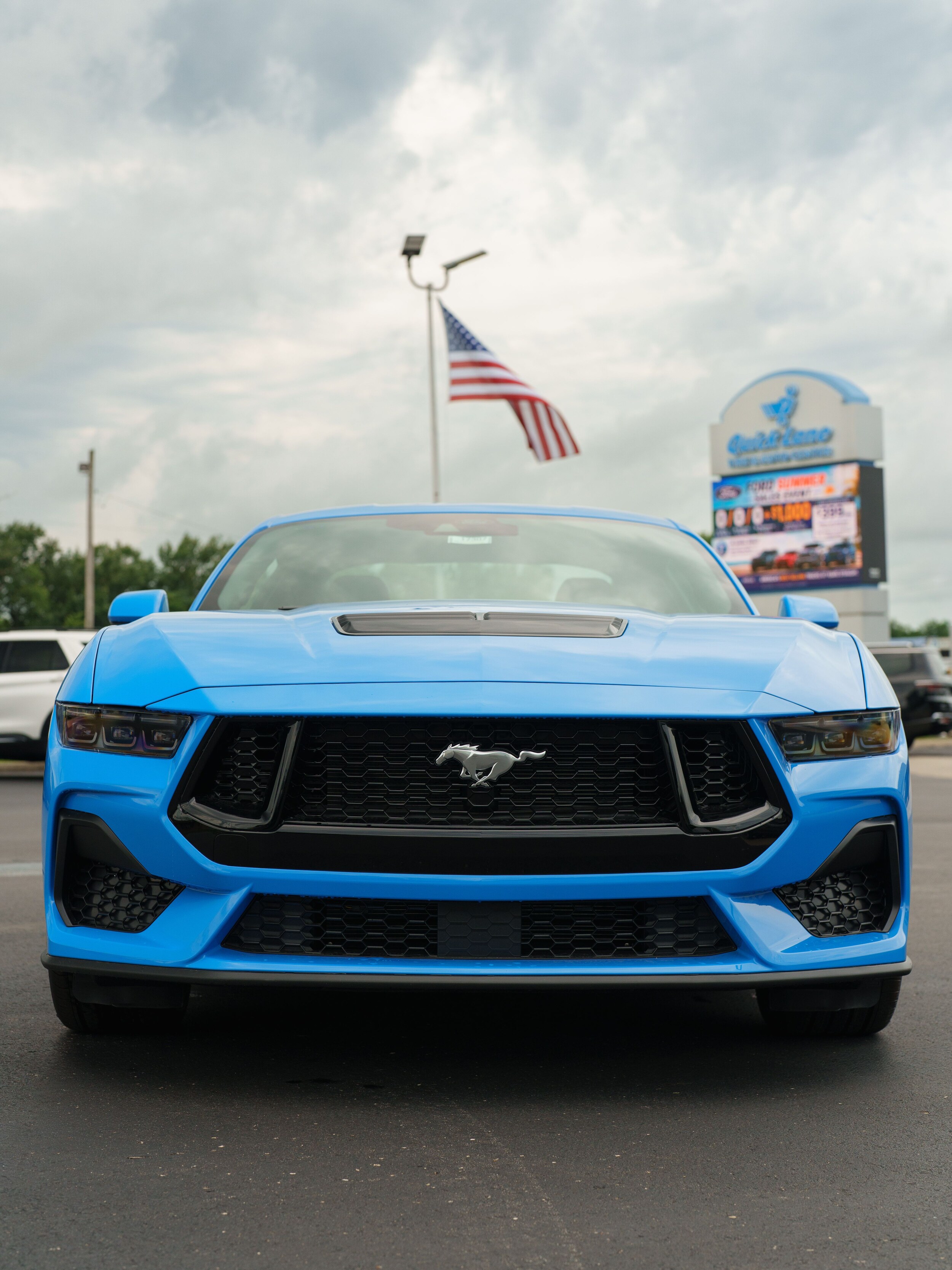
Can You Drive a Mustang in the Snow?
Yes. Plenty of Mustang owners drive their cars year-round, including during winter.
The biggest factors affecting how well a Mustang performs in snow are:
- Tire type and condition
- Snow depth
- Ice accumulation
- Driver technique
- Temperature
- Road treatment and plowing
- Which Mustang model and equipment you have
A Mustang on quality winter tires traveling over a plowed road can be dramatically easier to control than the same Mustang equipped with high-performance summer tires.
That distinction is extremely important.
Is the Ford Mustang All-Wheel Drive?
No. The current Ford Mustang is rear-wheel drive.
Power is sent to the rear wheels rather than all four wheels. Rear-wheel drive is one of the characteristics that helps give the Mustang its traditional performance-car handling and driving feel, but it also means the rear tires are responsible for putting engine power to the road.
On snow or ice, applying too much throttle can cause those rear tires to lose traction more easily than they would on dry pavement.
That's why smooth throttle inputs and good tires become especially important when driving a Mustang in winter weather.
Does the Mustang Have a Snow Mode?
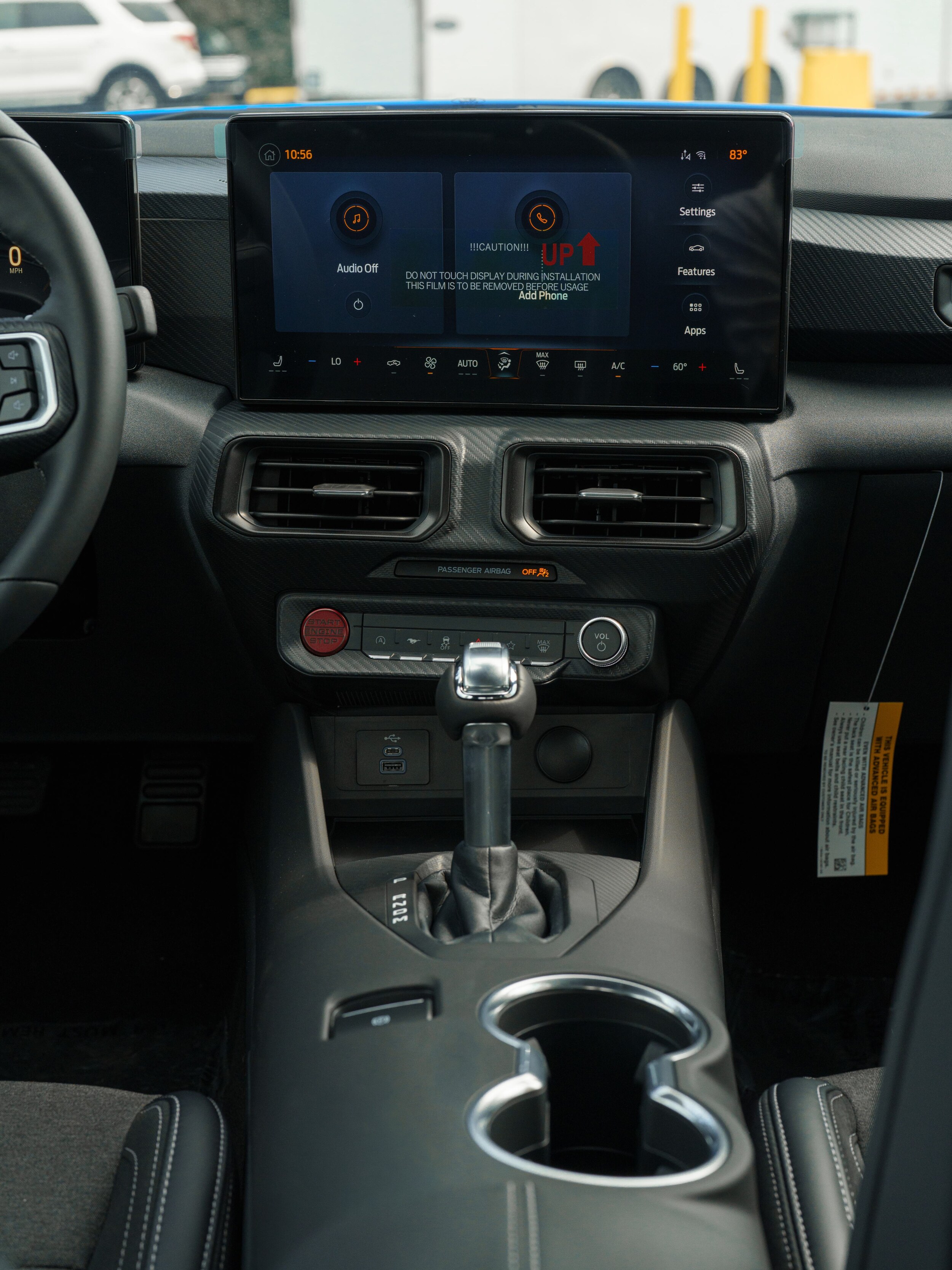
Modern Mustangs with selectable drive modes include a Slippery mode designed specifically for less-than-ideal road conditions such as snow and ice.
When Slippery mode is selected, the Mustang adjusts vehicle behavior to make power delivery easier to manage on low-traction surfaces.
Ford describes Slippery mode as being intended for snow-covered, ice-covered, or otherwise slippery roads.
On equipped vehicles, the system can modify factors such as accelerator response and traction and stability-control behavior to help reduce excessive wheelspin.
When Should You Use Slippery Mode?
Consider using Slippery mode when driving on:
- Snow-covered pavement
- Icy roads
- Slush
- Wet roads with poor traction
- Loose or slippery surfaces
Slippery mode can help, but it cannot create traction that your tires don't have. Tires remain one of the most important parts of winter Mustang driving.
Are Mustangs Bad in the Snow Because They're Rear-Wheel Drive?
Not necessarily.
Rear-wheel drive requires more respect on slippery surfaces because applying power can cause the rear of the vehicle to lose traction. But modern traction control, electronic stability control, limited-slip differential technology, drive modes, and improved tire technology make today's Mustang much easier to manage in winter than many older rear-wheel-drive performance cars.
The driver still plays an important role.
Accelerating aggressively on a snowy road isn't a good idea simply because the Mustang has electronic driver aids. Smooth acceleration, increased following distances, gradual braking, and lower speeds remain important.
What Tires Are Best for a Mustang in Snow?
If you plan to regularly drive your Mustang through snow and freezing temperatures, a dedicated set of winter tires provides the strongest winter-focused option.
Winter tires are designed with rubber compounds and tread patterns intended to remain effective at lower temperatures and provide traction in snow and winter conditions.
Quality all-season tires can also work well for Mustang owners who encounter occasional light snow and mostly cleared winter roads.
What you generally don't want is a Mustang attempting to navigate snow on summer performance tires.
Can You Drive a Mustang on Summer Tires in Snow?
You should not rely on summer performance tires for driving a Mustang in snow or ice.
Ford specifically warns that certain summer tires offered on performance-oriented Mustangs are not recommended when temperatures fall to approximately 45 degrees Fahrenheit or below or when snow and ice are present.
Summer tires are optimized for warm-weather performance. As temperatures drop, their rubber compound can lose flexibility and traction.
This means a powerful Mustang GT with sophisticated traction-control technology can still struggle badly if the tires aren't appropriate for winter conditions.
No drive mode can compensate for the wrong tires.
Winter Tires vs All-Season Tires on a Mustang
Winter Tires
Consider winter tires if:
- You must drive regardless of snowfall.
- You regularly encounter unplowed roads.
- Your area experiences frequent freezing temperatures.
- You regularly drive early in the morning before roads are treated.
- You want maximum winter traction from your Mustang.
All-Season Tires
All-season tires may make sense if:
- Snowfall in your area is relatively occasional.
- Most roads you use are quickly plowed and treated.
- You can avoid driving during major winter storms.
- You want one tire setup for most of the year.
Remember that not all all-season tires deliver identical snow performance. If winter capability matters, compare the specific tire's cold-weather and snow ratings rather than assuming every tire labeled "all-season" performs the same way.
Is a Mustang GT Good in Snow?
A Mustang GT can be driven in snow, but its 5.0-liter V8 gives the driver a significant amount of power to manage.
The solution isn't avoiding the GT. It's using that power appropriately.
On dry pavement, rapidly opening the throttle is part of what makes a Mustang GT entertaining. On snow or ice, the same throttle input can quickly overwhelm available traction.
For winter Mustang GT driving:
- Use appropriate winter or all-season tires.
- Select Slippery mode when conditions warrant it.
- Accelerate progressively.
- Avoid sudden throttle inputs.
- Leave traction and stability systems engaged for normal winter driving.
- Give yourself considerably more stopping distance.
A 5.0-liter V8 isn't inherently incompatible with winter. You simply have to be disciplined about how you use it.
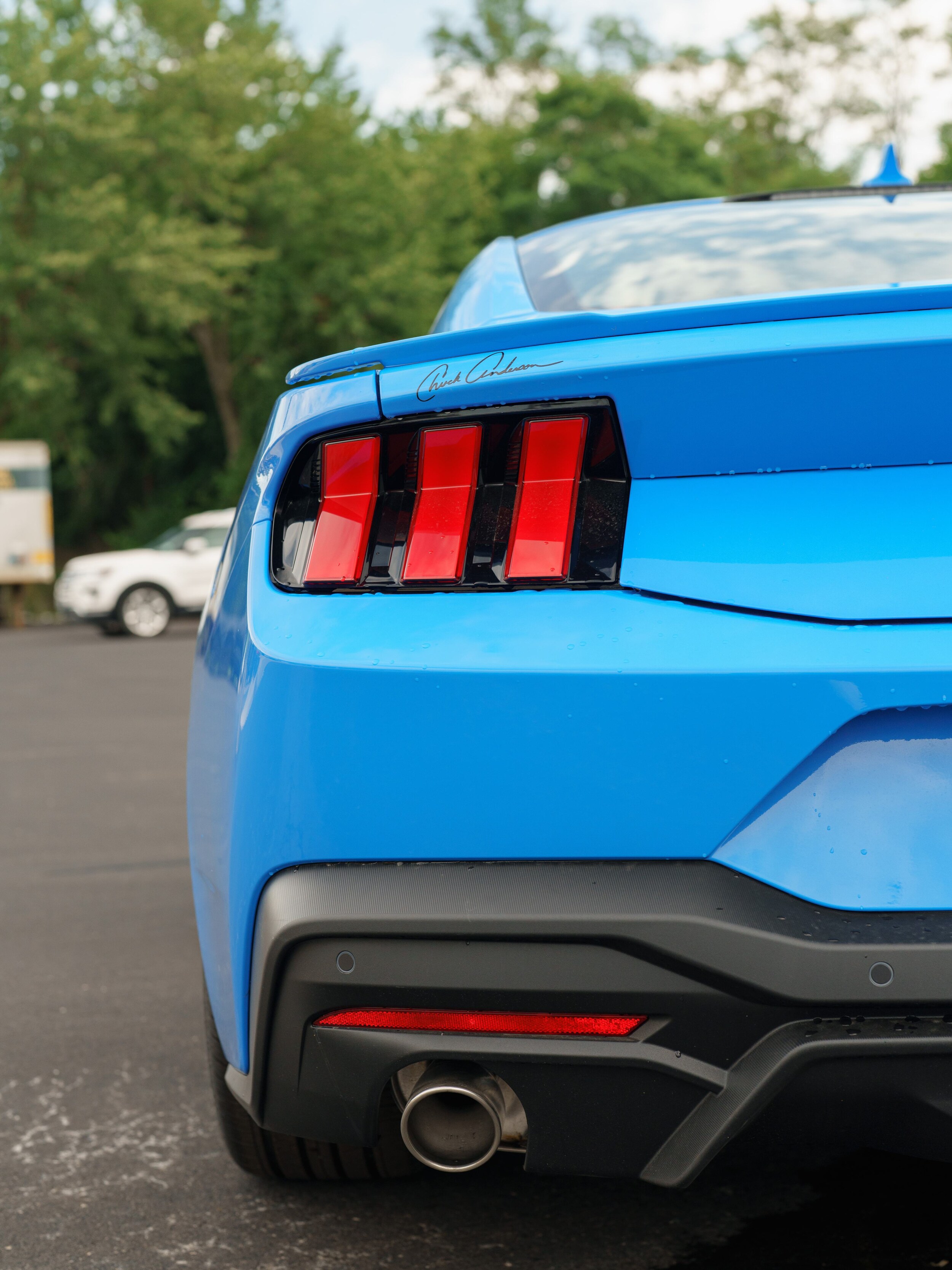
Is an EcoBoost Mustang Better in Snow?
An EcoBoost Mustang can make a practical year-round Mustang because it combines rear-wheel-drive handling with the 2.3-liter EcoBoost engine and automatic transmission.
However, don't assume that having less horsepower than a GT automatically makes an EcoBoost excellent in winter.
Tire selection still matters more than simply comparing engine output.
A Mustang EcoBoost on summer tires may have significantly less usable winter traction than a Mustang GT properly equipped with winter tires.
Is an Automatic or Manual Mustang Better in Snow?
Both can be driven successfully in winter, but an automatic Mustang may be easier for many drivers.
The automatic transmission eliminates the need to coordinate clutch engagement while starting on slippery surfaces and allows the vehicle's electronic systems to manage gear selection.
A skilled manual-transmission driver can also operate a manual Mustang effectively in winter. Smooth clutch engagement and careful throttle control become particularly important when starting on snow or ice.
If you're deciding between the two transmissions for reasons beyond winter weather, see our complete automatic vs manual Mustang comparison.
Does Traction Control Help a Mustang in Snow?
Yes. Traction control can detect excessive wheelspin and intervene to help the vehicle regain traction.
Electronic stability-control systems can also help when the vehicle begins deviating from the driver's intended path.
These technologies make modern high-horsepower rear-wheel-drive cars much easier to manage than performance cars from decades ago.
However, traction control does not change the laws of physics.
If you're traveling too fast for conditions or your tires cannot generate sufficient grip, electronic systems may not be able to prevent a loss of control.
Should You Turn Traction Control Off in Snow?
For normal winter driving, leave your Mustang's traction and stability-control systems turned on.
Those systems are specifically intended to help maintain control when available traction is limited.
There can be unusual circumstances where temporary wheelspin is needed to free a stuck vehicle, but disabling electronic assistance should not be the default strategy for driving on snowy public roads.
Can a Mustang Drive Through Deep Snow?
This is where the Mustang's limitations become much more noticeable.
The Mustang is a relatively low performance car, not a high-clearance SUV or pickup. Even if the tires have sufficient traction, deeper snow can eventually become a ground-clearance problem.
As snow depth increases, the underside and front of the car can begin contacting or pushing through accumulated snow.
If you frequently need to travel on unplowed rural roads after major snowstorms, a vehicle with greater ground clearance and all-wheel or four-wheel drive will generally be better suited to those conditions.
What About Ice?
Ice is challenging for virtually every vehicle.
All-wheel drive can help a vehicle accelerate, but it doesn't magically increase the amount of traction available while braking or turning on ice.
For a Mustang—or any vehicle—the safest approach on icy roads includes:
- Reducing speed
- Increasing following distance dramatically
- Avoiding abrupt steering inputs
- Braking progressively
- Accelerating gradually
- Using tires appropriate for winter conditions
If roads are covered in significant ice and travel isn't necessary, staying off the road is often the best option regardless of what you're driving.
Should You Put Weight in the Trunk of a Mustang for Snow?
You may hear traditional advice about adding weight over the rear wheels of a rear-wheel-drive vehicle.
While additional rear weight can affect traction, modern Mustangs are carefully engineered vehicles with electronic stability systems, specific suspension tuning, tire-pressure requirements, and designed weight distribution.
Rather than placing unnecessary heavy objects in the trunk, focus first on the factors that make the biggest difference: proper tires, adequate tread depth, correct tire pressures, smooth driving, and appropriate drive-mode selection.
How Do You Drive a Mustang Safely in Snow?
If winter weather catches you behind the wheel of your Mustang, slow and smooth is the strategy.
Accelerate Gradually
A Mustang can generate substantial torque. Apply the throttle progressively rather than suddenly.
Brake Earlier
Your stopping distance can increase dramatically on snow and ice. Begin slowing well before intersections, curves, and stopped traffic.
Make Smooth Steering Inputs
Abrupt steering can upset the vehicle when grip is limited.
Use Slippery Mode
If your Mustang is equipped with the appropriate selectable drive modes, use Slippery mode when road conditions warrant it.
Leave More Space
Don't follow another vehicle at the same distance you would on dry pavement.
Keep Traction Control On
For normal street driving in winter conditions, allow the Mustang's electronic traction and stability systems to assist you.
Use the Right Tires
This may be the single biggest equipment change you can make for winter performance.
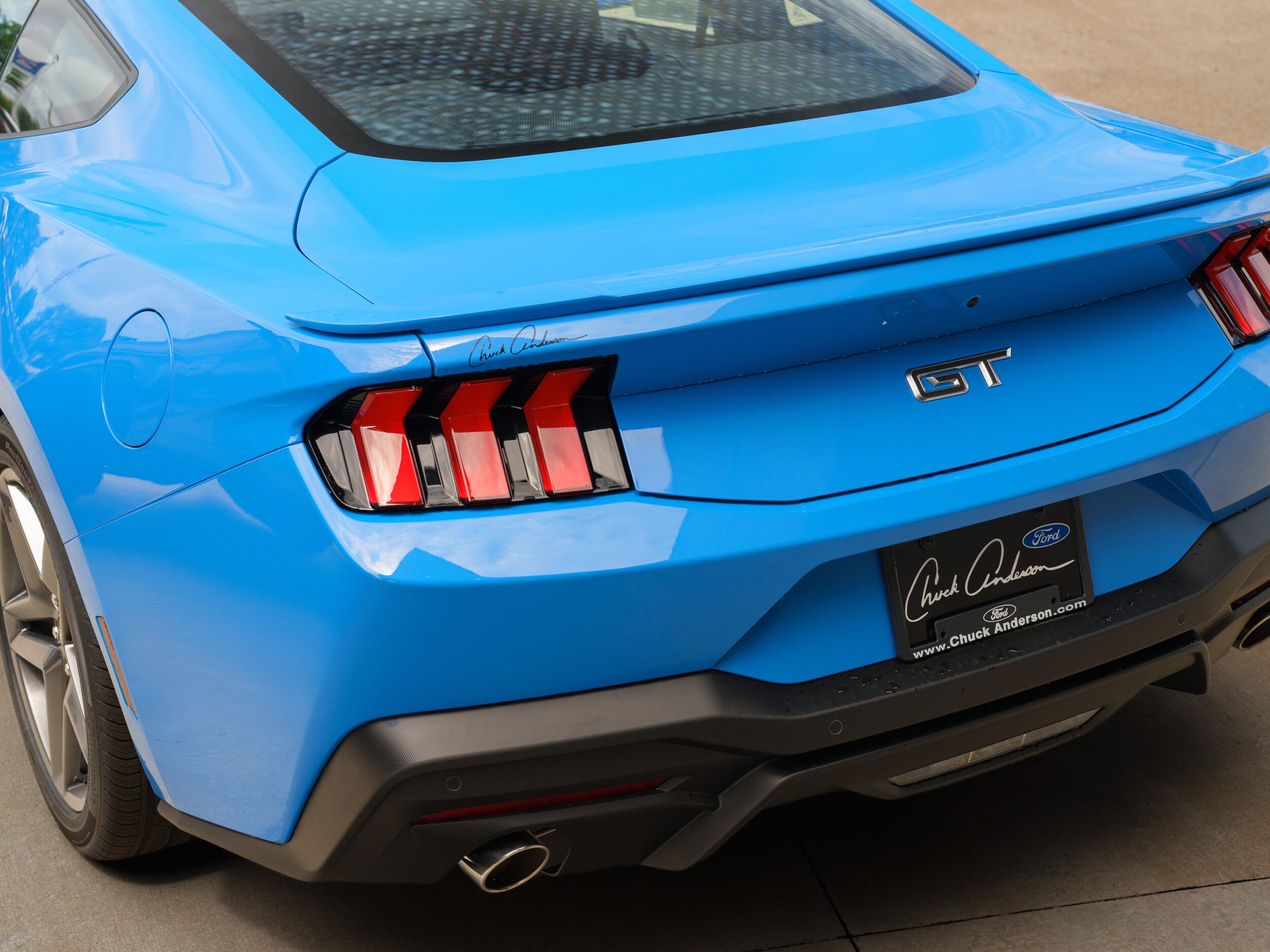
What Should I Keep in My Mustang During Winter?
If you drive your Mustang year-round in Missouri, keeping a simple winter emergency kit in the trunk is a good idea.
Consider carrying:
- Ice scraper and snow brush
- Warm gloves
- Small blanket
- Flashlight
- Phone charging cable or portable charger
- Compact shovel
- Emergency warning light or reflective equipment
- Windshield washer fluid rated for freezing temperatures
You should also regularly check your tire pressures because colder temperatures can cause tire pressure to decrease.
Can You Daily Drive a Mustang Through a Missouri Winter?
Yes, particularly if you're willing to equip the car appropriately and adjust your plans during severe storms.
A typical Kansas City-area winter includes plenty of cold, dry days when a Mustang presents no meaningful problem at all. On lightly snow-covered but treated roads, proper tires and careful driving can make the Mustang perfectly usable.
The Mustang becomes less ideal when snow gets deep, roads remain unplowed, or significant ice is present.
For an owner with flexibility to stay home or use another vehicle during the worst winter storms, enjoying a Mustang year-round can be very realistic.
Should I Buy a Mustang If It's My Only Vehicle?
A Mustang can absolutely work as an only vehicle, but consider your winter driving requirements before making the decision.
A Mustang may work well as your only vehicle if:
- Your roads are usually plowed quickly.
- You primarily drive paved highways and city streets.
- You can equip the Mustang with appropriate tires.
- You can avoid driving during major snow or ice events.
- You don't regularly travel on deep, unplowed roads.
You may prefer a different Ford vehicle if:
- You routinely drive before roads are plowed.
- You live on steep or poorly maintained roads.
- You regularly encounter deep snow.
- Work requires you to travel regardless of weather.
- You specifically need all-wheel or four-wheel drive.
Is the Mustang Good in Snow Compared With an AWD Vehicle?
An all-wheel-drive vehicle generally has an advantage when accelerating on slippery surfaces because power can be sent through more than two driven wheels.
That doesn't mean a Mustang is incapable in snow. It simply means you should recognize what it is: a low, rear-wheel-drive performance car.
With winter tires, careful driving, and modern electronic driver aids, a Mustang can be a perfectly reasonable winter vehicle for many drivers.
If you need to push through eight inches of untouched snow on a regular basis, that's a different job entirely.
So, Is the Ford Mustang Good in the Snow?
A Ford Mustang can be good in light to moderate snow when it is equipped with appropriate tires and driven carefully. Its rear-wheel-drive layout and relatively low ground clearance mean it won't match a properly equipped all-wheel-drive SUV or four-wheel-drive truck in severe winter conditions, but that doesn't mean you have to park your Mustang for the entire winter.
The most important things to remember are simple:
- Use winter-capable tires.
- Do not rely on summer performance tires in freezing or snowy conditions.
- Use Slippery mode when appropriate.
- Keep traction and stability systems active.
- Be smooth with the throttle, brakes, and steering.
- Know when snow is simply too deep for a low performance car.
Set up correctly, a Mustang can remain a fun and usable car even when the Missouri temperature drops.
Shop Ford Mustangs at Chuck Anderson Ford
If you're considering a Ford Mustang as a daily driver in Missouri, visit Chuck Anderson Ford in Excelsior Springs. Our team can help you compare Mustang trims, engines, transmissions, tire options, and features so you understand exactly what you're buying before winter arrives.
We serve Mustang shoppers from Excelsior Springs, Liberty, Kearney, Richmond, Kansas City, and communities throughout northwest Missouri and the Kansas City metro.
Shop New Ford Mustang Inventory or browse our used vehicle inventory to see what's currently available.
Continue researching the Mustang with our guides to Ford Mustang reliability, Mustang lifespan and mileage, and automatic vs manual Mustangs.
You can also return to our Ford Mustang Questions & Answers page for more Mustang research.
Ford Mustang Snow Driving FAQ
Can a Ford Mustang drive in snow?
Yes. A Ford Mustang can be driven in snow, especially when equipped with appropriate winter or all-season tires. Smooth driving and proper tire selection become especially important because the Mustang is rear-wheel drive.
Is the Ford Mustang AWD?
No. The current Ford Mustang uses a rear-wheel-drive layout rather than all-wheel drive.
Does the Mustang have a snow mode?
Modern Mustangs with selectable drive modes include Slippery mode, which is designed for reduced-traction conditions such as snow and ice.
Are winter tires worth it on a Mustang?
If you regularly drive your Mustang in freezing temperatures, snow, or ice, dedicated winter tires can provide a significant improvement in cold-weather traction compared with summer performance tires.
Can you drive a Mustang GT in snow?
Yes. A Mustang GT can be driven in winter conditions, but its substantial V8 power makes smooth throttle control especially important. Proper winter-capable tires are critical.
Is an EcoBoost Mustang good in snow?
An EcoBoost Mustang can work well as a year-round vehicle when properly equipped. Like every Mustang, however, tire choice and road conditions have a major impact on winter capability.
Can you use summer tires on a Mustang in winter?
Ford does not recommend using certain Mustang summer performance tires at temperatures around 45 degrees Fahrenheit or below or in snow and ice. Owners should verify the tire type installed on their particular Mustang before winter driving.
Should I turn traction control off in the snow?
For normal winter street driving, traction and stability-control systems should generally remain active so they can help manage wheelspin and vehicle stability.
Is a Mustang good enough for a Kansas City winter?
For many drivers, yes. A Mustang equipped with winter-capable tires can handle cold weather and many light-to-moderate snow conditions. Deep snow, significant ice, and unplowed roads remain limitations because the Mustang is a relatively low rear-wheel-drive performance car.
What is the most important upgrade for driving a Mustang in snow?
Appropriate tires are one of the biggest factors. Winter-focused tires can make a substantial difference in acceleration, braking, and cornering when temperatures drop and roads become slippery.