
2026 Ford Mustang 2.3L EcoBoost
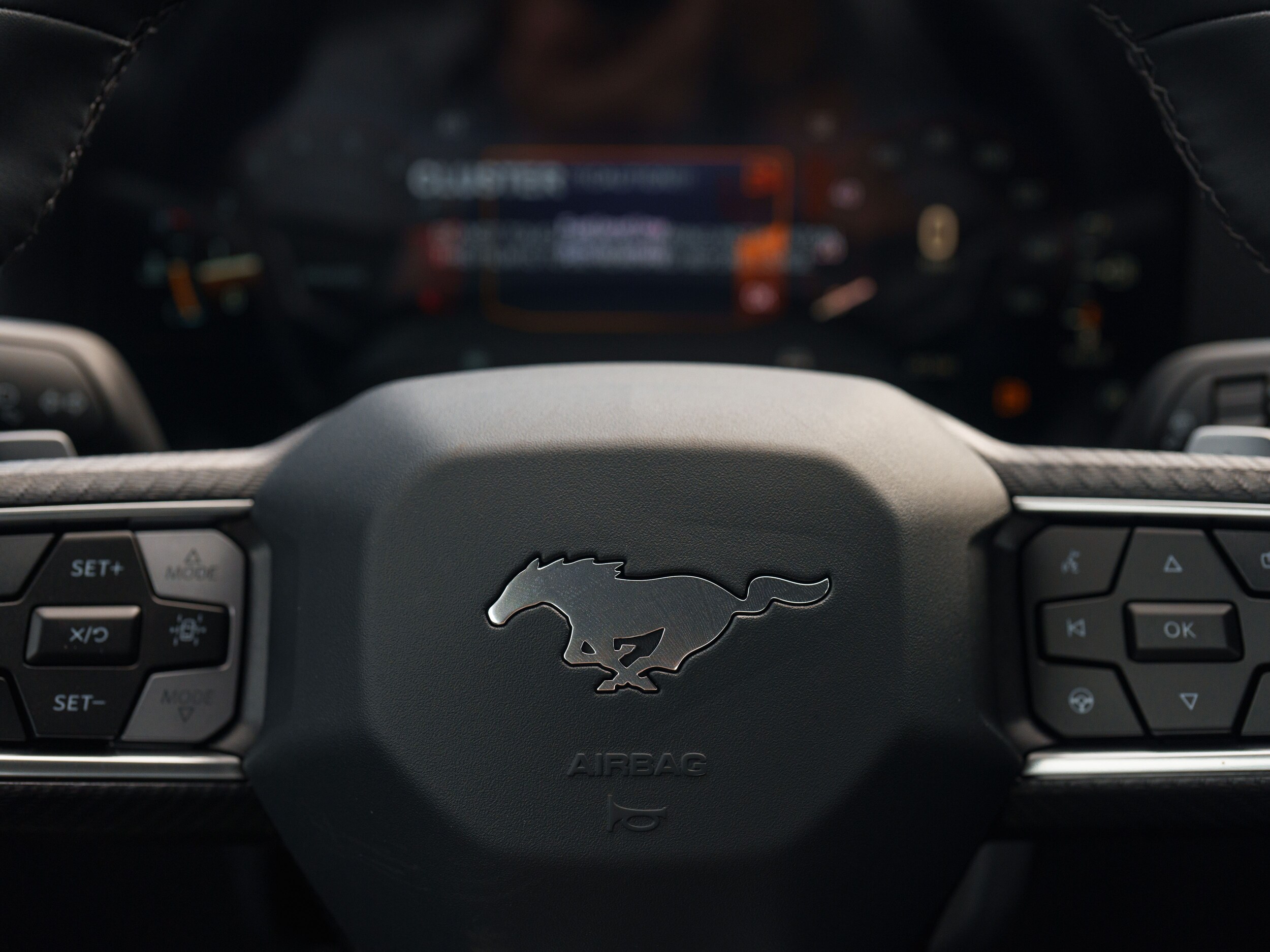
315-HP Turbocharged Mustang Engine
2026 Ford Mustang 2.3L EcoBoost Engine
The 2026 Ford Mustang 2.3L EcoBoost offers a different route to Mustang performance. Instead of relying on displacement or eight cylinders, the turbocharged four-cylinder produces 315 horsepower and 350 lb-ft of torque, sends power through a 10-speed automatic transmission and keeps the traditional rear-wheel-drive Mustang layout. For drivers who want meaningful acceleration, responsive street performance and everyday usability without making a V8 the centerpiece of the car, EcoBoost is a compelling place to start.
315 HPAt 5,500 RPM
350 LB-FTAt 3,000 RPM
10-SpeedAutomatic Transmission
3.15Limited-Slip Rear Axle
A Modern Mustang Powertrain
Four Cylinders Do Not Make This an Ordinary Economy Engine
The EcoBoost badge describes Ford's use of turbocharging and direct-injection technology to extract substantial output from a smaller-displacement engine.
In the Mustang, the result is a 2.3L engine producing 315 horsepower and 350 lb-ft of torque.
That torque peaks at just 3,000 rpm, helping explain why EcoBoost feels responsive during normal street driving rather than requiring the engine to be constantly operated near redline.
It is a fundamentally different personality from the naturally aspirated 5.0L V8, not simply a smaller version of it.
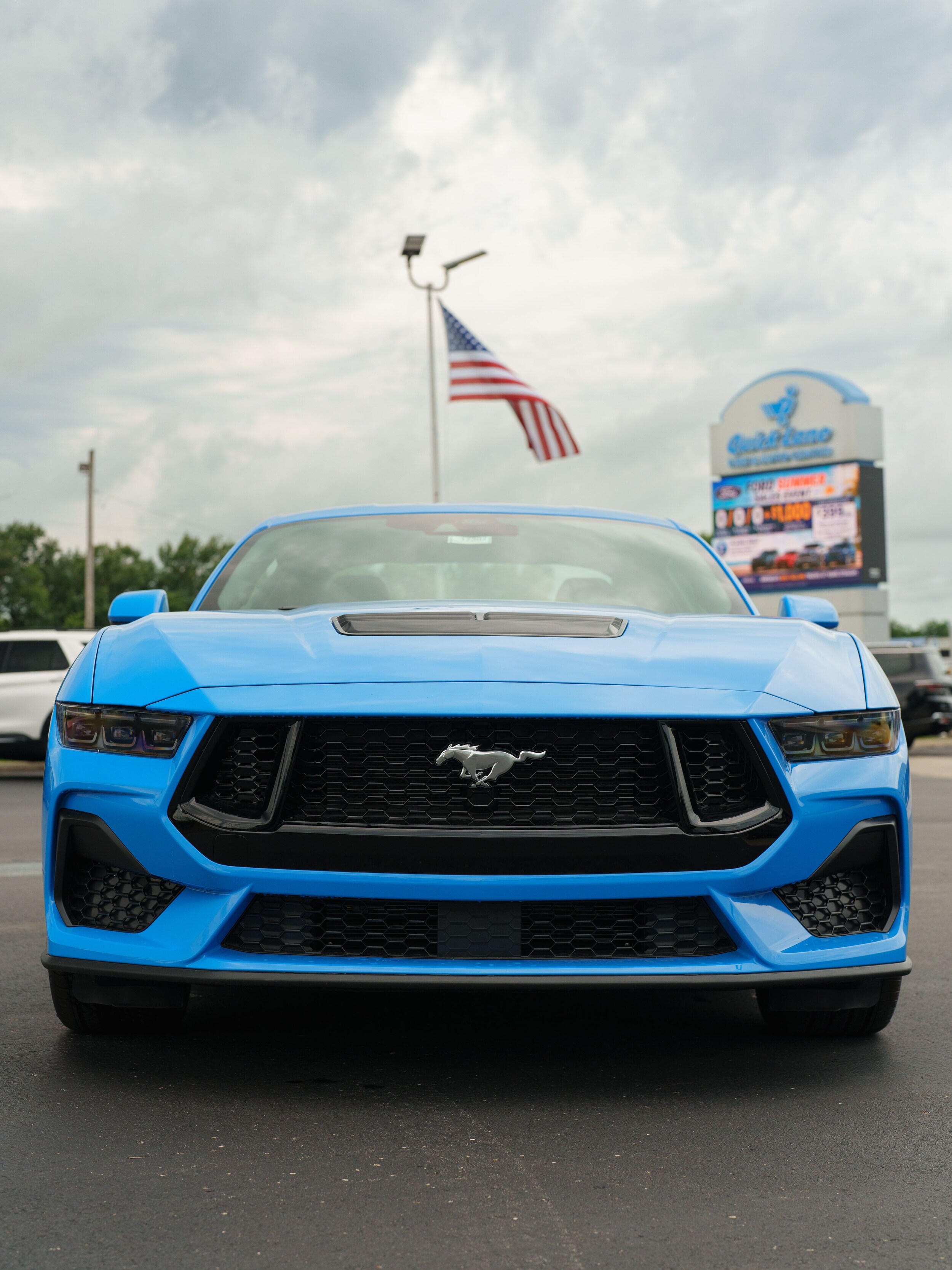
315 Horsepower
Turbocharging Lets 2.3 Liters Produce Serious Mustang Output
Ford rates the 2026 Mustang EcoBoost at 315 horsepower at 5,500 rpm when using 93-octane fuel.
Peak torque is 350 lb-ft at 3,000 rpm.
The important number for ordinary street driving may actually be the torque figure.
Strong torque at relatively low engine speed helps the Mustang accelerate without requiring the driver to wait for extremely high rpm.
2.3L EcoBoost Specs
- 2.3L turbocharged four-cylinder
- 315 horsepower at 5,500 rpm
- 350 lb-ft at 3,000 rpm
- 93-octane ratings
- 10-speed automatic transmission
- Rear-wheel drive
- 3.15 limited-slip rear axle
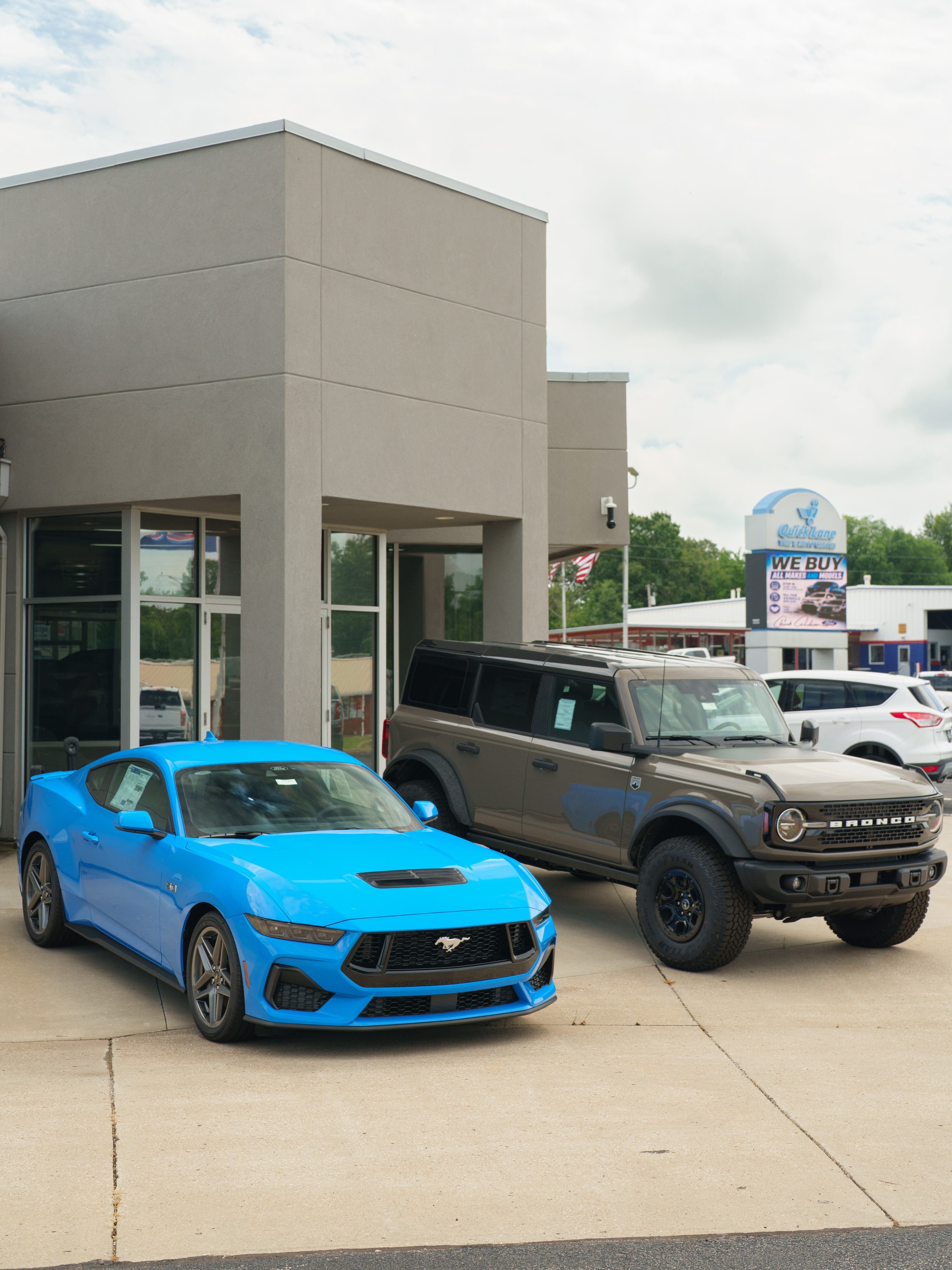
Turbocharged Power
What Does Turbocharging Actually Do?
A turbocharger uses energy from the engine's exhaust flow to compress incoming air.
Denser intake air allows the engine to burn more fuel efficiently and produce substantially more power than a similarly sized naturally aspirated engine.
That is how a relatively compact 2.3L engine can produce 315 horsepower while still fitting the everyday mission of the EcoBoost Mustang.
The result is strong power density without requiring the displacement of the Mustang GT's 5.0L V8.
350 LB-FT at 3,000 RPM
Why EcoBoost Can Feel Strong Before Peak Horsepower Arrives
Horsepower receives most of the attention in performance-car advertising.
Torque helps explain how quickly a car responds when the driver presses the accelerator.
The Mustang EcoBoost reaches its peak 350 lb-ft at 3,000 rpm, well before its horsepower peak at 5,500 rpm.
That broad usable power delivery is particularly helpful for passing, highway merging and normal street acceleration.
10R80 10-Speed Automatic
Ten Ratios Help Keep the Turbocharged Engine in Its Useful Range
Ford pairs the 2026 2.3L EcoBoost with a 10-speed automatic transmission.
More ratios allow the transmission to choose a gear that better matches vehicle speed, throttle demand and available engine power.
During acceleration, the transmission can keep the turbocharged engine near the part of the rev range where it produces strong output.
During relaxed driving, the higher gears help reduce unnecessary engine speed.
Is There a Manual EcoBoost?
The 2026 EcoBoost Uses the 10-Speed Automatic
Ford lists the 10-speed automatic as the transmission for the 2026 Mustang EcoBoost.
That means buyers who consider a clutch pedal essential should move their research toward Mustang GT or naturally aspirated Dark Horse.
GT offers a traditional 6-speed manual, while Dark Horse offers an available TREMEC 6-speed manual.
EcoBoost instead focuses on making its turbocharged performance accessible and easy to use every day.
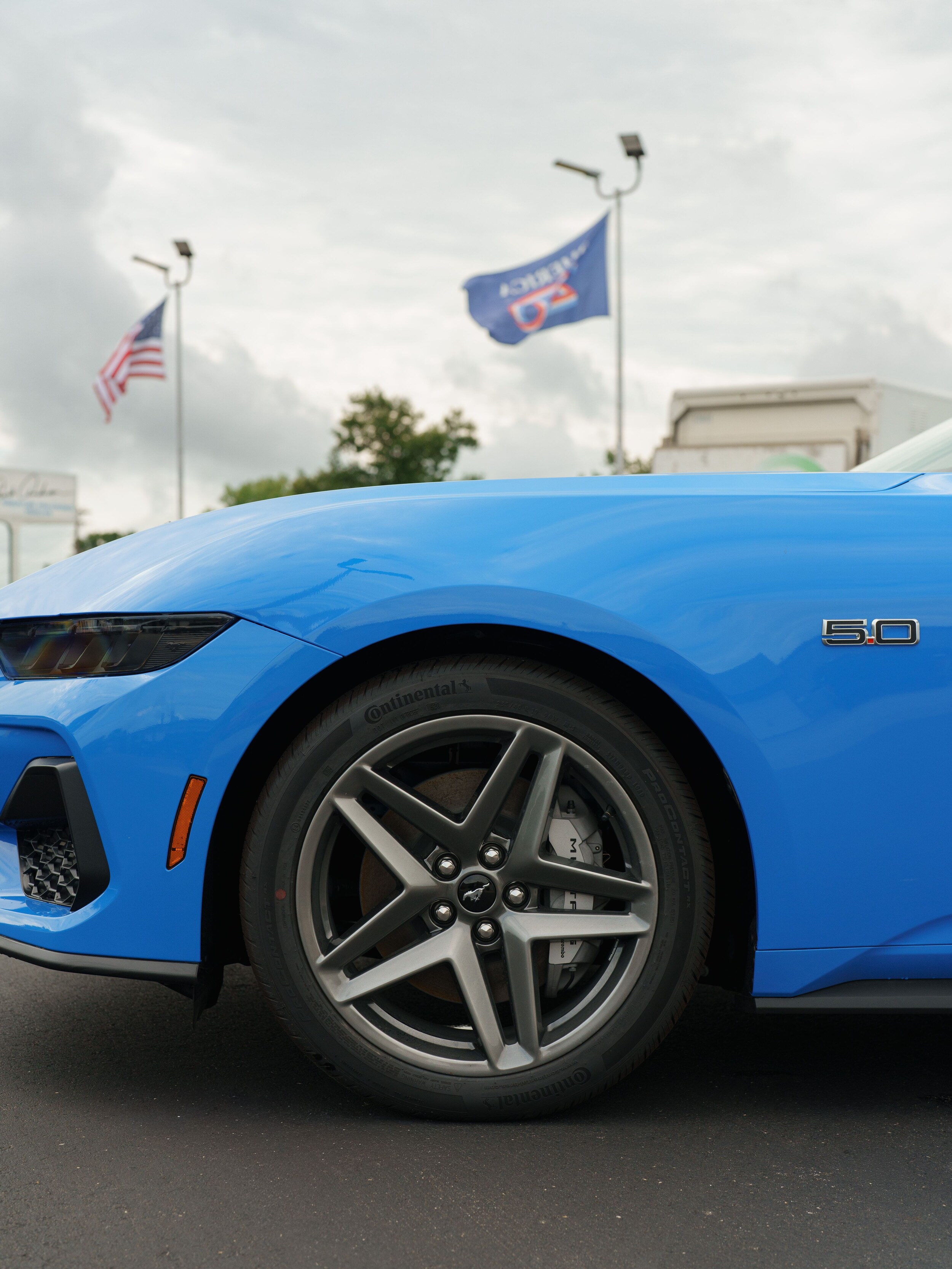
Rear-Wheel Drive
EcoBoost Changes the Engine, Not the Basic Mustang Formula
The EcoBoost Mustang remains a rear-wheel-drive performance car.
Power is sent to the rear axle rather than the front wheels.
That layout allows the front tires to focus primarily on steering while the rear tires handle engine torque.
It is a fundamental part of Mustang dynamics regardless of whether the engine has four cylinders or eight.
3.15 Limited-Slip Rear Axle
Helping Both Rear Tires Make Better Use of Available Traction
Ford equips the 2026 Mustang EcoBoost with a 3.15 limited-slip rear axle.
A limited-slip differential helps manage how torque is distributed between the rear wheels when available grip differs from side to side.
The system supports both acceleration and the rear-wheel-drive dynamics expected from a Mustang.
Selectable Drive Modes
The Same Engine Can Behave Differently Depending on the Drive Mode
Normal
Balanced settings for everyday Mustang driving.
Sport
Sharper vehicle responses for more enthusiastic street driving.
Slippery
Helps tailor throttle and vehicle responses for reduced-traction conditions.
Track-Oriented Functions
Mustang performance features provide additional tools for appropriate controlled environments.
Available Active Valve Performance Exhaust
A Four-Cylinder Mustang Can Still Have an Adjustable Exhaust Personality
Ford offers available active valve performance exhaust on EcoBoost configurations.
The system can alter exhaust character depending on the selected setting.
That gives drivers a quieter personality when desired and a more assertive exhaust note when conditions make that appropriate.
It is another example of EcoBoost being treated as a genuine performance Mustang, not simply the entry engine.
Available EcoBoost Performance Features
- Active valve performance exhaust
- Selectable drive modes
- Electronic line-lock
- Limited-slip rear axle
- Available appearance packages
- Fastback performance options
One Engine, Two Body Styles
2.3L EcoBoost Fastback or Convertible?
EcoBoost Fastback
The Fastback is the more traditional closed-roof Mustang interpretation.
It makes sense for buyers who prioritize the coupe profile, everyday performance and access to Fastback-specific appearance or performance options.
EcoBoost Convertible
The Convertible uses the same basic 315-horsepower EcoBoost formula but adds open-air driving.
It is the stronger fit when cruising and top-down enjoyment matter more than a closed-roof performance focus.
Everyday Mustang Performance
EcoBoost Makes a Strong Argument as the Daily-Driven Mustang
Maximum horsepower is not always the most important specification for a car driven every day.
Responsive low-rpm torque, an automatic transmission, manageable street performance and easy operation can matter more during daily ownership.
That is where the 2.3L EcoBoost makes much of its case.
It still delivers rear-wheel-drive Mustang performance, but without requiring the owner to build the entire experience around V8 power.
EcoBoost vs 5.0L V8
Which 2026 Mustang Engine Should You Choose?
| Feature | 2.3L EcoBoost | 5.0L GT V8 |
|---|---|---|
| Engine | 2.3L turbo four-cylinder | 5.0L naturally aspirated V8 |
| Horsepower | 315 hp | 480 hp standard |
| Torque | 350 lb-ft | 415 lb-ft standard |
| Forced Induction | Turbocharged | No |
| Manual Transmission | No | Yes |
| Best Known For | Turbo torque, everyday performance and accessibility | V8 sound, naturally aspirated response and greater output |
| Start Here If... | You want Mustang performance without requiring a V8 | The 5.0L V8 is a major reason you want a Mustang |
Is a Four-Cylinder Mustang Still a Mustang?
Engine Layout Has Changed Throughout Mustang History. The Core Formula Still Matters.
A Mustang does not become front-wheel drive or abandon its sports-car layout simply because it uses fewer cylinders.
The EcoBoost remains rear-wheel drive, uses a limited-slip differential and delivers substantially more than 300 horsepower.
The better question is not whether four cylinders are enough to qualify.
The better question is whether you prefer the turbocharged EcoBoost personality or the naturally aspirated V8 experience offered by Mustang GT and Dark Horse.
Buyer Fit
Who Should Consider the 2.3L EcoBoost Mustang?
Daily Drivers
Buyers who need a Mustang to handle regular commuting as well as recreational driving.
First-Time Mustang Buyers
Drivers who want meaningful performance without beginning at nearly 500 horsepower.
Turbo Enthusiasts
Buyers who enjoy low- and mid-range torque and turbocharged power delivery.
Convertible Buyers
Drivers who value open-air Mustang enjoyment more than owning a V8 specifically.
Modern Mustang Technology
The Engine May Be Compact. The Cabin Is Thoroughly Modern.
Current 2026 EcoBoost models feature a 12.4-inch digital instrument cluster and 13.2-inch center touchscreen.
Selectable drive modes, Ford Co-Pilot360 technology and available premium equipment broaden the car beyond pure performance.
That matters for buyers choosing EcoBoost specifically because they intend to use the Mustang frequently, not only on weekends.
Explore More Mustang Power
When Should You Move Beyond the 2.3L EcoBoost?
5.0L GT V8
Move to the 5.0L when naturally aspirated V8 sound, greater horsepower and manual-transmission availability matter more.
Research 5.0L V8Modified 5.0L Dark Horse
Move to Dark Horse when 500 naturally aspirated horsepower and more serious track capability are priorities.
Research Modified 5.0LSupercharged 5.2L
Move to the Dark Horse SC powertrain when the goal is extreme 795-horsepower Mustang performance.
Research Supercharged 5.2L Continue Your Mustang Research
Compare Engines, Trims and EcoBoost Models
Frequently Asked Questions
2026 Ford Mustang 2.3L EcoBoost FAQs
How much horsepower does the 2026 Mustang 2.3L EcoBoost have?
The 2026 Ford Mustang 2.3L EcoBoost produces 315 horsepower at 5,500 rpm when using 93-octane fuel.
How much torque does the Mustang EcoBoost make?
Ford rates the 2.3L EcoBoost at 350 lb-ft of torque at 3,000 rpm.
Is the 2026 Mustang EcoBoost turbocharged?
Yes. The 2.3L EcoBoost is a turbocharged four-cylinder gasoline engine.
What transmission does the 2026 Mustang EcoBoost use?
Ford pairs the 2.3L EcoBoost with a 10-speed automatic transmission.
Can you get a 2026 Mustang EcoBoost with a manual transmission?
No. The 2026 EcoBoost is configured with the 10-speed automatic. Buyers who want a conventional manual should compare Mustang GT or Dark Horse.
Is the 2026 Mustang EcoBoost rear-wheel drive?
Yes. Mustang EcoBoost uses rear-wheel drive.
Does the Mustang EcoBoost have a limited-slip differential?
Yes. Ford lists a 3.15 limited-slip rear axle as standard EcoBoost mechanical equipment.
Does the 2026 Mustang EcoBoost have active exhaust?
Active valve performance exhaust is available on properly equipped EcoBoost models.
Is the Mustang EcoBoost available as a Convertible?
Yes. The 2.3L EcoBoost is offered in both Fastback and Convertible Mustang configurations.
Does the EcoBoost Convertible have the same engine as the Fastback?
Yes. Both body styles use the 2.3L EcoBoost powertrain rated at 315 horsepower and 350 lb-ft of torque.
Is the 2.3L EcoBoost Mustang fast?
The EcoBoost produces 315 horsepower and 350 lb-ft of torque, making it a genuine rear-wheel-drive performance car even though it sits below the V8 Mustang models in outright output.
Is the Mustang EcoBoost a good daily driver?
Yes. Its 10-speed automatic, strong low- and mid-range torque, compact turbocharged engine and modern technology make everyday driving one of its strongest use cases.
Should I buy a Mustang EcoBoost or 5.0L V8?
Choose EcoBoost when turbocharged response and everyday usability are priorities. Choose the 5.0L V8 when naturally aspirated V8 sound, power and character are central to why you want a Mustang.
What Mustang models use the 2.3L EcoBoost?
The 2026 EcoBoost family includes Fastback, Premium Fastback, Convertible and Premium Convertible configurations using the 2.3L EcoBoost powertrain.
Where can I buy a 2026 Mustang EcoBoost near Kansas City?
Chuck Anderson Ford in Excelsior Springs serves Mustang shoppers throughout the Kansas City Northland and surrounding Missouri communities.
Mustang EcoBoost Near Kansas City
Decide Whether You Want a Mustang With a Turbo or a Mustang Because of the V8
That distinction makes this engine choice easier.
If you want responsive turbocharged power, rear-wheel drive, an automatic transmission and a Mustang that fits naturally into daily life, the 2.3L EcoBoost deserves serious consideration.
If the sound and character of a naturally aspirated V8 are central to the purchase, compare Mustang GT instead.
Chuck Anderson Ford can help compare available Mustang configurations around the way you actually intend to use the car.
Chuck Anderson Ford
1910 W Jesse James Road
Excelsior Springs, MO 64024
Sales: 816-648-6419
Serving Mustang shoppers throughout Excelsior Springs, Kearney, Liberty, Lawson, Smithville and the Kansas City Northland.
2026 Ford Mustang 2.3L EcoBoost
315 Horsepower. 350 LB-FT. Turbocharged. Rear-Wheel Drive.
The 2026 Mustang 2.3L EcoBoost delivers 315 horsepower and 350 lb-ft of torque through a 10-speed automatic transmission and 3.15 limited-slip rear axle. It keeps the Mustang's rear-wheel-drive performance layout while using turbocharging to produce strong low- and mid-range response from just 2.3 liters. For buyers who want a Mustang they can enjoy every day without making V8 ownership the central requirement, EcoBoost makes a compelling argument.
2026 Ford Mustang specifications, horsepower, torque, transmission availability, equipment, packages, pricing and vehicle availability are subject to change. Ford currently rates the Mustang 2.3L EcoBoost at 315 horsepower at 5,500 rpm and 350 lb-ft of torque at 3,000 rpm using 93-octane fuel. The 2026 EcoBoost powertrain uses a 10-speed automatic transmission, rear-wheel drive and 3.15 limited-slip rear axle. Some features described on this page are optional or limited to certain EcoBoost configurations. Always verify equipment and specifications for the exact vehicle before purchase.