
2026 Ford Mustang Dark Horse SC
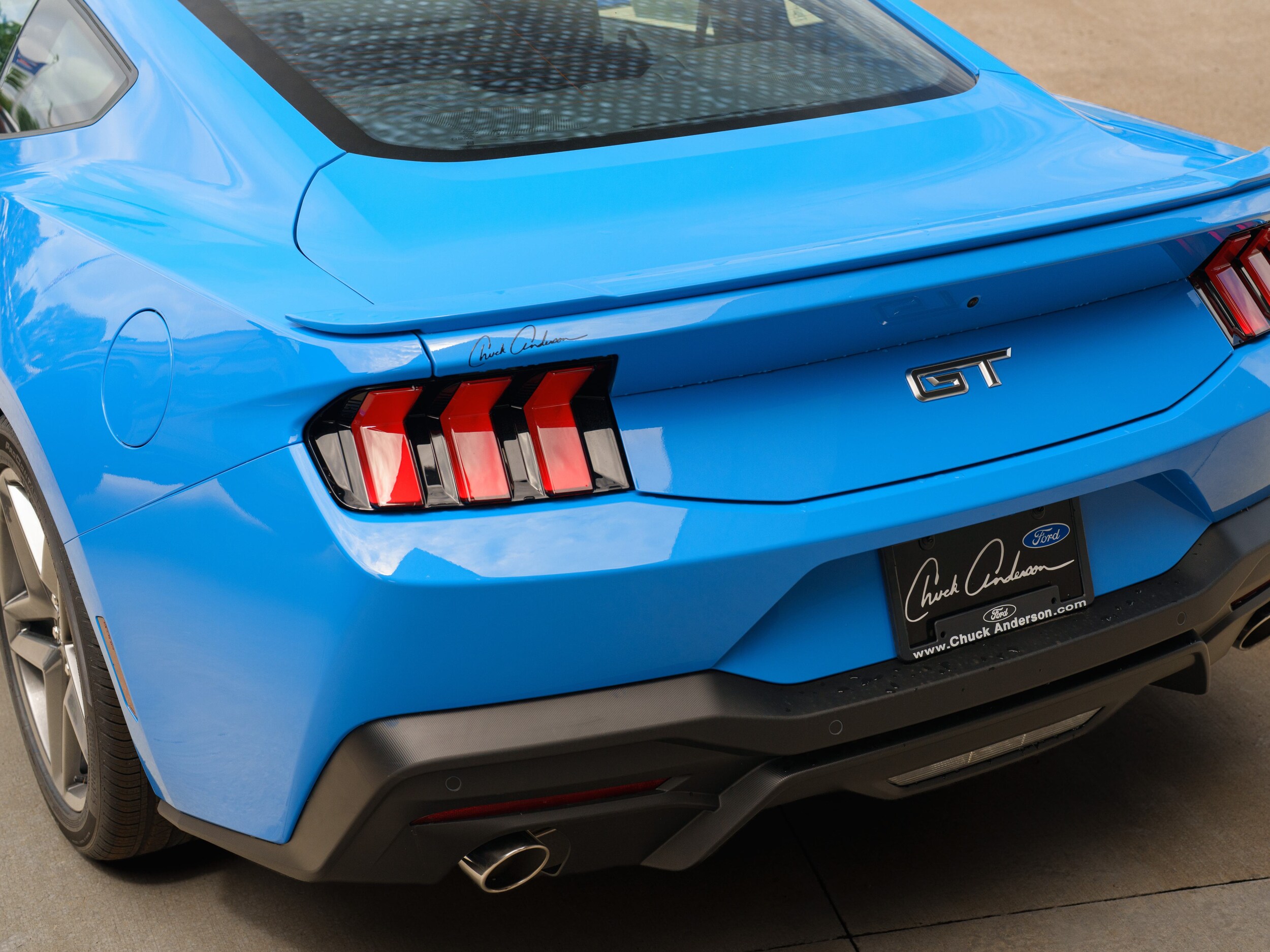
795-HP Supercharged Mustang V8
2026 Ford Mustang Dark Horse SC 5.2L Supercharged V8 Engine
The 2026 Ford Mustang Dark Horse SC uses a hand-assembled supercharged 5.2L cross-plane-crank V8 producing 795 horsepower and 660 lb-ft of torque. Ford pairs that output with a TREMEC 7-speed dual-clutch transmission, a 3.73 TORSEN differential, dedicated engine, transmission and differential cooling and a chassis engineered around making nearly 800 horsepower usable. This is not simply a stronger version of the Dark Horse 5.0L. It is an entirely different Mustang powertrain philosophy.
795 HPAt 7,200 RPM
660 LB-FTAt 4,600 RPM
7-SpeedTREMEC Dual Clutch
3.73TORSEN Differential
A Different Kind of Dark Horse Engine
The SC Moves From Naturally Aspirated Precision to Supercharged Force
Standard Dark Horse uses a modified naturally aspirated 5.0L Coyote V8.
Dark Horse SC does something very different.
Displacement increases to 5.2 liters and Ford adds a supercharger to force additional air into the engine.
The result jumps from 500 horsepower in Dark Horse to 795 horsepower in Dark Horse SC.
That 295-horsepower increase fundamentally changes what the drivetrain, cooling system, suspension, brakes and tires must be capable of handling.
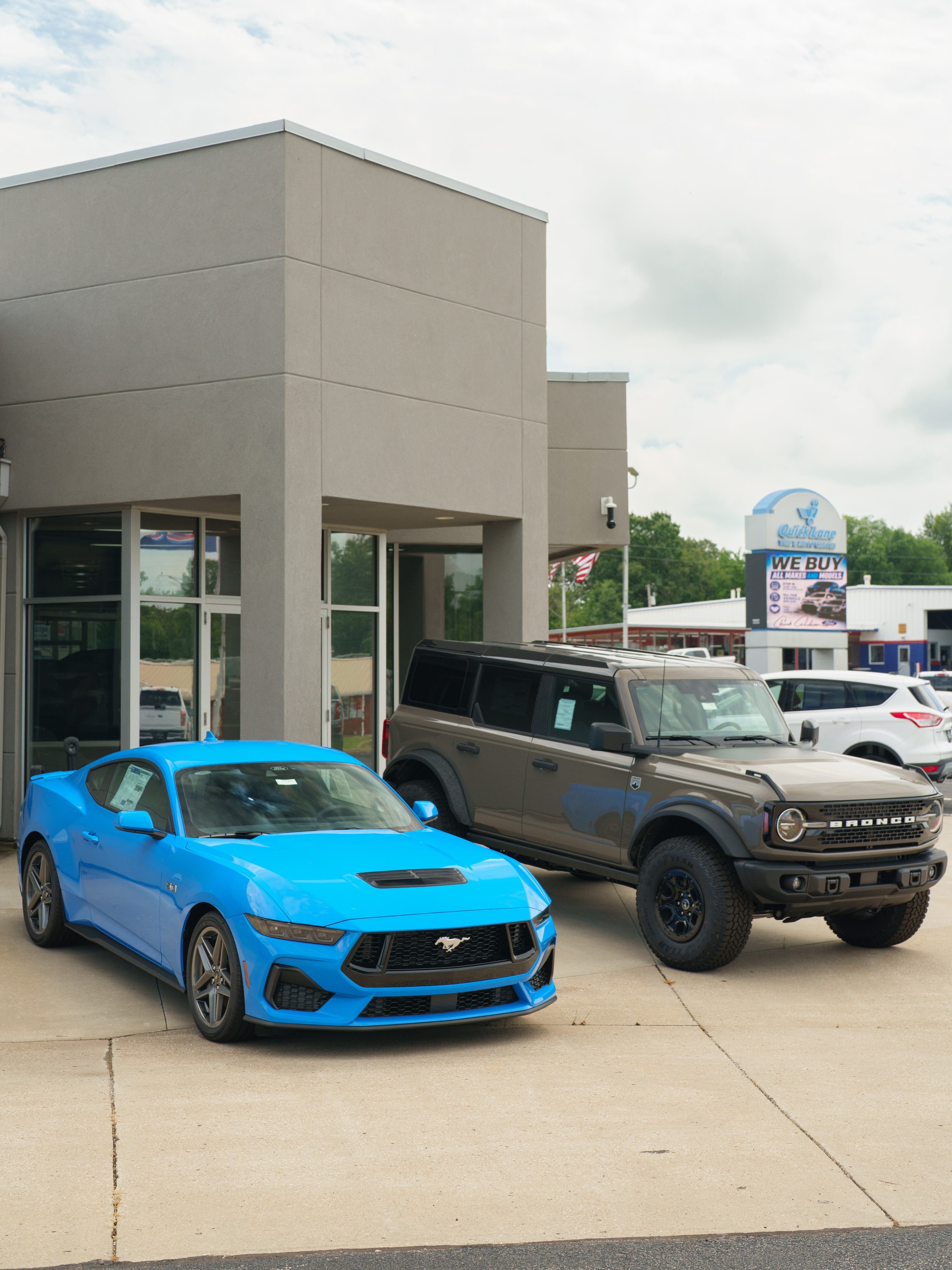
5.2L Supercharged Cross-Plane-Crank V8
795 Horsepower From Ford's Most Powerful Dark Horse
Ford rates the Dark Horse SC engine at 795 horsepower at 7,200 rpm.
Peak torque reaches 660 lb-ft at 4,600 rpm.
Those ratings are published using 93-octane fuel.
The 5.2L uses a cross-plane crankshaft, giving the engine a traditional high-performance V8 firing character.
Ford also identifies this 5.2L engine architecture as shared with the Mustang GTD supercar.
Dark Horse SC Engine Specs
- 5.2L supercharged V8
- Cross-plane crankshaft
- 795 hp at 7,200 rpm
- 660 lb-ft at 4,600 rpm
- 93-octane published ratings
- Hand-assembled engine
- Rear-wheel drive
- 3.73 TORSEN differential
What Does a Supercharger Do?
More Air Allows the 5.2L V8 to Produce Dramatically More Power
An internal-combustion engine needs air and fuel to make power.
A supercharger compresses incoming air before it reaches the engine, allowing more oxygen to enter each cylinder.
With additional fuel, the engine can create a much larger combustion event than it could while relying only on atmospheric pressure.
That is how Dark Horse SC moves far beyond the naturally aspirated output of Mustang GT and standard Dark Horse.
660 LB-FT at 4,600 RPM
The Torque Increase Is Nearly as Important as the Horsepower
Standard Dark Horse produces 418 lb-ft of torque.
Dark Horse SC produces 660 lb-ft.
That additional torque changes the way the car accelerates and the amount of work required from the rear tires and differential.
Managing 660 lb-ft through two driven wheels requires considerably more than simply installing a stronger engine.
Hand-Assembled in Dearborn
Each Dark Horse SC Engine Is Built by a Single Technician
Ford states that each Dark Horse SC 5.2L V8 is meticulously assembled by hand.
A single technician at Ford's Dearborn Engine Plant is responsible for assembling each engine.
That places the Dark Horse SC powerplant much closer in philosophy to Ford's specialized high-performance engines than a conventional mass-production Mustang powertrain.
5.2L SC Identity
- Hand assembled
- One technician per engine
- Built at Dearborn Engine Plant
- Supercharged induction
- Cross-plane crankshaft
- Ford Racing-developed application
TREMEC 7-Speed Dual-Clutch Transmission
Ford Chose Shift Speed Over a Conventional Clutch Pedal
Dark Horse SC does not use the 6-speed manual found in standard Dark Horse.
It also does not use Mustang GT's conventional 10-speed automatic.
Ford pairs the supercharged 5.2L exclusively with a TREMEC 7-speed dual-clutch transmission.
A dual-clutch transmission can prepare the next gear before the current gear is released, allowing extremely rapid changes while helping maintain power delivery.
At 795 horsepower, Ford prioritized shift speed and performance consistency over a traditional manual experience.
Why a DCT?
- Rapid gear changes
- Consistent power delivery
- Performance-oriented calibration
- No conventional clutch pedal
- Matched specifically to the SC powertrain
Want a Manual Mustang?
The Dark Horse SC Is Not the Right Engine If a Clutch Pedal Is Mandatory
Buyers who want maximum mechanical involvement may actually prefer the standard Dark Horse despite its lower horsepower.
Dark Horse offers a TREMEC 6-speed manual with its naturally aspirated 500-horsepower 5.0L V8.
Dark Horse SC instead prioritizes maximum performance around the 7-speed DCT.
Neither approach is universally better. They are designed for different priorities.
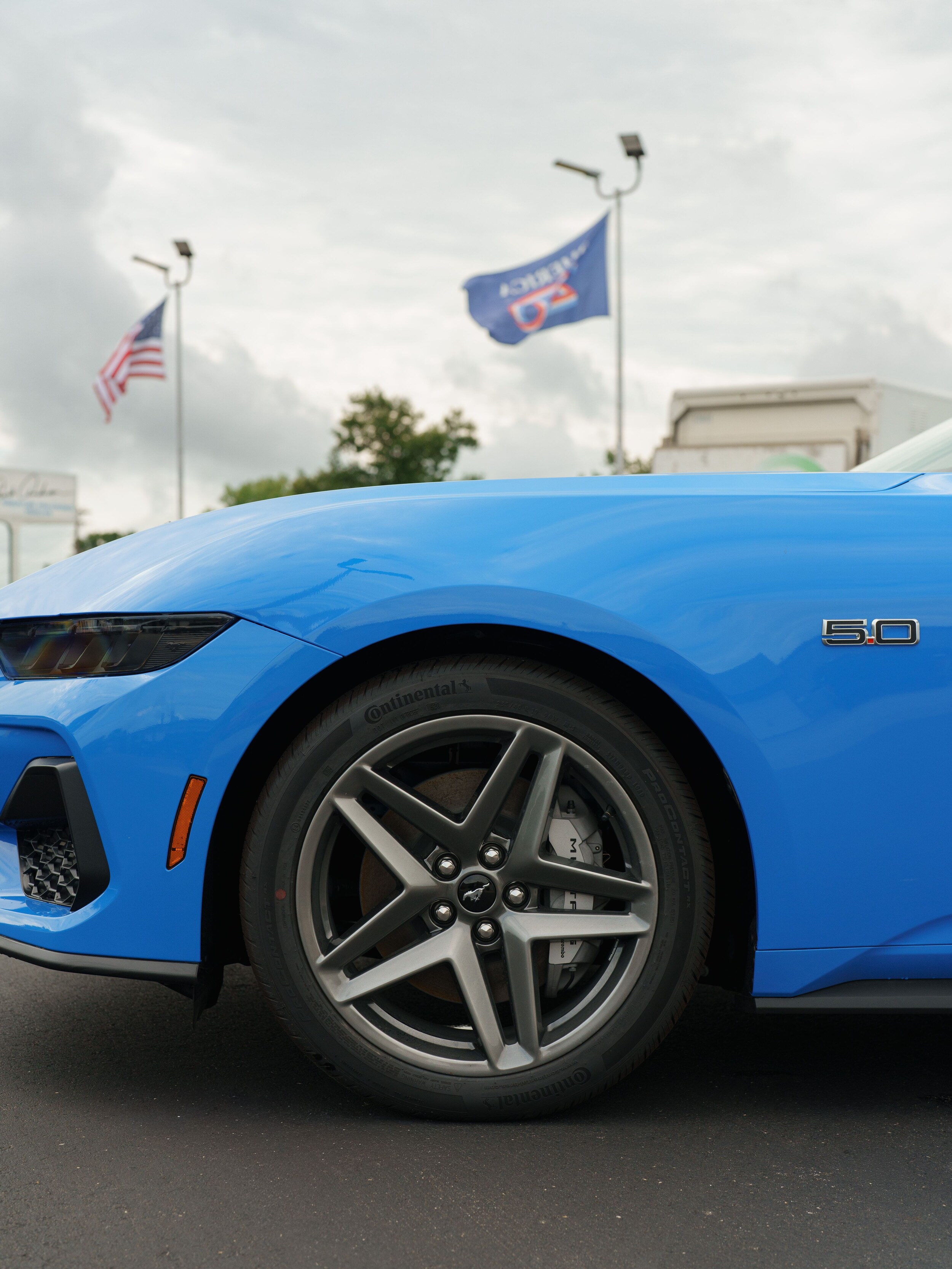
3.73 TORSEN Differential
Dark Horse SC Still Sends All 795 Horsepower to the Rear Wheels
Dark Horse SC remains a rear-wheel-drive Mustang.
Ford uses a 3.73 TORSEN differential to help manage the enormous amount of torque reaching the rear axle.
TORSEN hardware can distribute torque between the rear wheels based on available traction.
That becomes particularly important when accelerating out of a corner or asking the rear tires to put hundreds of pound-feet of torque onto the pavement.
Performance Cooling
Nearly 800 Horsepower Creates Heat Everywhere
Engine Cooling
The supercharged V8 requires substantial heat management during extended high-load operation.
Transmission Cooling
The 7-speed DCT also generates heat during repeated high-performance gear changes.
Differential Cooling
Managing 660 lb-ft through the rear differential creates another major thermal load.
Engine Airflow & Heat Extraction
The Hood Is Part of the Powertrain's Thermal Strategy
Dark Horse SC receives a unique aluminum hood with a prominent carbon-fiber vent.
The vent helps remove hot air from the engine compartment during demanding use.
Ford also developed the SC's aerodynamic and cooling systems together, because air entering and leaving the body affects both engine temperatures and high-speed stability.
On a supercharged 795-horsepower Mustang, airflow is a mechanical requirement, not merely a styling detail.
Carbon-Fiber Driveshaft
The Hardware Behind the Engine Matters Too
Current production Dark Horse SC equipment includes a composite carbon-fiber driveshaft.
The driveshaft transfers power from the transmission toward the rear differential.
Lightweight high-strength construction is particularly valuable in a drivetrain dealing with the output of a 795-horsepower supercharged V8.
It is another example of Ford engineering the drivetrain as a complete system rather than treating the engine as an isolated component.
Mustang V8 Comparison
GT 5.0L vs Dark Horse 5.0L vs Dark Horse SC 5.2L
| Specification | GT 5.0L V8 | Dark Horse Modified 5.0L | Dark Horse SC 5.2L |
|---|---|---|---|
| Displacement | 5.0L | 5.0L | 5.2L |
| Induction | Naturally aspirated | Naturally aspirated | Supercharged |
| Horsepower | 480 hp standard | 500 hp | 795 hp |
| Torque | 415 lb-ft standard | 418 lb-ft | 660 lb-ft |
| Manual Available | Yes | Yes | No |
| Primary Transmission | 6-speed manual or 10-speed automatic | TREMEC 6-speed manual or 10-speed automatic | TREMEC 7-speed DCT |
| Main Personality | Classic V8 street performance | Naturally aspirated track-focused performance | Extreme supercharged road-and-track performance |
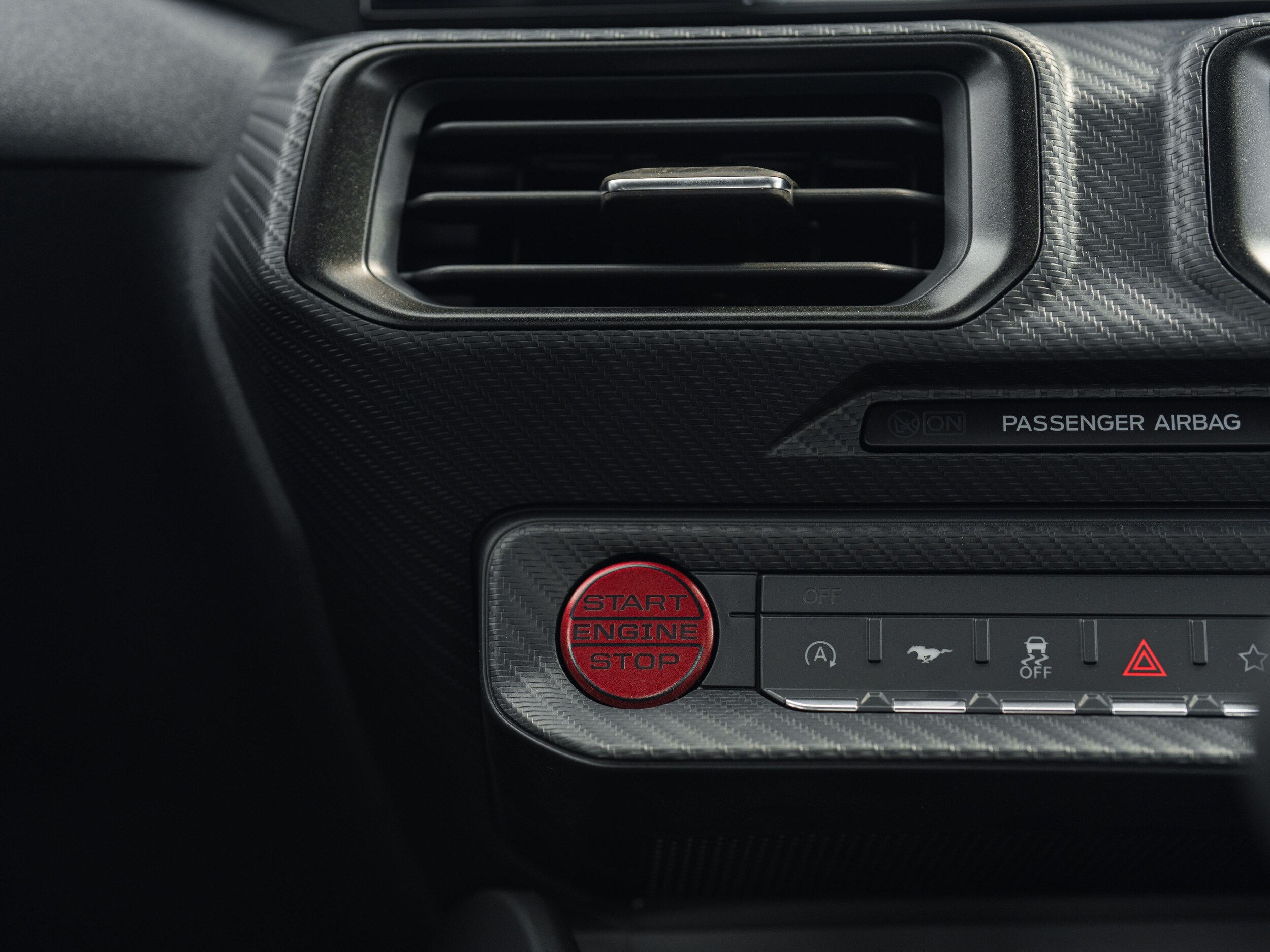
5.0L Dark Horse vs 5.2L Dark Horse SC
More Power Is Not the Only Difference
Standard Dark Horse provides 500 naturally aspirated horsepower, manual-transmission availability and strong driver involvement.
Dark Horse SC trades that manual-transmission option for a 7-speed DCT and adds almost 300 more horsepower.
The SC powertrain demands additional cooling, drivetrain strength, traction management and chassis capability.
If naturally aspirated response and manual shifting are the priority, standard Dark Horse may actually be the better fit.
If maximum output and performance capability are the priority, the 5.2L SC is in another league.
Available Dark Horse SC Track Pack
The Engine Stays at 795 HP. The Rest of the Car Gets More Serious.
Carbon-Ceramic Brakes
Brembo carbon-ceramic braking hardware helps manage repeated high-speed stops and reduce mass.
Carbon-Fiber Wheels
20-inch carbon-fiber wheels reduce rotating and unsprung mass.
Cup 2 R Tires
Michelin Pilot Sport Cup 2 R tires emphasize maximum dry performance and track grip.
Rear Seat Delete
Removing the rear seat cuts weight when lap-time performance matters more than passenger capacity.
About 150 Pounds Lighter
Once You Have 795 HP, Reducing Mass Becomes Extremely Valuable
Ford says the Track Pack's combination of carbon-fiber wheels, carbon-ceramic brakes and rear-seat deletion contributes to approximately 150 pounds of weight reduction.
Weight reduction improves more than acceleration.
It can also benefit braking, tire load, steering response and cornering performance.
Mustang GTD & GT3 Influence
Ford Racing Development Helped Shape the SC Powertrain
Ford developed Dark Horse SC alongside programs including Mustang GTD and Mustang GT3.
That allowed engineers to transfer lessons from racing and Ford's highest-performance Mustang programs into the production SC.
Ford specifically points to technology transfer involving areas such as powertrain, aerodynamics, suspension, braking and tires.
The supercharged 5.2L therefore sits inside a vehicle designed around far more than straight-line horsepower.
Buyer Fit
Who Should Consider the Supercharged 5.2L Dark Horse SC?
Maximum-Performance Buyers
Drivers who genuinely want nearly 800 horsepower, not simply the prestige of a larger number.
Track Enthusiasts
Buyers who can use the cooling, drivetrain and chassis capability engineered around the powertrain.
Supercharged V8 Fans
Drivers who specifically want the torque delivery, sound and acceleration associated with a supercharged V8.
Ford Performance Enthusiasts
Buyers attracted to the direct engineering connection with GTD and GT3 development.
Do You Actually Need 795 Horsepower?
The Most Powerful Engine Is Not Automatically the Best Mustang Engine for You
If most of your driving happens on ordinary public roads, a Mustang GT already delivers substantial performance.
If you want a manual transmission and naturally aspirated response, Dark Horse may provide a more involving experience.
The 5.2L SC makes the strongest argument when its supercharged output, DCT, cooling and track-oriented hardware are capabilities you genuinely value.
This engine is designed around maximum performance, not simply everyday transportation.
Continue Your Mustang Engine Research
Compare Every 2026 Mustang Powertrain
Research the Complete Vehicle
The 5.2L Engine Is Only One Part of the Dark Horse SC Story
Engine output tells you how much power Dark Horse SC makes.
The trim page explains how Ford builds the suspension, aerodynamics, brakes, tires and Track Pack around it.
If you are deciding whether Dark Horse SC is the right Mustang, research the complete car rather than evaluating the engine alone.
Frequently Asked Questions
2026 Mustang Dark Horse SC 5.2L V8 FAQs
What engine is in the 2026 Ford Mustang Dark Horse SC?
The 2026 Mustang Dark Horse SC uses a supercharged 5.2L cross-plane-crank V8.
How much horsepower does the Dark Horse SC 5.2L make?
Ford rates the supercharged 5.2L V8 at 795 horsepower at 7,200 rpm.
How much torque does the Dark Horse SC make?
The 5.2L V8 produces 660 lb-ft of torque at 4,600 rpm.
Is the Dark Horse SC engine supercharged?
Yes. Unlike the naturally aspirated Dark Horse 5.0L, Dark Horse SC uses a supercharged 5.2L V8.
Is the Dark Horse SC engine hand built?
Yes. Ford states that each Dark Horse SC engine is hand assembled by a single technician at the Dearborn Engine Plant.
What transmission is paired with the Dark Horse SC 5.2L V8?
Ford pairs the engine with a TREMEC 7-speed dual-clutch transmission.
Can you get the Dark Horse SC with a manual transmission?
No. The Dark Horse SC uses the 7-speed dual-clutch transmission. Buyers wanting a manual should compare standard Dark Horse.
What rear differential does the Dark Horse SC use?
Ford pairs the Dark Horse SC with a 3.73 TORSEN differential.
Is the Dark Horse SC rear-wheel drive?
Yes. Dark Horse SC sends its power to the rear wheels.
Does the Dark Horse SC have extra cooling?
Yes. Current Dark Horse SC equipment includes engine, transmission and differential cooling designed for demanding performance use.
What is the difference between the Dark Horse 5.0L and Dark Horse SC 5.2L?
Dark Horse uses a naturally aspirated 5.0L V8 producing 500 horsepower and offers a manual transmission. Dark Horse SC uses a supercharged 5.2L V8 producing 795 horsepower and a 7-speed DCT.
Does the Dark Horse SC engine share technology with Mustang GTD?
Ford identifies the 5.2L supercharged cross-plane-crank V8 architecture as shared with the Mustang GTD supercar, and Ford Racing developed Dark Horse SC alongside the GTD and GT3 programs.
What is the Dark Horse SC Track Pack?
The available Track Pack adds equipment including carbon-ceramic Brembo brakes, carbon-fiber wheels, Michelin Pilot Sport Cup 2 R tires and rear-seat deletion. Engine output remains 795 horsepower.
Which 2026 Mustang uses the supercharged 5.2L V8?
The supercharged 5.2L V8 powers the 2026 Mustang Dark Horse SC.
Where can I shop for a Dark Horse SC near Kansas City?
Chuck Anderson Ford in Excelsior Springs serves Mustang shoppers throughout the Kansas City Northland and surrounding Missouri communities.
Dark Horse SC Near Kansas City
This Engine Exists for Buyers Who Want Something Beyond a Conventional Mustang V8
500 naturally aspirated horsepower or 795 supercharged horsepower?
Manual transmission or 7-speed dual clutch?
Street-focused V8 performance or a Mustang built around extreme road-and-track capability?
Those questions matter more than simply choosing the highest number on a specification sheet.
Chuck Anderson Ford can help compare available Mustang configurations around the way you actually intend to use the car.
Chuck Anderson Ford
1910 W Jesse James Road
Excelsior Springs, MO 64024
Sales: 816-648-6419
Serving Mustang shoppers throughout Excelsior Springs, Kearney, Liberty, Lawson, Smithville and the Kansas City Northland.
2026 Mustang Dark Horse SC Supercharged 5.2L V8
795 Horsepower. 660 LB-FT. Hand-Built. Supercharged.
The 2026 Mustang Dark Horse SC supercharged 5.2L V8 produces 795 horsepower and 660 lb-ft of torque, sends that output through a TREMEC 7-speed dual-clutch transmission and uses a 3.73 TORSEN differential to help deliver power to the rear wheels. Ford surrounds the engine with dedicated cooling, specialized airflow management and Ford Racing-developed hardware. It is not simply the most powerful engine in the 2026 Mustang research cluster. It is the powertrain around which one of Ford's most serious modern performance Mustangs is built.
2026 Ford Mustang Dark Horse SC specifications, horsepower, torque, transmission, drivetrain, cooling equipment, packages, wheels, tires, pricing and vehicle availability are subject to change. Ford currently rates the supercharged 5.2L cross-plane-crank V8 at 795 horsepower at 7,200 rpm and 660 lb-ft of torque at 4,600 rpm using 93-octane fuel. The engine is paired with a TREMEC 7-speed dual-clutch transmission and 3.73 TORSEN differential. Track Pack equipment is optional and may materially affect ride quality, tire behavior, passenger capacity and suitability for ordinary road use. Always verify current specifications and equipment for the exact vehicle before purchase.