
Chuck Anderson Ford | Ford Purchasing Research
Should I Finance for 60 Months or 72 Months?
Five years or six years? Choosing between a 60-month and 72-month auto loan can affect much more than your monthly payment. Compare the actual interest costs, future trade equity, repayment flexibility and long-term ownership considerations before deciding how to finance your next Ford.
60 Months
Five-year repayment period
72 Months
Six-year repayment period
12 Months
Difference in scheduled loan length
Total Cost
Compare more than monthly payments
The Short Answer
Is It Better to Finance a Vehicle for 60 or 72 Months?
A 60-month auto loan is generally the better choice if you can comfortably afford the monthly payment and both loans carry the same positive interest rate. It allows you to pay off your vehicle one year sooner, spend less on interest and build vehicle equity more quickly. A 72-month loan may be appropriate when maintaining monthly cash-flow flexibility is important or when a more favorable financing program makes the longer loan financially competitive.
Neither financing term is automatically right for every customer. The best choice depends on the amount financed, approved APR, available incentives, trade equity, cash reserves and anticipated ownership period.
At Chuck Anderson Ford in Excelsior Springs, Missouri, we believe the right financing arrangement should make sense beyond the day you purchase your vehicle.
As explained on our Excelsior Springs automotive financing page , our finance department evaluates the complete transaction instead of focusing exclusively on the monthly payment.
Start with 60 months. Compare 72 months.
Then decide whether the additional monthly
flexibility justifies the difference in cost.
Five Years vs. Six Years
60-Month vs. 72-Month Auto Loan Comparison
Shorter Repayment
60 Months
Five-Year Auto Financing
Generally better suited to customers who prioritize reducing borrowing costs and eliminating vehicle debt sooner.
- Faster principal repayment.
- Lower total interest at the same positive rate.
- Greater potential trade equity.
- One fewer year of required loan payments.
Primary disadvantage: A higher required monthly payment.
Monthly Flexibility
72 Months
Six-Year Auto Financing
May be appropriate for customers who prioritize monthly cash flow while planning to keep their vehicle long term.
- Lower required monthly payment.
- Potentially greater household cash-flow flexibility.
- May allow greater retention of cash reserves.
- May qualify for specific financing incentives.
Primary disadvantage: Slower scheduled repayment and generally more interest at the same positive rate.
| Comparison Factor | 60-Month Loan | 72-Month Loan |
|---|---|---|
| Scheduled Repayment Period | 5 years | 6 years |
| Required Monthly Payment | Higher at the same rate | Lower at the same rate |
| Total Interest Expense | Generally lower | Generally higher |
| Principal Repayment | Faster | Slower |
| Future Trade Equity | Generally stronger | Generally lower |
| Negative Equity Risk | Generally lower | Generally higher |
| Monthly Budget Flexibility | Less flexibility | More flexibility |
| Payment-Free Ownership | Begins after scheduled year 5 | Begins after scheduled year 6 |
| Lease-Style Mileage Restrictions | None | None |
| Early Payoff | Subject to contract terms | Subject to contract terms |
General comparison assuming identical initial loan amounts, positive interest rates and scheduled monthly payments. Actual financing arrangements and vehicle depreciation may differ.
Compare the Actual Numbers
How Much Does a 72-Month Loan Lower Your Monthly Payment Compared With 60 Months?
Consider a hypothetical Ford purchase with $40,000 financed at a fixed annual interest rate of 6.00%.
By keeping the interest rate and amount financed identical, we can isolate the financial effect of extending the loan from five years to six years.
60-Month Financing
$773.31
Illustrative monthly payment
Amount financed: $40,000
Annual interest rate: 6.00%
Total interest: $6,398.72
Total loan payments: $46,398.72
72-Month Financing
$662.92
Illustrative monthly payment
Amount financed: $40,000
Annual interest rate: 6.00%
Total interest: $7,729.92
Total loan payments: $47,729.92
Monthly Payment Difference
$110.39
Less Per Month
The six-year loan provides approximately $110 in additional monthly flexibility.
Additional Interest
$1,331.20
More Borrowing Expense
The additional repayment year increases total interest when the loan is carried to its scheduled maturity.
Repayment Period
1 Year
Longer in Debt
The borrower continues making required payments throughout the sixth year.
Hypothetical mathematical examples using standard monthly amortization. Assumes no additional finance charges, taxes, fees, insurance or optional products. The example rate is not an advertised financing offer. Figures are rounded independently.
Monthly Payment Comparison
Total Interest Comparison
A 72-month loan lowers the required monthly
payment, but it does not necessarily lower
the cost of purchasing the vehicle.
In this example, choosing 60 months saves approximately $1,331 in total interest. Choosing 72 months provides approximately $110 in monthly payment flexibility.
Compare Financing Across Different Vehicle Budgets
60 vs. 72-Month Monthly Payments by Amount Financed
The difference between five-year and six-year financing becomes larger as the amount borrowed increases.
A customer financing a compact Ford Maverick may experience a different payment difference than someone purchasing a Ford Expedition or Super Duty.
| Amount Financed | 60-Month Payment | 72-Month Payment | Monthly Reduction | Additional Interest at 72 Months |
|---|---|---|---|---|
| $25,000 | $483.32 | $414.32 | $69.00 | $832.00 |
| $35,000 | $676.65 | $580.05 | $96.60 | $1,164.80 |
| $40,000 | $773.31 | $662.92 | $110.39 | $1,331.20 |
| $50,000 | $966.64 | $828.64 | $138.00 | $1,664.00 |
| $60,000 | $1,159.97 | $994.37 | $165.60 | $1,996.79 |
Illustrative loan calculations only. These amounts are not specific vehicle prices or available financing offers. Actual rates, loan amounts and approved financing terms vary. Figures are rounded independently.
The more you borrow, the more important
the relationship between interest rate
and repayment length becomes.
Customers financing higher-value trucks and SUVs should pay particular attention to the difference in total interest rather than considering the monthly payment alone.
Loan Term and Interest Rate Work Together
How Does Your Interest Rate Affect the Choice Between 60 and 72 Months?
A higher interest rate generally increases the financial advantage of paying off your vehicle sooner.
At lower rates, the additional interest associated with extending the loan may be less significant. At higher rates, the additional borrowing expense becomes more important.
| Interest Rate | 60-Month Payment | 72-Month Payment | 60-Month Interest | 72-Month Interest |
|---|---|---|---|---|
| 0.00% | $666.67 | $555.56 | $0.00 | $0.00 |
| 4.00% | $736.66 | $625.81 | $4,199.65 | $5,058.13 |
| 5.00% | $754.85 | $644.20 | $5,290.96 | $6,382.21 |
| 6.00% | $773.31 | $662.92 | $6,398.72 | $7,729.92 |
| 8.00% | $811.06 | $701.33 | $8,663.35 | $10,495.73 |
| 10.00% | $849.88 | $741.03 | $10,992.91 | $13,354.41 |
Hypothetical mathematical comparisons. These rates do not represent current Ford Credit offers, lender quotes or rates associated with particular credit scores. Assumes no additional finance charges.
Do 60-Month Auto Loans Have Lower Interest Rates?
Sometimes. Lenders may offer different rates for different repayment periods. Shorter loans may qualify for more favorable rates through certain lender programs.
However, manufacturer-sponsored financing can create situations where a longer term carries an equal or even lower rate.
Request actual approved financing terms for both repayment periods rather than assuming the same rate is available for each.
Learn more about financing qualifications in our guide: What Credit Score Do You Need to Finance a New Ford?
When a Longer Loan Can Actually Cost Less
How Much Lower Does a 72-Month Interest Rate Need to Be to Beat a 60-Month Loan?
A common assumption is that a five-year loan always costs less than a six-year loan. That is only necessarily true when the amount financed and positive interest rate are identical.
If the longer loan carries a sufficiently lower interest rate, it can produce approximately the same or even lower total interest expense.
Five-Year Benchmark
6.00%
60-Month Loan
Amount financed: $40,000
Monthly payment: $773.31
Total interest: $6,398.72
Approximate Break-Even Rate
5.01%
72-Month Loan
A six-year interest rate of approximately 5.01% produces nearly the same total interest as a five-year loan at 6%.
Lower Total Interest
4.00%
72-Month Loan
Amount financed: $40,000
Monthly payment: $625.81
Total interest: $5,058.13
Hypothetical break-even calculation assuming the same initial loan amount, standard monthly amortization, repayment through scheduled maturity and no additional finance charges. The exact break-even rate varies with the shorter loan's interest rate and contract terms.
| Alternative Financing | Total Interest | Difference From 60-Month Benchmark |
|---|---|---|
| 72 Months at 6.00% | $7,729.92 | $1,331.20 more |
| 72 Months at 5.00% | $6,382.21 | $16.51 less |
| 72 Months at 4.00% | $5,058.13 | $1,340.59 less |
These comparisons are educational examples, not actual approved financing offers. They do not account for differences in incentives, upfront fees or early payoff timing.
The shorter loan is not always the
less expensive loan when rates differ.
This is one reason Chuck Anderson Ford compares the actual available lender programs rather than automatically recommending one financing term.
Manufacturer Promotional Financing
Should I Finance for 60 or 72 Months if Ford Offers 0% APR?
If both loan terms are available at a genuine 0% APR without additional finance charges, and the amount financed is identical, neither loan produces additional interest expense.
| Financing Component | 60 Months | 72 Months |
|---|---|---|
| Amount Financed | $40,000 | $40,000 |
| Monthly Payment | $666.67 | $555.56 |
| Total Interest | $0 | $0 |
| Total Scheduled Payments | $40,000 | $40,000 |
| Remaining Principal After 36 Payments | $16,000 | $20,000 |
Hypothetical mathematical example. Does not represent an available Ford promotional offer. Assumes no fees or additional finance charges.
In this situation, the six-year loan provides approximately $111 in additional monthly flexibility without increasing total scheduled borrowing expense.
The five-year loan still reduces principal more quickly, leaving a lower outstanding balance if you decide to trade or sell the vehicle before the loan is paid off.
What If Ford Offers a Rebate Instead of 0% Financing?
Certain Ford incentives may require buyers to choose between a promotional interest rate and alternative customer cash.
A larger rebate may reduce the amount financed enough to make a conventional interest-bearing loan the less expensive overall purchasing arrangement.
Compare the complete cost of acquiring
the vehicle, not just the interest rate.
A 0% financing offer is attractive, but its financial value depends on what other incentives may be available and whether accepting the promotional rate changes the purchase price.
Think About Your Next Vehicle Purchase Too
Which Loan Builds Trade-In Equity Faster: 60 or 72 Months?
A 60-month loan generally builds vehicle equity more quickly than a 72-month loan when both loans begin with the same principal and interest rate.
The higher monthly payment reduces the outstanding principal more quickly. If both borrowers own vehicles with the same market value, the borrower with the smaller payoff will have more equity.
Vehicle Equity Formula
Current Vehicle Value − Loan Payoff = Net Vehicle Equity
How Much Will You Still Owe After Three Years?
60-Month Loan
$17,448.14
Remaining Principal
After 36 scheduled monthly payments on a hypothetical $40,000 loan at 6.00% annual interest.
72-Month Loan
$21,790.71
Remaining Principal
After 36 scheduled monthly payments on the same hypothetical amount financed and interest rate.
The five-year borrower owes approximately
$4,343 less after three years.
This difference reflects faster principal repayment resulting from higher scheduled monthly payments. It does not represent $4,343 in interest savings.
| Assumed Trade Value | 60-Month Loan Equity | 72-Month Loan Equity |
|---|---|---|
| $30,000 | +$12,551.86 | +$8,209.29 |
| $26,000 | +$8,551.86 | +$4,209.29 |
| $22,000 | +$4,551.86 | +$209.29 |
| $20,000 | +$2,551.86 | −$1,790.71 |
| $18,000 | +$551.86 | −$3,790.71 |
Hypothetical loan amortization and vehicle valuation scenarios. Assumed vehicle values are not depreciation forecasts or actual Ford trade-in values. Actual lender payoff quotes may differ from principal balances.
Why Does This Matter if You Trade Vehicles Frequently?
If you intend to replace your vehicle every two or three years, the amount you still owe at the time of trade-in can have a significant impact on your next purchase.
A smaller outstanding balance can provide more positive equity toward another vehicle or reduce the amount of negative equity that must be addressed.
How Is Trade-In Value Calculated? →
Understand Chuck Anderson Ford's vehicle appraisal methodology.
What Happens If I Owe More Than My Trade Is Worth? →
Learn how negative equity affects your next purchase.
When Is the Best Time to Trade In a Vehicle? →
Evaluate loan payoff, mileage, depreciation and ownership timing.
The Same Payment Can Buy Different Vehicles
Should I Choose a Less Expensive Vehicle Instead of a Longer Loan?
Extending your financing term is not the only way to lower your monthly payment.
Choosing a different Ford model, trim level or equipment package can reduce the amount financed while preserving the benefits of a shorter repayment period.
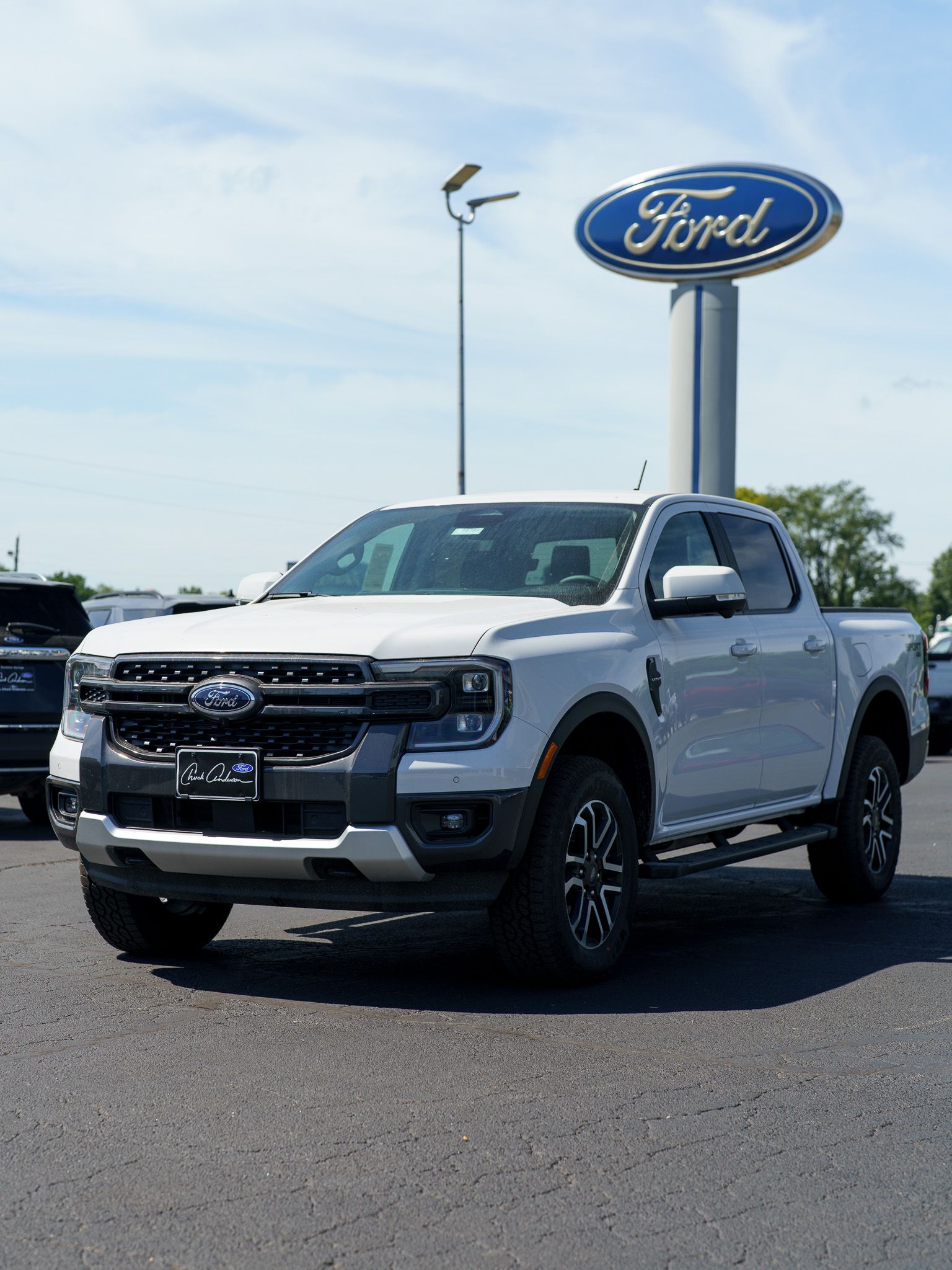
For some customers, a Ford Ranger or Maverick may provide all the pickup capability they need without requiring the purchase of a larger or more expensive truck.
Explore Ford Ranger Research →How Much Less Would You Need to Borrow to Keep the Same Payment?
Using our hypothetical $40,000 loan at 6.00%, a six-year loan produces a monthly payment of approximately $663.
To achieve approximately that same payment with a five-year loan at the same rate, the amount financed would need to be approximately $34,290.
72-Month Loan
$40,000
Approximate monthly payment: $663
60-Month Loan
$34,290
Approximate monthly payment: $663
Difference in Amount Financed
$5,710
Approximate reduction needed to achieve the same payment over five years instead of six.
Hypothetical calculation assuming a fixed 6.00% annual interest rate, standard monthly amortization and no additional finance charges.
Four Ways to Reduce the Amount You Need to Finance
1
Choose a Different Vehicle
Compare vehicles that provide the capability, comfort and features you actually need.
Explore New Ford Inventory →2
Compare Trim Levels
A lower trim or different equipment package may provide the functionality you need at a more affordable price.
Compare Ford Models and Trims →3
Apply Positive Trade Equity
Equity in your existing vehicle may reduce the amount you need to finance toward your next Ford.
Find Out What My Trade Is Worth →4
Evaluate Available Ford Incentives
Eligible purchase incentives may reduce the overall purchase balance or improve your financing structure.
Explore Ford Program Offers →Reduce the Amount Borrowed Without Extending the Loan
Should I Put More Money Down and Finance for 60 Months?
A larger down payment can help you achieve a lower monthly payment without adding another year to the financing contract.
However, the appropriate down payment depends on your available savings, trade equity, approved financing terms and other financial obligations.
| Transaction Component | 72 Months | 60 Months With Additional Cash Down |
|---|---|---|
| Starting Purchase Balance | $40,000 | $40,000 |
| Additional Cash Down | $0 | $5,000 |
| Amount Financed | $40,000 | $35,000 |
| Monthly Payment | $662.92 | $676.65 |
| Total Interest | $7,729.92 | $5,598.88 |
| Total Loan Payments | $47,729.92 | $40,598.88 |
| Loan Payments Plus Cash Down | $47,729.92 | $45,598.88 |
Hypothetical educational example excluding taxes, fees, insurance, optional products and the potential opportunity cost of using cash. Does not represent an available financing offer.
In this example, contributing an additional $5,000 upfront allows the customer to finance for five years with a monthly payment only approximately $14 higher than the six-year option.
Total interest expense is reduced by approximately $2,131.
Do not exhaust your emergency savings
simply to qualify for a shorter loan.
Consider your available cash reserves and other financial responsibilities before deciding how much additional money to put toward the purchase.
Combine Monthly Flexibility With Faster Repayment
Should I Finance for 72 Months but Make 60-Month Payments?
Some customers choose a six-year contractual loan while voluntarily making payments equivalent to a five-year financing arrangement.
This can provide a lower required monthly payment while allowing the borrower to repay the vehicle more quickly when their budget permits.
Required Payment
$662.92
72-Month Loan
Based on a hypothetical $40,000 loan at 6.00% annual interest.
Voluntary Extra Payment
+$110.39
Additional Principal
Additional money applied toward the outstanding loan principal.
Combined Monthly Amount
$773.31
Five-Year Payment Equivalent
Approximately the same payment as a 60-month loan at the same rate.
Hypothetical comparison. Assumes identical initial principal, interest rates, payment timing and effective payment application. Actual financing contracts and interest calculation methods may differ.
If the borrower consistently makes the additional payments and both loans have identical effective rates and repayment conditions, the longer contractual loan may be paid off on approximately the same schedule as the shorter loan.
When Does This Strategy Make Sense?
- Both loan terms carry the same or comparably favorable interest rates.
- The contract permits early repayment without an applicable penalty.
- The lender applies additional payments appropriately toward principal.
- The borrower has the discipline to make additional payments consistently.
- The lower required payment provides meaningful financial flexibility.
When Is the Strategy Less Effective?
- The 72-month loan carries a meaningfully higher interest rate.
- Additional payments are made only occasionally.
- The lender applies extra payments differently than expected.
- The contract includes relevant prepayment charges or restrictions.
- The borrower uses the lower required payment to take on unnecessary debt.
The flexibility of a longer loan is only
beneficial if the underlying financing
arrangement is competitive.
Do not assume a 72-month loan will cost the same as a 60-month loan simply because you intend to pay it off early. Compare the actual rates, contract terms and payment procedures.
Ford Credit customers can review available principal-payment and payoff procedures through Ford Credit customer support . Additional principal-only payments generally do not replace required scheduled payments.
What Happens During the Sixth Year?
What Is the Financial Benefit of Paying Off Your Ford One Year Earlier?
A five-year loan allows you to reach payment-free ownership one year earlier than a six-year loan, assuming both contracts are repaid as scheduled.
60-Month Loan
Year 1
Year 2
Year 3
Year 4
Year 5
Paid Off
72-Month Loan
Year 1
Year 2
Year 3
Year 4
Year 5
Year 6
Illustrative scheduled repayment timeline. Assumes all financing obligations are satisfied without refinancing or extensions.
Could You Save Your Former Vehicle Payment?
After paying off a vehicle, some owners choose to continue setting aside the money previously allocated to their monthly payment.
Using our earlier $40,000 financing example, setting aside the former five-year payment of approximately $773.31 each month for twelve months would produce approximately $9,280 in savings contributions.
Former Monthly Payment
$773.31
Amount potentially available each month after scheduled loan payoff.
Twelve Monthly Contributions
$9,279.72
Potential savings contributions if the former payment is set aside every month for one year.
Savings illustration only. Does not include interest earned, withdrawals or vehicle operating expenses. The shorter loan requires higher payments during the first five years. The savings contributions are not equivalent to the net financial advantage of the shorter loan.
These funds could potentially contribute toward a future vehicle purchase, emergency savings or other household financial goals.
Choose Financing Around Your Ownership Habits
Does How Long You Keep Your Vehicle Affect Whether 60 or 72 Months Is Better?
Yes. Your expected vehicle ownership period should be a significant part of your financing decision.
A customer purchasing a Ford Explorer to keep for ten years has different needs than someone who replaces their vehicle every three years.
Frequent vehicle replacement makes principal repayment and future trade equity especially important. Long-term ownership may make the monthly flexibility of a six-year loan easier to justify.
Explore Ford Explorer Research →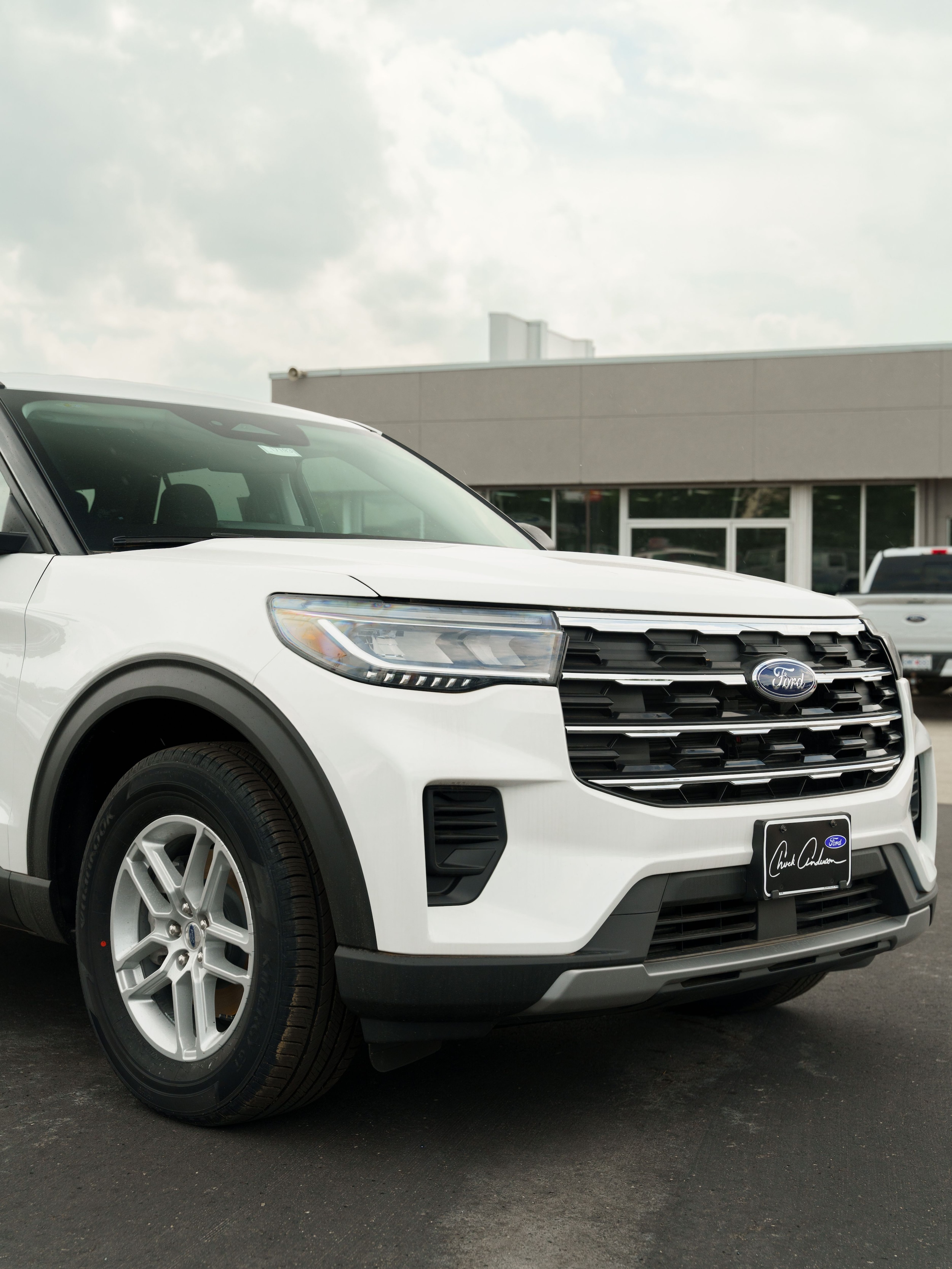
| Expected Ownership Period | Financing Consideration |
|---|---|
| 2–3 Years | Compare shorter financing or leasing. Six-year financing may leave a substantial payoff when you replace the vehicle. |
| 4–5 Years | Consider 60 months if you want the vehicle paid off near your anticipated replacement date. |
| 6–7 Years | Both terms may fit your ownership plans. Compare actual interest costs and available equity. |
| 8–10+ Years | Both terms can allow several years of payment-free ownership. A shorter term begins that period sooner. |
Should Frequent Vehicle Buyers Consider Leasing Instead?
Customers who regularly replace their vehicles may want to compare a shorter lease arrangement with traditional five-year or six-year purchase financing.
Leasing introduces mileage allowances, vehicle condition requirements and applicable lease-end obligations, so the complete ownership comparison remains important.
Read our complete guide: Should I Buy or Lease a Ford?
Consider Your Vehicle's Age at Scheduled Payoff
How Do Warranty Coverage and Mileage Affect the 60 vs. 72-Month Decision?
Ford's standard new-vehicle limited warranty generally includes three years or 36,000 miles of bumper-to-bumper coverage and five years or 60,000 miles of powertrain coverage, whichever comes first for each coverage period.
Certain Ford vehicles and components may have different or additional warranty provisions. Financing length does not extend factory warranty coverage.
| Annual Mileage | 60-Month Payoff | 72-Month Payoff |
|---|---|---|
| 10,000 Miles | 50,000 miles | 60,000 miles |
| 12,000 Miles | 60,000 miles | 72,000 miles |
| 15,000 Miles | 75,000 miles | 90,000 miles |
| 20,000 Miles | 100,000 miles | 120,000 miles |
| 25,000 Miles | 125,000 miles | 150,000 miles |
Illustrative mileage calculations excluding mileage already on the vehicle at purchase. Neither financing term imposes a lease-style annual mileage allowance.
A Missouri commuter driving 20,000 miles annually may accumulate approximately 20,000 additional miles during the sixth year of a six-year auto loan.
A reliable vehicle can continue serving its owner well beyond these mileage figures. Nevertheless, the borrower should account for maintenance, repairs, tires and other ownership expenses while continuing to make required loan payments.
Choose a financing term that leaves
room in your budget to properly
maintain the vehicle.
Our Ford service department and finance department can help explain maintenance considerations and available optional vehicle protection products.
Understanding Financial Protection
Does a 72-Month Loan Make GAP Protection More Important?
A longer financing term can increase the length of time during which your outstanding loan balance exceeds the vehicle's current market value.
If the vehicle is declared a covered total loss, the primary insurance settlement may be less than the remaining loan payoff.
GAP protection may help address certain eligible deficiencies under the applicable agreement, subject to its exclusions, coverage limits and other requirements.
60-Month Financing
Faster principal repayment may reduce the period during which the vehicle is worth less than its outstanding financing balance.
72-Month Financing
Slower principal repayment may make GAP protection worth evaluating, especially when financing with limited cash down or existing negative equity.
GAP protection is optional and may be relevant to either financing term. Its potential value depends on the loan balance, vehicle value, available cash reserves and the specific agreement.
It does not eliminate ordinary negative equity when trading or selling your vehicle.
Financing New and Pre-Owned Vehicles
Should You Choose 60 or 72 Months When Buying a Used Vehicle?
The same financial principles apply to new and used vehicle financing. However, used vehicle age, existing mileage, warranty coverage and available financing rates can make loan length particularly important.
New Vehicle Financing
- Available manufacturer financing incentives may improve borrowing costs.
- Factory warranty coverage may initially reduce certain repair risks.
- Early ownership depreciation can influence trade equity.
- Both 60- and 72-month terms may be available.
Used Vehicle Financing
- Vehicle age and mileage may affect available lender terms.
- Remaining warranty coverage may be more limited.
- Used vehicle financing rates may differ from new vehicle rates.
- A lower purchase price may make shorter financing more affordable.
A five-year-old used vehicle financed
for six years will be approximately
eleven years old at scheduled payoff.
That does not automatically make the purchase a bad decision. It does make the vehicle's condition, reliability, expected maintenance and financing cost particularly important.
Available Manufacturer and Alternative Lender Programs
Does Ford Credit Offer Both 60- and 72-Month Financing?
Yes. Ford Credit publishes standard purchase financing terms ranging from 12 to 84 months for eligible vehicles and customers.
Both 60- and 72-month repayment periods fall within this published range, subject to credit approval, vehicle eligibility and applicable program requirements.
Ford Credit is one potential financing source available through Chuck Anderson Ford. Our finance department also works with other participating financial institutions.
Ford Credit
Manufacturer-backed financing and eligible Ford promotional purchase programs.
Banks and Credit Unions
Alternative financing sources that may offer competitive rates, terms and underwriting options.
Your Own Financial Institution
Bring your existing bank or credit union preapproval and give our team an opportunity to compare it with other available approved options.
For more information about available manufacturer financing programs, visit Ford Credit's official financing options page .
Compare additional repayment periods through our guide: How Long Can You Finance a New Ford Vehicle?
Different Buyers Have Different Priorities
Which Financing Term Makes Sense in These Common Purchasing Scenarios?
Scenario 1
You Can Comfortably Afford Both Payments
If the rates and amount financed are identical, choosing five years generally reduces total interest and eliminates vehicle debt sooner.
Start with: 60 months.
Scenario 2
You Want More Monthly Financial Flexibility
A six-year loan may provide more room for household expenses and savings, provided the underlying vehicle purchase remains affordable.
Compare: 72 months.
Scenario 3
You Trade Vehicles Every Three Years
Faster principal repayment can help improve the equity position available at your anticipated replacement date.
Compare: 60 months or leasing.
Scenario 4
You Qualify for a Better Rate at 72 Months
The longer loan may produce lower total borrowing expense if the rate difference is sufficiently favorable.
Compare: Total loan payments.
Scenario 5
You Are Financing Existing Negative Equity
A larger initial loan balance increases potential financial exposure. Faster repayment may help, but affordability must also be considered.
Start with: Reducing the amount financed.
Scenario 6
You Plan to Keep Your Ford for Ten Years
Both financing terms may fit a long-term ownership strategy. Compare approved rates, emergency savings and maintenance needs.
Compare: Both loan terms.
Your Financing Decision Checklist
How to Decide Between 60-Month and 72-Month Financing
60 Months May Be Better If:
- You can comfortably afford the higher monthly payment.
- Both terms carry the same positive interest rate.
- You want to minimize total borrowing costs.
- You want to build positive equity faster.
- You expect to replace your vehicle before six years.
- You want to reach payment-free ownership sooner.
- You already have sufficient emergency savings.
72 Months May Be Better If:
- The lower required payment provides meaningful financial flexibility.
- You qualify for a particularly favorable six-year rate.
- You intend to keep your vehicle well beyond the financing term.
- You want to preserve appropriate cash reserves.
- You have meaningful positive trade equity.
- Your contract allows additional principal payments when appropriate.
- The vehicle fits your overall transportation budget.
If the only way you can afford a vehicle
is by extending the loan, consider whether
a different vehicle would be a better fit.
Remember that a vehicle's monthly payment does not include every expense associated with owning and operating it.
Seven Questions to Ask Before Choosing Your Financing Term
- What is the actual difference between my approved 60-month and 72-month APRs?
- How much additional interest would I pay by extending the loan?
- How much monthly flexibility would the six-year option provide?
- How long do I realistically expect to keep this vehicle?
- How much positive or negative equity might I have when I trade?
- Can I comfortably afford insurance, maintenance and other operating expenses in addition to the payment?
- Would a different vehicle, down payment or eligible Ford incentive improve the overall transaction?
The Chuck Anderson Ford Perspective
Our Recommendation: Compare Both Loan Terms Before You Decide
At Chuck Anderson Ford, we believe the shortest affordable financing term is generally a useful starting point when comparing otherwise identical loans.
However, we also recognize that interest rates, manufacturer incentives, household budgets and long-term ownership plans can change the financial comparison.
1
Establish the Purchase Balance
Determine the actual vehicle selling price, eligible incentives, trade equity and cash down.
2
Compare Approved Financing
Review the actual APR, required payments and total repayment amounts for both loan terms.
3
Choose the Right Structure
Select the financing arrangement that balances overall cost with your ownership plans and financial flexibility.
If 60 months comfortably fits your budget and costs less overall, it is generally the stronger starting point. If 72 months offers meaningful financial flexibility or better approved terms, it deserves consideration.
Our goal is not to convince every customer to finance for the same number of months. It is to help customers understand the numbers and make an informed purchasing decision.
Five-Year vs. Six-Year Auto Loan FAQs
Frequently Asked Questions About 60- and 72-Month Financing
Should I finance for 60 months or 72 months?
A 60-month loan is generally preferable when you can comfortably afford the payment and both loans carry the same positive interest rate. A 72-month loan may provide valuable monthly flexibility or more competitive financing terms in certain circumstances.
How much cheaper is a 60-month loan than a 72-month loan?
The savings depend on the amount financed and interest rate. For example, a hypothetical $40,000 loan at 6% annual interest produces approximately $1,331 less total interest over 60 months than over 72 months.
How much lower is the monthly payment on a 72-month loan?
The difference depends on the amount financed and interest rate. A hypothetical $40,000 loan at 6% annual interest produces payments of approximately $773 for 60 months and $663 for 72 months, a difference of about $110.
Do 60-month auto loans have lower interest rates?
They may. Lenders and manufacturer programs can offer different interest rates for different repayment periods. Compare the actual approved financing terms before deciding.
Can a 72-month auto loan cost less than a 60-month loan?
Yes. A longer loan can produce lower total interest if its interest rate is sufficiently lower than the shorter loan's rate. Differences in incentives and amounts financed can also affect overall purchasing cost.
Should I finance for 60 or 72 months at 0% APR?
With identical amounts financed and a genuine 0% APR without additional finance charges, neither term creates interest expense. The longer loan offers a lower required payment, while the shorter loan repays principal more quickly.
Which loan builds vehicle equity faster?
A 60-month loan generally builds vehicle equity faster than a 72-month loan when both carry the same interest rate and begin with the same amount financed.
Can I finance for 72 months and pay the loan off in 60 months?
Potentially, yes. Additional principal payments may shorten the actual repayment period. Review the contract's prepayment provisions and the lender's payment application procedures.
Is 60-month financing better if I trade every three years?
A shorter loan may improve your trade equity because it generally reduces outstanding principal more quickly. Frequent vehicle buyers may also want to compare leasing.
Should I put more money down to finance for 60 months?
A larger down payment can reduce the amount financed and help achieve a more affordable five-year payment. Consider your emergency savings, available trade equity and approved financing terms before deciding.
Is a 72-month auto loan a bad idea?
Not automatically. A six-year loan may be appropriate with a competitive rate, an affordable vehicle and long-term ownership plans. However, it generally increases interest expense compared with a shorter loan at the same positive rate.
Does Ford Credit offer 60- and 72-month financing?
Yes. Both terms fall within Ford Credit's published standard purchase financing range of 12 to 84 months, subject to approval, vehicle eligibility and applicable program requirements.
Does a 72-month loan increase negative equity risk?
It can. Slower scheduled principal repayment may increase the likelihood that the outstanding loan balance exceeds the vehicle's current market value.
Should I choose 60 or 72 months for a used vehicle?
Compare vehicle age, existing mileage, condition, warranty coverage, interest rate and anticipated maintenance costs. A shorter loan may reduce the number of years you carry debt on an older vehicle.
Does choosing a longer Ford loan extend the factory warranty?
No. Vehicle financing and factory warranty coverage are separate agreements. Choosing a longer loan does not extend the manufacturer's warranty.
Can I trade my Ford before a 60- or 72-month loan is paid off?
Yes. A financed vehicle can generally be traded before its loan is fully repaid. The outstanding loan payoff and any positive or negative equity must be addressed through the transaction.
Can I refinance a 72-month Ford loan to a shorter term later?
Refinancing may be possible through a lender offering an eligible replacement loan. Approval depends on credit, vehicle value, age, mileage, remaining balance and applicable lender requirements. Refinancing is not guaranteed.
Where can I compare 60- and 72-month Ford financing near Kansas City?
Chuck Anderson Ford at 1910 W Jesse James Road in Excelsior Springs, Missouri, helps customers compare eligible financing options. Call 816-648-6419 or use our online payment estimator and secure credit application.
Continue Your Ford Purchasing Research
Explore More Ford Financing and Vehicle Purchasing Guides
Is 72-Month Auto Financing a Bad Idea? →
Explore the benefits, disadvantages and risks of six-year auto loans.
How Long Can You Finance a New Ford Vehicle? →
Compare available financing periods, including 48-, 60-, 72- and 84-month loans.
What Credit Score Do You Need to Finance a New Ford? →
Understand lender approval requirements and automotive credit considerations.
How Much Should I Put Down on a Ford? →
Compare down payments and their effect on monthly payments and total interest.
Can I Buy a Ford With No Money Down? →
Learn about eligible zero-cash-down financing arrangements.
Can I Trade In a Car I Still Owe Money On? →
Understand vehicle loan payoffs and outstanding financing obligations.
What Happens If I Owe More Than My Trade Is Worth? →
Explore negative equity and potential purchasing alternatives.
Can Negative Equity Be Rolled Into a New Vehicle Loan? →
Understand how existing vehicle debt may affect replacement financing.
How Is Trade-In Value Calculated? →
Discover Chuck Anderson Ford's transparent vehicle appraisal approach.
When Is the Best Time to Trade In a Vehicle? →
Compare mileage, depreciation, equity and vehicle replacement timing.
Should I Buy or Lease a Ford? →
Evaluate vehicle ownership, leasing and long-term transportation costs.
Is It Better to Lease or Finance an F-150? →
Compare purchase financing with leasing a Ford full-size pickup.
Low APR Financing vs. Cash Rebates →
Compare eligible manufacturer incentives based on total purchase cost.
The Truth About Ford GAP Protection →
Understand optional financial protection following eligible total-loss events.
Chuck Anderson Ford Finance Center →
Explore financing resources, available lender options and purchasing assistance.
Research the Vehicle Before Choosing the Loan
Compare Ford Models That Fit Your Budget and Ownership Plans
Selecting the appropriate vehicle is just as important as selecting the appropriate financing term.
Explore our dedicated Ford model research centers to compare vehicle capabilities, trim levels, available equipment and ownership considerations.
Ford Maverick →
Compact pickup practicality and available hybrid efficiency.
Ford Ranger →
Midsize truck capability for work, towing and recreation.
Ford F-150 →
Full-size pickup capability with multiple powertrains and configurations.
Ford Super Duty →
Heavy-duty pickup capability for demanding work and towing requirements.
Ford Bronco Sport →
Compact SUV versatility for commuting and outdoor recreation.
Ford Bronco →
Off-road capability, removable roof configurations and outdoor adventure.
Ford Explorer →
Three-row family SUV practicality, performance and comfort.
Ford Expedition →
Full-size passenger space, cargo flexibility and towing capability.
Ford Mustang →
Ford performance car research, powertrains and driving experiences.
Serving the Kansas City Northland Since 1974
Compare 60- and 72-Month Auto Financing Near Kansas City, Missouri
Chuck Anderson Ford is a family-owned Ford dealership located in Excelsior Springs, Missouri, serving customers throughout the Kansas City Northland and surrounding Missouri communities.
Our finance department works with available lending institutions, including Ford Credit, local credit unions, regional banks and national automotive lenders, to help customers evaluate eligible financing arrangements.
Whether you are purchasing your first Ford, replacing your family's SUV, upgrading your work truck or shopping for a dependable daily driver, give our team the opportunity to help you compare available financing options.
Auto Financing in Excelsior Springs, MO →
Explore automotive financing at your hometown Ford dealership.
Ford Financing Near Liberty, MO →
Compare available vehicle loans, lender programs and repayment periods.
Auto Loans Near Kearney, MO →
Explore financing arrangements for Ford trucks, SUVs and used vehicles.
Vehicle Financing Near Lawson, MO →
Evaluate financing for work trucks, family vehicles and everyday transportation.
Ford Financing Near Smithville, MO →
Compare loan lengths, trade equity and available purchase opportunities.
Kansas City Northland Financing Assistance →
Speak directly with our team about financing your next vehicle.
Trusted Automotive Financing Information
Additional Resources for Comparing Five-Year and Six-Year Auto Loans
Learn more about auto loan terms, interest expense, lender requirements and manufacturer financing programs through these consumer education and manufacturer resources.
- Consumer Financial Protection Bureau: How to Compare Auto Loan Offers
- CFPB: What Can You Negotiate When Shopping for an Auto Loan?
- CFPB: How Lenders Determine Auto Loan Interest Rates
- Ford Credit: Standard Purchase, Flex Buy and Red Carpet Lease
- Ford Credit Account and Payment Support
- Ford Protect Vehicle Service Plan Information
- Chuck Anderson Ford: Our Automotive Financing Philosophy
Your Hometown Ford Dealer Since 1974
Five Years or Six Years? Let Us Help You Compare the Numbers.
A vehicle purchase is about more than finding a payment that fits your budget. It is about finding the right vehicle, understanding what it costs and selecting a financing arrangement that makes sense throughout your ownership.
At Chuck Anderson Ford, we welcome the opportunity to compare your available 60-month and 72-month financing options, eligible manufacturer incentives, trade equity and down payment arrangements.
Already have financing arranged through your own bank or credit union? Bring us the approval and give us an opportunity to compare it.
Our goal is not simply to put you into the lowest monthly payment. It is to help you put the vehicle you want in your driveway with the lowest reasonable overall cost available for your approved transaction.
Chuck Anderson Ford
1910 W Jesse James Road
Excelsior Springs, MO 64024
Sales:
816-648-6419
Proudly serving Excelsior Springs, Liberty, Kearney, Lawson, Smithville and the greater Kansas City area.
Built on Integrity. Backed by Family.
Information on this page is provided for general educational purposes and does not constitute an offer of credit, guarantee of financing approval or individualized financial advice. All financing is subject to credit approval, vehicle eligibility, lender requirements and applicable program terms. Ford Credit financing options are based on published manufacturer program information and are subject to change. Not all customers or vehicles qualify for every financing rate, repayment period or incentive. All loan amounts, monthly payments, interest rates, total interest calculations, remaining loan balances and equity examples are hypothetical mathematical illustrations and do not represent actual approved financing arrangements or advertised offers. Calculations assume standard monthly amortization and exclude taxes, fees, insurance, optional products and additional finance charges unless otherwise specified. Figures are rounded independently. Actual contracts, daily-interest calculations, payment timing and lender procedures may produce different results. The hypothetical financing break-even rate assumes identical initial principal amounts, no additional finance charges and repayment through scheduled maturity. Actual break-even calculations vary according to financing terms, rates, fees and applicable incentives. Assumed vehicle values are educational examples and do not represent actual appraisals, depreciation forecasts or guaranteed resale values. Shorter loan terms generally reduce interest expense when the amount financed and positive interest rate are identical. Additional principal payments and early payoff are subject to applicable financing agreement provisions and lender payment application requirements. Refinancing is not guaranteed. Savings examples represent hypothetical contributions rather than investment returns or guaranteed financial benefits. Factory warranty coverage is separate from financing and varies by vehicle, model year, in-service date, mileage, covered components and applicable warranty terms. Ford Protect extended service plans and GAP protection are optional products subject to eligibility, exclusions, limitations and applicable agreements. Manufacturer incentives are subject to availability, eligibility, expiration and compatibility requirements. Vehicle photographs are illustrative and do not establish current inventory availability, model year, pricing or financing eligibility.