
Chuck Anderson Ford | Ford F-150 Purchasing Guide
Is It Better to Lease or Finance an F-150?
Work truck or daily driver? Long-term ownership or a new truck every few years? Discover whether leasing or financing a Ford F-150 makes more sense for your mileage, towing needs, budget and lifestyle.

Finance
Long-term truck ownership
Lease
Frequent vehicle upgrades
Truck Use
Work, towing and mileage
Total Cost
Payments and future equity
The Short Answer
Should You Lease or Finance a Ford F-150?
Financing a Ford F-150 is generally the better choice for drivers who plan to keep their truck for many years, drive high mileage, use it extensively for work or towing, or want the freedom to customize it. Leasing can be the better choice for drivers who replace their truck every few years, drive predictable mileage and want access to newer features with potentially lower monthly payments.
The F-150 is different from many other vehicles because it can serve as a family vehicle, a daily commuter, a dedicated tow vehicle, an off-road truck or an essential piece of business equipment. Those different uses can significantly influence whether leasing or financing makes more financial sense.
At Chuck Anderson Ford in Excelsior Springs, Missouri, we recommend starting with how you actually use your truck. Once you know which F-150 configuration fits your needs, compare the available lease and finance programs on that specific truck.
For a broader explanation of Ford purchasing options, read our guide: Should I Buy or Lease a Ford?
Side-by-Side Comparison
Ford F-150 Leasing vs. Financing: What's the Difference?
Financing allows you to purchase an F-150 through an installment loan and work toward owning the truck outright. Leasing allows you to drive an eligible F-150 for an agreed period while paying for its expected depreciation, rent charges and applicable taxes and fees.
| Consideration | Financing an F-150 | Leasing an F-150 |
|---|---|---|
| Vehicle Ownership | You own the truck, subject to the lender's lien. | The leasing company owns the truck during the lease. |
| Monthly Payment | Based on purchase price, amount financed, APR and loan term. | Often lower than comparable-term financing, depending on the program. |
| Mileage Restrictions | No contractual loan mileage limit. | Contractual mileage allowance, with potential excess-mileage charges. |
| Long-Term Ownership | Keep the truck after the loan is paid off. | Return the truck or purchase it if an option is available. |
| Towing | Greater flexibility for frequent towing and associated wear. | Possible within vehicle ratings and applicable lease conditions. |
| Work Truck Use | Often preferable for demanding or unpredictable use. | May suit controlled use under an eligible lease agreement. |
| Customization | Greater freedom to install aftermarket equipment. | Modifications may need approval or removal before return. |
| Trade-In Equity | Potential positive or negative equity depending on truck value and loan balance. | No automatic ownership equity; available purchase options may have economic value. |
| Depreciation Risk | Owner bears changes in truck resale value. | Ordinary resale-value risk generally rests with the lessor under a standard closed-end lease. |
| Maintenance | Owner is responsible for maintenance and noncovered repairs. | Lessee is responsible for required maintenance and noncovered repairs. |
| Early Replacement | Sell or trade, subject to satisfying the loan payoff. | Early termination may involve significant charges or obligations. |
| Best General Fit | Long-term owners, frequent towing and heavy-use drivers. | Predictable-mileage drivers who prefer regular vehicle upgrades. |
The Ownership Approach
When Does Financing a Ford F-150 Make More Sense?
Financing is often the strongest starting point for traditional truck buyers. Many F-150 owners purchase their trucks with the intention of keeping them for years, building equity and using them without contractual mileage restrictions.
Consider Financing Your F-150 If:
- You typically keep your trucks for five years or longer.
- You drive substantial or unpredictable annual mileage.
- You regularly tow trailers, boats, campers or equipment.
- You use your truck for construction, farming or commercial work.
- You want to install aftermarket wheels, suspension or accessories.
- You expect substantial wear on the truck bed or interior.
- You want to eventually eliminate your monthly vehicle loan payment.
- You want flexibility over when you sell or trade your truck.
Financing becomes particularly attractive when the truck continues meeting your needs well after the loan is paid off. Those additional years of ownership can reduce your average annual vehicle cost.

The Flexibility Approach
When Does Leasing a Ford F-150 Make More Sense?
Leasing is worth considering if your F-150 primarily serves as your everyday vehicle rather than a truck that experiences demanding work conditions.
Many truck shoppers use an F-150 for commuting, family transportation, occasional home improvement projects and weekend activities. For those drivers, leasing can provide an attractive alternative to traditional financing.
Consider Leasing Your F-150 If:
- You prefer driving a new truck every two to four years.
- Your annual mileage is relatively predictable.
- You primarily use your truck for personal transportation.
- You enjoy having newer technology and convenience features.
- You maintain your vehicles and keep them in good condition.
- You prefer a defined vehicle replacement schedule.
- You are comfortable returning the truck at lease-end.
- You want to explore potentially lower comparable-term payments.
Leasing can be especially compelling for customers who already trade their financed trucks every few years. Rather than automatically taking another long-term loan, compare the cost of leasing over the period you actually intend to drive the truck.
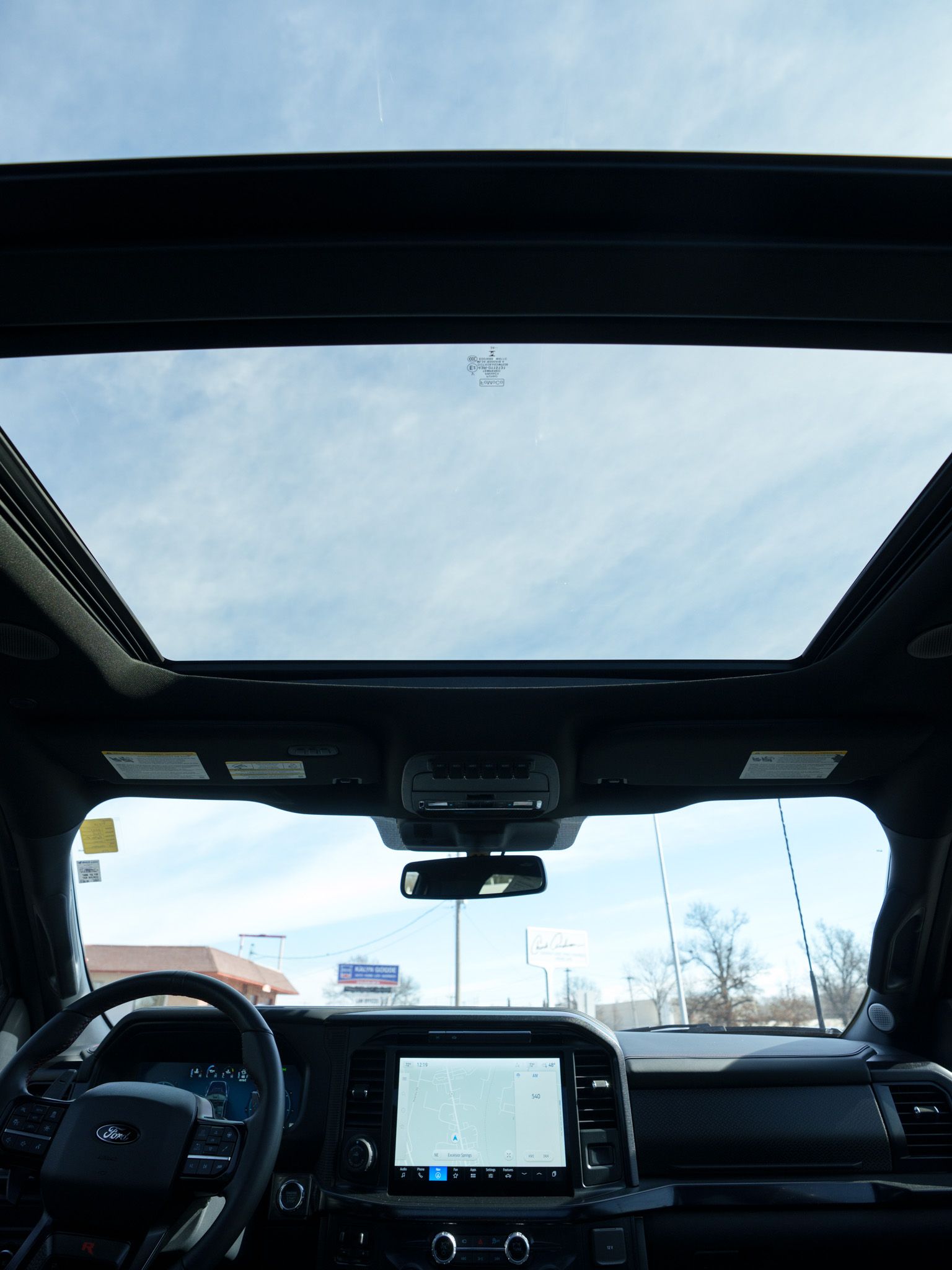
Already trading your F-150 every three years?
You may be a better lease candidate than you realize. Compare a three-year lease with the cost of financing and trading that same truck after three years, including its estimated remaining equity.
Understanding the Numbers
Is It Cheaper to Lease or Finance an F-150?
Leasing a Ford F-150 may result in a lower monthly payment than financing the same truck over a comparable term. However, a lower payment does not automatically mean a lower total cost.
Truck buyers should compare the actual selling price, applicable incentives, financing charges, upfront cash, expected ownership period and the value they will retain when they are ready for another truck.
Traditional Auto Loan
What Determines an F-150 Finance Payment?
- Negotiated purchase price.
- Eligible purchase rebates and incentives.
- Annual percentage rate (APR).
- Length of the financing term.
- Cash down payment.
- Positive or negative trade-in equity.
- Applicable taxes, fees and additional financed products.
A longer loan can reduce the monthly payment, but it may also increase total interest and extend the period of negative equity.
Ford Credit Red Carpet Lease
What Determines an F-150 Lease Payment?
- Negotiated vehicle price.
- Adjusted capitalized cost.
- Contract residual value.
- Applicable rent charge.
- Lease term and annual mileage allowance.
- Eligible lease incentives.
- Applicable taxes, fees and upfront contributions.
A favorable residual value and competitive lease incentives may make leasing attractive, even on a relatively expensive F-150 configuration.
Compare the Same Truck Over the Same Period
Suppose you expect to replace your F-150 after three years. Comparing a 36-month lease with the total payments on a 72-month loan would not give you a fair picture of the financial difference.
Instead, calculate how much you will have spent during those three years and how much equity or remaining debt you are likely to have at that point.
| Cost Component | Financed F-150 | Leased F-150 |
|---|---|---|
| Upfront Contribution | Cash and net trade equity contributed. | Cash and net trade equity contributed. |
| Monthly Payments | Payments made during the comparison period. | Payments made during the comparison period. |
| Additional Costs | Separately paid taxes, fees, maintenance and insurance. | Separately paid taxes, fees, maintenance and insurance. |
| End-of-Period Value | Subtract estimated truck value less remaining loan payoff. | No ownership value assumed if the truck is returned. |
| Potential Exit Charges | Account for applicable selling or transaction costs. | Account for applicable disposition, mileage and wear charges. |
| Final Comparison | Total net cost of financing during the selected period. | Total net cost of leasing through scheduled return. |
Count each payment and upfront contribution only once. Refundable security deposits are not a final cost if returned in full. Future truck values are estimates and cannot be guaranteed. This comparison is educational and does not represent a financing or lease offer.
Don't buy an F-150 based solely on the monthly payment.
A lower monthly payment achieved by extending the loan term or contributing a large amount of upfront cash is not necessarily a better deal. Review the total transaction and expected financial position when you are ready to replace the truck.
Special APR programs, retail rebates and lease incentives can change the financial comparison substantially. Our rate versus rebates guide explains another important part of evaluating Ford financing offers.
How Far Do You Drive?
How Much Mileage Is Too Much for an F-150 Lease?
There is no universal mileage threshold that automatically makes leasing a Ford F-150 a bad decision. The answer depends on available mileage allowances, the cost of higher-mileage lease programs and the alternative cost of purchasing the truck.
However, customers who drive long distances every day or accumulate unpredictable mileage may find financing more practical because a traditional auto loan does not impose contractual mileage limits.
| Annual Mileage | Three-Year Mileage | Purchasing Consideration |
|---|---|---|
| 10,000 miles | 30,000 miles | Leasing may be particularly attractive if a matching allowance is available. |
| 12,000 miles | 36,000 miles | Both options deserve consideration. |
| 15,000 miles | 45,000 miles | Compare higher-mileage lease programs with financing. |
| 20,000 miles | 60,000 miles | Financing may offer greater flexibility. |
| 25,000+ miles | 75,000+ miles | Financing is often the more practical starting point. |
Mileage figures are illustrative planning examples, not representations of available Ford Credit lease contracts.
Remember that financing does not make mileage financially irrelevant. High mileage can reduce resale value and increase maintenance expenses. The difference is that financed vehicles do not have a contractual lease-return mileage allowance.
Missouri truck buyers:
If you commute from Excelsior Springs, Liberty, Kearney, Lawson or Smithville into the Kansas City metro, include your daily round-trip mileage, weekend travel, towing trips and seasonal driving when evaluating a lease.
Real-World Truck Ownership
Should You Lease an F-150 If You Tow or Use It for Work?
Leasing does not inherently prevent you from towing a trailer with an F-150. A leased truck may be used for towing when properly equipped, operated within its vehicle ratings and used in accordance with the lease agreement.
The more important question is whether your towing or work habits are likely to produce high mileage, accelerated wear, significant cosmetic damage or a need for permanent modifications.
Occasional Towing
If you primarily commute and occasionally tow a boat, utility trailer or camper, leasing may still be a reasonable option.
Make sure the F-150 you select has the appropriate engine, payload, hitch equipment and towing capacity for your loaded trailer.
Find the best F-150 engine for towing →Frequent Heavy Towing
Drivers who regularly pull equipment, large campers or substantial trailers may benefit from the greater flexibility of financing.
Frequent towing can increase wear on tires, brakes and other components, even when the truck is operated properly within its ratings.
Explore our F-150 towing research →Construction and Contractor Use
Trucks used on construction sites may experience bed damage, scratches, interior wear and unpredictable mileage. Financing is often the simpler ownership structure for demanding daily use.
Farming and Rural Property Use
Gravel roads, muddy conditions, equipment hauling and rural property maintenance can introduce additional wear. Consider how those conditions could affect a leased truck's return condition.
Regardless of whether you lease or finance, always verify the towing capacity and payload rating of the exact F-150 you are considering. Your financing agreement does not change the physical capability or safety limitations of the truck.
Make Your F-150 Your Own
Should You Finance an F-150 If You Plan to Customize It?
Financing generally offers more flexibility if you plan to personalize your F-150 with aftermarket equipment or make substantial changes to its factory configuration.
Leased trucks are expected to meet the condition and equipment requirements established by the lease agreement at the time of return. Some modifications may be permitted, while others may require approval, removal or restoration.
Common F-150 Modifications
- Lift kits and leveling kits.
- Aftermarket wheels and tires.
- Upgraded suspension components.
- Custom bumpers and lighting.
- Performance and engine modifications.
- Commercial racks and storage systems.
- Toolboxes and other permanent bed equipment.
If extensive modifications are part of your plans, financing is usually the easier starting point.
What About Factory Accessories?
Factory-installed equipment and approved Ford accessories may provide a way to get the features you want without making substantial aftermarket changes.
Discuss accessory installation, lease eligibility and return requirements before making modifications to a leased F-150.
Our Ford service and parts team can help you explore available equipment and installation options.
Modifications may affect vehicle safety, warranty coverage, insurance, resale value and lease compliance. Always review applicable requirements before modifying your truck.
Choose the Truck Before the Payment
Which Ford F-150 Trim Levels Are Best to Lease or Finance?
There is no single F-150 trim level that always produces the best lease or finance value. Ford Credit programs, vehicle pricing, residual values and incentives can vary between configurations and model years.
The following guide focuses on the typical ways shoppers use different F-150 trim levels rather than assuming one financing program will always be more competitive.
| F-150 Trim | Typical Buyer | Purchasing Strategy |
|---|---|---|
| XL | Work-oriented truck buyers. | Financing often makes sense for demanding work or long ownership. |
| STX | Value-focused personal-use buyers. | Compare both based on available incentives and mileage. |
| XLT | Everyday drivers, families and mixed-use truck buyers. | A strong candidate for either option, depending on use. |
| Lariat | Premium daily-driver and family truck buyers. | Leasing may suit frequent upgrades; financing may suit long ownership. |
| Tremor | Outdoor enthusiasts and off-road-oriented buyers. | Financing may be preferable for extensive off-road use and modifications. |
| King Ranch | Premium truck buyers who value distinctive styling. | Compare actual lease costs with expected ownership equity. |
| Platinum | Luxury and technology-focused truck buyers. | Leasing may appeal to buyers who prioritize newer features. |
| Raptor / Raptor R | High-performance truck enthusiasts. | Financing often suits enthusiasts; lease availability and terms must be confirmed. |
If you are still deciding which F-150 to purchase, start with our complete Ford F-150 model guide or visit our F-150 Research Question Center for engine, trim, towing and reliability comparisons.
Future Truck Value
Is It Better to Finance an F-150 Because of Its Resale Value?
Resale value is an important consideration for F-150 shoppers. However, strong demand for full-size pickup trucks does not guarantee that a particular F-150 will retain a specific percentage of its original purchase price.
Truck resale values depend on model year, mileage, condition, trim level, powertrain, equipment, market demand and overall economic conditions.
How Financing Builds Potential Equity
As you make loan payments, your remaining principal generally decreases. If your F-150 becomes worth more than its remaining loan payoff, you have positive equity.
That equity may be available to apply toward your next truck when you decide to sell or trade it.
However, if depreciation exceeds the rate at which you reduce your loan balance, you may have negative equity instead.
How Resale Value Affects an F-150 Lease
A lease residual represents the truck's contractual lease-end value for purposes of calculating depreciation and, where applicable, the purchase option.
A higher residual, all else being equal, can reduce the depreciation portion of the lease payment.
Under a standard closed-end lease, the leasing company generally bears ordinary market-value declines when the truck is returned in accordance with the agreement.
Financing does not guarantee positive equity.
Your future financial position depends on the purchase price, loan balance and truck value when you are ready to trade. A lease does not automatically build ownership equity, although an eligible purchase option may have value.
Should You Trade In Your Current F-150?
Before deciding between leasing and financing, establish the current market value of your existing truck and determine whether it has an outstanding loan balance.
Positive trade-in equity may help reduce the amount needed for your next transaction. Negative equity can increase the total cost if it is included in a new eligible loan or lease.
Structuring Your Truck Purchase
Should You Put Money Down on an F-150 Lease or Loan?
A down payment can reduce your monthly payment whether you finance or lease an F-150. However, the financial consequences of an upfront contribution can be different.
Down Payment When Financing
A larger down payment can reduce the amount borrowed, decrease interest expenses and help limit negative equity, depending on the loan terms and vehicle value.
Compare those potential benefits with the importance of keeping enough cash available for other expenses.
Down Payment When Leasing
An upfront capitalized-cost reduction can lower your lease payment, but it does not automatically reduce the overall cost by the same amount.
Upfront contributions may not be recoverable if a leased truck is stolen or declared a total loss. Insurance and GAP protection depend on the applicable agreement.
When comparing F-150 lease options, ask for a structure with minimal capitalized-cost reduction so you can evaluate the actual payment without relying on a large upfront contribution. Taxes, fees and an initial payment may still be due at signing.
Life With Your F-150
Is Leasing an F-150 Better for Warranty and Maintenance Costs?
One reason some buyers prefer leasing is that a shorter replacement cycle may allow them to drive newer trucks that remain within applicable factory warranty coverage for much of their lease term.
However, warranty coverage is subject to time, mileage, exclusions and the applicable warranty agreement. Leasing does not automatically cover every repair or maintenance expense.
Financing and Long-Term Maintenance
Owners who keep an F-150 beyond its original warranty period should plan for routine maintenance and potential repair expenses.
Those expenses should be compared against the financial benefit of continuing to drive a paid-off truck.
Leasing and Shorter Replacement Cycles
Drivers who regularly replace their leased F-150 may spend less time operating older, higher-mileage trucks.
They remain responsible for required maintenance, tires, damage and repairs that are not covered by the applicable warranty or protection plan.
Whether you lease or finance, following Ford's recommended maintenance schedule and preserving service records can help keep your F-150 operating properly.
F-150 Commercial Purchasing
Should a Business Lease or Finance a Ford F-150?
Businesses evaluate truck purchases differently from many individual buyers. Cash flow, operating costs, replacement schedules, mileage, vehicle availability and potential tax treatment can all influence the decision.
Why a Business Might Finance an F-150
- Long equipment replacement cycles.
- Substantial vehicle mileage.
- Permanent commercial upfits.
- Greater flexibility for demanding work conditions.
- Ability to retain the vehicle after loan payoff.
- Potential depreciation deductions, subject to eligibility.
Why a Business Might Lease an F-150
- Defined fleet replacement schedules.
- Cash-flow management.
- Predictable vehicle usage.
- Regular access to newer truck equipment.
- Reduced exposure to ordinary resale-value risk under certain lease structures.
- Potential deduction of eligible business-use lease expenses.
Commercial financing and leasing programs may offer terms specifically designed around business vehicle requirements. These programs can differ from standard consumer auto loans and closed-end retail leases.
What about Section 179 and business tax deductions?
Purchasing or leasing an F-150 may provide different tax treatment depending on the business, percentage of business use, vehicle classification, gross vehicle weight rating, transaction structure and applicable tax law. Consult your tax professional before selecting a vehicle or financing arrangement based on expected deductions.
Your Next Truck
What Happens When Your Ford F-150 Lease Ends?
When an eligible Ford Credit Red Carpet Lease reaches its scheduled maturity date, you may have several options, depending on the terms of your individual agreement.
Option 1
Lease Another F-150
Return your current truck according to your agreement and explore available lease programs on another new F-150, subject to eligibility.
Shop New F-150 Trucks →Option 2
Purchase Your Leased F-150
If your lease includes an eligible purchase option, you may be able to buy the truck for the contractual purchase price plus applicable taxes and fees.
Explore Financing Options →Option 3
Return Your F-150
Complete the lease-return process and satisfy any applicable mileage, excess wear, disposition or other contractual obligations.
Contact Our Team →Before your lease ends, compare the truck's current market value with its complete purchase-option cost, where available. Do not assume that the ability to purchase or trade a leased truck is identical across all contracts.
Learn more from the official Ford Credit lease-end guide .
Find Your Truck-Buying Profile
Real-World F-150 Leasing and Financing Examples
The Daily Commuter
10,000 Miles Per Year
You drive an F-150 XLT to work, use it for family transportation and trade vehicles every three years. You rarely tow and keep your truck in good condition.
Our starting point: Compare leasing and financing.
The Contractor
25,000 Miles Per Year
You use your F-150 for job sites, hauling tools, towing equipment and driving between multiple locations throughout the Kansas City area.
Our starting point: Financing.
The Long-Term Owner
Eight Years of Ownership
You buy a truck you like, maintain it regularly and continue driving it for several years after the financing is paid off.
Our starting point: Financing.
The Technology Enthusiast
A New Truck Every Three Years
You enjoy newer infotainment systems, driver-assistance technology and premium interior features. Your mileage is consistent and you regularly upgrade vehicles.
Our starting point: Explore leasing.
The Truck Enthusiast
Custom Wheels and Suspension
You plan to modify your F-150 with aftermarket wheels, tires, suspension equipment and other personalized truck accessories.
Our starting point: Financing.
The Weekend Adventurer
Camping and Occasional Towing
Your F-150 serves as an everyday truck and occasionally pulls a camper or boat. You maintain your truck and can reasonably predict your annual mileage.
Our starting point: Compare both options.
These examples illustrate general purchasing considerations. The best option depends on actual vehicle pricing, available programs, contract terms and individual financial circumstances.
The Chuck Anderson Ford Perspective
Our Verdict: Is It Better to Lease or Finance an F-150?
If you plan to use your Ford F-150 extensively as a truck, drive substantial mileage, make aftermarket modifications or keep it well beyond the financing term, we would start with traditional financing.
If your F-150 is primarily your daily driver and you already replace vehicles every few years, we would strongly encourage you to compare available lease programs before automatically financing another truck.
Finance Your F-150 If:
- Long-term ownership matters.
- Your mileage is high or unpredictable.
- You expect demanding truck use.
- You want extensive customization flexibility.
- You want to eventually eliminate your loan payment.
Explore Leasing Your F-150 If:
- You frequently replace your truck.
- Your annual mileage is predictable.
- You primarily use it as a personal vehicle.
- You enjoy having newer technology.
- A competitive lease program is available.
The best decision is not necessarily the one with the lowest monthly payment. It is the one that delivers the best combination of truck capability, financial flexibility and total cost for the way you actually use your F-150.
Ford F-150 Purchasing FAQs
Frequently Asked Questions About Leasing or Financing an F-150
Is it better to lease or finance a Ford F-150?
Financing is generally better for long-term ownership, high mileage, demanding work and customization. Leasing may be better for drivers who replace their trucks frequently, drive predictable mileage and qualify for a competitive lease program.
Is leasing an F-150 cheaper than financing?
Leasing may have a lower monthly payment than comparable-term financing, but it is not automatically less expensive overall. Compare upfront contributions, payments, fees and expected vehicle equity over the same period.
Can you tow a trailer with a leased F-150?
Yes, provided the truck is properly equipped, operated within its towing and payload ratings, and used in accordance with the lease agreement. Excess wear and mileage charges may still apply at return.
Can you use a leased F-150 for work?
Work use may be permitted under an eligible lease agreement. Customers expecting demanding commercial use, extensive modifications or high mileage should compare financing and specialized commercial vehicle programs.
Can I put a lift kit on a leased Ford F-150?
A lift kit may require approval or removal before the truck is returned. Review your lease agreement and discuss the modification with the lessor before installation. Financing generally provides greater customization flexibility.
Is leasing an F-150 a good idea if I drive 20,000 miles per year?
High-mileage drivers should compare available higher-mileage lease programs with financing. Financing may offer greater flexibility because it does not impose a contractual lease-return mileage allowance.
Should I lease or finance an F-150 XLT?
An F-150 XLT can be a good candidate for either option. Leasing may suit predictable-mileage daily drivers who replace trucks frequently, while financing may suit long-term owners and demanding truck use.
Should I lease or finance an F-150 Lariat or Platinum?
Leasing may appeal to premium truck buyers who prioritize newer technology and frequent upgrades. Financing may be more attractive when the buyer plans to retain the truck for many years. Compare actual programs on the same truck.
Can I lease a Ford F-150 Raptor?
F-150 Raptor lease availability depends on the model year, specific vehicle, lender programs, location and credit qualification. Contact Chuck Anderson Ford to review available options.
Can I buy my Ford F-150 when the lease ends?
You may be able to purchase your leased F-150 if your agreement includes an eligible purchase option. Review the contractual purchase price, taxes, fees and remaining lease obligations.
Does financing an F-150 build equity?
Financing can build positive equity when the truck's market value exceeds its remaining loan payoff. However, depreciation, loan structure and market conditions can also result in negative equity.
Can I trade in my current truck toward an F-150 lease?
A trade-in may be used in an eligible lease transaction. Review its market value and any outstanding payoff to determine the net equity available and how it could affect your next agreement.
Can I finance a new F-150 through Ford Credit?
Eligible buyers may finance new F-150 trucks through available Ford Credit programs. Approval, APR, loan terms and incentives depend on the vehicle, current programs and individual credit qualifications.
Does Ford Credit offer different lease mileage options?
Ford Credit offers multiple mileage options through eligible Red Carpet Lease programs. Available allowances and pricing depend on the specific contract, vehicle and current program.
Is it better to lease or buy an F-150 for tax purposes?
Tax treatment depends on the transaction structure, vehicle classification, business-use percentage and applicable tax law. A qualified tax professional can determine which arrangement is more appropriate for your circumstances.
Where can I compare Ford F-150 lease and finance options near Kansas City?
Chuck Anderson Ford is located at 1910 W Jesse James Road in Excelsior Springs, Missouri. Our team serves F-150 shoppers from Liberty, Kearney, Lawson, Smithville and the greater Kansas City area. Call 816-648-6419 to discuss available purchasing options.
Continue Your F-150 Research
Explore More Ford F-150 Buying and Ownership Guides
Should I Buy or Lease a Ford? →
Compare general Ford purchasing options, long-term
ownership, depreciation and lease flexibility.
Ford F-150 Questions & Answers →
Explore common F-150 questions about towing, engines,
trim levels, reliability and ownership.
Which F-150 Engine Is Best? →
Compare Ford EcoBoost, V8, PowerBoost hybrid and
other F-150 powertrain options.
Best F-150 Engine for Towing →
Find the right engine for your camper, boat,
equipment trailer or other towing needs.
Ford F-150 Model Guide →
Explore F-150 trim levels, powertrains, features
and available truck configurations.
Low APR vs. Cash Rebates →
Understand how competing financing incentives
can affect your total purchase cost.
Ford Finance Center →
Explore vehicle financing resources and work
with our local finance team.
Value Your Trade-In →
Determine how your current truck could contribute
toward your next F-150.
Apply for Automotive Credit →
Start the credit application process when you
are ready to purchase your next truck.
Your Kansas City Northland Ford Dealer
Lease or Finance a Ford F-150 Near Kansas City, Missouri
Chuck Anderson Ford has served Excelsior Springs and surrounding Missouri communities since 1974. As a family-owned Ford dealership, we understand that customers use their trucks in dramatically different ways.
Some of our customers need an F-150 for commuting into Kansas City. Others need a dependable truck for rural property, agricultural work, construction, towing a camper or hauling a boat to Smithville Lake.
Those different needs are why we encourage customers to evaluate both the truck configuration and the purchasing arrangement instead of selecting a vehicle based solely on an advertised monthly payment.
Excelsior Springs, MO →
Hometown Ford F-150 shopping, financing and service.
Liberty, MO →
F-150 options for suburban families, commuters
and business owners.
Kearney, MO →
Ford trucks for commuting, rural property
and everyday Northland driving.
Lawson, MO →
F-150 purchasing options for rural living,
work and weekend recreation.
Smithville, MO →
Explore Ford trucks for commuting, camping
and Smithville Lake boat towing.
Greater Kansas City Area →
Contact Chuck Anderson Ford to compare
available F-150 purchasing programs.
Additional Information
Official Ford Credit Financing Resources
Ford Credit offers traditional financing and Red Carpet Lease options on eligible Ford vehicles. Specific programs, terms, mileage allowances, incentives and purchase options can change over time.
For additional information, explore these official Ford Credit resources:
Your Hometown Ford Dealer Since 1974
Find Your F-150. Compare Your Options. Make the Right Decision.
Whether you want to finance an F-150 for years of ownership or explore the flexibility of leasing your next truck, Chuck Anderson Ford can help you compare the available options based on your actual driving habits and financial goals.
Start by finding the F-150 that fits your needs, then work with our team to evaluate eligible financing programs, lease options and trade-in opportunities.
Chuck Anderson Ford
1910 W Jesse James Road
Excelsior Springs, MO 64024
Sales:
816-648-6419
Built on Integrity. Backed by Family.
Information on this page is provided for general educational purposes and does not constitute an offer of credit, financing, leasing or tax advice. All financing and lease programs are subject to applicable credit approval, lender requirements, vehicle eligibility and program availability. Vehicle pricing, APR, rent charges, lease terms, mileage allowances, residual values, incentives, taxes, fees and purchase options may vary by customer, vehicle, model year, location and contract and are subject to change. Excess mileage, excess wear, disposition and early termination charges may apply. Vehicle resale values and future equity cannot be guaranteed. Business tax treatment depends on individual circumstances and applicable law; consult a qualified tax professional. F-150 towing capacity, payload, equipment, warranty coverage and available features vary by vehicle configuration and model year. Always verify the specifications, certification labels and equipment of the exact truck before towing or hauling. Vehicle photos are illustrative and do not guarantee current availability or lease eligibility.