

Ford Explorer vs Chevy Traverse: which is better?
Three-Row SUV Comparison
Ford Explorer vs. Chevy Traverse: Which Is Better?
The Ford Explorer and Chevrolet Traverse are both three-row midsize SUVs, but they emphasize different strengths. Traverse offers more maximum cargo space and seating for up to eight. Explorer counters with a broader engine lineup, available 400-horsepower V6 power, rear-wheel-drive-based configurations and performance- and off-road-focused models.
Quick Answer: Traverse Wins Space; Explorer Wins Powertrain Choice
Choose the Chevrolet Traverse if maximum passenger and cargo space are the most important parts of your three-row SUV decision.
Traverse can seat up to eight and provides up to 98 cubic feet of maximum cargo space, compared with up to seven seats and approximately 85.8 cubic feet in Explorer.
Choose the Ford Explorer if you want more powertrain and driving-character choices.
Explorer offers a 300-horsepower 2.3L EcoBoost as its mainstream engine and an available 3.0L EcoBoost V6 producing up to 400 horsepower and 415 lb-ft of torque.
Both SUVs can tow up to 5,000 pounds, so towing alone may not settle this comparison.
Passenger Capacity
Traverse
Available seating for up to eight versus seven in Explorer.
Maximum Cargo
Traverse
Up to 98 cu. ft. versus up to 85.8 cu. ft. in Explorer.
Maximum Horsepower
Explorer
Up to 400 hp versus 328 hp in Traverse.
Maximum Towing
Tie
Both offer up to 5,000 pounds of towing capability.
2027 Ford Explorer vs. 2027 Chevrolet Traverse
Both work as three-row family SUVs, but their specifications point toward different kinds of buyers.
| Category | Ford Explorer | Chevrolet Traverse | Advantage |
|---|---|---|---|
| Vehicle Class | Midsize three-row SUV | Midsize three-row SUV | Tie |
| Maximum Seating | Up to 7 | Up to 8 | Traverse |
| Overall Length | Approximately 198.7 in. | Approximately 204.4 in. | Explorer for maneuverability |
| Second-Row Legroom | Up to approximately 37.5 in. | Approximately 41.4 in. | Traverse |
| Third-Row Legroom | Approximately 31.8 in. | Approximately 32.3 in. | Traverse |
| Cargo Behind Third Row | Approximately 16.3 cu. ft. | Approximately 22.9 cu. ft. | Traverse |
| Cargo Behind Second Row | Approximately 46.0 cu. ft. | Approximately 56.6 cu. ft. | Traverse |
| Maximum Cargo Volume | Up to approximately 85.8 cu. ft. | Up to approximately 98 cu. ft. | Traverse |
| Standard Engine | 2.3L EcoBoost I-4 | 2.5L Turbo I-4 | Different approaches |
| Standard Horsepower | 300 hp | 328 hp | Traverse |
| Maximum Available Horsepower | Up to 400 hp | 328 hp | Explorer |
| Maximum Available Torque | Up to 415 lb-ft | 326 lb-ft | Explorer |
| Maximum Towing | 5,000 lbs | 5,000 lbs | Tie |
| Transmission | 10-speed automatic | 8-speed automatic | Preference |
| Standard Drive Layout | Rear-wheel drive on applicable trims | Front-wheel drive on applicable trims | Depends on preference |
| Available Traction System | Intelligent 4WD | AWD; advanced twin-clutch AWD on Z71 | Depends on use |
| Off-Road Model | Explorer Tremor | Traverse Z71 | Different approaches |
| Performance Model | Explorer ST | No direct 400-hp ST equivalent | Explorer |
| Center Display | 13.2 in. | 17.7 in. | Traverse for screen size |
| Hands-Free Highway Driving | Available BlueCruise | Available Super Cruise | Preference / availability |
The headline is simple: Traverse gives you more interior volume. Explorer gives you more ways to change the personality of the SUV through engine, drivetrain and trim choice.
Passenger Space
Traverse Is the Roomier Family Hauler
If your decision is primarily about putting people into all three rows, Traverse has the measurable advantage.
Chevrolet offers seating for up to eight passengers, while Explorer tops out at seven.
Traverse also provides approximately 41.4 inches of second-row legroom, compared with up to roughly 37.5 inches in Explorer.
Third-row legroom is closer: approximately 32.3 inches in Traverse versus about 31.8 inches in Explorer.
For families regularly carrying teenagers or adults in the second row, Traverse's additional space deserves serious consideration.
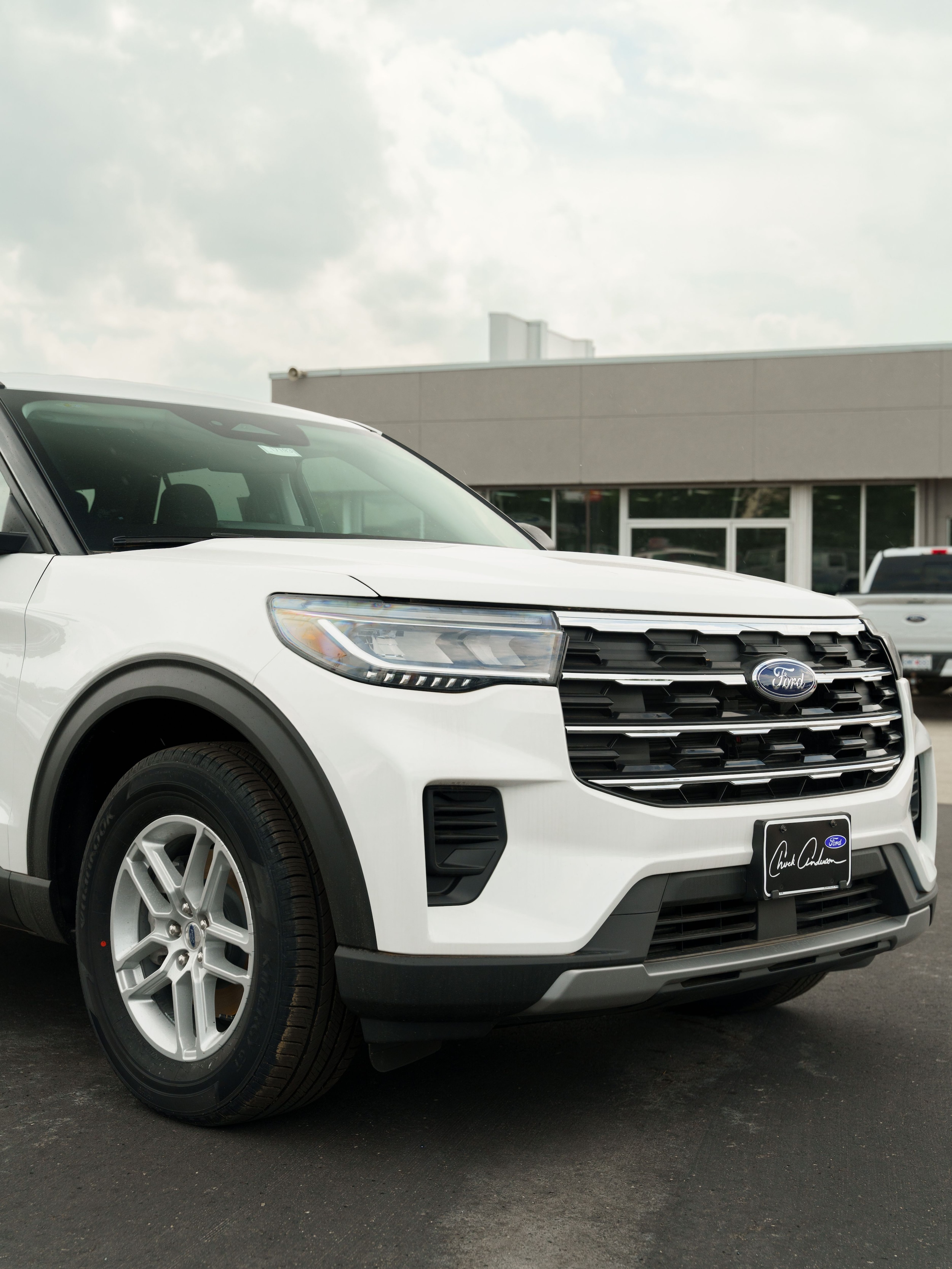
Do You Actually Need Eight Seats?
Traverse's eighth seating position is useful, but it only matters if your family will use it.
Explorer configurations with second-row captain's chairs typically seat six, while available or standard bench configurations on applicable models can increase capacity to seven.
Traverse LT can be configured for seven or available eight-passenger seating.
Choose Traverse for Seating If:
- You regularly transport seven or eight people.
- Carpool duty is part of everyday life.
- You value maximum second-row room.
- Your family often travels with friends or grandparents.
Choose Explorer If:
- Six or seven seats are enough.
- You prefer second-row captain's chairs.
- You do not need the largest interior in the segment.
- You value performance or a smaller exterior footprint more.
Traverse Wins the Cargo-Space Comparison
This may be Chevrolet's strongest argument against Explorer.
16.3 CU. FT.Explorer Behind Third Row
22.9 CU. FT.Traverse Behind Third Row
85.8 CU. FT.Explorer Maximum Cargo
98 CU. FT.Traverse Maximum Cargo
Why Cargo Behind the Third Row Matters
Maximum cargo volume is useful, but families often care more about cargo space while the third row is still occupied.
Explorer provides approximately 16.3 cubic feet behind its third row.
Traverse provides approximately 22.9 cubic feet.
That extra space can matter when all three rows are occupied and you still need room for groceries, suitcases, sports bags, a stroller or other family gear.
If maximum passenger-plus-cargo flexibility is your number one priority, Traverse wins this category.
Explorer Advantage
Explorer Gives You Two Very Different Levels of Performance
Ford gives Explorer buyers a powertrain decision that Traverse does not currently match.
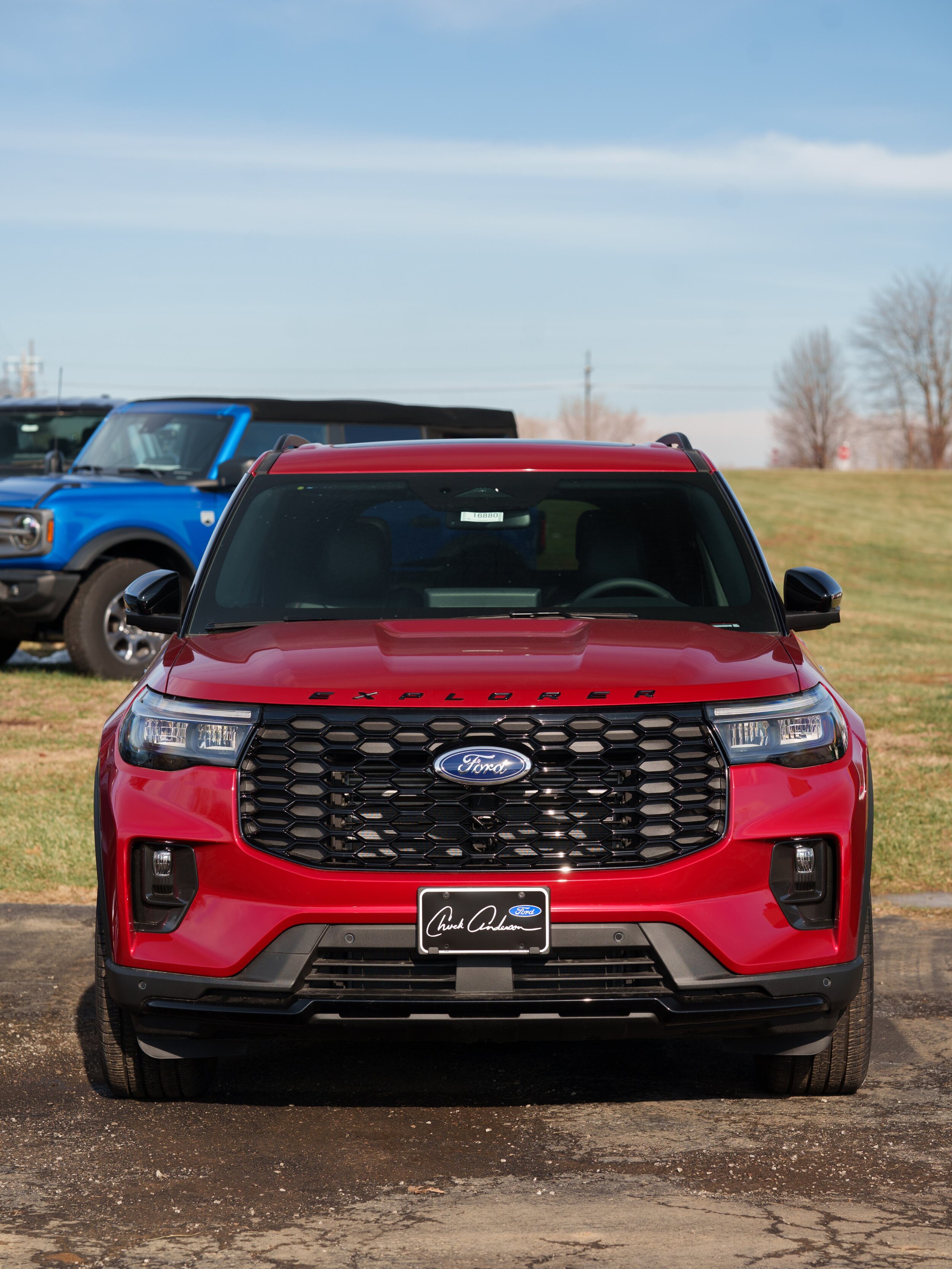
Most Explorers use the 2.3L EcoBoost four-cylinder producing 300 horsepower.
That engine is standard on Active, ST-Line, Tremor and Platinum and provides more than enough power for many families.
Buyers wanting significantly more performance can step into the 3.0L EcoBoost V6, which produces up to 400 horsepower and 415 lb-ft of torque.
That engine is standard on Explorer ST and available on applicable Tremor and Platinum configurations.
Traverse Has More Standard Horsepower
Chevrolet's standard 2.5L turbocharged four-cylinder produces 328 horsepower and 326 lb-ft of torque.
That gives Traverse an output advantage over Explorer's standard 300-horsepower 2.3L EcoBoost.
If you compare only the mainstream engines, Traverse has the stronger horsepower number.
Explorer Has the Higher Ceiling
The comparison changes completely when Explorer's available 3.0L EcoBoost enters the picture.
Up to 400 horsepower and 415 lb-ft place the V6 Explorer in a different performance category from the 328-horsepower Traverse.
If you want a genuinely quick three-row SUV, Explorer offers an option Traverse does not directly duplicate.
Performance SUV
If You Want Performance, Explorer ST Is the Easy Choice
Chevrolet offers the Traverse RS with more aggressive styling, larger wheels and premium equipment.
But RS uses the same 328-horsepower 2.5L turbo engine found throughout the Traverse lineup.
Explorer ST takes a different approach.
Its 3.0L EcoBoost V6 produces up to 400 horsepower, and the ST is specifically tuned around a more performance-oriented driving experience.
For the buyer who wants three rows but does not want the vehicle to feel like a traditional family appliance, Explorer ST has the stronger case.
Explorer ST vs. PlatinumWhich Tows More: Explorer or Traverse?
Neither has a headline towing-capacity advantage.
Properly configured 2027 Ford Explorer models can tow up to 5,000 pounds.
Chevrolet also rates properly equipped 2027 Traverse models for up to 5,000 pounds.
Chevrolet includes trailering equipment on current LT, Z71 and RS configurations, while Ford equips current Explorer models with a Class III Trailer Tow Package.
Since the headline number is the same, trailer owners should compare the exact vehicle's payload, hitch equipment, drivetrain, passengers and cargo rather than choosing solely from the 5,000-pound figure.
How Much Can an Explorer Tow?You Do Not Need the Explorer V6 to Tow 5,000 Pounds
This is an important distinction for Explorer shoppers.
Properly configured Explorers with the standard 2.3L EcoBoost can reach the same 5,000-pound maximum trailer rating.
The 3.0L V6 is therefore primarily a performance upgrade rather than a requirement for reaching Explorer's headline towing number.
Choose the Explorer V6 If:
- You value stronger acceleration.
- You frequently drive loaded.
- You want more passing power.
- You specifically want Explorer ST.
- You prefer having additional power in reserve while towing.
Explorer and Traverse Start With Different Driving Layouts
This difference does not automatically make one SUV better, but it contributes to how each vehicle approaches the segment.
Ford Explorer
Applicable Explorer trims use rear-wheel drive as the standard layout with Intelligent 4WD available.
Ford also offers standard Intelligent 4WD on Explorer Tremor.
The layout fits Explorer's broader emphasis on towing, performance and available 400-horsepower V6 power.
Chevrolet Traverse
Applicable Traverse models use front-wheel drive with all-wheel drive available.
Traverse Z71 upgrades to an advanced twin-clutch AWD system designed to improve traction in more demanding conditions.
Traverse's overall approach places greater emphasis on passenger packaging and interior volume.
Adventure Models
Explorer Tremor vs. Traverse Z71
Both manufacturers now offer a more rugged version of their three-row SUV.
Explorer Tremor includes standard Intelligent 4WD, increased ground clearance, all-terrain tires and off-road-oriented suspension and traction hardware.
It can also be configured with Explorer's available 3.0L EcoBoost V6 for substantially more power.
Traverse Z71 includes an advanced twin-clutch AWD system, Terrain Mode, Hill Descent Control, off-road suspension, skid plate and 18-inch wheels with all-terrain tires.
Both deserve consideration for families regularly traveling on gravel roads, snow, trails or rough recreational access roads.
Which Is Better Off Road?
The answer depends on configuration.
Traverse Z71 is a meaningful upgrade over a normal road-focused Traverse and gives Chevrolet buyers real traction and protection equipment.
Explorer Tremor is particularly interesting because Ford combines its off-road chassis changes with the option of the much more powerful 3.0L EcoBoost V6.
Our Take
For normal snow, gravel roads and mild trails, both can work very well.
If maximum available engine performance is part of your adventure-SUV decision, Explorer Tremor has the stronger powertrain argument.
If interior room remains the bigger priority, Traverse Z71 keeps the Traverse's space advantage while adding off-road equipment.
Explorer vs. Traverse Technology
Both have modern connected cabins, but their dashboards take different approaches.
Ford Explorer Technology
Current Explorer models use Ford's Digital Experience with a 13.2-inch center display and a 12.3-inch digital instrument cluster on applicable models.
Available technology includes Ford BlueCruise hands-free highway driving on compatible roads and appropriately equipped vehicles.
Explorer also offers available 360-Degree Camera technology and a broad range of Ford Co-Pilot360 driver-assistance features.
Chevrolet Traverse Technology
Traverse makes a strong first impression with a standard 17.7-inch center infotainment screen and 11-inch driver information display.
Available or included Super Cruise hands-free driving is offered on applicable trims, including current RS and High Country configurations.
Chevrolet also offers available HD Surround Vision and connected Google-based functionality.
Which Has Better Technology?
There is no universal technology winner.
Traverse wins the screen-size comparison with its standard 17.7-inch center display.
Both manufacturers offer sophisticated hands-free highway-driving systems on appropriately equipped vehicles: Ford BlueCruise and Chevrolet Super Cruise.
Rather than choosing from screen dimensions alone, use both systems in person and compare menu layout, phone connectivity, camera quality and how easily you can perform the functions you use every day.
Explorer Is the Smaller SUV Outside
Explorer measures approximately 198.7 inches long.
Traverse measures approximately 204.4 inches long.
That makes Traverse about 5.7 inches longer.
Chevrolet uses that additional overall size effectively, producing substantially more cargo room and more second-row legroom.
Why Explorer's Smaller Size Can Matter
- Easier parking
- More manageable in older garages
- Easier maneuvering in crowded school lots
- More convenient in urban driving
- Still provides three-row seating
- Still reaches 5,000 pounds of towing
Family Use
Which Is Better for a Family?
Traverse is the better answer if your family's biggest problem is simply needing more room.
Eight-passenger capability, 41.4 inches of second-row legroom and 22.9 cubic feet of space behind the third row make a compelling practical argument.
Explorer is the better answer if you do not need maximum space and would rather have a smaller SUV with more performance choices.
Families of four or five may find Explorer's passenger space more than adequate while appreciating the shorter exterior dimensions every day.
The correct choice depends less on the published maximum seating number and more on who actually rides in your second and third rows.
Think About People and Cargo at the Same Time
A common mistake when comparing three-row SUVs is looking at passenger capacity and maximum cargo volume as separate numbers.
Families often need both at the same time.
If the third row is upright, Traverse gives you roughly 6.6 additional cubic feet of cargo room behind it.
That difference becomes more useful when the cargo is a stroller, several suitcases, sports equipment or groceries rather than a theoretical cubic-foot measurement.
If your third row spends most of its life folded, Explorer's smaller maximum cargo figure may be much less important to your decision.
Explorer and Traverse Trim Lineups
Both lineups offer practical, rugged, sporty and premium directions, but Explorer adds a true higher-output performance model.
2027 Ford Explorer
- Active: Everyday family value
- ST-Line: Sport-inspired appearance
- Tremor: Off-road capability
- Platinum: Premium comfort
- ST: 3.0L EcoBoost performance
Explorer's major lineup advantage is how differently the trims can drive once the available V6 enters the equation.
2027 Chevrolet Traverse
- LT: Mainstream family model
- Z71: Off-road-focused AWD model
- RS: Sport-styled premium model
- High Country: Luxury-focused model
Traverse keeps one 328-horsepower turbo engine across the lineup and changes the vehicle primarily through equipment, appearance, luxury and chassis features.
Compare Equivalent Trims
A useful buying decision requires comparing vehicles aimed at similar customers.
Comparing an entry Explorer Active against a fully equipped Traverse High Country tells you more about trim level than it does about the two SUV platforms.
Good Starting Comparisons
- Explorer Active vs. Traverse LT
- Explorer Tremor vs. Traverse Z71
- Explorer Platinum vs. Traverse High Country
- Explorer ST-Line vs. Traverse RS for sporty appearance
Explorer ST has no exact Traverse equivalent because Chevrolet does not currently offer a 400-horsepower Traverse performance powertrain.
Which Is Better for Everyday Driving?
This is where a test drive matters more than another specification chart.
Why You Might Prefer Explorer
Explorer is shorter overall and offers a rear-wheel-drive-based layout on many configurations.
Buyers can also choose between mainstream 300-horsepower performance and substantially stronger available V6 power.
If you enjoy driving and want the SUV to feel more performance oriented, Explorer deserves the first test drive.
Why You Might Prefer Traverse
Traverse's biggest everyday advantage is how much passenger and cargo space Chevrolet fits into a still-manageable midsize SUV.
Families regularly loading people, bags, strollers and sports equipment may appreciate that packaging every day.
Its large standard display and straightforward turbocharged powertrain also make a strong mainstream family-SUV case.
Who Should Buy Ford Explorer?
- Buyers who want up to 400 horsepower
- Explorer ST performance shoppers
- Families who do not need eight seats
- Drivers who value a shorter exterior
- Buyers who want rear-wheel-drive availability
- Shoppers wanting Intelligent 4WD
- Adventure buyers considering Explorer Tremor
- Families whose 5,000-lb towing needs fit Explorer
Who Should Buy Chevrolet Traverse?
- Families needing up to eight seats
- Buyers prioritizing maximum cargo room
- Families regularly using all three rows
- Buyers who value more second-row legroom
- Drivers wanting a 17.7-inch standard display
- Shoppers considering Super Cruise
- Adventure buyers considering Traverse Z71
- Families who value space over maximum performance
Explorer or Traverse? Choose in 30 Seconds
Match the SUV to the reason you are shopping.
"I need eight seats."
Start with Traverse.
"I want the most cargo space."
Traverse wins.
"I want the most horsepower."
Explorer with the 3.0L EcoBoost.
"I want a performance SUV."
Explorer ST.
"I need to tow 5,000 pounds."
Either can potentially work when properly configured.
"I want something shorter and easier to park."
Explorer.
"I regularly use all three rows plus luggage."
Traverse deserves a close look.
Our Verdict: Explorer Is the Better Choice for Performance and Variety; Traverse Wins Pure Space
There is no honest way to say Explorer wins every category in this comparison.
Chevrolet Traverse offers more interior space, more maximum seating capacity and a larger cargo area. For a buyer whose single biggest priority is fitting the most people and gear into a midsize three-row SUV, those are meaningful advantages.
We would choose Explorer when the family does not need that maximum space.
Explorer gives buyers more powertrain choice, up to 400 horsepower, a shorter exterior footprint, rear-wheel-drive availability, Intelligent 4WD and distinct models such as ST and Tremor.
Both can reach 5,000 pounds of towing, so the decision comes down to what matters more after towing is removed from the equation.
If you need every inch and every seat, Traverse makes a strong case. If you want a three-row SUV that can be configured with much more performance and still covers normal family needs, Explorer is our pick.
Ford Explorer vs. Chevy Traverse FAQs
Quick answers to common questions about these three-row SUVs.
Which is better, Ford Explorer or Chevy Traverse?
Traverse has the advantage in maximum seating and cargo space, while Explorer offers more powertrain choice and up to 400 horsepower. The better SUV depends on whether space or performance flexibility matters more to you.
Which is bigger, Explorer or Traverse?
Traverse is longer at approximately 204.4 inches compared with roughly 198.7 inches for Explorer. Traverse also provides more maximum passenger and cargo space.
Which has more cargo space, Explorer or Traverse?
Traverse. Chevrolet lists up to approximately 98 cubic feet of maximum cargo volume compared with up to approximately 85.8 cubic feet in Explorer.
Which has more space behind the third row?
Traverse provides approximately 22.9 cubic feet behind its third row compared with approximately 16.3 cubic feet in Explorer.
Which seats more people, Explorer or Traverse?
Traverse can seat up to eight people on applicable configurations. Explorer offers seating for up to seven.
Which has more horsepower, Explorer or Traverse?
Explorer has the higher maximum output. Its available 3.0L EcoBoost V6 produces up to 400 horsepower, while Traverse's 2.5L turbocharged engine produces 328 horsepower.
Does Traverse have more standard horsepower than Explorer?
Yes. Traverse's standard 2.5L turbo engine produces 328 horsepower, while Explorer's mainstream 2.3L EcoBoost produces 300 horsepower.
Which tows more, Ford Explorer or Chevy Traverse?
Their maximum published towing ratings are equal. Properly configured current Explorer and Traverse models can tow up to 5,000 pounds.
Which is better for a large family?
Traverse has an advantage for larger families because it offers up to eight-passenger seating, more second-row legroom and more cargo space behind the third row.
Which is better for a family of four?
Explorer can be an excellent choice for a family of four because its smaller exterior may be easier to manage while still providing three rows, useful cargo capacity and up to 5,000 pounds of towing.
What is the Explorer equivalent of Traverse Z71?
Explorer Tremor is the closest off-road-focused Ford comparison. Both add traction, suspension and all-terrain equipment beyond their mainstream counterparts.
Does Chevy Traverse have an Explorer ST equivalent?
Not directly. Traverse RS offers sporty appearance and premium equipment, but it retains the 328-horsepower 2.5L turbo engine. Explorer ST uses an available 3.0L EcoBoost V6 producing up to 400 horsepower.
Continue Your Ford SUV Research
Compare Explorer with other SUVs and learn more about its towing, reliability and trim lineup.
Comparing Ford Explorer With Chevy Traverse?
Start by deciding whether you really need Traverse's additional passenger and cargo space.
If seven seats and Explorer's cargo area cover your family's needs, Explorer gives you engine, drivetrain and trim choices that can produce a very different driving experience.
Chuck Anderson Ford can help you compare Explorer Active, ST-Line, Tremor, Platinum and ST based on passenger needs, towing, performance, drivetrain, technology and budget.
Visit Chuck Anderson Ford in Excelsior Springs, Missouri, serving Explorer shoppers from Liberty, Kearney, Lawson, Smithville and throughout the Kansas City Northland.
Chuck Anderson Ford
- 1910 W Jesse James Road
- Excelsior Springs, MO 64024
- Sales: 816-648-6419
- Service: 816-648-6424
- Parts: 816-648-6429
2027 Ford Explorer and Chevrolet Traverse engines, horsepower, torque, seating, passenger dimensions, cargo capacities, towing ratings, drivetrain availability, technology, trim content, packages and specifications vary by vehicle configuration and are subject to change. Maximum towing figures require proper vehicle and trailer equipment and do not apply to every vehicle. Passenger and cargo measurements vary by seating and trim configuration. Competitor information reflects manufacturer-published information available when this page was prepared. Always verify current specifications, equipment, payload and towing requirements for the exact vehicle before purchase or towing.