
2027 Ford F-150 Ownership Guide
Maintenance, Tires, Service & Long-Term Ownership
2027 Ford F-150 Ownership Guide
Buying an F-150 is only the beginning. This 2027 Ford F-150 Ownership Guide explains how to plan routine maintenance, oil changes, tire rotations, tire pressure checks, brakes, filters, fluids, spark plugs, towing-related service, PowerBoost hybrid maintenance, off-road inspections and long-term care.
Oil-Life MonitorControls Oil Service
20,000 MICabin Filter
30,000 MIEngine Air Filter
3 YearsBrake Fluid
Ownership Topics
Jump to the Information You Need
Important 2027 Note
Use Your Exact Truck's Owner's Manual as the Final Authority
Ford had not yet published the final U.S. 2027 F-150 Owner's Manual when this guide was prepared.
The maintenance framework below is based on Ford's latest official F-150 scheduled maintenance guidance and current Ford service practices. Ford may revise individual intervals, specifications or procedures for the 2027 model year.
Once your truck is delivered, always follow the Owner's Manual, vehicle information display, tire label and maintenance schedule assigned to that exact VIN.
Maintenance Schedule
2027 Ford F-150 Maintenance Planning Guide
F-150 maintenance uses a combination of vehicle-calculated oil life, fixed mileage intervals, time-based maintenance and operating-condition requirements.
| Interval / Trigger | Recommended Service | What Owners Should Know |
|---|---|---|
| Intelligent Oil-Life Monitor | Change engine oil and filter. Rotate tires. Perform scheduled inspections and multi-point inspection. | Follow the truck's oil-life message. Based on Ford's latest F-150 guidance, do not exceed one year or 10,000 miles between oil-service intervals. |
| Every 20,000 Miles | Replace cabin air filter. | Dust, gravel roads, construction sites and heavy pollen may justify earlier inspection. |
| Every 30,000 Miles | Replace engine air filter under normal operating conditions. | Inspect sooner if the truck regularly travels dusty gravel roads, agricultural areas or off-road. |
| Every 3 Years | Change brake fluid according to Ford's current scheduled-maintenance guidance. | Time matters even when mileage remains low. |
| Around 100,000 Miles | Normal-schedule spark plug replacement and accessory drive-belt inspection under Ford's current F-150 guidance. | Severe operating conditions or specific equipment can create earlier requirements. |
| Around 150,000 Miles | Current normal-service guidance includes major driveline-fluid maintenance and accessory-drive-belt replacement. | Transmission, axle and transfer-case requirements depend on drivetrain and operating conditions. |
| Around 200,000 Miles / 10 Years | Initial long-term engine coolant replacement under current Ford guidance. | Ford's current schedule then uses shorter recurring coolant intervals. |
Engine Oil
How Often Should You Change the Oil in a 2027 F-150?
The best answer is not automatically "every 5,000 miles" or "every 10,000 miles."
Modern F-150 trucks use Ford's Intelligent Oil-Life Monitor to estimate when engine oil needs to be changed based on how the truck is actually operated.
Engine load, temperature, trip patterns, operating time and driving conditions can all influence the interval.
If the truck asks for an oil change early, follow the truck rather than waiting for a predetermined mileage number.
- Follow the Intelligent Oil-Life Monitor.
- Change the engine oil and filter together.
- Reset the oil-life monitor after service.
- Do not ignore the oil-change message.
- Use Ford-approved oil specification for your exact engine.
- Check oil level regularly, especially when towing.
- Never assume every F-150 engine uses the same oil capacity.
More Than an Oil Change
What Should Be Checked at Routine F-150 Service?
Tires
Rotate tires, inspect tread wear, measure tread depth and check inflation.
Brakes
Inspect brake pads, rotors, hoses, parking-brake components and overall wear.
Cooling System
Check coolant level, condition, hoses and visible leaks.
Steering & Suspension
Inspect linkage, ball joints, tie-rod ends and suspension components.
Driveshaft & U-Joints
Inspect applicable driveline components for wear, looseness or damage.
Exhaust
Look for leaks, damage and loose heat shields.
Filters
Inspect engine and cabin air filters, especially after dusty use.
Fluid Leaks
Inspect underneath and under the hood for engine, coolant and driveline leaks.
Tire Pressure
What PSI Should You Run in a 2027 Ford F-150?
There is not one correct tire-pressure number for every 2027 F-150.
The correct on-road pressure is the cold tire inflation pressure printed on the Tire Information label on your truck. That label is normally located on the driver's-side B-pillar or door area.
F-150 configurations use different wheels, tire sizes, tire constructions and load ratings. Some configurations may even specify different front and rear pressures.
Do not use the maximum PSI molded into the tire sidewall as your normal inflation target. That number describes the tire's limits, not necessarily Ford's recommended pressure for your truck.
Check Tires Cold
For an accurate comparison with the door placard, check pressure before significant driving and while the tires are cold.
Check Monthly
A monthly pressure check is a good ownership habit even when the TPMS warning light is not illuminated.
Check Before Towing
Verify truck and trailer tire pressure before long trips and substantial towing.
Watch Temperature Changes
Tire pressure changes as ambient temperature changes, making fall and winter checks especially important.
Do Not Chase Hot PSI
Tire pressure normally increases as the tires heat during driving. Do not bleed pressure from a hot tire simply because the reading has increased.
TPMS Is a Warning System
The Tire Pressure Monitoring System is not a substitute for checking pressure with an accurate gauge.
Tire Rotation & Wear
Rotate the Tires With Routine Service
Ford's current F-150 maintenance schedule pairs tire rotation with the oil-life service interval.
That is especially useful on a truck, because rear tires may experience substantial additional loading during towing and payload use.
- Rotate tires at the scheduled service interval.
- Measure tread depth at each rotation.
- Look for uneven inner or outer shoulder wear.
- Inspect for cuts, bulges and punctures.
- Check alignment if wear becomes uneven.
- Inspect tires after substantial off-road use.
- Check the spare tire when equipped.
Tire Replacement
Tire Size Is Only Part of Choosing a Replacement
Correct Size
Match the tire specifications appropriate for your exact wheel and F-150 configuration.
Correct Load Rating
Truck tires must be capable of supporting the loads expected from passengers, cargo and towing.
Correct Type
All-season, all-terrain and performance tires have different strengths and tradeoffs.
Raptor, Tremor and other specialized F-150 configurations deserve particular attention because tire size, construction and suspension calibration are part of the truck's overall engineering package.
Brake Maintenance
Brake Wear Depends Heavily on How You Use the Truck
Pads & Rotors
Inspect during routine maintenance rather than waiting for grinding, vibration or a warning light.
Towing
Frequent trailer use can increase brake-system heat and wear.
Brake Fluid
Ford's current F-150 scheduled-maintenance guidance specifies changing brake fluid every three years.
Do Not Wait for a Mileage Interval When Braking Changes
Have the truck inspected if you notice pulling while braking, steering-wheel vibration, pedal pulsation, unusual noise, longer stopping distances, a soft pedal or a brake warning light.
Air Filters
Cabin Filter vs. Engine Air Filter
20K
Cabin Air Filter
Ford's current normal schedule calls for cabin air-filter replacement at approximately 20,000-mile intervals.
Dust, pollen and dirty environments can require earlier replacement.
30K
Engine Air Filter
Ford's current normal schedule calls for engine air-filter replacement at approximately 30,000 miles.
Gravel roads, farms, construction sites and off-road use justify more frequent inspection.
F-150 Fluids
More Than Engine Oil
| Fluid | What It Does | Ownership Guidance |
|---|---|---|
| Engine Oil | Lubricates and protects the engine and turbochargers where equipped. | Follow the Intelligent Oil-Life Monitor and exact Ford oil specification for the engine. |
| Engine Coolant | Controls engine temperature and protects cooling-system components. | Inspect level and condition routinely. Current Ford guidance schedules the first major coolant change much later in the truck's life under normal use. |
| Brake Fluid | Transfers hydraulic pressure through the braking system. | Current Ford schedule: change every three years. |
| Transmission Fluid | Lubricates, cools and operates the 10-speed automatic transmission. | Current normal Ford guidance uses a long interval, but severe operation can change service requirements. |
| Transfer Case Fluid | Lubricates the transfer case on applicable four-wheel-drive trucks. | Off-road use, water exposure and severe operation require additional attention. |
| Axle / Differential Fluid | Lubricates differential gears and bearings. | Inspect for leaks and follow Ford's normal or severe schedule for the exact configuration. |
| Washer Fluid | Cleans the windshield and cameras where applicable. | Keep filled year-round and use cold-weather-rated fluid during Missouri winter conditions. |
Towing & Severe Use
A Working F-150 May Need More Attention Than a Commuter
Maintenance schedules assume operating conditions matter.
A truck that spends most of its life on lightly loaded highway trips is not being subjected to the same stress as an F-150 regularly towing a camper, hauling equipment, idling on a jobsite or operating off-road.
- Frequent towing or heavy payload
- Extended idling
- Repeated short trips
- Very hot or very cold operation
- Mountainous driving
- Dusty gravel roads
- Off-road driving
- Mud, sand or water exposure
Tell your service advisor how the truck is actually used rather than assuming the normal schedule applies to every vehicle.
Before Towing
F-150 Trailer Check
Tire Pressure
Verify truck and trailer tires cold.
Trailer Connection
Verify coupler, safety chains and electrical connection.
Trailer Brakes
Confirm proper operation when the trailer is equipped with brakes.
Lights
Test brake, turn and running lights.
Engine Oil
Verify oil level before a substantial towing trip.
Coolant
Check for proper level and visible leaks.
Payload
Include tongue weight, people and bed cargo.
Hitch Equipment
Confirm that the hitch and components are appropriate for the trailer.

PowerBoost Ownership
Does the F-150 Hybrid Require Different Maintenance?
PowerBoost still contains a gasoline 3.5L EcoBoost engine, so it still requires engine oil, filters, spark plugs and other conventional engine maintenance.
The difference is that it also incorporates an electric motor, high-voltage battery, regenerative braking and hybrid control systems.
The high-voltage hybrid system is not a routine DIY-service area. Diagnosis or repair of high-voltage components should be handled by properly trained technicians.
- Continue following the oil-life monitor.
- Maintain the gasoline engine normally.
- Keep cooling-system maintenance current.
- Pay attention to hybrid-system warning messages.
- Do not attempt high-voltage repairs yourself.
- Keep Pro Power Onboard outlets clean and protected.
EcoBoost Ownership
Caring for a Turbocharged F-150
Oil Matters
Turbochargers rely on proper lubrication, making correct oil specification and timely service especially important.
Airflow Matters
Keep the engine air filter and intake system maintained, particularly in dusty environments.
Cooling Matters
Towing and heavy loads increase heat, making coolant and cooling-system inspections important.
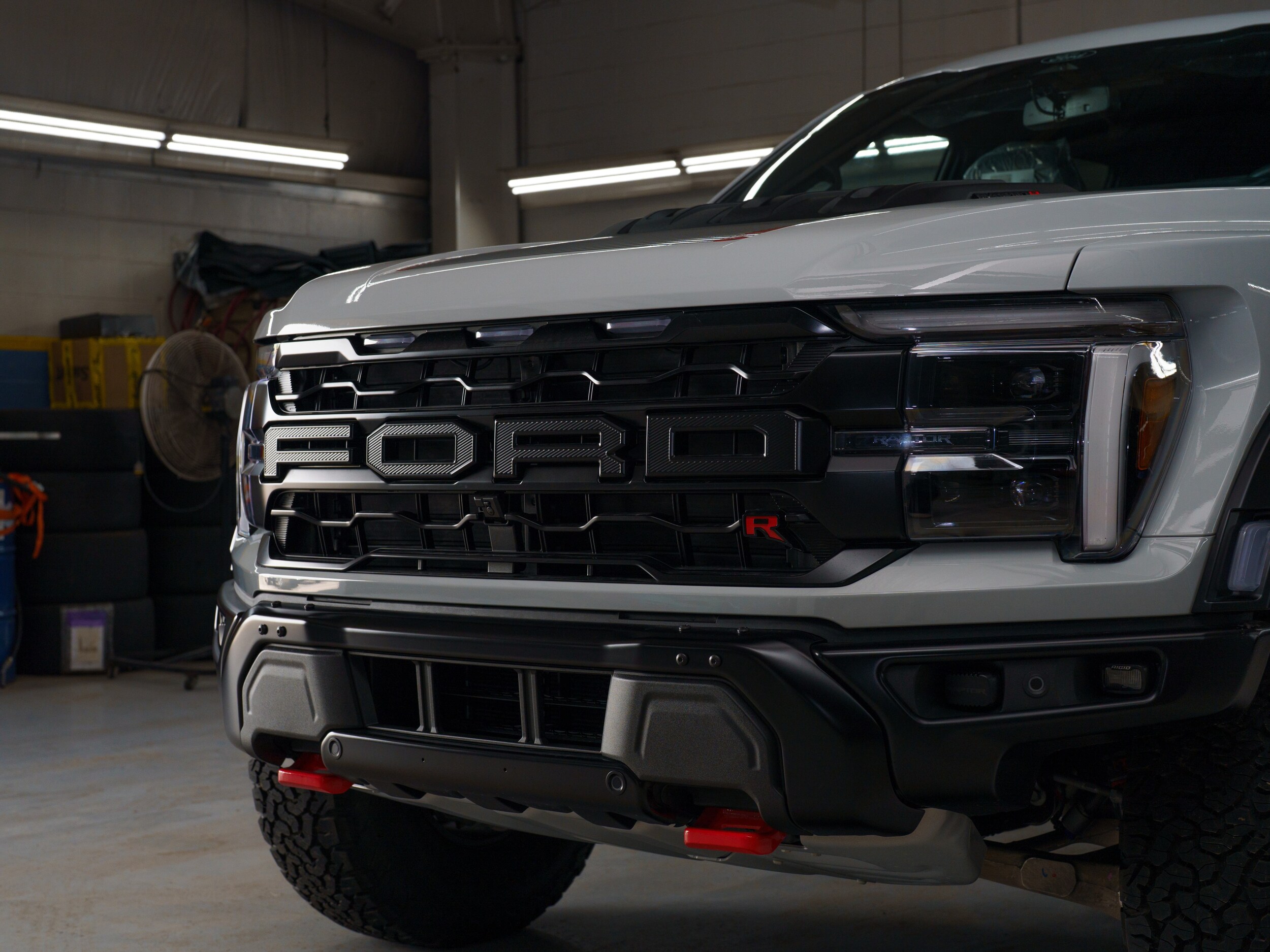
Raptor & Raptor R
Off-Road Use Adds Ownership Responsibilities
Raptor and Raptor R are engineered for substantially more aggressive terrain than a conventional F-150, but that capability does not eliminate inspection requirements.
After significant off-road driving, Ford recommends inspecting wheels, tires, suspension and underbody components for damage.
- Inspect tires after off-road use.
- Look for wheel damage.
- Inspect suspension components.
- Inspect the underbody and skid plates.
- Remove accumulated mud and debris.
- Inspect radiator areas for debris.
- Check driveline components after severe use.
- Reinflate tires to the placard pressure before road use.

Battery & Electrical System
Do Not Wait for the First No-Start
Test Battery Health
Have battery condition checked periodically, especially before winter.
Keep Terminals Clean
Inspect for corrosion, looseness and damaged connections.
Watch for Slow Starting
Slow cranking or repeated electrical warnings justify testing before the battery fails completely.
Wiper Blades
Replace when they streak, chatter, tear or no longer clear the windshield effectively.
Exterior Lighting
Periodically confirm headlights, brake lights and turn signals operate correctly.
Cameras & Sensors
Keep camera and sensor areas clean so available driver-assistance systems have an unobstructed view.
Missouri Ownership
Seasonal F-150 Maintenance Around Kansas City
Fall / Winter
- Check cold tire pressure.
- Test the 12-volt battery.
- Inspect tire tread depth.
- Check coolant condition and freeze protection.
- Inspect wiper blades.
- Use winter-rated washer fluid.
- Confirm heater and defroster operation.
- Wash road salt from the truck regularly.
Spring / Summer
- Check tire pressure after temperature increases.
- Inspect air-conditioning performance.
- Inspect cooling system before towing season.
- Check engine air filter after dusty spring driving.
- Inspect trailer equipment before vacation travel.
- Clean bugs and debris from cooling airflow areas.
- Inspect brakes before long towing trips.
Exterior Care
Missouri Road Salt Deserves Attention
Winter road treatments can accumulate on the underbody, wheel wells and suspension components.
Regular washing during and after winter helps remove salt, mud and contaminants from areas that are difficult to see.
- Wash wheel wells.
- Rinse the underbody.
- Clean around suspension components.
- Remove mud from skid plates.
- Repair paint chips when practical.
- Keep drainage areas clear.
Long-Term Ownership
Planning Beyond 100,000 Miles
0-30K Miles
Establish Good Habits
Follow oil-life messages, rotate tires, replace filters on schedule and establish a complete maintenance record.
30K-60K Miles
Watch How the Truck Is Aging
Pay closer attention to tire wear, brake condition, alignment, battery health and driveline behavior.
60K-100K Miles
Usage Starts to Matter More
Trucks used heavily for towing, idling, off-road work or dusty service may have additional maintenance needs before the normal long-term intervals.
Around 100K
Spark Plugs & Belt Inspection
Current Ford normal-schedule guidance includes spark-plug replacement and accessory-drive-belt inspection around this stage.
Around 150K
Major Driveline Maintenance
Current normal-schedule guidance reaches major transmission and applicable axle / transfer-case fluid service around this point, along with drive-belt replacement.
Around 200K
Long-Term Cooling-System Service
Ford's current normal schedule places the initial major engine-coolant replacement around 200,000 miles or 10 years, followed by recurring service.
Do Not Wait for the Scheduled Interval
Warning Signs That Deserve Immediate Inspection
Warning Lights
Engine, brake, charging, hybrid, transmission or temperature warnings.
Fluid Leaks
New oil, coolant, transmission or driveline fluid under the truck.
New Vibration
Steering-wheel, drivetrain or braking vibration that was not present before.
Overheating
Temperature warnings or repeated high-temperature operation.
Brake Changes
Grinding, pulsation, pulling or significantly altered pedal feel.
Drivability Changes
Misfires, hesitation, unusual shifting, reduced power or abnormal noise.
Service Records
Keep Track of More Than Mileage
Date & Mileage
Record when each service was performed and the truck's mileage.
Parts & Fluids
Keep invoices showing oil specifications, filters and other components used.
Repairs & Recalls
Maintain documentation of repairs, warranty work and completed recall campaigns.
Continue Your F-150 Research
Learn More About the 2027 Ford F-150
2027 F-150 Overview Explore the complete F-150 lineup. F-150 Trim Levels Compare XL through Raptor. F-150 Engines Compare EcoBoost, V8, PowerBoost and Raptor engines. PowerBoost Hybrid Learn about Ford's full-hybrid F-150 powertrain. F-150 Tremor Explore off-road-focused F-150 capability. F-150 Raptor Compare Raptor and Raptor R. Ford Service Center Learn about service at Chuck Anderson Ford. Schedule Service Request a Ford service appointment.
F-150 Service Near Kansas City
Maintain Your F-150 at Chuck Anderson Ford
From routine oil and filter service to brakes, batteries, tire rotations, diagnostics, drivetrain maintenance and PowerBoost service, maintaining an F-150 is easier when the service team understands how Ford trucks are built and used.
Chuck Anderson Ford in Excelsior Springs serves Ford owners throughout Liberty, Kearney, Lawson, Richmond, Smithville, North Kansas City, Kansas City and surrounding northwest Missouri communities.
Chuck Anderson Ford
1910 W Jesse James Road
Excelsior Springs, MO 64024
Service: 816-648-6424
Parts: 816-648-6429
- Oil and filter service
- F-150 tire rotation
- Brake service
- Battery testing
- Engine and cabin filters
- Drivetrain service
- Ford diagnostics
- PowerBoost service
- Recall repairs
- Ford truck maintenance
Frequently Asked Questions
2027 Ford F-150 Ownership FAQs
How often should I change the oil in a 2027 Ford F-150?
Follow the Ford Intelligent Oil-Life Monitor rather than relying only on a fixed mileage interval. Ford's latest F-150 guidance says not to exceed one year or 10,000 miles between oil-service intervals. Severe operating conditions may result in an earlier oil-change message.
How often should F-150 tires be rotated?
Ford's current F-150 maintenance schedule pairs tire rotation and tread inspection with the oil-life service interval.
What tire pressure should a 2027 Ford F-150 have?
Use the cold inflation pressure printed on the Tire Information label on the driver's-side B-pillar or door area of your exact truck. There is no single PSI number that applies to every F-150 because tire size, wheel, load rating and configuration vary.
Should I inflate my F-150 tires to the PSI printed on the tire sidewall?
Not as your normal inflation target. The tire sidewall identifies the tire's pressure and load limits. Ford's recommended vehicle pressure is printed on the truck's Tire Information label.
Should I check tire pressure when the tires are hot or cold?
Use cold tire pressure when comparing the reading with Ford's recommended placard pressure.
How often should the cabin air filter be replaced?
Ford's current F-150 normal schedule uses approximately a 20,000-mile cabin-air-filter replacement interval. Dust and pollen can require earlier service.
How often should the engine air filter be replaced?
Ford's current normal F-150 schedule places engine-air-filter replacement at approximately 30,000 miles. Dusty, off-road or agricultural use may justify earlier inspection or replacement.
How often should F-150 brake fluid be changed?
Ford's current scheduled-maintenance guidance calls for brake-fluid replacement every three years.
When should spark plugs be replaced in an F-150?
Ford's current normal F-150 schedule places spark-plug replacement around 100,000 miles. Certain operating conditions or equipment may require earlier service, so follow the maintenance guide for the exact truck.
When should F-150 transmission fluid be changed?
Ford's current normal-service schedule uses a long-term interval for automatic transmission fluid. Trucks that tow frequently, operate under heavy loads or experience severe conditions can have additional requirements. Follow the Owner's Manual for the exact vehicle.
Does towing change F-150 maintenance?
It can. Frequent or heavy towing increases powertrain, cooling-system, brake, tire and driveline loads. Ford identifies towing and heavy loading among operating conditions that can affect maintenance requirements.
Does the PowerBoost hybrid still need oil changes?
Yes. PowerBoost includes a gasoline 3.5L EcoBoost V6, so it still requires engine oil and filter changes as indicated by the Intelligent Oil-Life Monitor.
Does PowerBoost need to be plugged in?
No. The F-150 PowerBoost is a full hybrid, not a plug-in hybrid. The vehicle manages the hybrid battery during normal operation.
What should I inspect after driving an F-150 Raptor off-road?
Inspect the tires, wheels, underbody, suspension and other exposed components for damage. Remove accumulated mud and debris, inspect cooling airflow areas and return tires to the recommended on-road pressure before normal road use.
Should I service my F-150 before towing a camper on vacation?
If the truck is approaching a maintenance interval, completing service before a major towing trip is sensible. At minimum, check engine oil, coolant, tires, brakes, trailer equipment and all fluid leaks before departure.
Where can I service a Ford F-150 near Liberty or Kansas City?
Chuck Anderson Ford in Excelsior Springs, Missouri provides Ford service for F-150 owners from Liberty, Kearney, Lawson, Richmond, Smithville, North Kansas City, Kansas City and surrounding communities. Schedule Ford service .
2027 Ford F-150 Ownership
Maintain the Truck Around How You Actually Use It
The best F-150 maintenance plan is not simply a list of mileage numbers. Follow the truck's Intelligent Oil-Life Monitor, maintain the tires at the pressure specified on the vehicle label, complete scheduled filter and fluid service, and adjust your maintenance planning when towing, hauling, idling, driving off-road or operating in severe conditions. That approach gives your F-150 the best opportunity to remain dependable well beyond its first 100,000 miles.
This ownership guide is intended as a general research and maintenance-planning resource for the 2027 Ford F-150. Ford had not published the final U.S. 2027 F-150 Owner's Manual and complete scheduled maintenance information when this page was prepared. Maintenance intervals described here use Ford's latest official F-150 maintenance framework available at the time of publication and are subject to change for the 2027 model year. Required service varies by engine, drivetrain, equipment, tire configuration, vehicle use, operating conditions and service history. The Tire Information label on the specific vehicle is the authoritative source for recommended cold tire inflation pressure. Never substitute the maximum pressure printed on a tire sidewall for the vehicle manufacturer's recommended inflation pressure. Always follow the Owner's Manual, Tire Information label, vehicle messages and Ford maintenance schedule assigned to your exact VIN. Have warning lights, leaks, unusual noises, overheating, braking changes or drivability concerns inspected without waiting for the next scheduled maintenance interval.