
2027 Ford Mustang | Maintenance, Service & Long-Term Care
2027 Ford Mustang Ownership Guide
Owning a 2027 Ford Mustang is about more than enjoying the drive. Proper maintenance helps protect the engine, transmission, brakes, tires and other components that make Mustang ownership rewarding.
Whether you choose the turbocharged 2.3L EcoBoost, naturally aspirated 5.0L Mustang GT, modified 5.0L Dark Horse or supercharged 5.2L Dark Horse SC, your maintenance needs depend on the vehicle's equipment and how you use it.
Explore oil-change guidance, service intervals, brake and tire care, fluid maintenance, seasonal driving and the additional considerations for track-focused Mustang models.
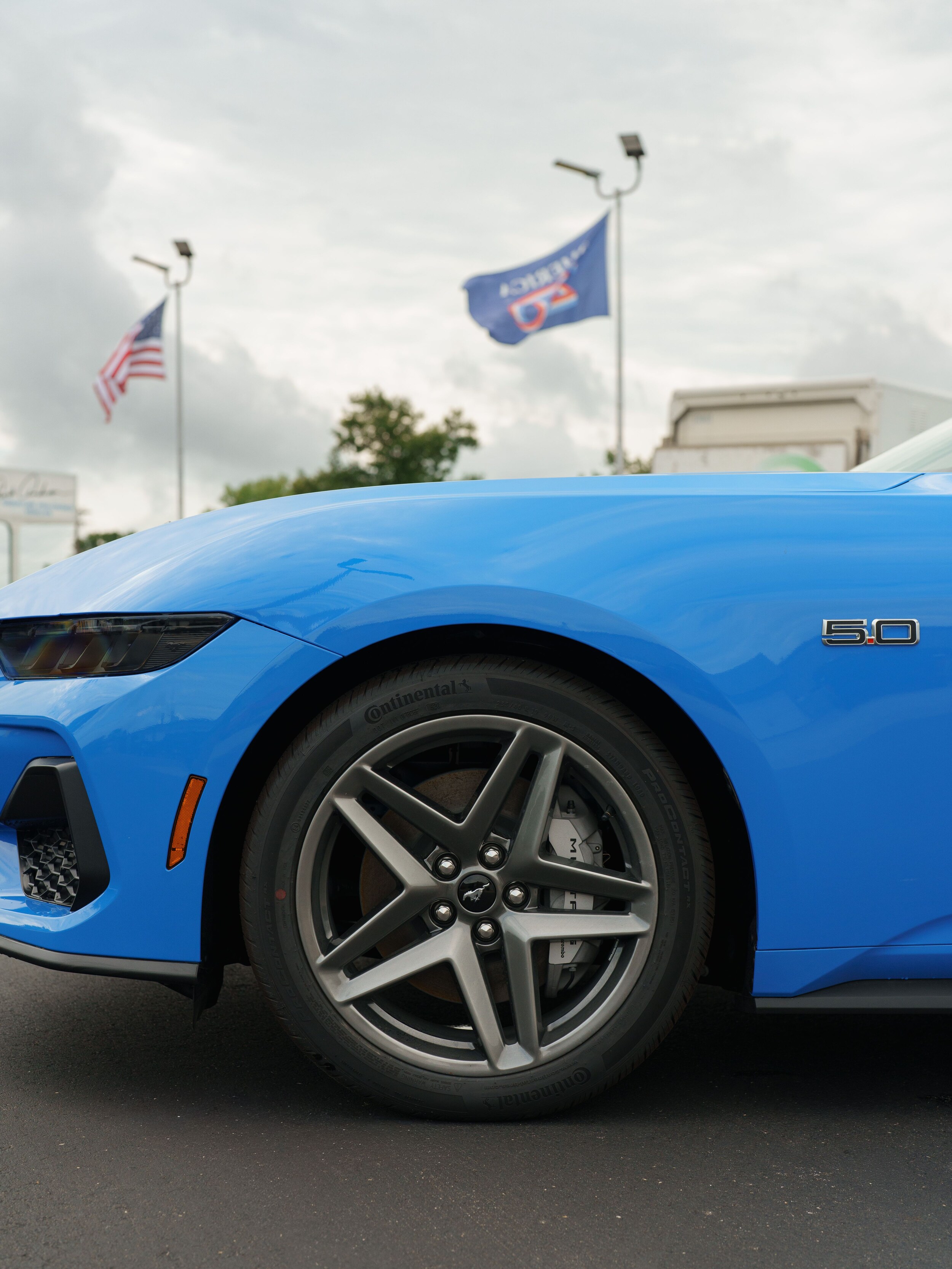 Illustrative previous-model-year Mustang image.
Oil-Life Monitor
Follow the vehicle's service reminder
3 Years*
Brake-fluid planning reference
20,000 Miles*
Cabin air-filter planning reference
DCT Service*
Separate Dark Horse SC requirements
Important 2027 maintenance information: Ford's preliminary 2027 Mustang ordering guides identify engines, models, equipment and available packages, but they do not establish the final 2027 scheduled-maintenance intervals.
Where this guide provides a specific mileage or time interval marked with an asterisk (*), it is a planning reference from Ford's published 2026 Mustang Owner's Manual, not a confirmed 2027 requirement. Always follow the final 2027 Owner's Manual, current Ford service information, the vehicle's Intelligent Oil-Life Monitor and the requirements for your exact VIN.
Maintenance Based on Actual Use
Not Every 2027 Mustang Needs the Same Maintenance
A Mustang used for gentle highway commuting experiences very different conditions from one driven aggressively on weekends or regularly taken to a road course.
Engine temperatures, oil condition, tire wear, brake wear and drivetrain loads are affected by driving habits as much as they are by mileage.
That's why a good Mustang ownership plan considers both the factory maintenance schedule and the way the vehicle is actually driven.
A daily-driven EcoBoost may spend much of its time in stop-and-go traffic. A Mustang GT may see frequent spirited acceleration. A Dark Horse might be used for occasional track events, while a Dark Horse SC adds supercharger and dual-clutch transmission systems with their own service considerations.
Even two Mustangs with the same odometer reading may need different attention if their operating conditions are significantly different.
The best maintenance plan begins with the correct Ford service information for the exact vehicle, then accounts for real-world driving conditions.
2027 Mustang Powertrains
Four Engines With Different Ownership Considerations
Ford's preliminary 2027 order guides identify four main Mustang powertrain configurations. Each has unique mechanical equipment that owners should understand.
2.3L EcoBoost
Turbocharged four-cylinder with a standard 10-speed automatic transmission.
Oil condition, correct fluids, turbocharger-related systems and routine inspection are important ownership considerations.
Mustang GT 5.0L
Naturally aspirated V8 with a standard six-speed manual and available 10-speed automatic.
Tire, brake and fluid maintenance become particularly important with frequent spirited driving.
Dark Horse 5.0L
Modified naturally aspirated V8 with dedicated powertrain cooling, Brembo brakes, MagneRide and a TORSEN differential.
Performance hardware deserves additional inspection after demanding use.
Dark Horse SC 5.2L
Supercharged V8 with a TREMEC seven-speed dual-clutch transmission, carbon-fiber driveshaft and 3.73 TORSEN differential.
Supercharger, intercooler and DCT maintenance require special attention.
Engine Oil & Filter
How Often Does a 2027 Ford Mustang Need an Oil Change?
For a new 2027 Mustang, the correct oil-change interval must be verified against the applicable Owner's Manual and service information for that vehicle.
Ford's published 2026 Mustang maintenance guidance uses an Intelligent Oil-Life Monitor to determine when an engine oil and filter change is needed.
The system accounts for operating conditions rather than requiring every driver to follow one identical mileage interval.
Factors that can shorten oil life include frequent short trips, extended idling, high engine loads, temperature extremes and demanding performance driving.
The published 2026 guidance says not to exceed one year or 10,000 miles between normal oil-service intervals, even when the vehicle has not displayed a reminder. Confirm whether the same maximum applies to the final 2027 schedule.
Should You Change Mustang Oil Every 5,000 Miles?
A fixed 5,000-mile oil-change interval is not universally required by Ford's published 2026 Mustang maintenance schedule.
Instead, that schedule relies on the Intelligent Oil-Life Monitor, with an upper normal-service limit of one year or 10,000 miles.
Drivers who frequently use their Mustang under severe or high-performance conditions may require earlier service. The applicable 2027 maintenance guidance and vehicle reminders should take precedence over a generic mileage recommendation.
What Should Be Checked During an Oil-Change Visit?
- Engine oil and filter condition
- Tire pressure, tread depth and uneven wear
- Tire rotation eligibility based on wheel sizes
- Brake pads, rotors, hoses and parking brake
- Cooling-system condition and visible hoses
- Steering and suspension components
- Exhaust components and heat shields
- Rear-axle and driveline components
- Engine and cabin air filters
- Visible fluid leaks and warning messages
After completing the oil and filter service, the Oil-Life Monitor should be reset according to Ford's procedure.
Maintenance Planning Reference
2027 Mustang Maintenance Planning: EcoBoost, GT and Dark Horse
The following table uses Ford's published 2026 Mustang normal-maintenance schedule as a reference for owners planning 2027 EcoBoost, GT and naturally aspirated Dark Horse service.
These are not verified 2027 factory intervals. Confirm the final schedule for the vehicle before using them to determine when service is due.
| 2026 Ford Reference Interval | Service Item | Ownership Consideration |
|---|---|---|
| When Oil-Life Monitor Indicates | Change engine oil and filter; inspect tires, brakes, cooling and other systems. | 2026 guidance limits normal oil-service intervals to one year or 10,000 miles. |
| Every 3 Years | Replace brake fluid. | Time-based service, even on low-mileage vehicles. |
| Every 20,000 Miles | Replace cabin air filter. | Dusty conditions can warrant earlier inspection. |
| Every 30,000 Miles | Replace engine air filter. | Inspect sooner in dusty operating environments. |
| 60,000 Miles Under Severe Service | Replace spark plugs. | Applies when the vehicle meets Ford's severe-service conditions. |
| Every 100,000 Miles | Replace spark plugs and inspect accessory drive belts. | Normal-service spark-plug reference interval. |
| Every 150,000 Miles | Service applicable automatic or manual transmission fluid; change rear-axle fluid; replace accessory drive belts. | Exact service items depend on installed transmission and vehicle configuration. |
| 10 Years or 200,000 Miles | Initial engine-coolant replacement. | Use the time or mileage requirement specified by Ford. |
| After Initial Coolant Service | Replace coolant every five years or 100,000 miles. | Use Ford-approved coolant and procedures. |
Source: Ford's published 2026 Mustang Owner's Manual, scheduled maintenance excluding Dark Horse SC. These intervals are provided for preliminary ownership planning only and must be reconciled with the final 2027 maintenance schedule, vehicle warnings and VIN-specific service requirements.
Review Ford's published 2026 Mustang Owner's Manual for the reference schedule
Long-Term Ownership Planning
How Maintenance Needs Change as Your Mustang Accumulates Miles
A Mustang's early ownership years are largely focused on oil changes, tire care, brake inspections and routine checks.
As mileage increases, filter replacement, spark plugs, drivetrain fluids and accessory components become more relevant.
Early Ownership
Follow service reminders, inspect the tires, monitor brake wear, maintain fluid levels and document completed maintenance.
20,000–30,000 Miles*
The 2026 reference schedule calls for cabin air-filter replacement at 20,000 miles and engine air-filter replacement at 30,000 miles.
60,000–100,000 Miles*
Severe-service spark-plug replacement enters the schedule at 60,000 miles, while the normal reference interval is 100,000 miles.
150,000 Miles and Beyond*
Long-term transmission, rear-axle, belt and coolant maintenance becomes important, with exact requirements varying by model.
* Mileage examples are from Ford's 2026 maintenance schedule. Verify the applicable 2027 Owner's Manual. Dark Horse SC uses additional, separate maintenance intervals.
Tire Care
Mustang Tire Maintenance Deserves More Attention Than Most Owners Give It
Tires are the only components connecting your Mustang to the road.
Their condition influences acceleration, cornering, braking and wet-weather traction.
Maintaining proper tire pressure can also help limit uneven tire wear.
Owners should check tire pressure when the tires are cold and use the pressure listed on the vehicle's tire-information label.
The maximum pressure printed on the tire's sidewall is not the normal inflation target.
Practical Mustang Tire Checklist
- Check cold tire pressure regularly.
- Use the vehicle's tire-information label.
- Inspect tread depth and uneven wear.
- Look for cuts, punctures, bulges and sidewall damage.
- Recheck pressure after major temperature changes.
- Confirm whether the tires are all-season, summer or track-oriented.
- Verify the tire sizes before attempting rotation.
- Have unusual wear patterns or vibrations inspected.
What Tire Pressure Should a 2027 Mustang Use?
The correct tire pressure is the cold inflation pressure on the specific vehicle's tire-information label.
Do not assume that EcoBoost, GT, Dark Horse and Dark Horse SC all use the same pressure.
Wheel size, tire specifications and vehicle equipment can differ substantially between Mustang configurations.
Staggered Tire Setups
Not Every 2027 Mustang Can Be Rotated Front to Rear
Some performance Mustang models use different front and rear tire sizes.
This is called a staggered tire setup.
For example, the 2027 naturally aspirated Dark Horse uses wider rear tires than front tires in its standard configuration.
Dark Horse SC configurations also use performance-focused tire and wheel combinations, with the 970A High Package Coupe adding specialized carbon-fiber wheels and Michelin Pilot Sport Cup 2 R tires.
When front and rear tires have different sizes, a conventional front-to-rear rotation may not be possible.
Rotation may also be restricted by directional tire designs, wheel widths, tire construction or vehicle-specific requirements.
Should Every Mustang Get a Tire Rotation at Every Oil Change?
Ford's routine maintenance guidance includes tire inspection and rotation where appropriate.
However, rotation must be compatible with the installed wheel and tire setup.
For staggered performance Mustangs, the service technician should confirm the approved rotation procedure before moving tires between positions.
Missouri Weather and Seasonal Driving
Summer Performance Tires Require Planning for Kansas City Winters
The Kansas City area experiences hot summers, cold winters and occasional snow and ice.
Those temperature changes matter when choosing tires for a Mustang.
Many higher-performance Mustang configurations use summer-oriented tires designed primarily for warm-weather traction.
Cold temperatures can reduce the flexibility of certain tire compounds and significantly affect available grip.
Ford's ordering guidance for certain Mustang summer performance tires warns against use at approximately 45 degrees Fahrenheit or below, or in snow and ice.
Specialized tires such as the Michelin Pilot Sport Cup 2 R on the Dark Horse SC 970A may have additional temperature and weather limitations specified by the tire manufacturer.
Daily-Driven EcoBoost or GT
Check whether the vehicle is equipped with all-season or summer tires before planning year-round commuting.
Dark Horse
Review its standard summer performance tires and the more specialized tire configuration included with the Handling Package.
Dark Horse SC 970A
Understand the limitations of its Michelin Pilot Sport Cup 2 R tires before driving in cold, wet or winter conditions.
Dedicated Winter Tire Setup
Owners intending to drive regularly during Missouri winters may benefit from an appropriate seasonal wheel-and-tire setup approved for the vehicle.
Remember: Rear-wheel drive and advanced traction-control systems cannot make an unsuitable tire compound perform like a winter tire on snow or ice.
Brake Maintenance
Inspect Mustang Brakes Based on Use, Not Mileage Alone
Braking systems convert vehicle motion into heat.
Repeated aggressive braking can increase temperatures and accelerate wear on pads, rotors and other components.
That is especially important for high-performance Mustang configurations with upgraded brake hardware.
The 2027 Mustang GT can be equipped with additional Brembo braking equipment through the GT Performance Package.
Dark Horse includes Brembo performance brakes as standard equipment, while Dark Horse SC offers even more specialized configurations, including carbon-ceramic brake discs on the 970A High Package Coupe.
Brake Warning Signs Worth Investigating
- Grinding noises while braking
- Persistent squealing
- Vibration through the steering wheel or brake pedal
- Reduced braking effectiveness
- Vehicle pulling during braking
- Brake or ABS warning indicators
- Visible rotor damage or unusual pad wear
- Unexpected changes in brake-pedal feel
Are Dark Horse SC Carbon-Ceramic Brakes Different to Maintain?
Yes. Carbon-ceramic brake components are different from conventional cast-iron brake discs and require the correct inspection procedures and service specifications.
Owners of a 2027 Dark Horse SC 970A should ensure brake maintenance is performed using information appropriate for the actual brake system installed on the vehicle.
Do not assume a standard Mustang GT brake-service procedure applies to specialized Dark Horse SC components.
Brake Fluid
Why Mustang Brake Fluid Needs Time-Based Maintenance
Brake fluid transmits hydraulic pressure through the braking system.
It can also absorb moisture over time, which can affect its boiling point and performance.
Ford's published 2026 Mustang maintenance schedule calls for brake-fluid replacement every three years.
That is a time-based service rather than a mileage-only service.
A low-mileage Mustang that spends much of its life in a garage can still need brake-fluid service.
Owners planning demanding performance use should pay particular attention to the brake system's condition and Ford's applicable track-use procedures.
Does the 2027 Mustang Require Brake Fluid Every Three Years?
Three years is Ford's published 2026 Mustang reference interval.
Confirm the requirement in the final 2027 Owner's Manual for your vehicle before treating it as the official 2027 interval.
Brake-fluid service should use the exact fluid specification and procedure Ford requires for the installed brake system.
Cabin and Engine Air Filters
Two Filters With Different Jobs and Different Service Needs
Cabin Air Filter
The cabin air filter helps remove particles from air entering the passenger compartment through the climate-control system.
Ford's published 2026 Mustang maintenance schedule identifies 20,000 miles as the normal replacement reference.
Dusty roads, construction zones and other demanding environments can justify earlier inspection or replacement.
Engine Air Filter
The engine air filter helps prevent dirt and debris from entering the engine's intake system.
Ford's published 2026 Mustang maintenance schedule identifies 30,000 miles as the normal replacement reference.
Vehicles driven frequently in dusty conditions may require earlier attention.
These are 2026 maintenance references only. The final 2027 Owner's Manual and current Ford service information determine the actual schedule.
Clean intake air is particularly important to maintaining the condition of engine components, whether the Mustang uses a turbocharger, natural aspiration or a supercharger.
Spark-Plug Maintenance
When Should Mustang Spark Plugs Be Replaced?
Spark plugs ignite the air-fuel mixture inside a gasoline engine.
As they wear, engine performance and combustion consistency can be affected.
Ford's published 2026 Mustang schedule lists spark-plug replacement at 100,000 miles under normal service, with a 60,000-mile reference for severe operating conditions.
These figures should be confirmed against the final 2027 maintenance requirements for the exact engine and vehicle.
Possible Signs of Spark-Plug Problems
- Engine misfires
- Rough idle
- Hard starting
- Inconsistent acceleration
- Reduced engine performance
- Check-engine warning light
A warning light or drivability concern should be diagnosed rather than automatically attributed to spark plugs.
Engine, Transmission and Differential Fluids
Mustang Fluids Protect More Than Just the Engine
A modern Mustang relies on several different fluids to lubricate components, transfer hydraulic pressure and manage operating temperatures.
Each fluid has a specific purpose, and using the wrong specification can cause serious problems.
Engine Oil
Lubricates internal engine components and helps manage heat generated during operation.
Transmission Fluid
Protects transmission components and supports operation. The correct fluid and procedure depend on whether the vehicle has a conventional automatic, manual or dual-clutch transmission.
Rear Differential Fluid
Lubricates gears and bearings in the rear-axle assembly. Performance use can create additional thermal demands.
Engine Coolant
Helps regulate engine operating temperature and protect cooling-system components.
Brake Fluid
Transfers hydraulic force through the braking system. Age and moisture contamination are important service considerations.
Performance Cooling Systems
Dark Horse and Dark Horse SC include specialized cooling hardware that should be inspected and serviced according to the relevant Ford procedures.
Can You Use the Same Transmission Fluid in Every Mustang?
No. The 2027 Mustang lineup includes different transmission designs.
EcoBoost uses a 10-speed automatic. Mustang GT offers a six-speed manual or 10-speed automatic. Dark Horse offers a 10-speed automatic or TREMEC six-speed manual. Dark Horse SC uses a TREMEC seven-speed dual-clutch transmission.
Owners should use only the approved fluids and service procedures for their exact transmission and vehicle.
Specialized Supercharged Maintenance
2027 Mustang Dark Horse SC: Additional Maintenance to Plan For
The 2027 Dark Horse SC combines a supercharged 5.2L V8 with a TREMEC seven-speed dual-clutch transmission. Those systems introduce maintenance considerations beyond the ordinary Mustang EcoBoost, GT and naturally aspirated Dark Horse configurations.
Ford's published 2026 Dark Horse SC Owner's Manual provides a separate schedule covering the intercooler, supercharger drive belt, DCT side filter, transmission fluid and fuel filter.
The table below is a reference to that published 2026 schedule—not a claim that Ford has confirmed identical service intervals for 2027.
| 2026 Ford Dark Horse SC Reference Interval | Additional Service |
|---|---|
| Every 20,000 Miles |
Replace cabin air filter. Inspect intercooler and intercooler coolant. Inspect supercharger drive belt. Replace DCT side filter and top off fluid using Ford's prescribed fill procedure. |
| Every 30,000 Miles | Replace engine air filter. |
| Every 40,000 Miles | Change dual-clutch transmission fluid and side filter. |
| Every 50,000 Miles | Replace fuel filter. |
| 60,000 Miles Under Severe Service | Replace spark plugs. |
| Every 100,000 Miles | Replace spark plugs and inspect accessory drive belts. |
| Every 150,000 Miles | Replace accessory drive belts and change rear-axle fluid. |
| 10 Years or 200,000 Miles | Initial engine-coolant replacement. |
Source: Ford's published 2026 Mustang Owner's Manual, Dark Horse SC scheduled-maintenance section. Ford also identifies time-based brake-fluid service and Oil-Life Monitor requirements. Confirm the final 2027 Dark Horse SC maintenance schedule for the specific VIN.
Why Is Dark Horse SC DCT Service Different?
The seven-speed dual-clutch transmission has specialized fluid, filter and service procedures that differ from the conventional automatic and manual transmissions used elsewhere in the Mustang lineup.
Ford's 2026 Dark Horse SC schedule identifies a DCT side-filter service at 20,000 miles and a DCT fluid-and-side-filter service at 40,000 miles.
Those reference intervals should not be replaced with the longer normal-service transmission-fluid interval listed for the non-SC Mustang models.
When servicing a 2027 Dark Horse SC, use the final Ford procedure and requirements for that vehicle.
New for 2027
Dark Horse SC Convertible Ownership Adds New Considerations
Ford introduces the Dark Horse SC Convertible for 2027.
It shares the supercharged 5.2L V8 and seven-speed DCT with the Coupe models but adds its own body-style equipment.
The Convertible includes unique MagneRide tuning, a reduced-drag rear spoiler, a unique carbon-fiber hood vent and Silver Argento Brembo calipers.
Convertible owners should also monitor the condition of the roof material, seals, drains and operating mechanism using Ford's applicable maintenance and care instructions.
950A Coupe
Provides the supercharged SC powertrain with a fixed roof, cast-aluminum wheels and a split-folding rear seat.
970A High Package Coupe
Adds included Track Pack hardware, carbon-fiber wheels, carbon-ceramic brakes, Michelin Pilot Sport Cup 2 R tires and rear-seat deletion.
950A Convertible
Provides the supercharged powertrain with an open-air body style, unique suspension tuning and Convertible-specific equipment.
Ownership Priorities
Each configuration has different tires, braking equipment, body hardware and servicing considerations.
Track Days and Demanding Driving
Track Use Changes How You Should Maintain a Mustang
Repeated hard acceleration, high engine speeds, heavy braking and aggressive cornering place greater loads on a vehicle than routine commuting.
Mustang GT, Dark Horse and Dark Horse SC models can include performance-oriented systems intended for demanding driving, but that does not mean they are exempt from additional inspection or maintenance.
In fact, high-performance driving can accelerate tire wear, brake wear and fluid degradation.
Track use can also introduce operating conditions that require service much sooner than a normal street-driving schedule would suggest.
Before a Track Event
- Confirm the vehicle is suitable for the event and meets its rules.
- Review Ford's track-preparation requirements for the exact model.
- Check engine oil and other fluid levels.
- Inspect brake pads, rotors and brake-fluid condition.
- Inspect tire age, tread, damage and pressures.
- Verify wheel fasteners and wheel condition.
- Inspect for fluid leaks.
- Review any warning messages or diagnostic concerns.
After Demanding Performance Use
- Check for abnormal tire wear or damage.
- Inspect brakes for excessive wear or overheating.
- Look for new fluid leaks.
- Inspect cooling components and hoses.
- Listen for unfamiliar drivetrain or suspension noises.
- Review the vehicle's maintenance and track-use requirements.
Does Track Driving Shorten Mustang Maintenance Intervals?
It can. High-load operation can increase wear and subject mechanical components and fluids to higher temperatures.
Ford's published Mustang maintenance guidance also notes that extensive racetrack or high-rpm operation can affect the service life of components such as the timing chain.
Follow the track-use instructions for the exact 2027 model rather than assuming the normal street-driving service chart is sufficient.
Rear-Axle Maintenance
Some Differential-Fluid Services Are Triggered by Conditions, Not Mileage
The rear differential is responsible for transferring torque to the rear wheels while allowing them to rotate at different speeds.
Its fluid helps lubricate internal gears and bearings.
Ford's published 2026 Mustang maintenance guidance includes exceptions that can require rear-axle service ahead of the normal mileage interval.
For example, it directs owners to change axle fluid if the axle has been submerged in water.
It also addresses service following an axle over-temperature warning.
When Should a Mustang Differential Be Inspected?
Inspect the differential and related components if you notice fluid leaks, unfamiliar drivetrain noise, abnormal vibration or a related vehicle warning.
Track-driven Mustangs may also require more frequent differential-fluid attention under their specific Ford track-use instructions.
The correct fluid and service procedure depend on the actual axle and vehicle configuration.
Ownership by Mustang Model
What Deserves Extra Attention on Each 2027 Mustang?
2027 Mustang EcoBoost
The 2.3L EcoBoost uses turbocharging and a 10-speed automatic transmission.
Regular oil maintenance, correct fluid specifications, intake-system cleanliness and routine inspection are important.
Owners selecting the available RTR Performance Package should also understand its upgraded braking, differential and chassis equipment.
2027 Mustang GT
The naturally aspirated 5.0L V8 is offered with a manual or automatic transmission.
Tire and brake wear can vary significantly depending on driving habits and available GT Performance Package equipment.
Owners choosing summer performance tires should plan carefully for Missouri winter conditions.
2027 Mustang Dark Horse
Dark Horse adds dedicated powertrain cooling, standard MagneRide, Brembo brakes and a TORSEN differential.
Owners planning occasional track use should pay particular attention to the condition of those systems and follow Ford's specific track-use requirements.
2027 Mustang Dark Horse SC
The supercharged 5.2L V8, specialized cooling and seven-speed DCT introduce additional maintenance considerations.
Buyers of the 970A High Package Coupe should also understand carbon-ceramic brake and carbon-fiber wheel care.
Weekend and Low-Mileage Mustangs
Driving Fewer Miles Doesn't Eliminate Maintenance
Some Mustang owners drive their cars every day. Others reserve them for weekends, car shows or occasional warm-weather outings.
A low-mileage Mustang can still require maintenance even when very few miles have accumulated.
Engine oil, brake fluid and other components are affected by time and environmental conditions as well as use.
Batteries can discharge during storage, tires can lose pressure and exposed brake components can develop surface corrosion.
Good Habits for an Occasionally Driven Mustang
- Follow time-based services in the applicable Owner's Manual.
- Monitor battery condition during extended storage.
- Check tire pressure before driving after a long period of inactivity.
- Inspect the vehicle for leaks and warning messages.
- Keep the vehicle clean and follow Ford's storage recommendations.
- Check convertible-top seals and drain areas on applicable models.
- Maintain records even when annual mileage is low.
Does a Garage-Kept Mustang Still Need Oil Changes?
Yes. Low annual mileage does not automatically eliminate time-based maintenance.
Ford's published 2026 Mustang schedule includes a maximum time between normal oil services, and the applicable 2027 manual should be consulted for the exact vehicle.
Vehicles placed into long-term storage should also follow Ford's storage procedures.
Simple Preventive Care
Owner Checks That Can Help Catch Problems Early
You don't need to perform complicated mechanical work to take good care of a Mustang.
Simple, consistent observations can help identify concerns before they become more serious.
Watch the Instrument Cluster
Respond to oil-pressure, coolant-temperature, brake, battery and other warning messages rather than continuing to drive aggressively.
Monitor Tire Condition
Check pressure, tread and visible tire damage, especially after major temperature changes.
Look Under the Vehicle
New fluid spots or visible leaks deserve inspection.
Listen for Changes
New grinding, rattling, vibration or drivetrain noises may indicate a condition requiring diagnosis.
Check Fluid Levels
Follow Ford's instructions for checking accessible fluid levels without opening hot or pressurized systems.
Monitor the Battery
Battery condition is particularly important on Mustangs that spend extended periods parked.
Ford App and Security Features
2027 Mustang Ownership Includes More Than Mechanical Maintenance
Modern Mustang ownership also involves connected-vehicle technology.
Ford's preliminary 2027 ordering information lists Ford app Remote Start beginning with the EcoBoost 100A equipment group.
The 2027 lineup also includes the Ford Security Package with one year included upon activation, along with an optional seven-year purchase.
Listed Ford Security Package features include theft alerts, start inhibit and stolen vehicle services, subject to applicable terms and software availability.
Ford App
Supported connected features can help owners view vehicle information and access available remote functions using a compatible device.
Vehicle Security
Review activation, service terms and available theft-related features when taking delivery of a 2027 Mustang.
Software and Connectivity
Keep connected features and vehicle software current according to Ford's supported update procedures.
Maintain Accurate Records
Keep track of service history, vehicle warnings and completed repairs alongside the vehicle's connected-service information.
Connected functions and remote features vary by model, equipment, activation status, network conditions and service terms. App-based Remote Start should not be confused with every configuration's physical key-fob equipment.
Ford Service or Do-It-Yourself?
Some Mustang Maintenance Is Simple. Other Service Is Highly Specialized.
Routine checks such as tire pressure, washer-fluid level and visible fluid leaks may be appropriate for owners comfortable performing basic vehicle care.
Other procedures require specialized tools, approved fluids, technical information and the correct vehicle-specific sequence of operations.
This is particularly important for modern performance vehicles with advanced transmissions, sophisticated brake systems and specialized cooling equipment.
Good Reasons to Use a Ford Service Department
- Manufacturer-specified oil and filter service
- Brake-fluid replacement
- Transmission fluid and filter service
- Dark Horse SC DCT maintenance
- Cooling-system inspection and repair
- Warranty-related diagnosis and repairs
- Recall and service-campaign completion
- Electrical and software-related diagnosis
- Performance-model inspections
Chuck Anderson Ford's service team has access to Ford service information, diagnostic resources and parts designed for Ford vehicles.
Long-Term Value
Keep a Detailed Maintenance History for Your Mustang
Documented maintenance can help technicians understand a vehicle's history and give future buyers more confidence in its condition.
This can be especially useful for performance models, where how the vehicle was driven and maintained may matter as much as mileage.
Keep records of oil changes, filters, fluid services, tires, brakes and any other significant maintenance or repairs.
If the Mustang is used on track, maintaining a separate log of track events, preparation and post-event inspections can also be useful.
Useful Information to Save
- Service date and vehicle mileage
- Service facility and repair order
- Parts and fluids used
- Tire model, size and installation date
- Brake maintenance and replacement
- Transmission and differential fluid service
- Track-use preparation and inspections, if applicable
- Warranty, recall and software-related repairs
Continue Your Mustang Research
Explore the Complete 2027 Ford Mustang Lineup
Maintenance requirements can vary because Mustang models use different engines, transmissions, wheels, tires and performance equipment.
Explore the individual models to better understand the systems that make each Mustang unique.
2027 Mustang Trim Guide
Compare EcoBoost, GT, Dark Horse and Dark Horse SC models, equipment groups and body styles.
Compare Mustang Trims2027 Mustang Engine Guide
Compare all four Mustang engine families, including their transmissions and mechanical differences.
Compare Mustang Engines2027 Mustang EcoBoost
Explore the 2.3L turbocharged engine and available Fastback and Convertible models.
Research EcoBoost Models2027 Mustang GT
Learn about the 5.0L V8, transmission choices and available performance equipment.
Research Mustang GT2027 Mustang Dark Horse
Explore the modified V8, dedicated cooling, MagneRide and Brembo braking equipment.
Research Dark Horse2027 Mustang Dark Horse SC
Compare the supercharged Coupe, track-oriented 970A and new Convertible configurations.
Research Dark Horse SCChuck Anderson Ford Service
Explore maintenance, brake, tire, diagnostic and repair services at our Excelsior Springs dealership.
Explore Our Service CenterSchedule a Service Appointment
Request maintenance or vehicle inspection with Chuck Anderson Ford.
Schedule Mustang ServiceFrequently Asked Questions
2027 Ford Mustang Maintenance and Ownership FAQs
How often does a 2027 Ford Mustang need an oil change?
Follow the applicable 2027 Owner's Manual and vehicle service reminders. Ford's published 2026 Mustang schedule uses an Intelligent Oil-Life Monitor and limits normal oil-service intervals to one year or 10,000 miles. Confirm the final 2027 requirements before relying on those limits.
Is the 2027 Mustang maintenance schedule available?
The preliminary 2027 Ford Mustang order guides provide model and equipment specifications, not a final scheduled-maintenance chart. Specific mileage and time intervals must be confirmed with the applicable 2027 Owner's Manual and current Ford service information.
Should I change Mustang oil every 5,000 miles?
A fixed 5,000-mile interval is not universally required by Ford's published 2026 Mustang schedule. It uses the Intelligent Oil-Life Monitor, while severe use can require earlier service. Follow the requirements for your specific 2027 vehicle.
Does a low-mileage Mustang still need annual maintenance?
Yes. Time-based service, battery care, tire inspection and fluid condition remain important even if a Mustang is driven infrequently. Follow the maximum service times specified for the vehicle.
What oil should I use in a 2027 Mustang?
Use the exact oil viscosity and Ford specification required for the vehicle's engine and operating conditions. Do not assume the EcoBoost, GT, Dark Horse and Dark Horse SC all use identical oil requirements.
How often should a 2027 Mustang's tires be rotated?
Inspect tire condition during service and rotate only when permitted by the installed wheel and tire configuration. Some performance Mustangs use staggered tire sizes that prevent conventional front-to-rear rotation.
What tire pressure should I use in my 2027 Mustang?
Use the cold tire pressure shown on the specific vehicle's tire-information label. Do not use the maximum pressure printed on the tire sidewall as the normal inflation target.
Can you drive a 2027 Mustang Dark Horse in the winter?
Winter suitability depends heavily on tires, weather and road conditions. Dark Horse summer performance tires have important cold-weather limitations. Appropriate seasonal tires and careful driving are essential considerations for Missouri winters.
Are summer performance tires safe in freezing temperatures?
Do not assume they are. Some Ford Mustang summer performance tires are not recommended for temperatures around 45 degrees Fahrenheit or below, or for snow and ice. Follow the limitations for the exact tire installed.
How often should Mustang brake fluid be replaced?
Ford's published 2026 Mustang maintenance schedule calls for brake-fluid replacement every three years. Verify the final 2027 requirement for the exact vehicle.
When should the Mustang cabin air filter be replaced?
The published 2026 Mustang maintenance reference is 20,000 miles, with earlier inspection appropriate in dusty conditions. Confirm the applicable 2027 service interval.
When should the Mustang engine air filter be replaced?
Ford's published 2026 normal-service reference is 30,000 miles, although dusty conditions can require earlier inspection or replacement. Check the final 2027 schedule.
When should Mustang spark plugs be replaced?
Ford's published 2026 Mustang schedule specifies a 100,000-mile normal-service reference and a 60,000-mile severe-service reference. The final 2027 Owner's Manual determines the correct interval for your vehicle.
Does the 2027 Mustang EcoBoost need special maintenance?
The 2.3L EcoBoost uses turbocharging, making correct engine oil, intake-system maintenance and cooling-system care important. Follow the specified maintenance schedule and fluid requirements for the exact vehicle.
Does Mustang GT require more maintenance than EcoBoost?
Maintenance needs depend on vehicle configuration and driving conditions. GT's V8 engine and available performance equipment can introduce different tire, brake and fluid considerations from EcoBoost.
Does the 2027 Dark Horse require special maintenance?
Dark Horse includes dedicated powertrain cooling, Brembo brakes, MagneRide damping and a TORSEN differential. These systems should be inspected and serviced using the correct Ford procedures, particularly after demanding performance use.
Does Dark Horse SC have a different maintenance schedule?
Ford's published 2026 Dark Horse SC schedule includes additional intercooler, supercharger-drive-belt and dual-clutch-transmission services. Owners of a 2027 Dark Horse SC should verify the final model-specific service schedule rather than using the ordinary Mustang schedule.
How often does Dark Horse SC need DCT service?
Ford's published 2026 Dark Horse SC maintenance schedule specifies DCT side-filter service at 20,000 miles and DCT fluid-and-side-filter replacement at 40,000 miles. Confirm the applicable 2027 instructions before scheduling service.
Does Dark Horse SC need supercharger maintenance?
Its specialized powertrain has additional inspection requirements. The published 2026 Dark Horse SC schedule includes inspection of the supercharger drive belt and intercooler system at 20,000-mile intervals. The 2027 service requirements should be verified.
Are Dark Horse SC carbon-ceramic brakes expensive to maintain?
Carbon-ceramic components are specialized performance parts, and maintenance or replacement costs can differ significantly from conventional brakes. Owners should obtain service estimates based on the exact components and vehicle configuration.
Does track driving change Mustang maintenance?
Yes. Repeated high-load and high-temperature operation can increase wear on brakes, tires, fluids and drivetrain components. Follow the vehicle-specific Ford track-use instructions and inspection requirements.
When should Mustang differential fluid be changed?
The published 2026 normal schedule lists rear-axle-fluid service at 150,000 miles for the applicable models, with additional exceptions for conditions such as axle submersion or overheating. Track-use requirements may be different. Confirm the final 2027 schedule.
When does a Mustang need engine coolant replacement?
The published 2026 Mustang schedule lists the first engine-coolant change at 10 years or 200,000 miles, followed by five-year or 100,000-mile intervals. Owners should confirm the applicable 2027 requirement and coolant specification.
Should I service a Mustang that has been sitting in storage?
Inspect the battery, tires, fluids, brakes and visible components before returning the vehicle to regular use. Time-based services still apply, and Ford's storage recommendations should be followed.
Does the 2027 Mustang have connected security features?
Ford's preliminary 2027 order guides include the Ford Security Package with one year of service upon activation and an available seven-year option. Features and terms depend on activation, vehicle compatibility and service availability.
Where can I service a 2027 Mustang near Kansas City?
Chuck Anderson Ford is located at 1910 W Jesse James Road in Excelsior Springs, Missouri. Our service department serves Mustang owners from Liberty, Kearney, Lawson, Smithville, Richmond and the Kansas City Northland.
Mustang Service Near Kansas City
Maintain Your Mustang Around How You Actually Drive It.
A daily-driven EcoBoost, weekend Mustang GT, track-focused Dark Horse and supercharged Dark Horse SC can place very different demands on their mechanical components.
Mileage matters. So do time, driving conditions, temperatures, tires, brakes and performance use.
At Chuck Anderson Ford in Excelsior Springs, Missouri, our service team can help you review applicable Ford maintenance requirements, inspect your vehicle and plan service around its actual equipment and condition.
We serve Mustang owners from Excelsior Springs, Liberty, Kearney, Lawson, Smithville, Richmond and throughout the Kansas City Northland.
Chuck Anderson Ford
1910 W Jesse James Road
Excelsior Springs, MO 64024
1910 W Jesse James Road
Excelsior Springs, MO 64024
Service:
816-648-6424
Parts:
816-648-6429
2027 Ford Mustang Ownership
Protect the Performance You Bought.
The best way to care for a 2027 Mustang is to follow the applicable factory maintenance requirements and pay attention to the vehicle's actual operating conditions.
Stay current with oil and filter service, maintain proper tire pressure, inspect the brakes, use the correct fluids and keep detailed maintenance records.
For Dark Horse and Dark Horse SC models, understand the additional demands that can accompany specialized cooling, performance braking, aggressive tires and high-load driving.
Most importantly, don't treat a generic maintenance chart as a replacement for the instructions that apply to your Mustang's exact engine, transmission and equipment.
A well-maintained Mustang is better prepared to deliver the driving experience you purchased it for—whether that's commuting, weekend cruising or appropriate closed-course performance driving.
2027 Ford Mustang Ownership Guide Disclaimer: Model, engine, transmission, equipment and package descriptions are based on Ford's preliminary 2027 Mustang and Dark Horse SC order guides dated October 15, 2026. Those documents do not provide a final 2027 scheduled-maintenance chart. Specific mileage and time intervals discussed on this page are expressly identified as reference information from Ford's published 2026 Mustang Owner's Manual. They are not represented as confirmed 2027 requirements.
For all 2027 Mustangs, the applicable Owner's Manual, vehicle-specific maintenance schedule, Intelligent Oil-Life Monitor, instrument-cluster messages, Ford technical service information and service requirements for the exact VIN take precedence over general guidance on this page. Severe driving, racetrack use, environmental conditions and equipment differences can require additional inspection or earlier service. Dark Horse SC has specialized supercharger, intercooler and dual-clutch transmission service considerations.
Use only the oils, fluids, filters, parts and service procedures appropriate for the vehicle. Summer and track-oriented tires have temperature and weather limitations. Specialized brake, wheel, cooling and transmission equipment requires correct maintenance and inspection. Driver-assistance and electronic systems do not replace safe driving practices. Connected services depend on equipment, activation, subscriptions and applicable terms.
Images are illustrative and may depict a different model year or equipment configuration. Vehicle specifications, features and availability are subject to change. Contact Chuck Anderson Ford for current service information and assistance.