
1. Choose the Ford
Select the model, trim, engine, drivetrain, color and equipment that fit your actual needs.
Lease programs and availability vary by vehicle.
Highway 10 commuters. Highway 13 travelers. Growing families. Truck owners. Rural property. Weekend recreation. Changing vehicle needs.
Leasing a new Ford may make sense if you enjoy driving a newer vehicle every few years and can reasonably predict your mileage.
Traditional financing may be a better fit if you plan to keep your Ford for years, drive substantial mileage or use your truck for demanding work.
Chuck Anderson Ford helps Richmond and Ray County drivers compare eligible Ford Credit lease programs with available financing options—without assuming the same answer works for everyone.

A Ford lease and a traditional vehicle loan can put you behind the wheel of the same new Ford—but they create different financial arrangements and future decisions.
For some Richmond drivers, leasing is attractive because they enjoy driving newer vehicles and do not necessarily want to keep the same truck or SUV for many years.
Others prefer purchasing because they accumulate substantial mileage, work around rural property, tow regularly or plan to keep their vehicles well beyond the final payment.
Neither approach is automatically better.
It depends on how you use the vehicle and what you want from it over time.
A family may be ready for a different SUV in a few years as its passenger needs change.
A commuter may prefer newer technology and predictable vehicle replacement intervals.
A farmer or contractor may find that long-term ownership better supports the demands placed on a work truck.
Our Finance Center can help qualified customers compare current Ford leasing and financing options on eligible vehicles.
Start with your driving needs. Then decide whether leasing or buying fits those needs better.
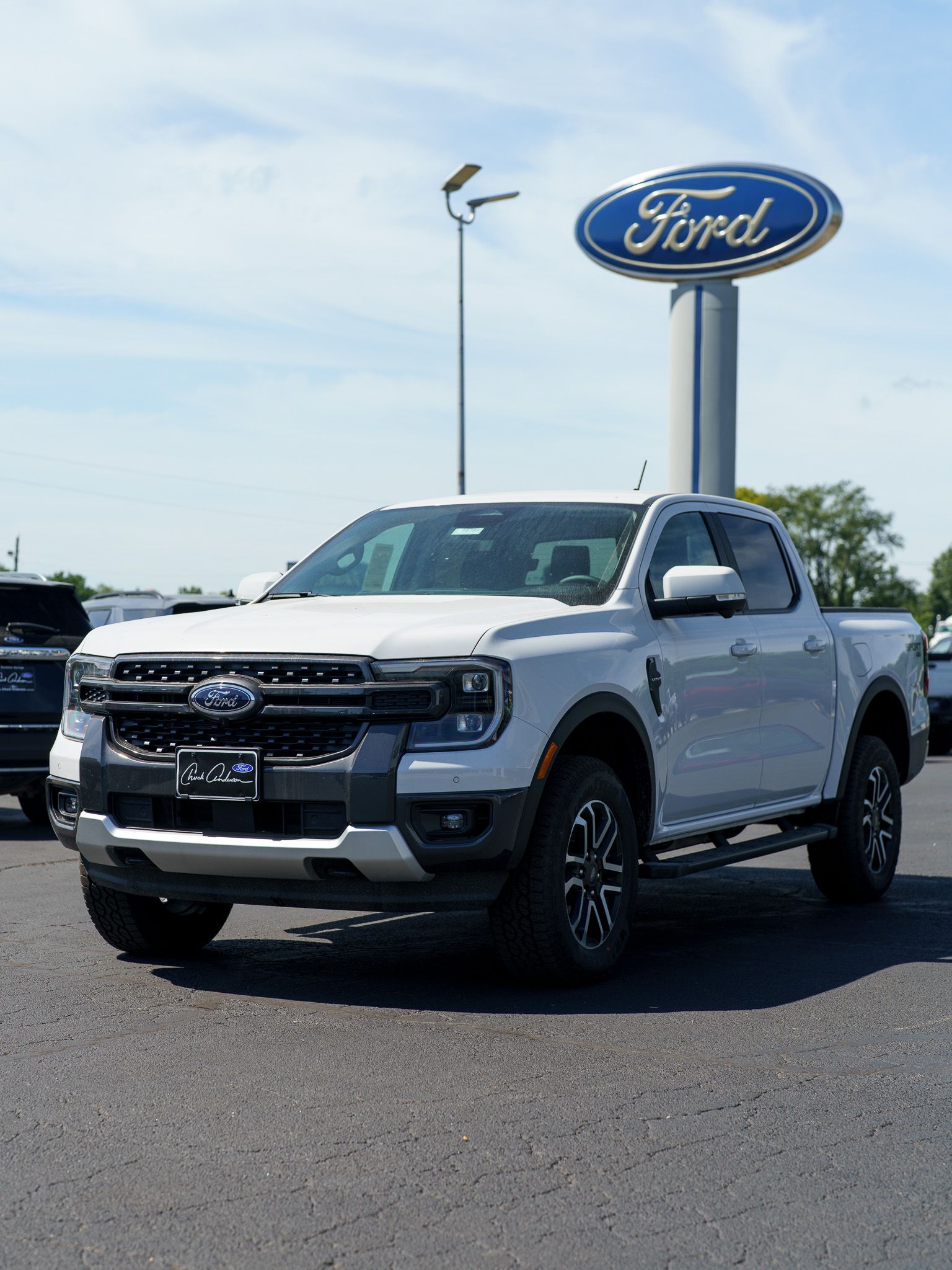
A vehicle lease allows you to use a new Ford for an agreed period and mileage allowance instead of taking out a conventional loan with the primary goal of long-term ownership.
During a Ford Credit Red Carpet Lease, Ford Credit is generally the owner of the vehicle, while you have the right to use it according to your lease agreement.
You make the required payments, follow the vehicle's maintenance and condition requirements, and stay aware of your allowed mileage.
At the end of the lease, you make a decision based on your agreement and the options available at that time.
Select the model, trim, engine, drivetrain, color and equipment that fit your actual needs.
Lease programs and availability vary by vehicle.
Review the term, mileage allowance, payment, amount due at signing, taxes, fees and other contractual requirements.
Ford Credit provides multiple term and mileage options for eligible customers.
At lease-end, you may return the Ford, enter another transaction or purchase the vehicle if your agreement permits it.
The available choices depend on the individual contract.
Ford Credit's Red Carpet Lease program currently describes terms ranging from 24 to 48 months and multiple mileage choices for eligible vehicles and qualified customers.
The specific combinations available depend on the vehicle, current Ford Credit programs, the customer and the transaction.
Payments may be lower than comparable-term purchase financing because the lease payment generally reflects the vehicle's use and expected depreciation during the agreed term, along with applicable charges.
However, a lower payment does not automatically make leasing less expensive in the long run.
Leasing and financing create different ownership outcomes, mileage considerations and end-of-term obligations.
Understanding the process before signing makes it easier to choose a lease that reflects how you expect to drive.
Start with the vehicle. Compare the size, trim, equipment, technology, drivetrain, towing and passenger capacity you actually need.
Include commuting, trips around Richmond, regional travel, family activities, vacations and weekend recreation.
Compare available terms, mileage allowances, monthly payments, amounts due at signing and fees on eligible vehicles.
Make the scheduled payments, maintain the Ford according to the applicable requirements and monitor mileage and condition.
Review mileage, wear and use, remaining obligations and Ford Credit's lease-end process before the contract expires.
Explore another Ford, purchase your current vehicle if permitted or return it under the terms of your agreement.
Leasing can be especially attractive when your preference is to change vehicles every few years rather than keep one for a long time.
Perhaps you like having access to newer driver-assistance technology, updated displays and recently introduced features.
Maybe your family is growing, and the vehicle that fits today might not be the vehicle you need several years from now.
Or perhaps your work commute and recreational needs are predictable, making it easier to choose an appropriate lease mileage allowance.
Common reasons drivers consider leasing include:
These benefits should be weighed against mileage restrictions, return conditions and total costs.
The goal is not to make leasing seem right for every customer. It's to determine whether the way leasing works fits the way you live.
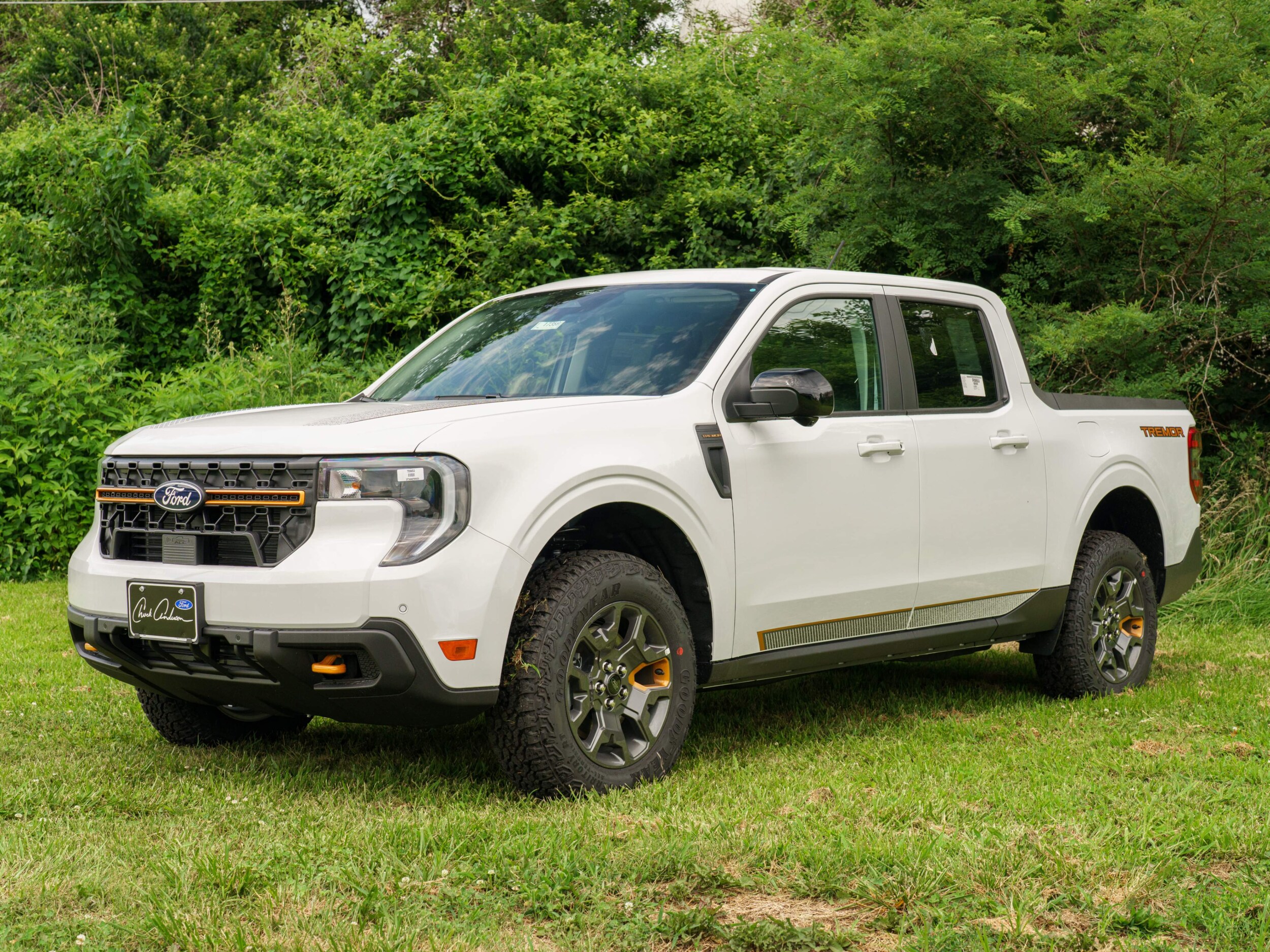
A lease payment is not simply the vehicle's purchase price divided by the number of months.
Several different financial factors affect the final amount.
Residual value is an estimate of the vehicle's value at the end of the lease term for purposes of the lease calculation.
It is one factor affecting the depreciation portion of the payment.
The residual value is not necessarily what a customer could sell the vehicle for in the open market at that time.
If your agreement includes a lease-end purchase option, the applicable purchase price and terms are described in the contract.
Two lease advertisements might display very similar monthly payments while requiring dramatically different amounts at signing.
They might also use different mileage allowances, terms, trims, option packages or incentives.
Comparing only the monthly payment can hide those differences.
Always compare the complete transaction: vehicle, term, mileage, payment, amount due at signing, fees and lease-end requirements.
A larger amount paid upfront can reduce the monthly lease payment, but that does not automatically make it the better financial choice.
The full amount due at signing may include a capitalized-cost reduction, the first payment, applicable taxes, fees and other required amounts.
Customers should understand which part of that payment is actually reducing the lease balance and which amounts cover other transaction costs.
A lower amount due at signing may leave more money available for other expenses, but can result in a different monthly payment.
Additional capitalized-cost reduction can lower payments, but increases money committed at the beginning of the lease.
Applying positive trade equity may affect the lease structure. Review whether that is the best use of the equity.
Large upfront capitalized-cost reductions can be at risk if the leased vehicle is stolen or totaled. Insurance and lease terms matter.
Ask for more than one lease structure: Compare the total amount due at signing with the payment under each available option. The lowest advertised payment is not necessarily the best overall arrangement.
Mileage is one of the most important decisions when choosing a vehicle lease—especially in Richmond, where driving can extend far beyond trips around town.
A driver who only makes local trips might accumulate mileage very differently from someone commuting regularly to Liberty, North Kansas City or elsewhere in the Kansas City region.
A family may add mileage through school activities, shopping, sports and weekend travel.
Truck owners may also use their vehicles for recreational trips, towing or rural property work.
These miles count toward the lease just as much as commuting miles do.
Include regular trips between Richmond, Excelsior Springs and other destinations to the west.
Account for north-south travel related to work, family, errands and regional appointments.
School transportation, athletic events, family visits and other recurring trips can add mileage throughout the year.
Camping, visiting relatives, weekend travel and vacations should be included in the estimate.
Your Ford Credit lease agreement specifies the mileage allowance and the applicable excess-mileage charge.
If the vehicle is returned above that allowance, additional charges may apply.
That is why the mileage structure should be based on realistic expectations rather than simply choosing the lowest available allowance to obtain a smaller payment.
The vehicle does not stop operating when you reach your contracted mileage limit.
However, mileage beyond your agreement's allowance may create charges if you return the vehicle.
If you anticipate substantial annual mileage, compare the available higher-mileage lease structures with traditional purchase financing before deciding.
Before selecting a lease allowance, think through all the places the vehicle travels during an ordinary year.
Estimate the miles driven to work, the number of days you commute and any regular work-related trips.
Include school, sports, grocery shopping, local errands, medical appointments and family activities.
Add vacations, weekend trips, recreational activities and occasional longer journeys.
Leave a reasonable margin for changes you cannot predict perfectly, such as a different job location, a new family schedule or more frequent travel.
Then compare the available mileage options with our Finance Center.
The goal is to make the lease fit your life rather than make your life fit an unrealistically low mileage allowance.
Leasing and buying can both make sense, but the differences become more important when you consider what happens beyond the next monthly payment.
| Consideration | Ford Leasing | Financing / Buying |
|---|---|---|
| Vehicle Ownership | You use the vehicle under a lease; the leasing company owns it during the term. | You are purchasing the vehicle and working toward full ownership. |
| Monthly Payment | Often lower than comparable-term financing, depending on the complete lease structure. | Generally reflects repayment of the financed purchase amount plus applicable finance charges. |
| Mileage | Your agreement establishes an allowance; excess mileage may create charges at return. | No lender-imposed annual mileage limit under a standard purchase loan. |
| Long-Term Use | A new decision occurs at lease-end, including a possible buyout where eligible. | You can continue driving the vehicle after the loan is satisfied. |
| Vehicle Modifications | Permanent modifications may affect lease-return requirements. | Ownership generally allows more freedom, subject to warranty, safety and legal considerations. |
| Wear & Tear | Excess wear and use may create charges at vehicle return. | You remain responsible for the vehicle's condition and repair expenses as owner. |
| Changing Vehicles | The lease provides a planned decision point after an agreed term. | You can sell or trade the vehicle when ready, subject to the outstanding loan if any. |
| High Annual Mileage | Requires careful mileage planning and cost comparison. | Often more flexible for drivers who accumulate substantial mileage. |
| Heavy Work Use | Condition, modifications and mileage requirements deserve extra attention. | May fit better when keeping a heavily used truck or commercial vehicle long term. |
| End of Term | Return, eligible purchase or another transaction according to the contract. | After the loan is fully paid, the vehicle belongs to you. |
Leasing deserves consideration when you enjoy newer vehicles, expect predictable mileage, typically maintain vehicles in good condition and don't plan significant permanent customization.
Traditional financing deserves a closer look when you drive substantial mileage, expect to keep the vehicle for many years, regularly work the truck hard or want greater freedom to modify it.
Compare the full financial picture and your long-term plans—not simply which option shows the lower monthly payment today.
A truck may spend part of its life commuting and another part hauling, towing or working on rural property.
For some Richmond drivers, a leased F-150 or another eligible Ford pickup may be a reasonable option when the truck is primarily used for normal transportation, recreation and moderate utility.
However, a different analysis may be appropriate when the truck regularly operates on jobsites, accumulates substantial annual mileage or experiences heavy work-related wear.
Before leasing a pickup, consider:
If those factors fit comfortably within an available lease structure, leasing may deserve consideration.
Otherwise, financing and eventual ownership may offer greater flexibility.

An F-150 used primarily for commuting, normal family transportation and occasional light utility may be a candidate for leasing when eligible.
Predictable annual mileage and normal vehicle use can make a lease easier to plan.
A pickup that spends substantial time on gravel roads, hauling supplies or doing demanding work may face greater wear and return-condition considerations.
Long-term ownership may be worth stronger consideration.
Commercial vehicles can involve specialized equipment, significant mileage, employee use and unusual operating conditions.
Business customers should evaluate appropriate commercial financing or leasing programs rather than assuming a standard personal lease is the best option.
Lease availability varies by model, vehicle, credit qualification and current Ford Credit programs. First find the Ford that fits your needs, then compare eligible lease and purchase options.
A compact pickup for drivers who want everyday utility, maneuverability and a truck bed without stepping into a full-size pickup.
A midsize pickup with everyday versatility for commuting, property maintenance and recreation.

A full-size pickup for Richmond drivers who need a combination of cabin space, towing, hauling and everyday comfort.
A three-row SUV for family transportation, commuting and changing passenger needs.
A larger family SUV with substantial passenger and cargo capacity for the right household.
A compact SUV combining everyday usefulness with available adventure-oriented capability.
An SUV designed around outdoor use and distinctive capability, with lease suitability dependent on expected use and condition.
A performance-oriented Ford for drivers who prioritize driving enjoyment and sporty design.
Heavy-duty pickups that deserve special consideration regarding mileage, towing, work use and long-term ownership.
See which new Ford models and configurations are currently available through Chuck Anderson Ford.
Compare models, trim levels, engines, features and ownership considerations before choosing a vehicle.
Lease eligibility: The vehicles shown are examples of Ford models to research. Their inclusion does not guarantee a current lease program, special payment, specific incentive or immediate inventory availability.
Leasing does not mean you have to ignore the value of the vehicle you already own.
If you have a car, truck or SUV to trade, Chuck Anderson Ford can evaluate it as part of the transaction.
However, the way trade value is applied deserves consideration.
If the appraised value exceeds the vehicle's payoff, you have positive equity that can be considered in the new transaction.
Ask how different uses of that equity affect the lease structure.
If the appraised value and payoff are similar, there may be little or no trade equity available.
Our team can review the amount due and how the transaction would be completed.
If the payoff exceeds the appraised value, the difference must be addressed.
Available lease structures, credit approval and program limits determine how a qualifying transaction may be handled.
Not necessarily.
Applying a substantial amount of positive equity as an upfront capitalized-cost reduction may reduce the monthly payment, but it also commits that equity at the beginning of the lease.
Ask our Finance Center to compare available structures before deciding.
Ford Credit expects a vehicle to experience normal use during a lease. But damage or conditions beyond the agreement's wear-and-use standards may create charges at return.
This is especially relevant to Richmond drivers who use vehicles on gravel roads, around rural property, while towing or for demanding everyday activities.
Condition, damage and whether the tires are an appropriate match for the vehicle can matter during lease return.
Dents, scratches and other body damage may be evaluated against Ford Credit's applicable guidelines.
Stains, tears, burns and other excessive interior damage may result in charges under the contract.
Keys, accessories, required equipment and other items specified by the lease agreement should be accounted for.
Ordinary driving around Richmond is not automatically incompatible with a lease.
However, frequent rough-road travel, hauling, agricultural work or demanding use may increase the possibility of wear that exceeds the lease-return standards.
If you regularly use a truck in situations likely to cause dents, scratches, bed damage or permanent equipment changes, compare the lease-return obligations with the greater flexibility of ownership.
Ford Credit provides a complimentary pre-inspection process as lease-end approaches, with scheduling available within the applicable pre-return window.
That gives you an opportunity to review the vehicle's condition and understand potential issues before the final return.
Review Ford Credit's current wear-and-use guidelines and your individual lease agreement for the actual standards that apply.
A leased Ford still needs maintenance according to the applicable manufacturer recommendations and contractual requirements.
That can include engine oil and filter service, tires, brakes, batteries, inspections and other scheduled maintenance.
If the vehicle requires repairs, the lease agreement may establish requirements for how they must be performed.
Keeping maintenance records can also be useful when preparing for lease return.
Chuck Anderson Ford's Service Department provides maintenance and repair support for many Ford vehicles.
Our technicians can help address vehicle concerns during the lease rather than having them become last-minute problems near its end.
Taking care of your Ford during the lease helps protect the vehicle and can make the lease-end process easier.
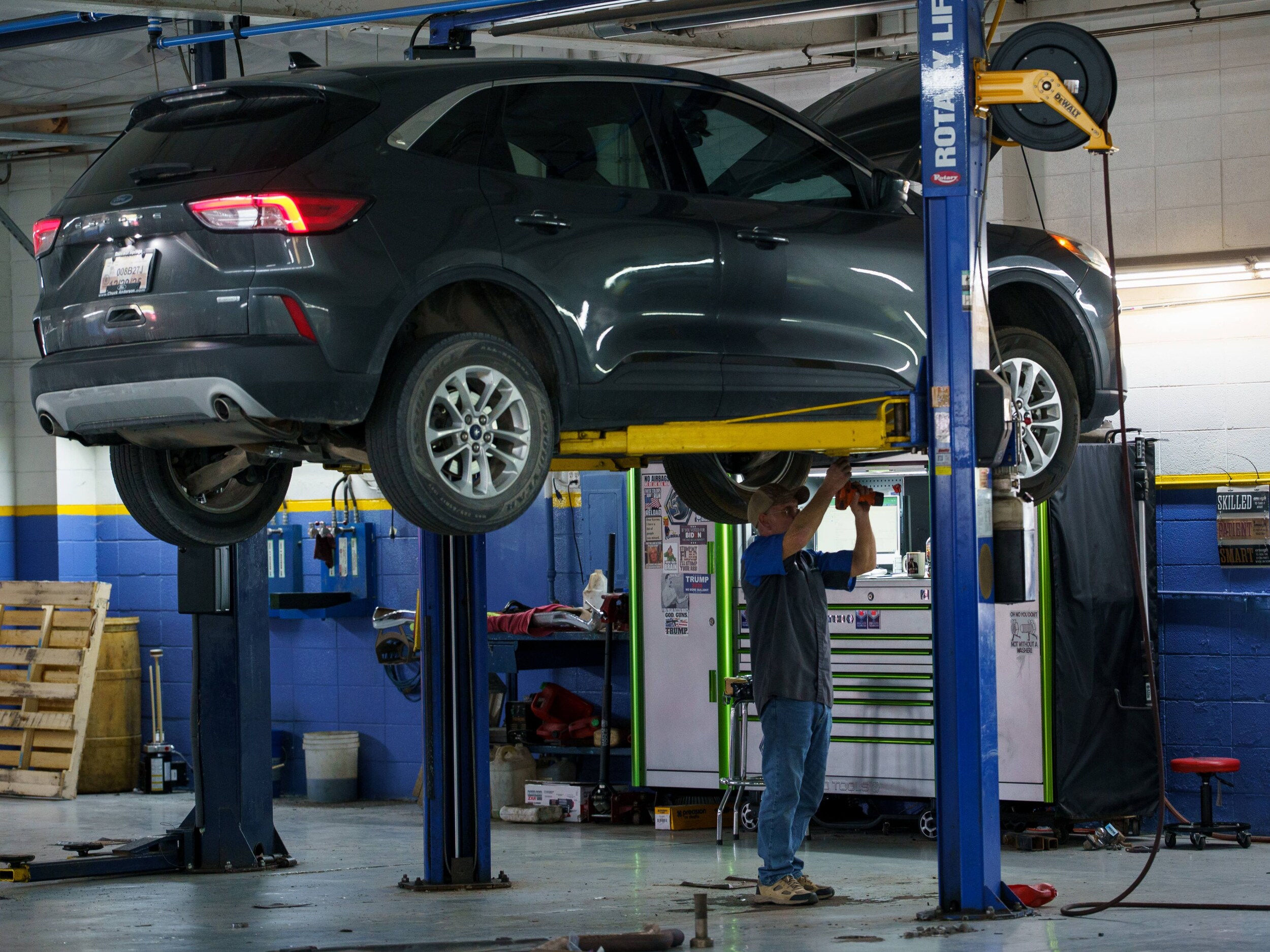
Lease-end is a scheduled opportunity to decide whether your next vehicle should be the same Ford, a different Ford or something else entirely.
Your choices depend on the lease agreement, eligibility and any remaining obligations.
Explore a new Ford and review current purchase or lease programs that fit your needs at that time.
Your replacement vehicle could be larger, smaller or equipped differently.
If the individual agreement provides a purchase option, you may be able to buy the vehicle at the applicable purchase price and terms.
Some vehicle categories can have different purchase-option eligibility.
Return the leased vehicle through the applicable process and satisfy any remaining obligations.
Mileage, wear and use, missing equipment and fees should be reviewed ahead of time.
As lease-end approaches, review your agreement and discuss the next step with Ford Credit and our dealership.
Confirm your mileage, vehicle condition, potential obligations and available purchase or replacement options.
Ford Credit offers lease-end resources, including wear-and-use guidance and a pre-inspection process, to help customers prepare.
You may want a larger SUV, additional seating or different cargo space as family responsibilities change.
A new job or different work location can change the amount of mileage and the type of vehicle that makes sense.
Moving onto acreage may create a need for a truck, towing equipment or additional utility.
Camping, boating, outdoor travel and other hobbies can influence vehicle size, drivetrain and towing needs.
A lease creates a scheduled point at which to reassess your needs.
However, the flexibility of that decision should be compared with the long-term ownership benefits of purchasing a vehicle you plan to keep.
Richmond businesses, farms and contractors should consider the operating demands of a commercial vehicle before choosing a financing or leasing structure.
Commercial use can involve substantial annual mileage, specialized equipment, multiple drivers and demanding work conditions.
Tools, upfits, permanent modifications, equipment trailers and work-related wear may make a standard consumer lease less suitable for certain applications.
Ford offers commercial financing resources, and the appropriate program depends on the business, vehicle and eligibility.
If you're buying a truck for your farm, construction company, landscaping operation or service business, start with the actual commercial requirements.
Then compare suitable financing or leasing options rather than assuming a personal-use lease should be used.
Discuss these requirements with our team before selecting a vehicle or financing structure.
Richmond has a combination of small-town life, regional commuting and rural property needs that can make leasing a different decision for each household.
Founded in 1827, Richmond serves as the county seat of Ray County.
The historic courthouse square, Farris Theatre, Richmond Spartans traditions and annual Mushroom Festival are all part of the community's identity.
Missouri Highway 10 and Highway 13 connect Richmond with surrounding communities, jobs, family activities and regional destinations.
For a Richmond resident considering a lease, those different driving needs matter because annual mileage and expected vehicle condition are part of the agreement.

A local commuter or driver using the vehicle mostly around town may have mileage needs different from someone traveling throughout the region every day.

Local traditions, events and recreational travel all contribute to the mileage and transportation needs of Richmond households.

School, sports and family schedules can add mileage and change the type of vehicle a family needs over time.

Weekend travel, family visits and outdoor activities belong in the annual mileage estimate before choosing a lease.
Regular travel toward Excelsior Springs, Liberty or other destinations can make the choice of mileage allowance especially important.
Gravel roads, acreage, hauling and towing can create additional considerations for truck condition and long-term ownership.
A lease should make sense because the vehicle and terms fit your goals—not simply because the monthly payment looks attractive.
Chuck Anderson and his family purchased the Ford dealership in Excelsior Springs in 1974.
More than five decades later, Chuck Anderson Ford remains family-owned and continues serving Richmond, Ray County and surrounding Missouri communities.
Our Finance Center works with customers who are purchasing and leasing vehicles.
That means helping you understand the available options before choosing the structure that works best.
We want to explain the lease term.
We want to explain the mileage allowance.
We want you to understand what is due at signing.
We want you to understand the complete monthly payment and applicable fees.
And we want you to understand what happens when the lease ends.
If traditional financing is a better fit for your mileage, truck use or ownership plans, that deserves consideration too.
Leasing is one way to drive a Ford. It isn't automatically the right way for every Richmond customer.
You can begin researching vehicles, reviewing finance resources and preparing for your transaction from home.
Find the vehicle you want before comparing eligible leasing and purchasing options.
Learn about financing, leasing, incentives, credit applications and available dealership resources.
Begin the credit application process online before visiting Chuck Anderson Ford.
Explore payment scenarios as you research vehicle costs and purchase financing.
Start evaluating your current vehicle if you plan to include it in the transaction.
Review available Ford programs and incentives that may apply to qualifying customers and vehicles.
Compare models, engines, trim levels and ownership information before making your choice.
Ask about a specific vehicle, lease eligibility, available programs or purchasing alternatives.
Payment estimator note: A traditional vehicle payment calculator is not necessarily a Ford Credit lease-quote calculator. Request an actual lease structure from our Finance Center for the specific eligible vehicle and program.
Richmond drivers do not have to travel into central Kansas City to compare Ford leasing and vehicle financing options.
Chuck Anderson Ford is located at 1910 W. Jesse James Road in nearby Excelsior Springs, Missouri.
Start near the Ray County Courthouse at 100 W. Main Street in Richmond.
Connect to Missouri Highway 10 West toward Excelsior Springs.
Continue toward W. Jesse James Road and follow current navigation to Chuck Anderson Ford.
Road construction and traffic may change the preferred route.
Before visiting, you can browse new Ford inventory, review financing resources, begin a credit application and contact us about current lease eligibility on a specific vehicle.
1910 W. Jesse James Road
Excelsior Springs, MO 64024
Sales: 816-648-6419
Service: 816-648-6424
New Ford leasing, traditional financing, trade-in evaluations, credit applications and vehicle research.
Serving Richmond, Ray County, Lawson, Kearney, Liberty, Smithville, Excelsior Springs and neighboring Missouri communities.
Family-owned since 1974.
Chuck Anderson Ford in nearby Excelsior Springs helps Richmond and Ray County customers compare available Ford Credit lease programs and financing options on eligible new Ford vehicles. The dealership is located at 1910 W. Jesse James Road, Excelsior Springs, MO 64024.
Ford Credit Red Carpet Lease is a leasing program for eligible new Ford vehicles. Qualified customers can choose from available lease terms and mileage options, with lease-end choices governed by the agreement.
Ford Credit currently describes its Red Carpet Lease program as offering terms ranging from 24 to 48 months. Specific terms vary by vehicle, program and eligibility.
Ford Credit offers multiple mileage options. The exact allowance will be stated in your lease agreement. Choose a mileage structure that reflects your actual commuting, family travel and recreational driving.
If you return the leased vehicle with mileage above the allowance in the agreement, excess-mileage charges may apply. The per-mile rate and relevant conditions are established in your contract.
Ford Credit offers multiple mileage options for eligible customers. Ask Chuck Anderson Ford about the available structures and compare their complete costs with traditional financing.
It may be, but mileage deserves extra attention. Include daily commuting, family travel, errands, weekend trips and vacations before selecting an allowance. High-mileage drivers should compare leasing with traditional financing.
Lease payments depend on the vehicle price, residual value, lease term, mileage allowance, applicable rent charge, incentives, taxes, fees, amount due at signing, credit qualification and other transaction details.
Ford Credit notes that lease payments are often lower than similar-term financing payments, but that is not guaranteed. Leasing and buying also have different total costs, obligations and ownership outcomes.
Not automatically. A lease may have a lower monthly payment while traditional financing can result in long-term ownership. Compare total costs, mileage, fees, time horizons and what happens at the end of each arrangement.
The amount due at signing depends on the vehicle, program, approval and transaction. Ask our Finance Center to compare available structures with different upfront amounts so you can evaluate the complete cost.
A larger capitalized-cost reduction can lower the monthly payment but commits more money upfront. Consider the total lease cost and the implications if the vehicle is stolen or totaled before choosing the amount.
Ford Credit currently describes complimentary GAP protection as a benefit of its Red Carpet Lease program. Coverage terms, limitations and eligibility should be confirmed in the applicable agreement.
Lease availability depends on the exact F-150 and current programs. An eligible F-150 lease may suit predictable personal use, but frequent heavy work, high mileage and substantial modifications deserve careful consideration.
Potentially. Lease eligibility varies by model, configuration and current Ford Credit programs. Contact Chuck Anderson Ford for options on eligible Maverick vehicles.
Potentially. Ask Chuck Anderson Ford about available leasing programs for eligible Ranger vehicles and compare the structure with traditional financing.
Eligible Ford Explorer and Expedition configurations may have leasing options depending on the current program and vehicle. Ask our Finance Center about specific availability.
Lease eligibility varies by vehicle and current program. Drivers planning extensive modifications or demanding off-road use should pay particular attention to lease-return condition requirements.
Eligible Mustang vehicles may have available lease programs. The exact term, payment, mileage allowance and eligibility depend on the specific vehicle and transaction.
It depends on mileage, vehicle condition, hauling, towing and modification plans. Regular demanding use may make traditional ownership more flexible than a lease with return-condition requirements.
Appropriate towing may be possible with a properly equipped eligible vehicle, subject to the lease agreement and manufacturer requirements. Follow the vehicle's ratings and consider mileage and wear from towing.
Modifications can create lease-return concerns and may be subject to contractual restrictions. Review the agreement and contact the lessor before making permanent changes.
Business use, specialized equipment, high mileage and multiple drivers may require different arrangements from a standard personal lease. Ask about applicable commercial financing or leasing programs and eligibility.
Yes. A trade-in can be part of an eligible lease transaction. Appraised value, existing loan payoff and positive or negative equity should all be reviewed before choosing how to structure the lease.
Not necessarily. Applying equity upfront may lower the monthly payment, but there may be advantages to comparing alternative structures. Ask the Finance Center to show you how different approaches affect the total transaction.
Many Ford Credit leases provide a purchase option, but eligibility depends on the vehicle and individual contract. Some electric vehicles and other specific applications may have different purchase-option rules. Review your agreement.
You may explore leasing or purchasing another eligible Ford through a new transaction while fulfilling the obligations of your existing lease. Available loyalty benefits and new programs depend on current terms and eligibility.
Contact Chuck Anderson Ford and Ford Credit to discuss the applicable return process, appointment requirements and obligations under your individual lease agreement.
Normal wear and use is expected. Conditions exceeding the standards in your lease agreement may create excess wear-and-use charges when the vehicle is returned.
Ford Credit offers a complimentary pre-inspection process during the applicable lease-end period. Visit the Ford Credit Wear and Use resource for current guidance.
Tires must meet the applicable return standards, including appropriate matching and condition requirements. Damage or conditions exceeding Ford Credit's guidelines may create charges.
Early lease termination may be possible under the agreement, but it can involve substantial charges or financial obligations. Contact Ford Credit to obtain the terms applicable to your specific contract before making a decision.
Not automatically. Routine maintenance remains the customer's responsibility under the lease agreement unless a specific program or purchased product provides applicable coverage.
Yes. Chuck Anderson Ford provides applicable Ford maintenance, tires, brakes, oil changes, diagnostics and other service throughout the lease period.
Yes. Begin through the Chuck Anderson Ford credit application. Approval and program eligibility depend on the applicant and transaction.
Start with current new Ford inventory, review Ford program offers, and contact Chuck Anderson Ford for lease availability and terms on a specific eligible vehicle.
From downtown Richmond near the Ray County Courthouse, connect to Missouri Highway 10 West toward Excelsior Springs. Chuck Anderson Ford is located at 1910 W. Jesse James Road. Open Google Maps directions.
Chuck Anderson and his family purchased the dealership in 1974. Chuck Anderson Ford remains family-owned and has served Richmond, Excelsior Springs and surrounding Missouri communities for more than five decades.
Ford Leasing & Financing Disclaimer: Leasing is subject to credit approval, eligible vehicles and available Ford Credit or other applicable leasing programs. Lease terms, mileage allowances, residual values, payments, rent charges, incentives, taxes, fees, amounts due at signing, insurance requirements, purchase options and lease-end obligations vary by vehicle, customer, program and agreement and are subject to change. Excess mileage and excess wear-and-use charges may apply when a vehicle is returned. Early termination may involve additional charges. A disposition fee may apply if disclosed in the lease agreement, subject to applicable waiver eligibility. Lease-end purchase options are not available for every vehicle or contract; some electric vehicles may have different eligibility. Commercial use and modifications may be subject to additional restrictions. No monthly payment, incentive, lease approval or inventory availability is guaranteed by this page. The terms of the signed lease agreement and current Ford Credit documentation control.
Whether you're considering leasing, buying, trading or maintaining a Ford, these Richmond resources can help you take the next step.
Explore new Ford trucks, SUVs and other vehicles available through Chuck Anderson Ford.
New Ford Vehicles Near Richmond ›Understand auto loans, credit applications, lender options and payment considerations.
Richmond Auto Financing ›Start evaluating your current vehicle and learn how trade equity may affect your next transaction.
Richmond Trade-In Values ›Highway 10 commuter. Highway 13 traveler. Growing family. Ford Explorer. Expedition. Maverick. Ranger. F-150. Bronco. Mustang. Weekend recreation. Rural property. High-mileage driver. Long-term truck owner.
For some Richmond drivers, leasing offers an appealing way to drive a newer Ford on a planned cycle.
For others, traditional financing and long-term ownership may be the better answer.
Chuck Anderson Ford can help qualified customers compare eligible lease and purchase options based on their mileage, budget and plans for the vehicle.
Chuck Anderson Ford
1910 W. Jesse James Road
Excelsior Springs, MO 64024
Sales: 816-648-6419