

Is the Ford Bronco good in snow?
``` Ford Bronco Winter Driving Guide
Is the Ford Bronco Good in Snow?
Yes. The Ford Bronco is exceptionally well equipped for winter driving thanks to standard 4x4, selectable G.O.A.T. Modes, available Advanced 4x4, substantial ground clearance and multiple tire and off-road packages. But the most important winter-driving component may still be the four tires touching the road.
```
``` Quick Answer: Yes, the Ford Bronco Is Very Good in Snow
Every current Ford Bronco comes with four-wheel drive.
Ford also gives every Bronco a dedicated Slippery G.O.A.T. Mode specifically designed for low-traction conditions including snow, ice, rain and slick roads.
Depending on trim and equipment, Bronco can also provide Advanced 4x4 with Automatic On-Demand Engagement, electronic-locking differentials, 33- or 35-inch off-road tires and more than 11 inches of available ground clearance.
That makes Bronco particularly capable when winter conditions move beyond a lightly snow-covered street into deep snow, unplowed roads or rough rural terrain.
But do not confuse four-wheel drive with unlimited winter traction. Tires have enormous influence over braking, turning and overall grip on snow and ice.
4x4Standard on Every Bronco
SlipperyDedicated Snow & Ice Mode
11.6 IN.Available Sasquatch Ground Clearance
13.1 IN.Bronco Raptor Ground Clearance
```
``` Why Is the Ford Bronco Good in Snow?
- Standard four-wheel drive
- Dedicated Slippery G.O.A.T. Mode
- Available Advanced 4x4
- Available locking differentials
- Substantial ground clearance
- Available all-terrain and rugged-terrain tires
- Sasquatch Package with 35-inch tires
- AdvanceTrac with Roll Stability Control
The Bronco Advantage
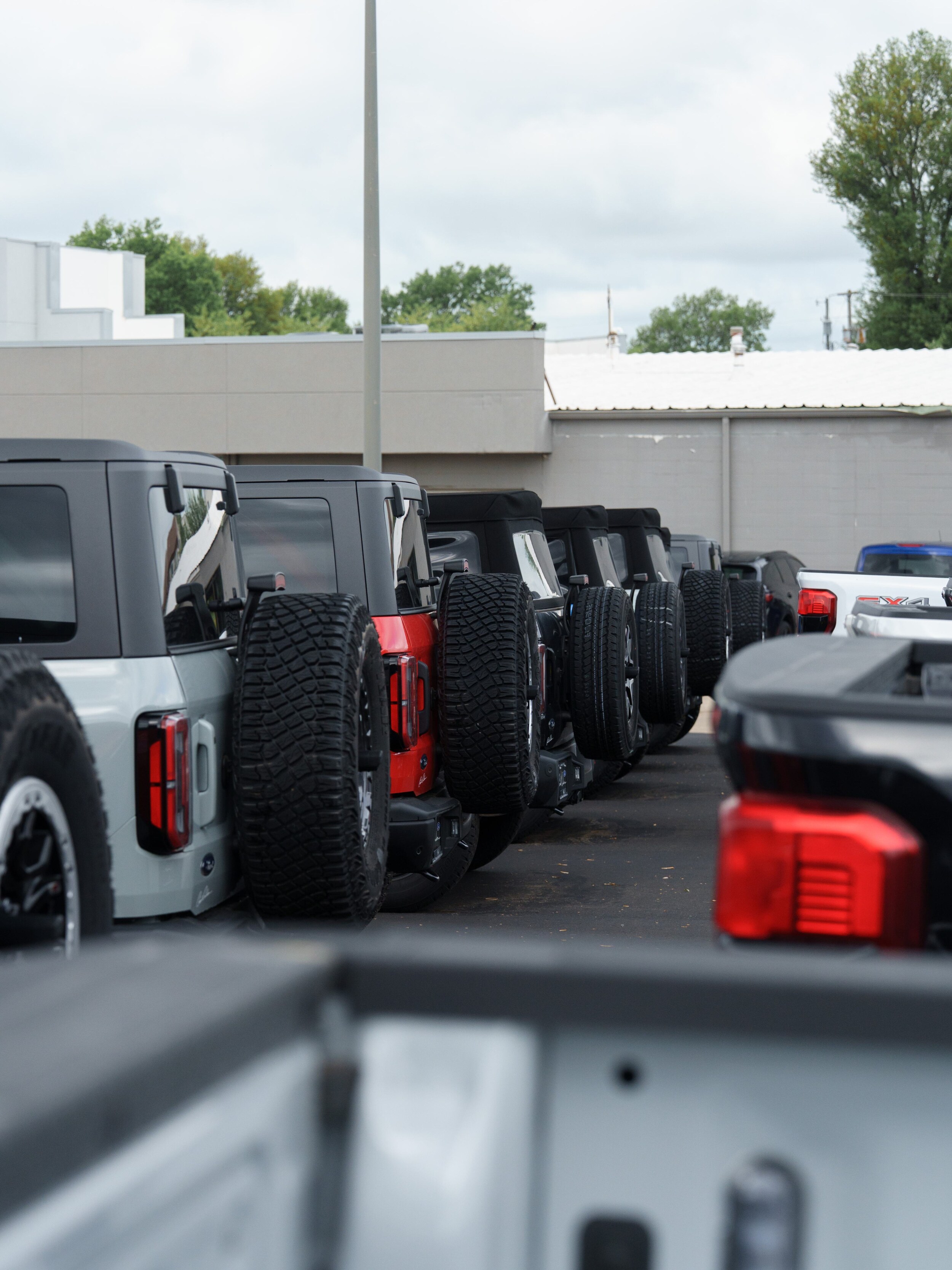
Many SUVs are perfectly capable on a plowed snowy road.
Bronco begins separating itself when conditions get deeper, rougher or less predictable.
Its combination of drivetrain capability and ground clearance allows it to handle situations that can become much more difficult for lower two-wheel-drive or all-wheel-drive vehicles.
Bronco is designed to keep going after the snowplow has stopped.
``` 
``` Winter Drive Mode
What Does Bronco Slippery Mode Do?
Ford's Slippery G.O.A.T. Mode is specifically calibrated for slick surfaces such as snow, ice, rain and wet pavement.
When selected, the Bronco changes multiple vehicle settings rather than simply turning on four-wheel drive.
Ford says Slippery Mode reduces throttle response, optimizes transmission shifting and uses more restrictive traction and stability-control settings to help the driver maintain control on low-traction surfaces.
For normal snow-covered roads, Slippery Mode is generally the first Bronco setting we would consider.
```
``` Why Does Slippery Mode Reduce Throttle Response?
Snow and ice reward smooth inputs.
A sudden burst of engine torque can spin the tires before the driver intends it.
By making accelerator response more progressive, Slippery Mode helps the driver apply power more gradually.
The transmission and stability-control system also adapt to the lower-traction environment.
The goal is not to make the Bronco faster in snow. The goal is to make its available traction easier to manage.
```
``` Every 2026 Ford Bronco Has 4x4
You do not have to buy a special Bronco trim just to get four-wheel-drive capability.
Ford equips every full-size Bronco with a four-wheel-drive system.
Base configurations use an electronic shift-on-the-fly part-time 4x4 system, while Advanced 4x4 with Automatic On-Demand Engagement is available or standard depending on configuration.
Why 4x4 Helps in Snow
Four-wheel drive can send engine torque to both axles instead of relying only on two driven wheels.
That can significantly improve the Bronco's ability to accelerate from a stop, climb a snow-covered grade and continue moving through loose or deep snow.
That additional drive traction is one of Bronco's biggest winter advantages.
```
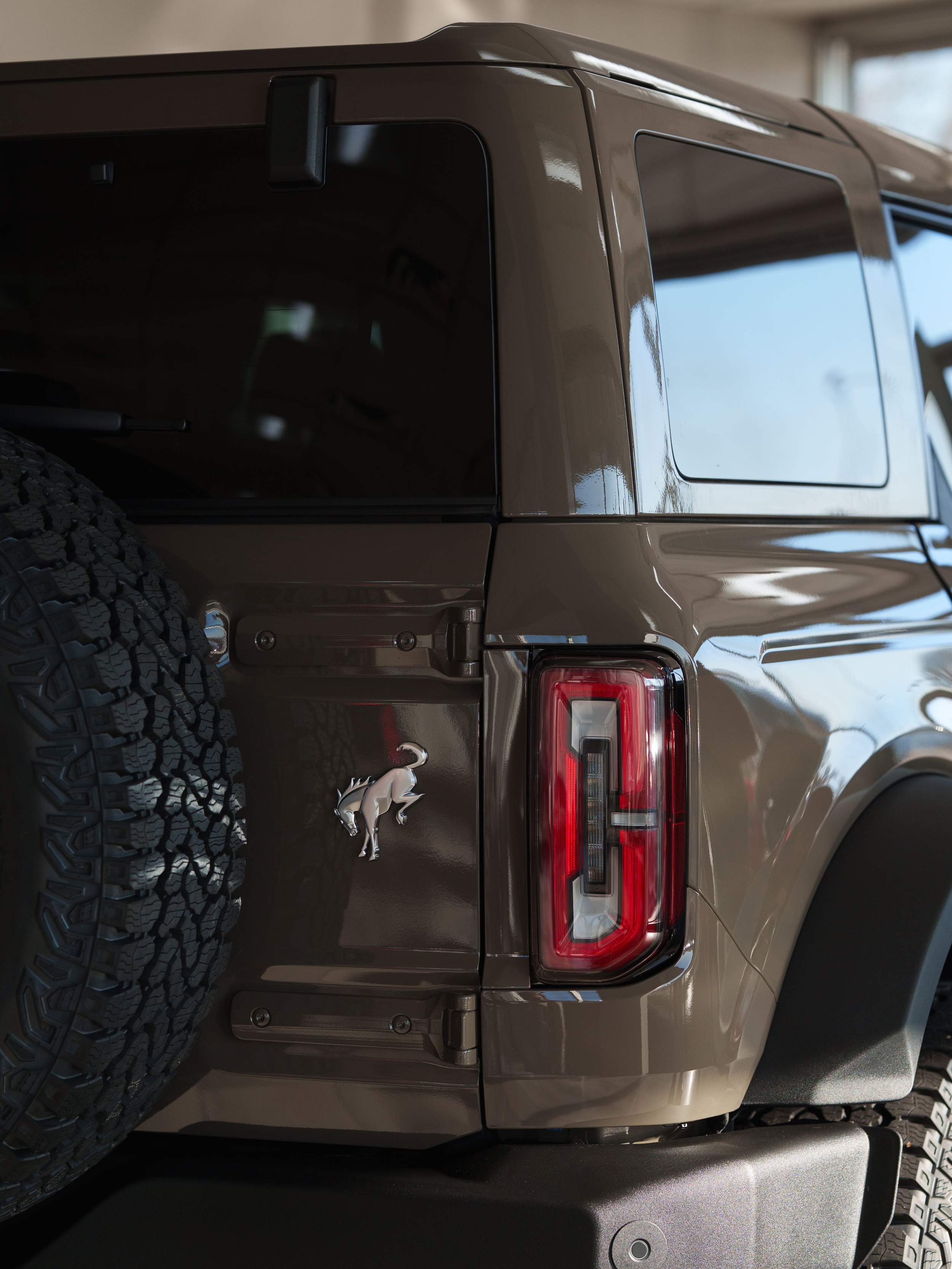
``` Important: Four-Wheel Drive Does Not Give You Four-Wheel-Drive Braking Four-wheel drive can improve acceleration and mobility in slippery conditions, but it cannot create tire grip that does not exist. Braking and turning still depend heavily on tire traction, road conditions and driver speed. A four-wheel-drive Bronco can slide on ice just like any other vehicle if the tires exceed their available grip.
``` 
``` 
Advanced 4x4
What Is Bronco Advanced 4x4?
Ford offers Advanced 4x4 with Automatic On-Demand Engagement on applicable Bronco configurations.
Badlands includes Advanced 4x4 as standard equipment.
The system adds an automatic on-demand capability using an electronically controlled clutch within the transfer case.
That makes it especially useful when traction conditions change repeatedly, such as a winter road alternating between dry pavement, slush, packed snow and ice.
For drivers who regularly deal with variable winter conditions, Advanced 4x4 is one of the Bronco features worth understanding when comparing builds.
```
``` Which Bronco G.O.A.T. Mode Should You Use in Snow?
The correct mode depends on whether you are driving on a slick road or actually trying to move through deep loose snow.
| Condition | Bronco Mode | Why |
|---|---|---|
| Snow-Covered Road | Slippery | Ford specifically calibrates Slippery Mode for snow, ice, rain and slick surfaces. |
| Icy Road | Slippery | Reduces throttle response and adjusts traction, stability and shifting behavior. |
| Wet / Slushy Road | Slippery | Helps manage changing low-traction conditions. |
| Deep Loose Snow | Sand on applicable models | Ford says Sand Mode can be used for soft dry sand or deep snow and engages 4WD lock. |
| Deep Snow on Rough Terrain | Appropriate 4x4 / terrain mode | Ground clearance, momentum and tire choice become increasingly important. |
| Normal Dry Winter Road | Normal | There is no need to select an aggressive terrain mode when traction is normal. |
Always use the Owner's Manual for the exact Bronco. Drive-mode and four-wheel-drive selection should match current road conditions. A mode intended for loose off-road surfaces is not automatically appropriate for dry pavement.
```
``` Bronco Sand Mode Can Help in Deep Snow
This sounds strange until you think about what deep loose sand and deep loose snow have in common.
Both can require maintaining momentum while the tires push through a soft surface.
Ford specifically describes Bronco Sand Mode as suitable for soft dry sand or deep snow.
Which Broncos Have Sand Mode?
For the 2026 lineup, Ford lists Sand among the G.O.A.T. Modes on:
- Base
- Big Bend
- Outer Banks
- Heritage Edition
Badlands, Stroppe Edition and Raptor use a different seven-mode terrain-management suite with specialized Off-Road, Rock Crawl and Baja modes.
```
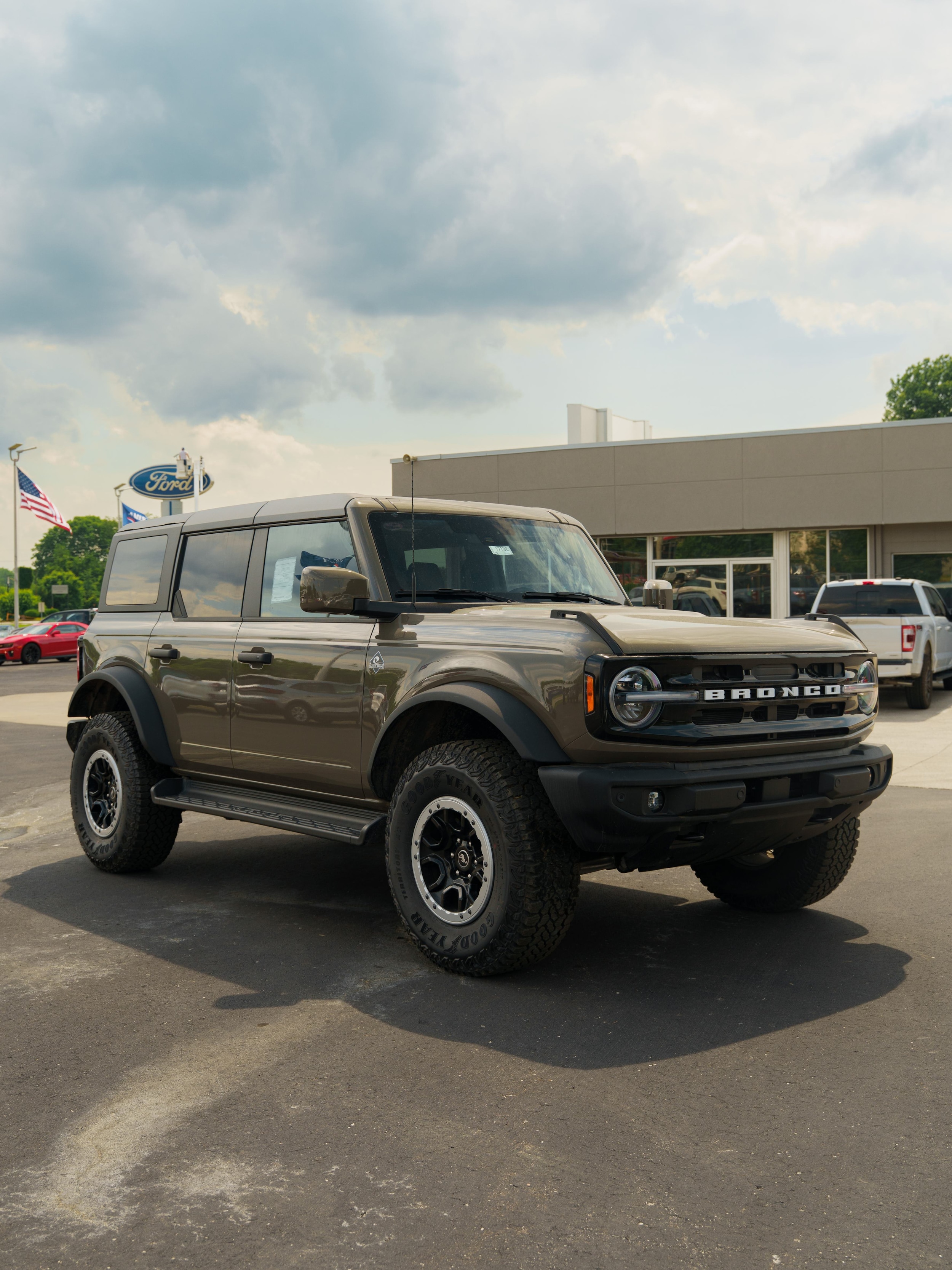
``` AdvanceTrac With Roll Stability Control Helps in Winter Too
Bronco's winter capability is not limited to mechanical four-wheel drive.
Ford equips Bronco with AdvanceTrac with RSC, or Roll Stability Control.
Ford specifically identifies snow, ice, gravel and rain-slicked roads as situations where the electronic system can help improve vehicle control.
Stability-control technology monitors vehicle behavior and can intervene when available traction and the vehicle's movement begin to diverge from what the driver intends.
Four-wheel drive helps the Bronco get moving. Electronic stability and traction systems help manage the vehicle while it is moving.
``` 
``` Most Important Winter Upgrade
Tires Matter More Than Most Bronco Shoppers Realize
Four-wheel drive, lockers and ground clearance can help you get through snow.
Tires determine how effectively those systems can put power to the ground.
Tires also have an enormous influence on the two winter situations where four-wheel drive cannot solve the problem: braking and cornering.
A Bronco on tires poorly suited to cold or icy conditions can have less usable winter grip than a less capable vehicle on excellent winter tires.
If winter traction is your highest priority, tire choice should be near the top of your shopping list.
```
``` All-Season, All-Terrain or Winter Tires?
All-season tires can work well for occasional light Missouri snow when temperatures and road conditions are not extreme.
All-terrain tires can provide useful traction in loose snow and mixed off-road conditions, but individual tread compounds vary substantially.
Dedicated winter tires are designed specifically around cold-weather traction and are the choice to consider when maximum snow and ice performance matters.
Bigger Does Not Automatically Mean Better on Ice
A 35-inch Sasquatch tire looks considerably more capable than a smaller tire.
In deep snow and rough terrain, the additional clearance and aggressive tread can be valuable.
But on packed snow and ice, tire compound and winter-specific tread design can matter more than diameter alone.
Do not choose a winter tire by size alone.
```
``` Ford Bronco Ground Clearance in Snow
Ground clearance becomes increasingly important as snow depth increases.
| 2026 Bronco Configuration | Approx. Ground Clearance | Winter Advantage |
|---|---|---|
| Base 2-Door | 8.3 in. | Already substantial compared with many road-focused vehicles |
| Base 4-Door | 8.4 in. | Useful for ordinary winter roads and moderate accumulation |
| Big Bend / Outer Banks | About 9.4 in. | Additional clearance without requiring an extreme configuration |
| Badlands | About 10.5 in. | Strong deep-snow and rough-road foundation |
| Sasquatch 2-Door | Up to 11.6 in. | Excellent clearance for deeper snow |
| Sasquatch 4-Door | Up to 11.5 in. | Excellent clearance plus four-door practicality |
| Bronco Raptor | 13.1 in. | Maximum factory Bronco ground clearance |
```
``` Why Does Ground Clearance Matter in Deep Snow?
In light snow, ground clearance may barely matter.
Once accumulation becomes deeper than the space beneath a vehicle, snow can begin packing underneath the chassis.
That creates additional resistance and can eventually lift weight away from the tires.
Bronco's available 10-, 11- and even 13-inch-plus ground-clearance figures give it a meaningful advantage in deeper accumulation and unplowed conditions.
This is where Bronco begins doing things that many ordinary crossovers were never really designed to do.
```
``` Is Bronco Sasquatch Better in Snow?
In deep snow and difficult winter terrain, Sasquatch can provide meaningful advantages.
The package adds approximately 35-inch rugged-terrain tires, additional ground clearance, aggressive gearing and electronic-locking front and rear axles.
Those features become valuable when conditions move beyond normal plowed pavement.
But Sasquatch Is Not Required for Winter Driving
You do not need 35-inch tires and locking differentials to drive through a typical Missouri snowfall.
A standard Bronco with suitable tires, appropriate 4x4 selection and Slippery Mode is already a strong winter vehicle.
Buy Sasquatch for the type of terrain you expect to drive, not simply because snow occasionally falls where you live.
```
``` Do Locking Differentials Help in Snow?
They can help when traction becomes severely limited, particularly when one wheel on an axle has much less grip than the other.
An electronic-locking differential can force both wheels on that axle to rotate together.
That can be extremely useful in deep snow, uneven terrain and situations where individual wheels begin losing contact or traction.
But lockers are specialized tools.
They are not something you need to activate simply because the neighborhood street has a layer of snow on it.
Follow the Bronco Owner's Manual and use drivetrain settings that match the conditions.
```
``` Which Ford Bronco Trim Is Best in Snow?
There are actually different winners depending on what you mean by "snow."
Best for Normal Winter Driving: Big Bend
For most buyers, you do not need the most extreme Bronco simply to handle winter.
Big Bend provides standard 4x4, 32-inch all-terrain tires and Slippery Mode while keeping the vehicle easier to configure around normal everyday use.
For Missouri snow, this may be all the Bronco most people need.
Best Comfortable Winter Daily Driver: Outer Banks
Outer Banks combines Bronco winter capability with more comfort-focused standard equipment.
Heated front seats and dual-zone automatic climate control are particularly easy features to appreciate when temperatures drop.
Sasquatch remains available if you want substantially more clearance and off-road capability.
Best for Deep Snow & Rough Roads: Badlands
Badlands starts with Advanced 4x4, approximately 10.5 inches of ground clearance and 33-inch rugged-terrain tires.
It can then move into Sasquatch territory with approximately 35-inch tires and even more clearance.
If your winter driving regularly includes rough unplowed roads, Badlands makes a strong case.
Most Extreme Snow Capability: Raptor
Raptor's 37-inch tires, 13.1 inches of ground clearance and specialized drivetrain and suspension hardware give it enormous terrain capability.
But it is also extremely wide and highly specialized.
Raptor is maximum Bronco, not automatically the smartest winter commuter.
```
``` Why Badlands Is So Good in Deep Snow
Badlands starts substantially farther up the capability ladder than a typical pavement-focused SUV.
Standard equipment includes:
- Advanced 4x4 with Automatic On-Demand Engagement
- 33-inch rugged-terrain tires
- HOSS 2.0 off-road suspension
- Bilstein position-sensitive dampers
- Steel underbody protection
- Rock rails
- Front and rear tow hooks
And You Can Add Sasquatch
Sasquatch increases tire size to approximately 35 inches and raises ground clearance to as much as 11.5–11.6 inches depending on body style.
It also adds additional drivetrain capability.
For rural roads, deep snow and winter trail use, a Badlands Sasquatch is an exceptionally capable factory combination.
```
``` Extreme Conditions
Is Bronco Raptor the Best Bronco for Snow?
It has the most extreme factory ground-clearance number: 13.1 inches.
Its 37-inch tires, wide track, powerful 3.0L EcoBoost V6 and specialized HOSS 4.0 suspension make it tremendously capable in difficult terrain.
But normal winter roads rarely require anything close to that.
Raptor is also considerably wider than a regular Bronco, which can matter on narrow winter roads and in ordinary parking spaces.
Buy Raptor because you want Raptor. Do not buy it simply because you need to drive to work after four inches of snow.
```
``` 2-Door Bronco in Snow
The shorter 100.4-inch wheelbase and compact body can be useful on tight trails and in technical terrain.
A 2-Door can also offer up to approximately 11.6 inches of ground clearance with Sasquatch.
It carries four passengers and has less cargo room than the 4-Door.
4-Door Bronco in Snow
The 4-Door uses a longer 116.1-inch wheelbase and seats up to five.
Its added passenger and cargo practicality can make it the better choice for families, winter road trips and carrying emergency gear.
Sasquatch-equipped 4-Door Broncos can provide approximately 11.5 inches of ground clearance.
```
``` What About Normal Missouri Snow?
For most winter storms around the Kansas City area, Bronco has considerably more capability than you are likely to need.
You generally do not need locking differentials, 35-inch tires or rock-crawling equipment simply to drive a properly maintained road after snowfall.
Focus on the Basics
- Appropriate tires
- Slippery Mode when conditions call for it
- Proper 4x4 use
- Slower speeds
- Longer following distances
- Smooth steering and braking
The Bronco provides the hardware. The driver still has to respect the conditions.
```
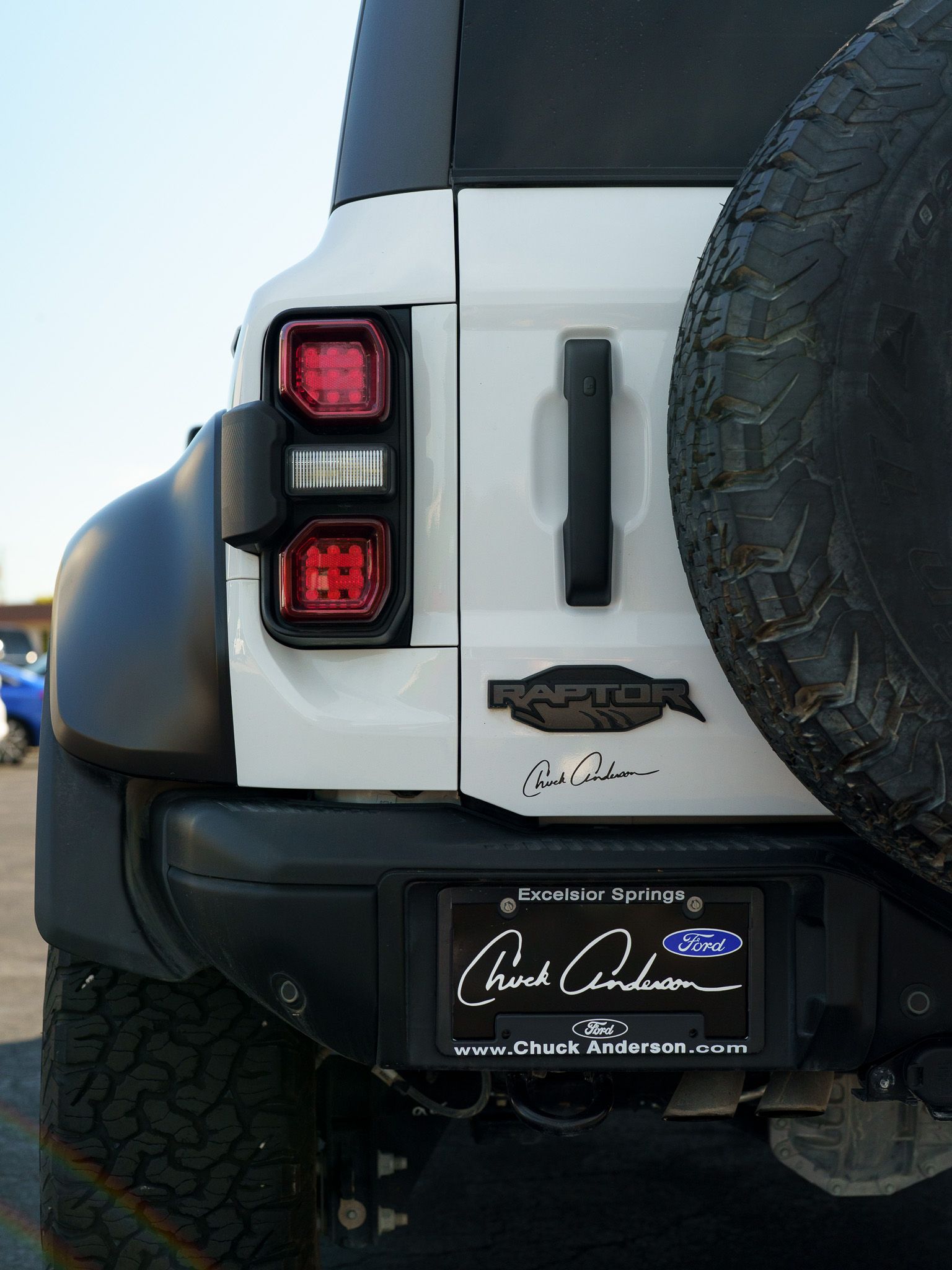
``` Is the Ford Bronco Good on Ice?
Bronco gives you useful electronic tools for icy conditions, including Slippery Mode, traction control, anti-lock brakes and AdvanceTrac with Roll Stability Control.
But ice is where tire grip becomes particularly important.
Four-wheel drive can help the Bronco move away from a stop, but all vehicles rely on the small contact patches beneath their tires when they need to turn or stop.
On extremely slick ice, even an advanced four-wheel-drive vehicle can lose traction.
If ice performance matters more than occasional deep-snow capability, prioritize appropriate winter tires over simply buying the largest available off-road tire.
``` 
``` Transmission Choice
Manual vs. Automatic Bronco in Snow
Both can work well in winter.
An experienced manual-transmission driver may appreciate direct control over gear selection and engine braking.
Ford's 7-speed manual is available with the 2.3L EcoBoost on applicable Bronco configurations.
The 10-speed automatic makes everyday winter driving easier for many owners and integrates with Ford's electronic drive-mode programming.
We would not choose the transmission based on snow capability alone. Choose the one you prefer living with every day.
```
``` How to Drive a Bronco Safely in Snow
- Slow down before conditions become difficult.
- Increase following distance substantially.
- Use smooth accelerator inputs.
- Brake earlier and more progressively.
- Avoid abrupt steering corrections.
- Select an appropriate drive mode.
- Know which 4x4 setting is appropriate.
Do Not Let Capability Create Overconfidence
Bronco may accelerate through snow so easily that conditions feel better than they actually are.
That can create false confidence.
You may discover the true amount of traction only when you need to stop.
Judge road conditions by braking and steering grip, not solely by how easily the Bronco accelerates.
```
``` What Should You Carry in a Bronco During Winter?
Capability does not eliminate the value of being prepared.
Basic Winter Gear
- Warm clothing or blanket
- Gloves and hat
- Flashlight
- Phone charging cable or battery pack
- Ice scraper
- Small shovel
- Drinking water
- Basic first-aid supplies
For Remote or Severe Conditions
- Recovery strap rated for the intended use
- Proper recovery points
- Traction aids where appropriate
- Additional cold-weather clothing
- Navigation backup
- Emergency food
- Extra windshield-washer fluid
- Equipment appropriate to the route
```
``` Is a Bronco Hard Top Better for Winter?
Both factory hard-top and soft-top Broncos are designed for all-season use, but some owners may prefer the hard top during winter because of its more conventional solid-panel construction.
Regardless of roof type, keep seals clean and inspect weatherstripping before winter.
Snow and ice should be removed appropriately rather than allowing excessive accumulation to remain on the vehicle.
Roof choice should be based on your overall Bronco ownership preferences rather than snow capability alone.
```
``` Bronco vs. Bronco Sport in Snow
Both can be excellent winter vehicles.
Full-size Bronco provides greater maximum ground clearance, more aggressive available off-road hardware and locking-differential capability.
That gives it the edge in genuinely deep or difficult terrain.
Bronco Sport Has Winter Advantages Too
Bronco Sport also comes with standard 4x4 and offers Slippery Mode.
Its smaller dimensions and unibody construction can make it easier to maneuver and live with as a normal winter commuter.
If the question is "Which can tackle more extreme deep snow?" choose Bronco. If the question is "Which do I need to get to work after a snowstorm?" either may be more than capable.
Bronco vs. Bronco Sport ```
``` Choosing a Bronco for Snow in 30 Seconds
Match your winter conditions to the Bronco you actually need.
"We get occasional snow."
You do not need an extreme Bronco. A standard 4x4 Bronco with appropriate tires is already highly capable.
"I commute regardless of the weather."
Consider Big Bend or Outer Banks. Prioritize the right tires and comfort features.
"I regularly drive unplowed rural roads."
Badlands becomes attractive. Advanced 4x4, greater clearance and 33-inch tires give it a strong foundation.
"We get genuinely deep snow."
Consider Sasquatch. Its added ground clearance and drivetrain hardware become more meaningful.
"Ice is my biggest problem."
Focus heavily on tires. Four-wheel drive cannot manufacture grip when braking or turning on ice.
"I want maximum capability."
Raptor provides the highest ground clearance, but it is considerably more Bronco than normal winter commuting requires.
"I want heated seats and strong winter capability."
Outer Banks. Its comfort-oriented equipment makes it an excellent winter daily-driver Bronco.
"I want a manual and deep-snow capability."
Look closely at Badlands. It keeps the 2.3L manual available while offering substantial off-road hardware.
```
``` Our Verdict: Bronco Is an Excellent Winter Vehicle
Standard four-wheel drive alone gives Bronco a strong foundation for snow.
Slippery Mode adds electronic calibration specifically intended for snow, ice and other slick conditions.
Available Advanced 4x4, locking differentials and Sasquatch hardware give Bronco the ability to move far beyond normal winter-road duty.
But Tires Still Decide How Much of That Capability You Can Use
A Bronco's drivetrain can distribute torque extremely well.
It cannot create traction between a poor tire and an icy road.
For everyday winter use, we would rather have a sensibly equipped Bronco on excellent tires than an extreme Bronco on tires poorly matched to the conditions.
For deep snow, add clearance and off-road hardware. For ice, prioritize tires. For normal winter driving, virtually every Bronco starts with an excellent foundation.
```
``` Ford Bronco Snow & Winter Driving FAQs
Quick answers to the most common questions about driving a Bronco in snow, ice and winter weather.
Is the Ford Bronco good in snow?
Yes. Every current Ford Bronco has four-wheel drive, and Ford provides Slippery G.O.A.T. Mode specifically for conditions such as snow and ice. Available Advanced 4x4, locking differentials and substantial ground clearance can provide even more capability.
Does every Ford Bronco have 4x4?
Yes. Every current full-size Ford Bronco includes a four-wheel-drive system as standard equipment.
What Bronco drive mode should I use in snow?
Slippery Mode is designed for slick surfaces including snow, ice and wet roads. Ford also identifies Sand Mode on applicable Broncos as suitable for deep snow. Always follow the Owner's Manual and choose settings appropriate to the actual conditions.
What does Bronco Slippery Mode do?
Ford says Slippery Mode reduces accelerator response, optimizes transmission shifting and changes traction and stability-control behavior to improve control on snow, ice and other slick surfaces.
Can you use Bronco Sand Mode in snow?
Ford specifically describes Sand Mode on applicable Bronco models as suitable for soft dry sand or deep snow. It is intended for loose conditions rather than ordinary dry pavement.
Does Ford Bronco have a snow mode?
Ford calls its winter-oriented setting Slippery Mode rather than Snow Mode. Slippery is specifically calibrated for surfaces including snow and ice.
What is Advanced 4x4 on the Ford Bronco?
Advanced 4x4 with Automatic On-Demand Engagement adds an electronically controlled transfer-case function that can help manage changing traction conditions. It is standard on Badlands and available on applicable other configurations.
Is Bronco Badlands good in snow?
Yes. Badlands is particularly capable in deeper or rougher winter conditions because it includes Advanced 4x4, approximately 10.5 inches of ground clearance and 33-inch rugged-terrain tires.
Is Bronco Sasquatch good in snow?
Sasquatch can be very capable in deep snow because it adds approximately 35-inch tires, increased ground clearance and locking-differential capability. Tire compound and tread still matter greatly on packed snow and ice.
How much ground clearance does Bronco have?
Ground clearance varies by configuration. Standard Broncos begin around 8.3 to 8.4 inches, Badlands provides about 10.5 inches, Sasquatch-equipped Broncos can reach approximately 11.5 to 11.6 inches, and Bronco Raptor reaches about 13.1 inches.
Is Bronco Raptor better in snow?
Bronco Raptor has enormous deep-snow potential with 37-inch tires and approximately 13.1 inches of ground clearance. However, its extra width and specialized design are unnecessary for normal winter commuting.
Does four-wheel drive help a Bronco stop faster in snow?
Four-wheel drive primarily improves the ability to send engine power through more wheels. Braking still depends heavily on tire grip, road surface, vehicle speed and braking input.
Does a Ford Bronco need winter tires?
Not every Bronco owner needs dedicated winter tires, but they can provide a major traction advantage in consistently cold, snowy or icy conditions. Tire choice should reflect the climate and type of winter driving expected.
Are all-terrain tires good in snow?
Many all-terrain tires perform well in loose snow, but performance varies by tire design and compound. A dedicated winter tire may provide better traction on packed snow and ice.
Are 35-inch Bronco tires better in snow?
Large 35-inch Sasquatch tires and added clearance can help in deep snow and rough terrain, but larger diameter alone does not guarantee better traction on packed snow or ice.
Do Bronco locking differentials help in snow?
Locking differentials can help in deep snow or very low-traction terrain when individual wheels lose grip. They are specialized tools and are not required for ordinary snow-covered roads.
Which Ford Bronco trim is best for snow?
Big Bend is more than capable for most normal winter driving. Outer Banks is a strong comfort-focused winter daily driver. Badlands is our choice for deeper snow, rough roads and more demanding winter terrain.
Is Bronco Outer Banks good in snow?
Yes. Outer Banks includes standard four-wheel drive and Slippery Mode and combines Bronco capability with comfort features that are useful during everyday winter driving.
Is a 2-Door or 4-Door Bronco better in snow?
Both can be excellent in snow. The 2-Door has a shorter wheelbase and compact footprint, while the 4-Door provides more passenger and cargo room for winter travel. Tires and configuration matter more than door count alone.
Is the manual Bronco good in snow?
Yes. An experienced driver can use a manual-transmission Bronco effectively in winter. Automatic Broncos can also be excellent and integrate smoothly with Ford's electronic drive-mode systems.
Is the Ford Bronco good on ice?
Bronco includes useful features such as Slippery Mode, AdvanceTrac, ABS and four-wheel drive, but tire grip remains critical on ice. Even a Bronco can slide if the available traction is exceeded.
Is Ford Bronco better than Bronco Sport in deep snow?
Full-size Bronco has greater maximum ground clearance and more extreme available drivetrain and off-road hardware, giving it the advantage when snow becomes genuinely deep or terrain becomes difficult.
Is Bronco Sport also good in snow?
Yes. Bronco Sport also includes standard 4x4 and winter-oriented drive modes, making it a strong everyday winter vehicle despite being smaller and less extreme than full-size Bronco.
Should I buy Sasquatch just because I live where it snows?
Probably not. Standard Bronco configurations are already very capable in normal snow. Sasquatch makes the strongest case for buyers who also expect deep snow, difficult unplowed roads or serious off-road use.
What is the most important Bronco feature for winter?
Standard 4x4 and Slippery Mode provide an excellent foundation, but tires may have the greatest influence over overall snow and ice traction because they affect acceleration, braking and turning.
```
``` Continue Your Ford Bronco Research
Compare Bronco trims, capability and ownership questions before choosing your SUV.
```
``` Looking for a Ford Bronco for Missouri Winters?
You probably do not need the most extreme Bronco in the showroom just because Kansas City occasionally gets buried in snow.
At Chuck Anderson Ford, we can help you compare the equipment that actually matters for the way you drive: tire type, standard versus Advanced 4x4, ground clearance, Sasquatch equipment, comfort features and the differences between Big Bend, Outer Banks, Badlands and other Bronco configurations.
If your winter driving is mostly commuting around Excelsior Springs, Liberty or the Northland, a relatively straightforward Bronco may provide all the winter capability you need.
If you regularly travel rural roads, hunting property, farms, unplowed routes or deeper snow, we can help you move toward a Badlands or Sasquatch-equipped Bronco with more clearance and drivetrain capability.
Visit Chuck Anderson Ford in Excelsior Springs, Missouri, serving Bronco shoppers from Liberty, Kearney, Lawson, Smithville and throughout the Kansas City Northland.
Chuck Anderson Ford
- 1910 W Jesse James Road
- Excelsior Springs, MO 64024
- Sales: 816-648-6419
- Service: 816-648-6424
- Parts: 816-648-6429
```
``` Information on this page reflects available 2026 Ford Bronco specifications at the time this guide was prepared. Four-wheel-drive systems, G.O.A.T. Modes, tires, ground clearance, locking differentials, suspension and other features vary by trim and equipment. Snow and ice traction varies substantially with tire design, tire condition, temperature, road surface, snow depth, driver inputs and vehicle configuration. Four-wheel drive can improve mobility but does not eliminate the risk of losing traction and does not replace appropriate tires, safe speeds or proper following distance. Always consult the Bronco Owner's Manual for correct four-wheel-drive and G.O.A.T. Mode operation and use equipment appropriate for current road and weather conditions.