

Which F-150 engine gets the best gas mileage?
Ford F-150 Fuel Economy Guide
Which F-150 Engine Gets the Best Gas Mileage?
The Ford F-150 PowerBoost Full Hybrid gets the best EPA-estimated gas mileage in the current F-150 lineup. For buyers who prefer a conventional gasoline engine, the 2.7L EcoBoost is the strongest fuel-economy choice in the 2026 lineup.
Quick Answer: PowerBoost Gets the Best F-150 Gas Mileage
If fuel economy is your top priority, the 3.5L PowerBoost Full Hybrid is the F-150 engine to research first.
For the 2026 F-150, EPA estimates reach approximately 23 MPG city, 25 MPG highway and 24 MPG combined with rear-wheel drive. Four-wheel-drive PowerBoost models are rated at approximately 22 city, 24 highway and 23 combined.
Among conventional gasoline engines, the 2.7L EcoBoost provides the best published fuel economy, reaching approximately 19 city, 25 highway and 21 combined MPG with rear-wheel drive.
The best engine still depends on more than MPG. Towing requirements, purchase price, drivetrain, annual mileage and how you actually use the truck should all be considered.
24 MPG PowerBoost RWD Max Combined
23 MPG PowerBoost 4WD Combined
21 MPG 2.7L EcoBoost RWD Combined
19-20 MPG Many 3.5L EcoBoost & 5.0L V8 Configurations
2026 Ford F-150 MPG by Engine
Fuel economy changes with engine, drivetrain and configuration. These figures show representative EPA estimates for mainstream 2026 F-150 configurations.
| Engine | Drivetrain | City MPG | Highway MPG | Combined MPG |
|---|---|---|---|---|
| 3.5L PowerBoost Full Hybrid | RWD | 23 | 25 | 24 |
| 3.5L PowerBoost Full Hybrid | 4WD | 22 | 24 | 23 |
| 2.7L EcoBoost V6 | RWD | 19 | 25 | 21 |
| 2.7L EcoBoost V6 | 4WD | 18 | 23 | 20 |
| 3.5L EcoBoost V6 | RWD | 17 | 25 | 20 |
| 3.5L EcoBoost V6 | 4WD | 17 | 23 | 19 |
| 5.0L V8 | RWD | 16 | 24 | 19 |
| 5.0L V8 | 4WD | 16 | 24 | 19 |
| High-Output 3.5L EcoBoost Raptor | 4WD | 14 | 18 | 16 |
| 5.2L Supercharged V8 Raptor R | 4WD | 10 | 15 | 12 |
EPA estimates vary by configuration. Cab, bed, drivetrain, tires, axle ratio, trim and equipment can change fuel-economy ratings. Always compare the window stickers of the exact F-150s you are considering.
Why Does PowerBoost Get the Best F-150 MPG?
PowerBoost combines a 3.5L twin-turbocharged EcoBoost V6 with an electric motor, high-voltage battery and hybrid control system.
The electric motor can assist the gasoline engine when power is required, while regenerative braking allows the hybrid system to recover energy that would otherwise be lost during deceleration.
Hybrid systems tend to provide their biggest fuel-economy advantage during city and mixed driving, where stopping and starting give the system more opportunities to recover energy and assist the gasoline engine.
PowerBoost also delivers substantial performance, so choosing the fuel-economy leader does not mean choosing the least powerful F-150.
PowerBoost Is Especially Worth Considering If:
- You drive a substantial number of miles each year.
- You spend significant time in city or mixed driving.
- You want strong torque in addition to better fuel economy.
- You value available Pro Power Onboard.
- You use your truck for commuting as well as truck duties.
- You want a full-size pickup without giving up substantial capability.

Best Conventional Gas Engine
What If You Don't Want a Hybrid?
For 2026, the 2.7L EcoBoost is the fuel-economy leader among the conventional gasoline F-150 engines.
A rear-wheel-drive configuration can reach approximately 19 MPG city, 25 MPG highway and 21 MPG combined. Four-wheel-drive versions are rated around 18 city, 23 highway and 20 combined.
That makes the 2.7L especially attractive to drivers who primarily commute, use their truck for everyday transportation and only need moderate towing capability.
It still produces 325 horsepower and 400 lb-ft of torque, so choosing the smaller EcoBoost does not mean giving up normal full-size-truck performance.
Compare 2.7 vs. 3.5 EcoBoostDoes the 3.5L EcoBoost Get Good Gas Mileage?
Considering its performance and towing capability, the conventional 3.5L EcoBoost can return reasonable highway fuel economy—but efficiency is not its primary mission.
Up to 25 MPG Highway
Certain rear-wheel-drive 2026 3.5L EcoBoost configurations are rated at approximately 25 MPG highway.
500 lb-ft of Torque
The conventional 3.5L EcoBoost provides significantly more torque than the smaller 2.7L, which is useful for frequent towing and loaded driving.
Capability Comes First
If you regularly tow a substantial trailer, choosing enough engine for the job may matter more than chasing one or two MPG in unloaded driving.
Turbocharged MPG depends heavily on your right foot. The 3.5L EcoBoost can be efficient when lightly loaded, but frequent boost, high speeds, heavy payload and towing can increase fuel consumption significantly.
V8 Fuel Economy
How Does the 5.0L V8 Compare?
The 5.0L V8 is not the F-150 engine we would choose if maximum MPG is the primary goal.
Representative 2026 configurations are rated around 16 MPG city, 24 MPG highway and 19 MPG combined.
Interestingly, its highway rating can be relatively close to the EcoBoost engines under the right conditions. The larger difference tends to appear during lower-speed driving and situations where hybrid operation can provide an advantage.
Buyers generally choose the 5.0L because they value naturally aspirated response, V8 sound, substantial towing capability and traditional engine character—not because it wins the MPG contest.
Compare 3.5 EcoBoost vs. 5.0 V8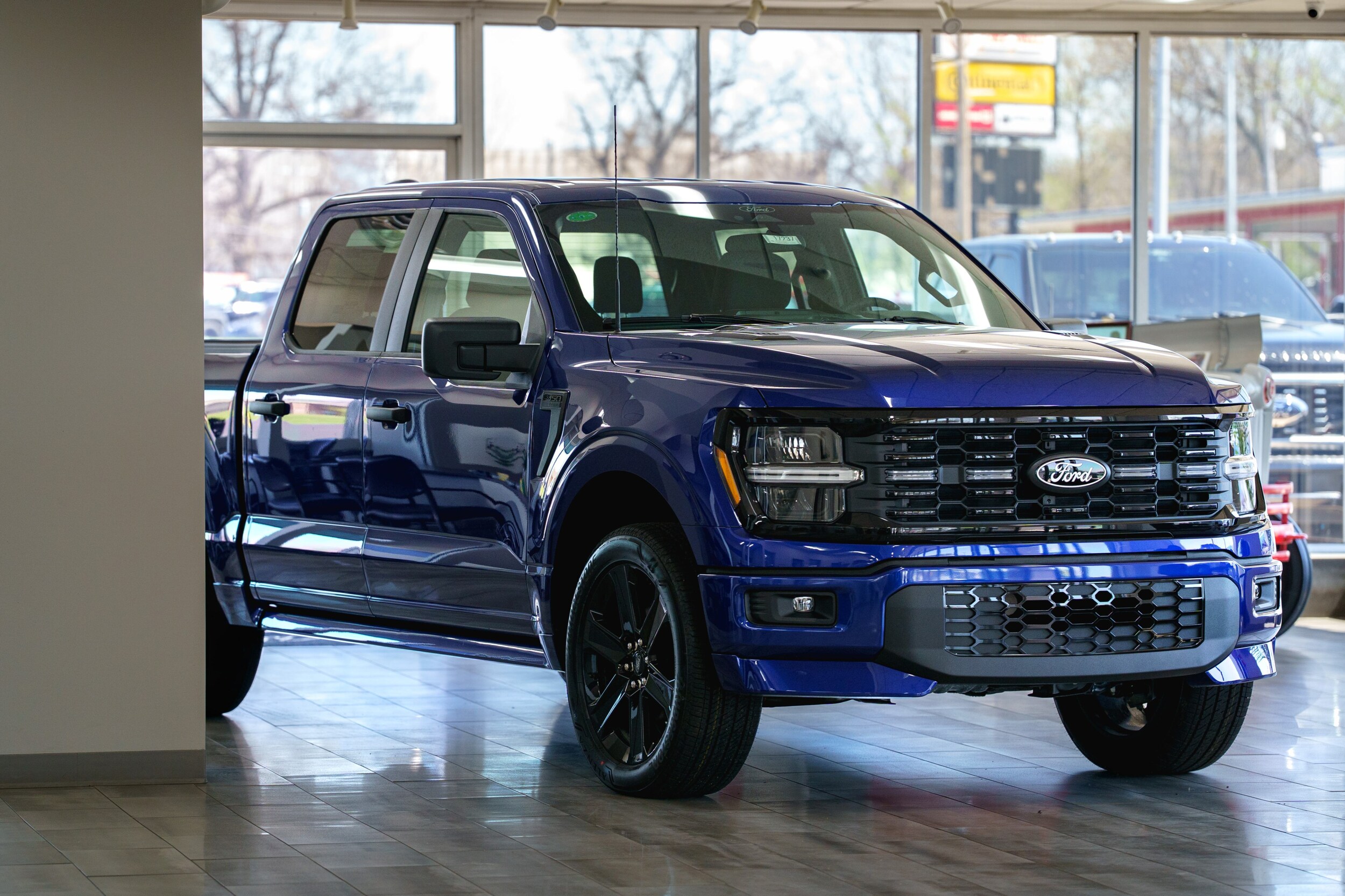
EPA MPG vs. Real-World F-150 MPG
EPA estimates are valuable because they provide a standardized way to compare trucks. Your actual fuel economy can be very different.
Pickup trucks are especially sensitive to speed, payload, trailer weight, wind, temperature, tires and driving habits.
Two people driving identically equipped F-150s can therefore see noticeably different averages.
Use EPA figures to compare configurations—not as a promise of the exact MPG you will see every day.
What Can Reduce F-150 MPG?
- High interstate speeds
- Heavy acceleration
- Frequent turbo boost
- Towing
- Heavy payload
- Cold weather
- Extended idling
- Short trips
- Oversized or aggressive tires
- Roof racks and exterior accessories
- Low tire pressure
- Strong headwinds
Which F-150 Engine Gets the Best MPG While Towing?
This question does not have one universal answer because towing fuel economy changes dramatically with trailer size, shape, weight, speed, terrain and weather.
A tall travel trailer creates far more aerodynamic drag than a low utility trailer of similar weight. Interstate speed can also have a major effect because aerodynamic resistance rises rapidly as speed increases.
PowerBoost retains hybrid functionality while towing, but highway trailer use provides fewer opportunities for regenerative braking than stop-and-go driving. A conventional EcoBoost or V8 can also return very different results depending on how hard it is working.
If you tow frequently, we would prioritize buying an engine with enough capability for the trailer first, then consider fuel economy among the trucks that safely meet your towing and payload requirements.
Which F-150 Engine Is Best for Towing?Does Better MPG Automatically Make PowerBoost Cheaper to Own?
Not necessarily. Fuel economy is only one part of total vehicle cost.
Annual Mileage
The more miles you drive, the more valuable an MPG improvement can become. A low-mileage driver saves less fuel annually than someone commuting thousands of miles each month.
Purchase Price
Compare the actual transaction price of the PowerBoost and gasoline-engine trucks you are considering. Better MPG does not automatically offset a higher purchase price.
How You Use the Truck
A buyer who uses Pro Power Onboard for work or camping may receive value from PowerBoost that cannot be measured at the fuel pump.
2027 F-150
What Will Be the Most Fuel-Efficient 2027 F-150 Engine?
The 2027 engine lineup changes significantly because Ford replaces the familiar 2.7L EcoBoost with a new 3.0L EcoBoost across much of the mainstream F-150 lineup.
PowerBoost continues as the full-hybrid F-150 powertrain, while the conventional 3.5L EcoBoost, 5.0L V8 and Ford Performance engines remain available in applicable configurations.
When this guide was prepared, final F-150-specific fuel-economy ratings for the new 3.0L EcoBoost and complete 2027 lineup had not yet been published.
Rather than assuming the 2026 ratings carry forward unchanged, Chuck Anderson Ford recommends comparing the final EPA rating or window sticker of the exact 2027 F-150 you are considering.
Explore 2027 F-150 EnginesWhich F-150 Engine Should You Buy If MPG Matters?
Start with how much truck capability you actually need.
Mostly Commuting
Start with PowerBoost or the efficient mainstream EcoBoost.
If annual mileage is high and towing requirements are moderate, fuel economy deserves significant weight in the decision.
Frequent Heavy Towing
Start with the 3.5L EcoBoost.
Maximum towing capability may matter more than a small unloaded MPG advantage when the truck frequently pulls substantial weight.
Want a V8
Buy the 5.0L if the V8 experience matters.
It will not win the fuel-economy comparison, but MPG does not need to be the only factor in choosing a truck you plan to enjoy.
City & Mixed Driving
PowerBoost deserves serious consideration.
Hybrid systems can take greater advantage of regenerative braking and electric assistance during lower-speed stop-and-go operation.
Highway Driving
Compare exact configurations.
Conventional engines can post competitive highway ratings, making the window sticker important when most of your driving is at steady speeds.
Job Sites or Camping
PowerBoost may provide additional value.
Available Pro Power Onboard can make the hybrid useful for reasons extending beyond fuel savings.
Our Verdict: PowerBoost Wins the MPG Comparison
If the question is simply, "Which F-150 engine gets the best gas mileage?", the answer is PowerBoost.
The 2026 PowerBoost reaches up to approximately 24 MPG combined, making it the most fuel-efficient F-150 powertrain in the current published lineup.
For buyers who do not want the hybrid, the 2.7L EcoBoost is the strongest 2026 conventional-gas choice at up to approximately 21 MPG combined.
Our MPG Rankings
- PowerBoost Hybrid: Best overall fuel economy.
- 2.7L EcoBoost: Best 2026 conventional-gas MPG.
- 3.5L EcoBoost: More focused on torque and towing.
- 5.0L V8: Strong capability and V8 character over MPG.
- Raptor: Performance-focused rather than efficiency-focused.
- Raptor R: Maximum performance, not fuel economy.
For 2027 shoppers, compare the new 3.0L EcoBoost once Ford's final EPA figures are available.
Ford F-150 Gas Mileage FAQs
Quick answers to common questions about F-150 MPG and engine choice.
Which Ford F-150 engine gets the best gas mileage?
The 3.5L PowerBoost Full Hybrid gets the best fuel economy in the 2026 F-150 lineup, reaching up to approximately 24 MPG combined in a rear-wheel-drive configuration.
What is the most fuel-efficient non-hybrid F-150 engine?
For 2026, the 2.7L EcoBoost is the most fuel-efficient conventional gasoline F-150 engine, reaching up to approximately 21 MPG combined with rear-wheel drive.
What MPG does the F-150 PowerBoost get?
Representative 2026 PowerBoost ratings reach approximately 23 MPG city, 25 highway and 24 combined with rear-wheel drive, while four-wheel-drive versions are rated around 22 city, 24 highway and 23 combined.
What MPG does the 2.7 EcoBoost F-150 get?
A rear-wheel-drive 2026 2.7L EcoBoost can achieve approximately 19 MPG city, 25 highway and 21 combined. Four-wheel-drive configurations are rated around 18 city, 23 highway and 20 combined.
What MPG does the 3.5 EcoBoost F-150 get?
Representative 2026 conventional 3.5L EcoBoost ratings are around 17 MPG city, 25 highway and 20 combined with rear-wheel drive, and 17 city, 23 highway and 19 combined with four-wheel drive.
What MPG does the 5.0 V8 F-150 get?
Representative 2026 5.0L V8 configurations are rated around 16 MPG city, 24 highway and 19 MPG combined. Ratings can vary by truck configuration.
Does 4WD reduce F-150 gas mileage?
It often can. Four-wheel-drive hardware adds weight and can create additional drivetrain losses, so otherwise similar 4WD and RWD trucks may have different EPA ratings.
Does towing reduce F-150 MPG?
Yes. Towing increases weight and aerodynamic drag, which can substantially reduce fuel economy. Trailer shape, speed, terrain, wind and load all affect the result.
Does PowerBoost save gas on the highway?
PowerBoost can still return strong highway fuel economy, but the hybrid system generally has more opportunities to recover energy during city and mixed driving than during long periods of steady-speed highway driving.
Which 2027 F-150 engine will get the best MPG?
Final 2027 F-150 fuel-economy ratings should be verified once Ford and the EPA publish complete specifications. The new 3.0L EcoBoost replaces the previous 2.7L across much of the lineup, while PowerBoost continues as the F-150 full-hybrid powertrain.
Continue Your Ford F-150 Research
Compare F-150 engines by fuel economy, towing, performance and ownership needs.
Want an F-150 That Balances MPG and Capability?
The most fuel-efficient F-150 is not automatically the right truck for every driver.
Tell Chuck Anderson Ford how far you drive, whether you tow, how much payload you carry and whether features like Pro Power Onboard matter to you. We can help you compare F-150 engines based on total ownership needs rather than one MPG number.
Visit Chuck Anderson Ford in Excelsior Springs, Missouri, serving Ford truck shoppers from Liberty, Kearney, Lawson, Smithville and throughout the Kansas City Northland.
- Chuck Anderson Ford
- 1910 W Jesse James Road
- Excelsior Springs, MO 64024
- Sales: 816-648-6419
- Service: 816-648-6424
- Parts: 816-648-6429
EPA-estimated fuel economy varies by model year, engine, drivetrain, cab, bed, trim, tires, axle ratio and equipment. Actual mileage will vary with driving habits, towing, payload, speed, weather, terrain, vehicle condition and other factors. The 2026 MPG figures referenced on this page represent applicable published EPA estimates and do not apply to every F-150 configuration. Final 2027 fuel-economy ratings should be verified once complete Ford and EPA specifications are published. Always review the Monroney label and specifications of the exact vehicle you are considering.