Ford F-150 Research Questions & Answers

Chuck Anderson Ford F-150 Research Center

Ford F-150 Questions & Answers

Towing capacity. EcoBoost vs. V8. PowerBoost. Trim levels. Reliability. Campers. Everyday driving. Get straightforward answers to some of the most common questions shoppers ask about the Ford F-150.

Start With Your Question

Finding the Right F-150 Starts With How You Plan to Use It

There is no single Ford F-150 configuration that is best for every buyer. Someone towing a large travel trailer may prioritize a very different engine, axle ratio and equipment package than someone who primarily uses an F-150 for commuting, family transportation or weekend projects.

This Ford F-150 Question Center from Chuck Anderson Ford is designed to help shoppers understand those differences. Use the quick answers below as a starting point, then follow our detailed research guides when you want to go deeper into a particular engine, trim, capability or comparison.

Because Ford changes engines, equipment and specifications between model years, always verify the specifications of the exact F-150 you are considering.

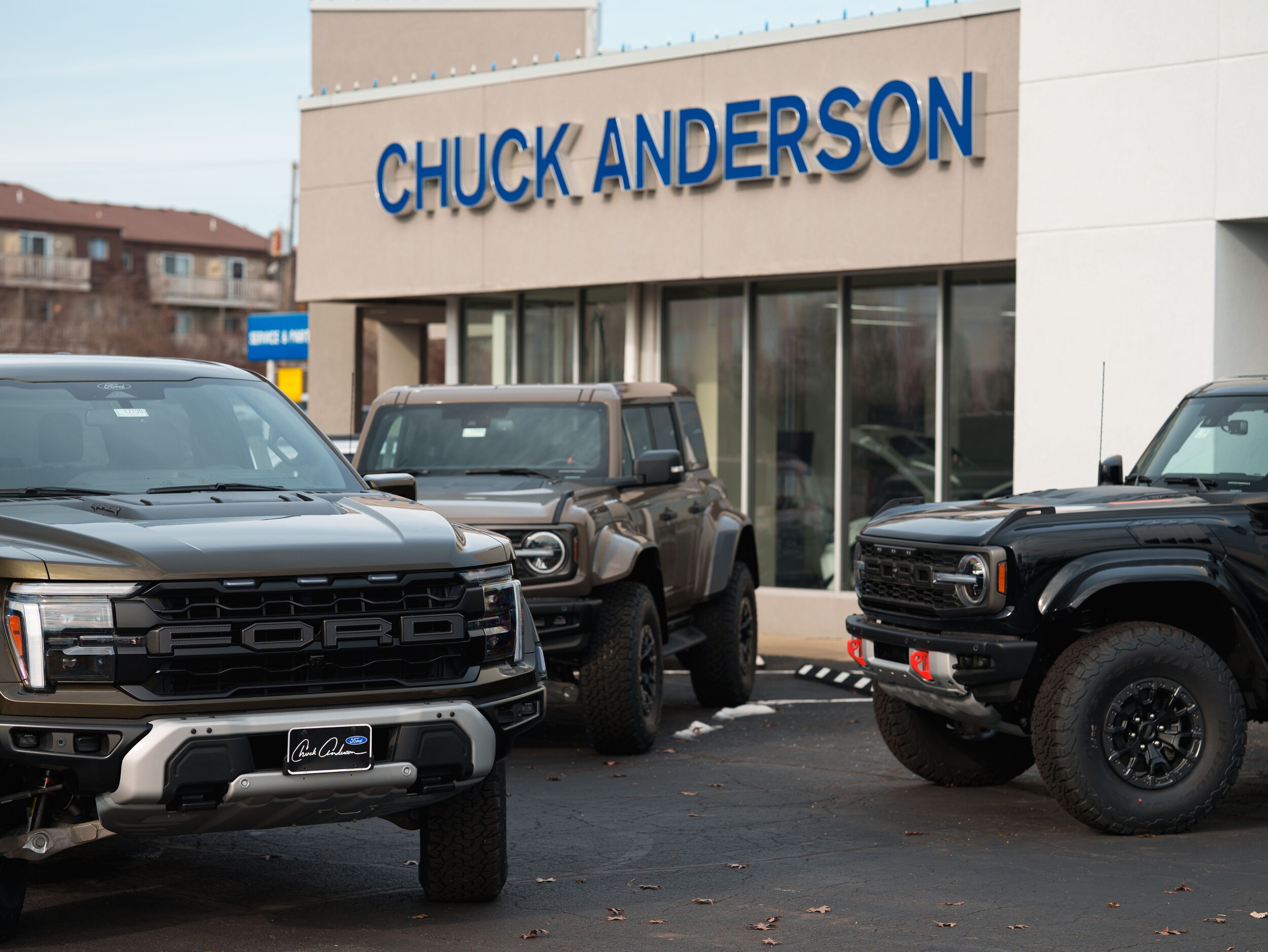
Ford F-150 full-size pickup truck research
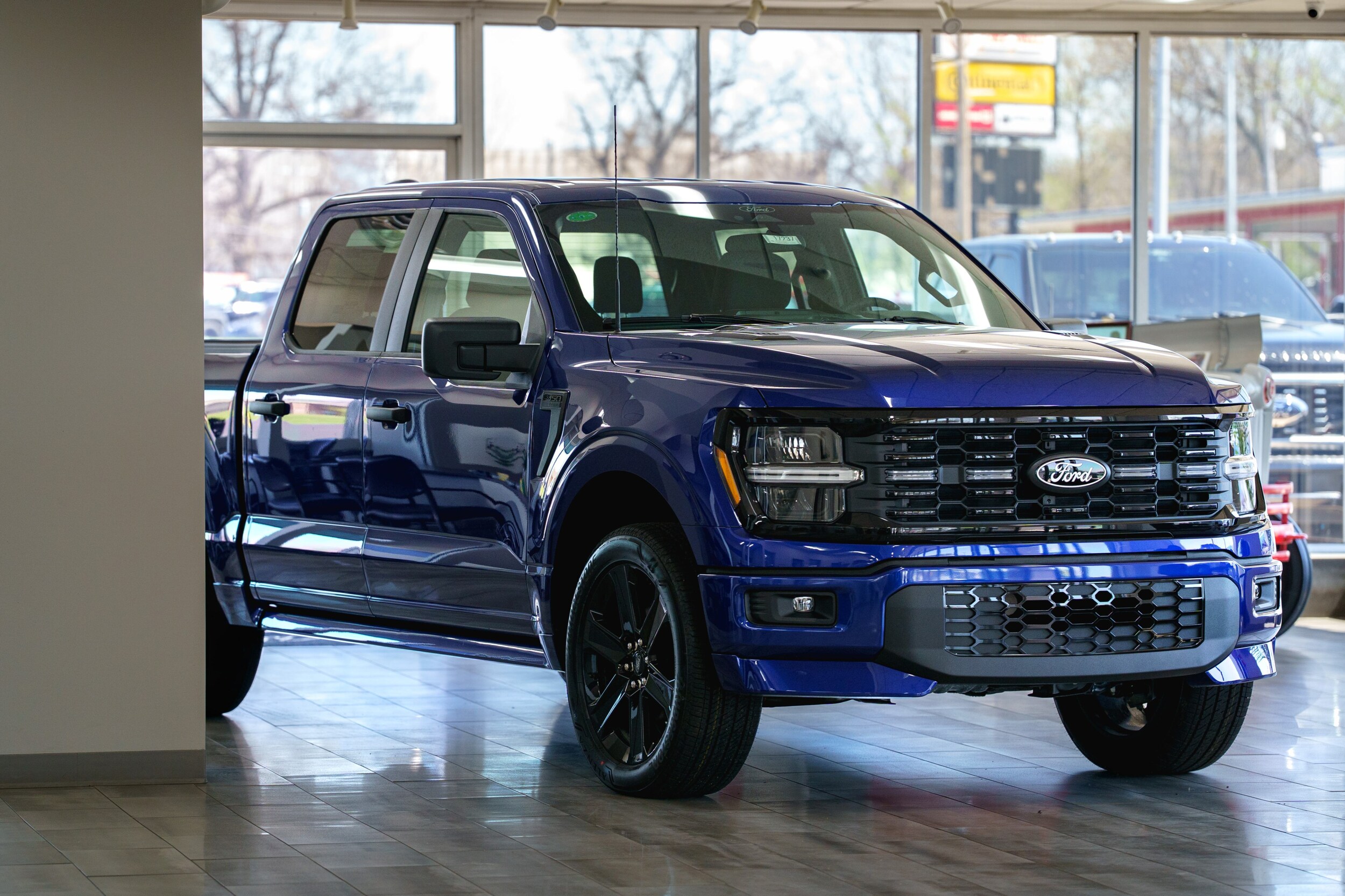
Ford F-150 towing capability

F-150 Towing & Engine Questions

Engine choice matters, but an F-150's actual towing capability depends on the complete truck: engine, cab, bed, wheelbase, drivetrain, axle ratio, equipment and available payload.

How much can a Ford F-150 tow?

Ford F-150 towing capacity varies substantially by model year, engine, cab, bed, drivetrain, axle ratio and towing equipment. Properly configured F-150 models can handle substantial trailers, but the maximum advertised rating should never be assumed to apply to every truck.

The best approach is to identify the loaded weight of your trailer, account for passengers and cargo, then match that requirement to a specific F-150 configuration.

Read our complete F-150 towing guide →

Which Ford F-150 engine is best?

The best F-150 engine depends on what you expect the truck to do. EcoBoost engines are strong choices for buyers who value low-rpm torque and towing capability. The 5.0L V8 appeals to drivers who prefer naturally aspirated V8 response and character, while PowerBoost adds hybrid assistance and available onboard electrical power.

Compare F-150 engines →

Ford F-150 3.5 EcoBoost vs. 5.0 V8: which is better?

The 3.5L EcoBoost and 5.0L V8 appeal to different F-150 buyers. The turbocharged 3.5L EcoBoost emphasizes strong low-rpm torque and towing performance, while the naturally aspirated 5.0L V8 delivers the traditional response, sound and driving character many truck owners specifically want.

Compare the 3.5 EcoBoost and 5.0 V8 →

Ford F-150 2.7 vs. 3.5 EcoBoost: which is better?

On F-150 model years that offer both engines, the 2.7L EcoBoost can be an appealing choice for everyday driving and lighter-duty truck use, while the 3.5L EcoBoost generally appeals more to buyers prioritizing torque and higher towing capability.

Engine availability changes by model year, so this comparison is especially useful when researching new and used late-model F-150s.

Compare the 2.7 and 3.5 EcoBoost →

Ford F-150 PowerBoost vs. EcoBoost: which should I buy?

Choose a conventional EcoBoost if you want strong turbocharged performance without the additional hybrid system. Consider PowerBoost if hybrid assistance, strong torque and available Pro Power Onboard are valuable to the way you use your truck.

Compare PowerBoost and EcoBoost →

Which F-150 engine is best for towing?

The 3.5L EcoBoost has traditionally been one of the primary F-150 choices for buyers focused on heavy conventional towing because of its strong torque and availability in high-capability configurations.

Engine choice alone does not determine towing capacity. Cab, bed, wheelbase, axle ratio, drivetrain, payload and towing equipment all need to be considered.

Find the best F-150 engine for towing →

Which F-150 engine gets the best gas mileage?

The most fuel-efficient F-150 powertrain depends on model year, drivetrain, cab, equipment and driving conditions. PowerBoost can be particularly attractive to buyers who want full-size pickup capability with hybrid assistance, while smaller EcoBoost powertrains may also make sense for drivers who do not need maximum towing capability.

Compare F-150 engines for fuel economy →

What is the most reliable Ford F-150 engine?

There is no single F-150 engine that can universally be called the most reliable across every model year. Engine generation, maintenance history, operating conditions, towing frequency and previous ownership all matter.

When comparing used F-150s, service history and the condition of the individual truck can be just as important as the engine family under the hood.

Ford F-150 Reliability & Longevity

Two questions matter to nearly every truck buyer: how dependable is it, and how long can it last?

Is the Ford F-150 reliable?

An F-150's long-term reliability depends on the model year, powertrain, maintenance history and how the truck has been used. Regular maintenance becomes especially important for trucks that tow frequently, operate in severe conditions or accumulate high annual mileage.

Buyers considering a used F-150 should evaluate the individual truck rather than relying only on the reputation of the model name.

Read our F-150 reliability guide →

How long does a Ford F-150 last?

There is no fixed mileage at which an F-150 reaches the end of its useful life. Maintenance, rust exposure, towing, payload, driving conditions and previous repairs can all dramatically affect how long a particular truck remains dependable.

For buyers planning to keep a truck for many years, consistent maintenance and choosing the correct configuration for the workload are critical.

Learn more about F-150 longevity →
Ford F-150 trim level comparison

Which F-150 Trim Is Right for You?

F-150 trims range from practical work-focused pickups to premium daily drivers and specialized off-road trucks. The right trim is usually the one that gives you the equipment you will actually use without forcing you to pay for features you do not need.

What is the difference between F-150 XL and XLT?

XL is the more work-focused starting point in the F-150 lineup, while XLT typically adds additional comfort, appearance, convenience and technology choices. Buyers using a truck primarily for work may find XL compelling, while XLT is often a natural step up for mixed work, family and everyday use.

Compare F-150 XL vs. XLT →

F-150 XLT vs. Lariat: what's the difference?

XLT is one of the broadest all-around choices in the F-150 lineup. Lariat moves farther into premium everyday transportation with a greater emphasis on interior materials, seating, technology and convenience while retaining serious truck capability.

Compare F-150 XLT vs. Lariat →

F-150 Lariat vs. Platinum: which is better?

Lariat can be a strong choice for buyers wanting premium comfort without moving all the way to the upper end of the F-150 lineup. Platinum places a greater emphasis on luxury appointments, technology and premium design.

The better choice depends on whether the additional premium features matter enough to justify moving beyond Lariat.

Compare F-150 Lariat vs. Platinum →

F-150 Tremor vs. Raptor: what's the difference?

Tremor is designed for buyers who want meaningful off-road capability while retaining the character and utility of a conventional F-150. Raptor moves much farther toward high-performance off-road driving with specialized suspension, powertrain and chassis hardware.

Compare F-150 Tremor vs. Raptor →

F-150 vs. F-250, Campers & Heavy Towing

If your trailer requirements are driving the purchase decision, choosing the right truck class may matter more than choosing the trim level.

F-150 vs. F-250: which truck do I need?

Choose an F-150 when light-duty pickup capability, daily drivability, passenger comfort and conventional towing meet your needs. Move toward an F-250 Super Duty when trailer weight, payload, fifth-wheel use or the frequency and severity of the work exceed what makes sense for a light-duty pickup.

The decision should be based on loaded trailer weight, tongue or pin weight, payload and how frequently you tow—not simply the advertised maximum tow rating.

Compare Ford F-150 vs. F-250 →

What size camper can an F-150 tow?

The answer depends more on the camper's actual loaded weight and tongue weight than its physical length. Two travel trailers of similar size can have very different weights.

Before matching an F-150 to a camper, determine the trailer's realistic loaded weight and make sure the truck has sufficient towing capacity and available payload after accounting for people, cargo and accessories.

Can an F-150 tow a fifth wheel?

Certain properly configured F-150s may be capable of handling some lighter fifth-wheel trailers, but payload is often the limiting factor because fifth-wheel pin weight is carried by the truck.

Buyers considering a larger or heavier fifth wheel should compare the complete requirements carefully against an F-250 or F-350 Super Duty before deciding on a truck.

What is the best F-150 for everyday driving?

For many everyday drivers, an F-150 SuperCrew in a mainstream trim such as XLT or Lariat can provide a strong balance of passenger space, comfort, technology and truck capability.

The ideal engine and drivetrain depend on whether your normal use also includes towing, winter weather, off-road travel or substantial highway mileage.

F-150 PowerBoost & Pro Power Onboard

Ford's hybrid F-150 is about more than fuel economy. For some owners, its biggest advantage is what the truck can do when parked.

What is Ford Pro Power Onboard?

Pro Power Onboard is Ford's available built-in electrical power system. Depending on the F-150 configuration and system offered for that model year, it can provide power for tools, equipment, recreation and other electrical devices directly from the truck.

Buyers who work from their truck, camp, tailgate or want mobile electrical capability may find Pro Power Onboard especially useful.

Is the F-150 PowerBoost worth it?

PowerBoost can be worth considering if you value hybrid assistance, strong torque and available Pro Power Onboard. It can be especially appealing for owners who use their F-150 as a mobile workspace, tow regularly or want substantial onboard electrical capability.

Buyers who simply want a conventional gasoline truck may prefer an EcoBoost or V8 configuration instead.

Important: Shop the configuration, not just the engine badge. Towing capacity, payload, fuel economy and available equipment can change with cab, bed, drivetrain, axle ratio, trim and model year.

Still Trying to Decide Which F-150 Is Right for You?

Online research can narrow the choices, but the final answer often depends on the exact truck. Chuck Anderson Ford can help you compare F-150 engines, trims, drivetrains, cab configurations and towing equipment based on how you actually plan to use your pickup.

Visit Chuck Anderson Ford in Excelsior Springs, Missouri, serving truck shoppers throughout the Kansas City Northland and communities including Liberty, Kearney, Lawson and Smithville.

  • Chuck Anderson Ford
  • 1910 W Jesse James Road
  • Excelsior Springs, MO 64024
  • Sales: 816-648-6419
  • Service: 816-648-6424
  • Parts: 816-648-6429

Ford F-150 engine availability, horsepower, torque, EPA-estimated fuel economy, towing capacity, payload, trim content, equipment, technology, pricing and specifications vary by model year and configuration and are subject to change. Maximum towing and payload ratings depend on the individual vehicle's engine, drivetrain, cab, bed, wheelbase, axle ratio, equipment, passengers, cargo and other factors. Always verify current manufacturer specifications, vehicle certification labels, towing information, equipment and availability for the specific vehicle before purchase or towing.