

Ford F-150 PowerBoost vs EcoBoost: which should I buy?
Ford F-150 Hybrid vs. Gas
Ford F-150 PowerBoost vs. EcoBoost: Which Should I Buy?
Choose PowerBoost if you want more total torque, hybrid assistance and available high-output Pro Power Onboard. Choose a conventional EcoBoost if you want strong turbocharged performance without the added hybrid hardware and onboard-power capability.
Quick Answer: PowerBoost If You'll Use Its Hybrid Benefits; EcoBoost If You Won't
For buyers who value additional torque, hybrid operation and Pro Power Onboard, we would choose the F-150 PowerBoost. Current 2027 information lists PowerBoost at 430 horsepower and 570 lb-ft of torque.
The conventional 3.5L EcoBoost produces 400 horsepower and 500 lb-ft of torque and remains an excellent choice for buyers primarily focused on conventional gasoline-engine towing and strong turbocharged performance.
PowerBoost is not automatically better simply because it has more technology. If you do not care about hybrid operation or high-output onboard electrical power, a conventional EcoBoost may be the more straightforward choice.
Total Torque
PowerBoost
570 lb-ft in current 2027 information versus 500 lb-ft for the conventional 3.5L EcoBoost.
Onboard Power
PowerBoost
Available Pro Power Onboard is one of the hybrid's biggest advantages.
Maximum Towing
3.5L EcoBoost
Ford's 2026 guide gives the conventional 3.5L the higher maximum available tow rating.
Our Advice
Depends on Use
PowerBoost pays off when you actually use the features that make it different.
First: PowerBoost Is Also an EcoBoost
The terminology can be confusing.
Ford's 3.5L PowerBoost Full Hybrid V6 starts with a twin-turbocharged 3.5L EcoBoost gasoline engine and then adds an electric motor, high-voltage battery and hybrid-specific transmission components.
So when shoppers ask "PowerBoost vs. EcoBoost," the most useful direct comparison is usually PowerBoost vs. the conventional 3.5L EcoBoost.
Ford also offers other EcoBoost engines depending on model year. For 2027, a new 3.0L EcoBoost becomes the mainstream engine across many F-150 configurations. That engine serves a different role than the higher-output PowerBoost hybrid.
F-150 PowerBoost vs. 3.5L EcoBoost Comparison
These two engines share a 3.5-liter turbocharged foundation, but their priorities are different.
| Feature | 3.5L PowerBoost Full Hybrid | 3.5L EcoBoost | Advantage |
|---|---|---|---|
| Gas Engine | 3.5L twin-turbo EcoBoost V6 | 3.5L twin-turbo EcoBoost V6 | Similar foundation |
| Hybrid System | Yes | No | PowerBoost |
| Current 2027 Horsepower | 430 hp | 400 hp | PowerBoost |
| Current 2027 Torque | 570 lb-ft | 500 lb-ft | PowerBoost |
| 2026 Max Available Towing | 11,600 lbs | 13,500 lbs | 3.5L EcoBoost |
| Pro Power Onboard | Up to 7.2 kW available | Lower-output availability depending on configuration | PowerBoost |
| Hybrid Battery | Yes | No | Depends on preference |
| Best For | Hybrid torque, mobile power, work sites, camping | Conventional towing and strong gas-engine performance | Depends on use |
Model-year note: Output, towing capability, Pro Power Onboard availability and equipment can change by model year and configuration. The 2027 horsepower and torque figures shown here reflect current F-150 information, while the maximum towing figures shown are Ford's published 2026 ratings.
More Than a Hybrid Badge
What Does PowerBoost Add to an F-150?
PowerBoost starts with the familiar 3.5L EcoBoost V6, then adds an electric motor, high-voltage battery and hybrid-specific electronic 10-speed automatic transmission.
The electric motor works with the gasoline engine rather than replacing it. The result is greater total system output and torque than the conventional 3.5L EcoBoost.
But the biggest differentiator may be something that has nothing to do with acceleration: Pro Power Onboard.
The PowerBoost system can support up to 7.2 kW of available onboard electrical power, making the truck useful as a mobile power source for tools, equipment, campsites, tailgating and other applications.
Why Choose PowerBoost or EcoBoost?
Both are strong F-150 choices. Their value depends on what you expect the truck to do.
PowerBoost
Why Choose the PowerBoost Hybrid?
- 430 horsepower in current 2027 information
- 570 lb-ft of total system torque
- Gasoline plus electric-motor assistance
- Available Pro Power Onboard up to 7.2 kW
- Strong acceleration and low-rpm torque
- Useful for job sites and property work
- Excellent option for camping and tailgating
- Hybrid-specific component warranty coverage
PowerBoost makes the strongest case when you will actually take advantage of its hybrid system or onboard electrical capability.
Research F-150 PowerBoost3.5L EcoBoost
Why Choose the Conventional EcoBoost?
- 400 horsepower
- 500 lb-ft of torque
- Twin-turbocharged V6
- No hybrid propulsion hardware
- Strong low-rpm towing torque
- Up to 13,500 pounds of available 2026 towing
- Excellent highway passing power
- Strong fit for conventional truck buyers
If your priority is straightforward gasoline-engine towing and performance, the conventional 3.5L EcoBoost remains difficult to beat.
Research the 3.5L EcoBoostPro Power Onboard May Be the Biggest Reason to Buy PowerBoost
If you only compare horsepower and torque, PowerBoost looks like a somewhat stronger version of the 3.5L EcoBoost.
Pro Power Onboard changes the comparison.
A properly equipped PowerBoost F-150 can provide up to 7.2 kW of available electrical output. That turns the truck into a mobile power source without carrying a separate portable generator for many common uses.
For contractors, property owners, campers and anyone who regularly works away from an electrical outlet, this capability can be worth more than the difference in horsepower.
PowerBoost Can Be Especially Useful For:
- Power tools
- Job-site equipment
- Camping
- Tailgating
- Property maintenance
- Outdoor events
- Mobile work setups
- Emergency electrical needs within system limits
If none of those uses matter to you, the value proposition changes considerably.
Which Is Better for Towing?
More torque does not automatically mean a higher maximum tow rating.
For Maximum Conventional Towing, Choose the 3.5L EcoBoost
PowerBoost produces more total system torque, but Ford's published 2026 towing guide gives the conventional 3.5L EcoBoost the higher maximum available tow rating.
A properly configured 2026 F-150 with the 3.5L EcoBoost can tow up to 13,500 pounds. PowerBoost reaches up to 11,600 pounds when properly configured.
That does not make PowerBoost a poor tow vehicle. More than 11,000 pounds of potential towing capability is substantial. PowerBoost also provides strong electric-assisted torque and can be particularly attractive for campers who value onboard electrical power.
But if the only objective is achieving the highest available F-150 conventional tow rating, the conventional 3.5L EcoBoost wins.
How Much Can an F-150 Tow?
Travel Trailers & Camping
PowerBoost Can Make a Lot of Sense for Campers
This is one use case where the choice becomes especially interesting.
The conventional 3.5L EcoBoost can provide the greater maximum available towing capacity, making it attractive for heavier trailers.
PowerBoost still offers substantial towing capability while adding high-output Pro Power Onboard. That onboard power can be valuable at a campsite for equipment and electrical devices.
So the decision may come down to the trailer itself: Do you need every pound of available towing capability, or would you benefit more from substantial towing plus onboard electrical power?
Which Is Better for Everyday Driving?
Both provide more than enough output for normal unloaded driving.
430 HPPowerBoost Total System Output
570 LB-FTPowerBoost Total System Torque
400 HPConventional 3.5L EcoBoost
PowerBoost Around Town
Hybrid assistance gives PowerBoost smooth low-speed response and substantial total torque. Depending on conditions, the truck can also use electric assistance during normal driving.
Buyers who appreciate hybrid technology and expect significant city or mixed driving may find the system especially appealing.
3.5L EcoBoost Around Town
The conventional 3.5L EcoBoost is hardly lacking for normal use. Five hundred lb-ft of torque provides effortless acceleration, highway merging and passing.
Drivers who simply want a powerful gasoline F-150 without the hybrid portion of the PowerBoost system may prefer it.
Does PowerBoost Get Better Gas Mileage?
Fuel economy is one of the reasons buyers consider a hybrid, but do not assume every PowerBoost configuration will dramatically outperform every conventional EcoBoost F-150 in every situation.
EPA estimates vary by model year, drivetrain, tires, equipment and configuration. Real-world results also change significantly with speed, temperature, towing, payload and driving style.
Hybrid assistance can be especially useful in conditions involving frequent starts, stops and lower-speed operation. Highway driving and towing reduce some of the situations where a hybrid system can recover or reuse energy most effectively.
If fuel economy is a major purchase factor, compare the EPA rating shown on the window stickers of the exact PowerBoost and EcoBoost trucks you are considering.
Best F-150 Engine for Gas MileagePowerBoost vs. EcoBoost Reliability
The hybrid has more components, but component count alone does not determine long-term reliability.
PowerBoost
PowerBoost adds an electric motor, high-voltage battery, power electronics and hybrid-specific transmission components to the 3.5L EcoBoost foundation.
That makes the system mechanically and electronically more complex than the conventional EcoBoost, but "more complex" should not be automatically translated into "unreliable."
Ford provides separate warranty coverage for applicable hybrid components, including current hybrid-battery coverage of 8 years or 100,000 miles.
Conventional 3.5L EcoBoost
The standard 3.5L EcoBoost eliminates the hybrid motor, high-voltage battery and related hybrid hardware.
It still uses twin turbochargers, direct engine controls and other modern systems, so it should not be viewed as mechanically simple in an absolute sense.
For used trucks, model year, maintenance history, previous towing and overall vehicle condition are more useful than simply comparing the words "hybrid" and "non-hybrid."
Our reliability advice: Do not avoid PowerBoost solely because it has a battery, and do not assume a conventional EcoBoost will automatically last longer because it has fewer hybrid components. Research the model year and maintain the truck according to how it is used.
Buy PowerBoost If...
- You specifically want a hybrid F-150.
- 570 lb-ft of total system torque appeals to you.
- You want available 7.2-kW Pro Power Onboard.
- You use your truck at job sites.
- You camp or spend time away from conventional electrical power.
- You want substantial towing capability plus mobile power.
- You see real value in what the hybrid system adds.
Buy a Conventional EcoBoost If...
- You primarily want strong gasoline-engine performance.
- Maximum conventional F-150 towing is the priority.
- You do not need high-output Pro Power Onboard.
- You prefer not to add hybrid propulsion hardware.
- Your truck use is straightforward towing, hauling and commuting.
- The conventional engine meets your needs at a better price.
- You simply do not expect to use the features unique to PowerBoost.
Is the F-150 PowerBoost Worth It?
PowerBoost is worth it when you can identify exactly how you will use the features you're paying for.
A contractor who regularly powers tools from the truck can make an easy case for Pro Power Onboard. A camper may value substantial electrical capability away from a hookup. A driver who enjoys the additional hybrid-assisted torque may simply prefer the way PowerBoost drives.
But if your F-150 will mainly commute, haul occasional materials and tow a trailer without ever needing significant onboard electricity, the conventional EcoBoost may satisfy everything you actually need.
Do not buy PowerBoost because the word "hybrid" sounds more advanced. Buy it because its specific capabilities make your truck more useful.
PowerBoost or EcoBoost? Choose in 30 Seconds
Find the statement that sounds most like the way you use a truck.
"I tow as heavy as possible with an F-150."
Start with the conventional 3.5L EcoBoost. It provides access to the F-150's higher maximum conventional tow rating in Ford's current published towing data.
"I tow a camper and want electrical power at the campsite."
Start with PowerBoost. Its combination of substantial towing capability and available 7.2-kW Pro Power Onboard is unusually well suited to this use.
"I run tools from my truck."
PowerBoost deserves serious consideration. High-output Pro Power Onboard may eliminate or reduce the need for a separate generator in many applications.
"I just want a really strong gas F-150."
Choose the conventional 3.5L EcoBoost. Four hundred horsepower and 500 lb-ft already provide substantial performance without the hybrid portion of PowerBoost.
"I want the most torque without buying a Raptor R."
Look closely at PowerBoost. Current specifications list 570 lb-ft of total system torque.
"I'm not sure I'd ever use Pro Power Onboard."
Compare the price carefully. If the hybrid system's unique advantages do not matter to you, conventional EcoBoost may provide better value for your needs.
2027 F-150 Lineup
PowerBoost vs. the New 3.0L EcoBoost
There is another comparison shoppers will increasingly make for 2027.
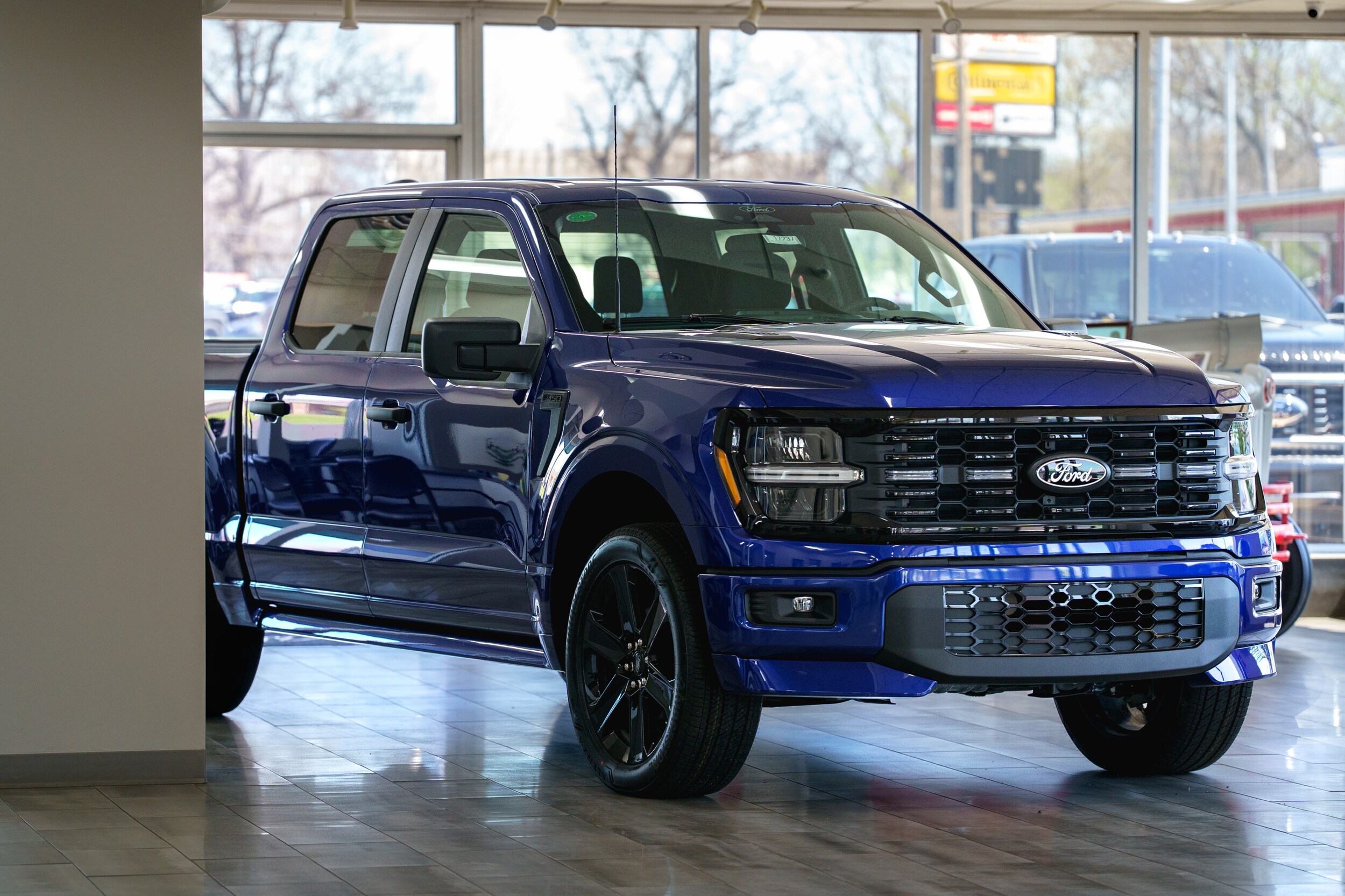
Ford's new 3.0L EcoBoost replaces the previous 2.7L EcoBoost across much of the mainstream F-150 lineup. It serves as the standard or high-volume engine in many XL, STX, XLT and Lariat configurations.
PowerBoost sits much farther up the capability ladder, combining 430 horsepower and 570 lb-ft of current total system torque with hybrid assistance and available high-output Pro Power Onboard.
For everyday buyers who do not need those features, the new 3.0L may be the logical starting point. For buyers specifically seeking hybrid torque and electrical capability, PowerBoost remains the more specialized choice.
Compare 2027 F-150 EnginesOur Verdict: PowerBoost Is Better When You'll Use What Makes It Special
We would choose PowerBoost for a buyer who regularly uses onboard electricity, wants the additional hybrid-assisted torque or simply prefers the hybrid driving experience.
We would choose the conventional 3.5L EcoBoost for a buyer focused primarily on traditional towing and hauling who does not have a clear use for the additional hybrid hardware.
The conventional EcoBoost actually has the higher maximum available towing number in Ford's currently published 2026 specifications. PowerBoost counters with more total torque and a capability the conventional engine cannot match: up to 7.2 kW of available onboard electrical power.
So the question is less "Which engine is better?" and more "Would Pro Power Onboard and hybrid assistance make my F-150 meaningfully more useful?"
If the answer is yes, buy PowerBoost. If the answer is no, conventional EcoBoost remains an excellent choice.
F-150 PowerBoost vs. EcoBoost FAQs
Quick answers to common questions about Ford's hybrid and conventional EcoBoost F-150 powertrains.
Is PowerBoost better than EcoBoost?
PowerBoost is better for buyers who value hybrid assistance, additional total torque and available high-output Pro Power Onboard. Conventional EcoBoost may be better for buyers focused primarily on gasoline-engine towing and performance.
Is PowerBoost an EcoBoost engine?
Yes. The F-150 PowerBoost combines a 3.5L twin-turbocharged EcoBoost V6 with an electric motor, high-voltage battery and hybrid-specific components.
How much horsepower does PowerBoost have?
Current 2027 F-150 information lists the 3.5L PowerBoost Full Hybrid at 430 horsepower.
How much torque does PowerBoost have?
Current 2027 information lists PowerBoost at approximately 570 lb-ft of total system torque.
Which tows more, PowerBoost or 3.5 EcoBoost?
Ford's published 2026 towing information lists the conventional 3.5L EcoBoost at up to 13,500 pounds of available towing compared with up to 11,600 pounds for PowerBoost when properly configured.
Does PowerBoost need to be plugged in?
No. PowerBoost is a full hybrid, not a plug-in hybrid. Its battery is charged through operation of the hybrid system and regenerative processes rather than by plugging the truck into an external charger.
What is Pro Power Onboard?
Pro Power Onboard is Ford's available built-in electrical power system. PowerBoost can support up to 7.2 kW of available output for tools, equipment, recreation and other electrical needs.
Is PowerBoost good for camping?
PowerBoost can be especially useful for camping because it combines substantial towing capability with available high-output Pro Power Onboard for electrical devices and equipment.
Does the PowerBoost battery have a warranty?
Ford currently provides 8-year or 100,000-mile warranty coverage for applicable hybrid-battery components on F-150 PowerBoost vehicles. Always verify coverage for the exact model year and VIN.
Should I buy PowerBoost or the 3.5 EcoBoost?
Choose PowerBoost if hybrid torque and available Pro Power Onboard will be useful to you. Choose the conventional 3.5L EcoBoost if maximum conventional towing and strong gasoline-engine performance are the priorities.
Continue Your Ford F-150 Research
Compare F-150 powertrains, towing capability and long-term ownership.
Still Deciding Between PowerBoost and EcoBoost?
Think about what happens after you park the truck.
If your F-150 needs to pull a trailer and then power equipment, tools or a campsite when you arrive, PowerBoost can offer a combination conventional EcoBoost cannot duplicate.
If you simply need strong towing, hauling and everyday performance, the conventional EcoBoost may give you everything you need.
Chuck Anderson Ford can help you compare available F-150 configurations based on your trailer, work requirements, annual driving and how you actually plan to use the truck.
Visit us in Excelsior Springs, Missouri, serving Ford truck shoppers from Liberty, Kearney, Lawson, Smithville and throughout the Kansas City Northland.
- Chuck Anderson Ford
- 1910 W Jesse James Road
- Excelsior Springs, MO 64024
- Sales: 816-648-6419
- Service: 816-648-6424
- Parts: 816-648-6429
Ford F-150 engine output, towing capacity, payload, fuel economy, hybrid operation, Pro Power Onboard output, equipment, availability and specifications vary by model year and configuration and are subject to change. Current 2027 horsepower and torque figures referenced here are based on available model information. Maximum towing figures referenced are Ford's published 2026 maximum available ratings and do not apply to every vehicle. Cab, bed, wheelbase, drivetrain, axle ratio, towing equipment, passengers, cargo and payload affect vehicle capability. Hybrid-component warranty coverage varies by model year, component and in-service date. Always verify the specifications, warranty and ratings of the individual vehicle before purchase or towing.