
2027 Ford Super Duty Ownership Guide
Gas & Power Stroke Diesel Maintenance
2027 Ford Super Duty Ownership Guide
Buying a Super Duty is only the beginning. Proper maintenance helps protect the engine, transmission, axles, brakes, cooling system, tires and towing hardware that make an F-250, F-350 or F-450 capable of doing serious work. This guide covers routine maintenance for the 2027 Ford Super Duty, including the 7.3L gas V8 and 6.7L High-Output Power Stroke diesel, plus towing, severe-duty use, DEF, filters, fluids, tires, brakes and long-term service.
Oil-Life MonitorDetermines Oil Service
30,000 MINormal Diesel Fuel Filters
3 YearsBrake Fluid
200,000 MIInitial Coolant Replacement
Maintenance Is Based on Use
A Super Duty That Tows Every Day Should Not Be Serviced Like One That Commutes Empty
Ford uses an Intelligent Oil-Life Monitor to account for how the truck is actually operated rather than relying only on a fixed mileage number.
Engine temperature, operating conditions and driving severity affect how quickly the oil-life percentage decreases.
That is especially important with a Super Duty because two identical trucks can have completely different lives.
One may commute unloaded. Another may idle on a jobsite, tow near its rated limits, operate on gravel roads and work through extreme Missouri heat and winter cold.

Maintenance Schedule
2027 Ford Super Duty Service Intervals at a Glance
These intervals provide a planning guide. The Intelligent Oil-Life Monitor, operating conditions and the maintenance information for your exact truck always take priority.
| Interval | Gas 7.3L V8 | 6.7L Power Stroke Diesel | All Super Duty Models |
|---|---|---|---|
| Every Oil-Service Interval | Engine oil and filter. Reset oil-life monitor. | Engine oil and filter. Reset oil-life monitor. Check DEF and water separator. | Tire rotation as appropriate, brake inspection, steering, suspension, driveshaft, U-joints, cooling system, exhaust and multi-point inspection. |
| 20,000 Miles | Inspect routine systems. | Inspect routine systems. | Replace cabin air filter under Ford's normal schedule. |
| 30,000 Miles | Replace engine air filter. | Replace engine air filter. Replace engine-mounted and frame-mounted fuel filters under normal service. | Check rear axle U-bolt torque as specified by Ford. |
| 50,000 Miles | Continue normal inspections. | Replace diesel engine air-inlet foam filter under normal service. | Severe-use axle and transfer-case service may apply depending on configuration and operation. |
| 60,000 Miles | Severe-duty spark-plug service may apply. | Continue diesel-specific inspections. | Front wheel bearing grease/seal service where non-sealed bearings are used. Severe-use transfer-case service may apply. |
| 90,000 Miles | Continue normal service. | Inspect accessory drive belts. | Continue routine inspections. |
| 100,000 Miles | Replace spark plugs. Inspect accessory drive belts. | Replace accessory drive belts according to Ford's current schedule. | Inspect all fluid systems, hoses and wear items. |
| 150,000 Miles | Transmission fluid and filter. | Transmission fluid and filter. | Axle fluid and transfer-case fluid as applicable under Ford's scheduled-maintenance guidance. |
| 200,000 Miles / 10 Years | Initial engine coolant replacement. | Initial engine coolant replacement. | After the initial service, coolant is generally serviced every 100,000 miles or five years. |
| Every 3 Years | Brake fluid. | Brake fluid. | Replace brake fluid regardless of mileage. |
Engine Oil
Follow the Intelligent Oil-Life Monitor
The 2027 Super Duty does not rely on one universal oil-change mileage for every driver.
Ford's Intelligent Oil-Life Monitor estimates oil life based on actual operating conditions and displays an oil-change message when service becomes necessary.
Ford's current maintenance guidance says not to exceed 10,000 miles or one year between oil services even if the monitor has not requested service sooner.
Trucks that tow heavily, idle frequently, operate in dusty conditions or experience extreme temperatures can require more frequent oil changes.
At Every Oil Change
An Oil Change Should Also Be an Inspection Opportunity
Tires
Rotate tires as appropriate, inspect tread depth and look for abnormal wear, damage or inflation concerns.
Brakes
Inspect pads, rotors, hoses, parking-brake components and other brake-system wear items.
Steering & Suspension
Inspect steering linkage, ball joints, suspension, tie-rod ends and related heavy-duty chassis components.
Driveshaft & U-Joints
Inspect driveshaft and U-joints and lubricate serviceable components where grease fittings are provided.
Cooling System
Inspect coolant concentration, freeze protection, hoses and fluid level.
Exhaust
Inspect the exhaust system and heat shields for damage or abnormal conditions.
Air Filters
Inspect engine and cabin filters and service earlier when operating in dusty conditions.
Wheels
Inspect wheel-related components for unusual noise, looseness, wear or drag.
7.3L Gas V8 Maintenance
Maintaining the Ford "Godzilla" V8
The 7.3L naturally aspirated gas V8 provides Super Duty capability without the diesel-specific maintenance systems found on the Power Stroke.
Gas owners do not need DEF, diesel fuel-filter service or diesel particulate filter regeneration.
Important long-term maintenance includes engine oil, air filtration, spark plugs, cooling system service, transmission service and drivetrain fluids.
Gas Engine Service Planning
Key 7.3L V8 Maintenance Milestones
Oil Monitor
Change engine oil and filter when indicated. Do not exceed Ford's maximum time/mileage interval.
30,000 MI
Replace the engine air filter under normal scheduled maintenance, or earlier in dusty conditions.
100,000 MI
Replace spark plugs under normal scheduled maintenance.
150,000 MI
Transmission-fluid and filter service according to Ford's schedule.
6.7L Power Stroke Maintenance
Diesel Capability Comes With Diesel-Specific Maintenance
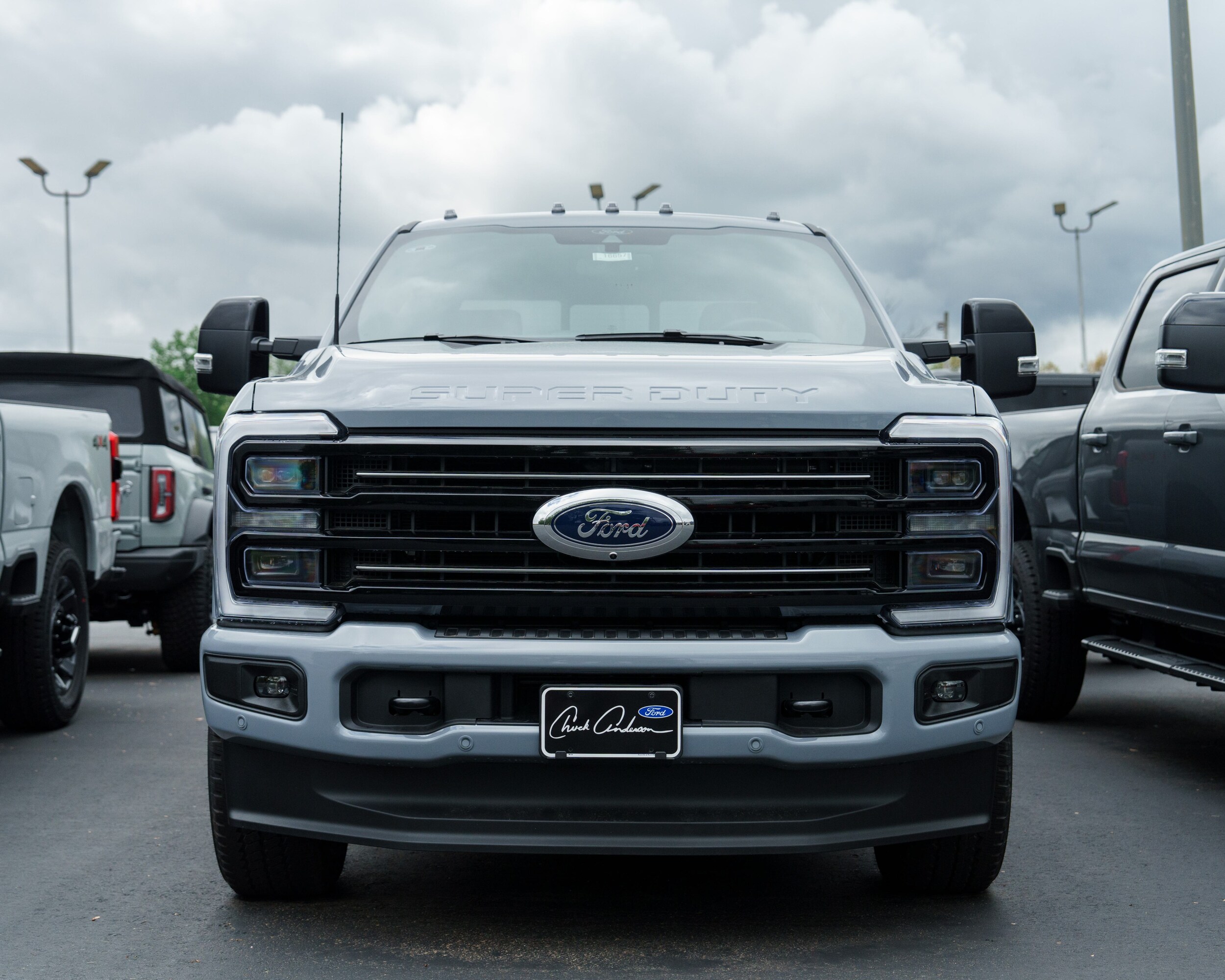
The 6.7L High-Output Power Stroke produces 500 horsepower and 1,200 lb-ft of torque, but diesel ownership includes additional systems that gas owners do not need to service.
Fuel filtration, Diesel Exhaust Fluid, the water separator, diesel particulate filter operation and diesel air-intake filtration all become part of routine ownership.
Diesel Fuel Filters
One of the Most Important Power Stroke Maintenance Items
Normal Service: 30,000 Miles
Ford's current scheduled-maintenance information calls for replacement of the engine-mounted and frame-mounted diesel fuel filters every 30,000 miles under normal operating conditions.
Fuel filtration is particularly important because modern diesel injection systems operate at extremely high pressure and depend on clean fuel.
Severe Service: 15,000 Miles
Ford reduces the diesel fuel-filter replacement interval to 15,000 miles for severe service.
Trucks frequently towing, idling, operating in dusty environments or working under demanding conditions deserve particular attention.
Power Stroke Water Separator
Never Ignore a Water-in-Fuel Warning
The 6.7L Power Stroke fuel system includes a diesel fuel conditioner module and water-separation system.
Ford calls for draining the fuel-and-water separator when necessary or when indicated by the instrument cluster.
Water contamination is not something to postpone. Clean, properly filtered fuel is essential to protecting diesel injection-system components.
Diesel Exhaust Fluid
DEF Is a Normal Part of 6.7L Power Stroke Ownership
Diesel Exhaust Fluid, commonly called DEF, is used by the selective catalytic reduction emissions system.
DEF consumption varies with operating conditions. Heavy towing and high engine loads can increase consumption.
Ford's maintenance guidance includes checking and refilling the DEF tank during routine oil-service inspections.
Do not substitute water or other fluids for approved DEF, and do not ignore low-DEF warnings displayed by the truck.
Diesel Owner Checklist
- Monitor DEF level.
- Use correct diesel fuel.
- Service both diesel fuel filters.
- Respond to water-in-fuel warnings.
- Monitor diesel particulate filter messages.
- Allow normal regeneration to occur.
- Pay attention to repeated short-trip use.

Diesel Particulate Filter
Regeneration Is Part of Normal Diesel Operation
The diesel particulate filter traps soot from the exhaust system.
The truck periodically raises exhaust temperature during regeneration to burn accumulated soot.
Trucks that spend substantial time towing or driving at highway speeds often provide favorable conditions for regeneration.
Repeated short trips, extended low-speed operation and interrupted regeneration cycles can make diesel emissions-system management more important.
Always follow messages displayed by the truck regarding regeneration or diesel particulate filter service.
Air Filtration
Dust Changes the Schedule
Engine Air Filter
Ford's normal schedule calls for replacement at 30,000 miles, but dusty roads and jobsite conditions can require earlier service.
Diesel Foam Filter
The Power Stroke has additional diesel air-inlet filtration. Ford's normal schedule includes replacement of the air-inlet foam filter at 50,000 miles.
Cabin Air Filter
Ford's current schedule calls for cabin-filter replacement at approximately 20,000 miles under normal conditions.
Brakes
Trailer Weight Makes Brake Inspections Even More Important
Brake pads, rotors, hoses and related components should be inspected during routine service.
Heavy towing, frequent stop-and-go driving and commercial use can accelerate brake wear compared with unloaded highway driving.
Ford calls for brake-fluid replacement every three years, regardless of mileage.
If the truck tows regularly, trailer-brake operation should also be verified as part of your broader towing-equipment inspection.
Tires & Wheels
Tires Are Part of the Towing System
Pressure
Maintain tire pressures appropriate for the exact truck, tire and load using the vehicle certification information.
Tread
Inspect tread depth and uneven wear, especially on trucks used for frequent heavy towing.
Rotation
Rotate tires according to Ford's guidance. Dual-rear-wheel trucks have different rotation considerations than SRW trucks.
Load Rating
Replacement tires must have adequate load capacity for the truck's configuration and intended use.
Dual-Rear-Wheel Owners
DRW Trucks Need Their Own Tire and Axle Attention
F-350 and F-450 dual-rear-wheel trucks deserve particular attention to inflation, tread differences between paired tires, wheel condition and rear-axle service.
Ford notes that front tires on DRW vehicles should be rotated when specified, while rear tires may follow different guidance depending on wear and configuration.
Trucks operating near maximum gross vehicle weight can also require more frequent rear-axle fluid service.
Transmission Service
The Transmission Works Just as Hard as the Engine
Both gas and diesel Super Duty trucks rely on a ten-speed automatic transmission.
Ford's normal scheduled maintenance currently calls for automatic transmission fluid and filter service at 150,000 miles.
Severe use, repeated heavy towing, high operating temperatures or other demanding conditions deserve discussion with a qualified technician rather than assuming every truck should automatically reach the normal maximum interval.
Axles & Transfer Case
Heavy Towing Places Major Loads on the Drivetrain
Rear Axle
Ford's normal schedule eventually includes axle-fluid replacement, but severe-duty and high-load operation can require earlier service.
Front Axle
Four-wheel-drive trucks should have front-axle components inspected, particularly when used off road, in water or under severe conditions.
Transfer Case
4x4 trucks add a transfer case that requires appropriate fluid maintenance, with severe-service intervals occurring earlier than normal use.
After Deep Water or Off-Road Use
Do Not Wait for a Mileage Interval if the Drivetrain Has Been Submerged
Water intrusion can contaminate axle or transfer-case fluid.
If the truck has been driven through substantial water, mud or unusually harsh off-road conditions, inspection should be based on the event rather than waiting for the next scheduled interval.
Cooling System
Towing Converts Work Into Heat
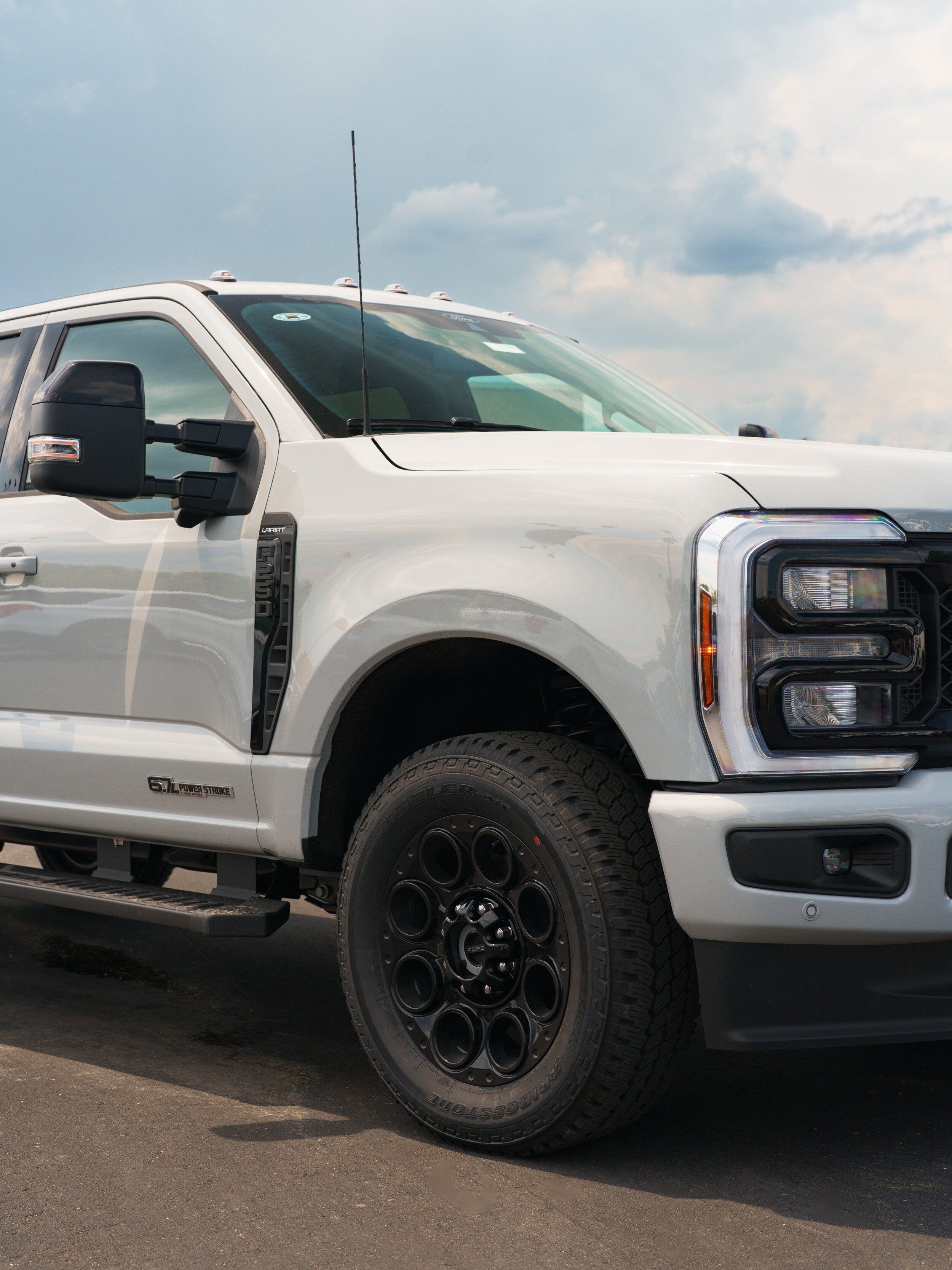
Cooling-system condition is critical on a heavy-duty truck because the engine and transmission can generate significant heat under sustained towing loads.
Ford calls for coolant level, concentration and hose inspection during routine maintenance.
The current scheduled-maintenance guidance lists initial engine-coolant replacement at 10 years or 200,000 miles, followed by approximately five years or 100,000 miles thereafter.
Coolant should still be inspected throughout the truck's life rather than ignored until the replacement mileage.
Batteries & Electrical System
Diesel Trucks Place Significant Demand on Their Batteries
Gas Super Duty
Inspect battery condition, terminals and charging-system performance, especially before extreme winter or summer weather.
Power Stroke Diesel
Diesel starting places greater demand on the electrical system. Both batteries should be evaluated as a system when starting performance begins to decline.
Severe-Duty Maintenance
Many Super Duty Owners Qualify Without Realizing It
A Super Duty used the way heavy-duty trucks are intended to be used can fall into Ford's severe-service category.
Heavy Towing
Regularly pulling substantial trailers increases heat and load throughout the powertrain.
Extended Idling
Jobsite idling accumulates engine operating time without adding equivalent odometer mileage.
Dust
Gravel roads, farms, construction sites and off-road operation can shorten filter life.
Temperature Extremes
Very hot and very cold operating environments add additional stress to fluids, batteries and components.
Important for Power Stroke Owners
Severe Duty Cuts the Diesel Fuel-Filter Interval in Half
Ford's current maintenance schedule lists normal diesel fuel-filter replacement at 30,000 miles.
Under severe service, Ford lists replacement of the engine-mounted and frame-mounted fuel filters at 15,000 miles.
If your Super Duty earns its living towing, idling or operating in difficult environments, do not automatically assume the normal schedule applies.
Before a Major Towing Trip
Super Duty Pre-Tow Inspection Checklist
Tires
Check pressure, tread condition, sidewalls and load capacity.
Engine Oil
Confirm proper level and consider remaining oil life before a long trip.
Coolant
Verify coolant level and inspect visible hoses for concerns.
Brakes
Confirm truck and trailer brakes are operating correctly.
Hitch
Inspect hitch, fifth-wheel or gooseneck hardware and attachment points.
Trailer Wiring
Verify lights, electrical connector, trailer-brake connection and breakaway system.
Diesel DEF
Power Stroke owners should verify adequate DEF before long towing trips.
Payload
Account for passengers, bed cargo and trailer tongue or pin weight.
Fluids
Look for leaks and verify appropriate fluid levels before departure.
Missouri Super Duty Ownership
Seasonal Maintenance Matters Around Kansas City
Super Duty owners around Excelsior Springs, Liberty, Kearney, Lawson, Smithville, Richmond and Kansas City deal with summer heat, winter cold, road salt, gravel roads and changing weather.
A seasonal inspection can catch concerns that do not fit neatly into a mileage schedule.
- Check battery condition before winter.
- Verify coolant freeze protection.
- Inspect tire tread before snow season.
- Wash road salt from the chassis.
- Inspect brake and fuel lines for corrosion.
- Check wiper blades and washer fluid.
- Inspect 4x4 operation before it is needed.
- Inspect trailer connectors for corrosion.
4x4 Owners
Use Four-Wheel Drive Before You Actually Need It
A truck that spends most of its life on pavement can still benefit from periodic verification that the four-wheel-drive system engages and operates correctly.
Transfer-case fluid, front-axle components, hubs and U-joints add additional maintenance considerations compared with a 4x2 truck.
Trucks used off road, submerged in water or subjected to severe conditions should be inspected accordingly rather than waiting for normal mileage intervals.
Long-Term Ownership
The Goal Is Not Just 100,000 Miles
Super Duty trucks are frequently purchased for long-term service. Maintenance becomes increasingly important as mileage and engine hours accumulate.
50K
Review service history, tires, brakes, filters and drivetrain condition.
100K
Gas spark-plug service and belt-related maintenance become important milestones.
150K
Major transmission and drivetrain-fluid service is part of Ford's normal schedule.
200K+
Cooling-system service and continued preventive inspection become especially important to long-term ownership.
Ownership Comparison
7.3L Gas vs. 6.7L Power Stroke Maintenance
| Maintenance Item | 7.3L Gas V8 | 6.7L Power Stroke Diesel |
|---|---|---|
| Engine Oil | Oil-Life Monitor | Oil-Life Monitor |
| DEF | Not Required | Required |
| Diesel Fuel Filters | Not Applicable | 30,000 miles normal; 15,000 miles severe service |
| Water Separator | Not Applicable | Drain when required or indicated |
| DPF Regeneration | Not Applicable | Normal Part of Diesel Operation |
| Spark Plugs | 100,000 miles normal service | Not Applicable |
| Engine Air Filter | 30,000 miles normal service | 30,000 miles normal service |
| Diesel Foam Air Filter | Not Applicable | 50,000 miles normal service |
| Brake Fluid | Every 3 Years | Every 3 Years |
| Transmission | 150,000 miles normal service | 150,000 miles normal service |
| Initial Coolant Replacement | 10 Years / 200,000 Miles | 10 Years / 200,000 Miles |
Do Not Wait for the Next Scheduled Interval
Signs Your Super Duty Needs Attention
Fluid Leaks
Oil, coolant, transmission, axle or fuel leaks deserve prompt inspection.
Brake Changes
Vibration, pulling, noise or changed pedal feel should not wait.
Steering Play
Looseness, wandering or abnormal steering feel deserves inspection.
Warning Lights
Engine, emissions, DEF, DPF, water-in-fuel or drivetrain warnings should be addressed appropriately.
Unusual Vibration
Driveline vibration can involve tires, U-joints, driveshafts or other components.
Temperature Changes
Unexpected engine or transmission temperature behavior under load deserves attention.
Uneven Tire Wear
May indicate pressure, alignment, suspension or loading concerns.
Hard Diesel Starting
Battery, glow-plug, fuel or other diesel-system concerns may be involved.
Ford Super Duty Service
Let Chuck Anderson Ford Help Maintain Your Super Duty
Whether your Super Duty has the 7.3L gas V8 or the 6.7L Power Stroke, maintenance should reflect the way the truck actually works.
Our service team can help with routine oil changes, diesel fuel filters, brake service, tires, batteries, fluids, cooling systems and broader Super Duty maintenance.
If your truck tows frequently, operates commercially or sees severe conditions, tell the service advisor how the vehicle is used so its maintenance plan can reflect that workload.
Chuck Anderson Ford
Ford Service in Excelsior Springs, MO
1910 W Jesse James Road
Excelsior Springs, MO 64024
Service: 816-648-6424
Parts: 816-648-6429
Serving Ford truck owners from Excelsior Springs, Liberty, Kearney, Lawson, Smithville, Richmond, North Kansas City, Kansas City and surrounding Missouri communities.
2027 Super Duty Research
Continue Exploring Your Super Duty
2027 Super Duty Overview Explore the complete Super Duty lineup. Super Duty Engines Compare gas and diesel powertrains. 7.3L Godzilla V8 Research the 420-horsepower gas V8. High-Output Power Stroke Explore 500 horsepower and 1,200 lb-ft of diesel torque. Super Duty Trim Levels Compare XL, XLT, Lariat, King Ranch and Platinum. Super Duty XL Research the work-first Super Duty. Super Duty XLT Work capability with everyday comfort. Super Duty Lariat Premium heavy-duty capability. Super Duty King Ranch Distinctive premium Super Duty luxury. Super Duty Platinum Contemporary luxury and technology. Ford Service Center Learn about service at Chuck Anderson Ford. Schedule Service Book your next Ford maintenance visit.
Frequently Asked Questions
2027 Ford Super Duty Maintenance FAQs
How often does a 2027 Ford Super Duty need an oil change?
Ford uses the Intelligent Oil-Life Monitor to determine the oil-change interval based on vehicle use. Follow the truck's oil-change message and do not exceed Ford's maximum time or mileage interval.
Can I just change my Super Duty oil every 10,000 miles?
Not necessarily. Ten thousand miles is a maximum normal-service limit in Ford's current guidance, not a recommendation to ignore the Oil-Life Monitor until 10,000 miles. Towing, idling and severe use may call for earlier service.
How often should the 6.7L Power Stroke fuel filters be changed?
Ford's current normal schedule lists replacement of the engine-mounted and frame-mounted diesel fuel filters every 30,000 miles. Severe-service operation reduces that interval to 15,000 miles.
Does the 7.3L Godzilla V8 need diesel-style fuel-filter service?
No. The 7.3L is a gasoline engine and does not use the Power Stroke's diesel fuel-filter and water-separator system. Research the 7.3L V8 .
How often should the 2027 Super Duty engine air filter be replaced?
Ford's current normal schedule lists engine-air-filter replacement at 30,000 miles. Trucks operated in dusty or dirty conditions may require earlier replacement.
How often should the cabin air filter be replaced?
Ford's current schedule lists cabin air-filter replacement at approximately 20,000 miles under normal conditions.
How often should the spark plugs be changed in the 7.3L Super Duty?
Ford's current normal schedule lists spark-plug replacement at 100,000 miles. Severe-service gas trucks may require earlier service.
How often should Super Duty brake fluid be replaced?
Ford currently calls for brake-fluid replacement every three years, regardless of mileage.
When should the Super Duty transmission fluid be changed?
Ford's current normal schedule lists automatic transmission fluid and filter service at 150,000 miles. Severe operating conditions should be discussed with a qualified service advisor.
When does a 2027 Super Duty need coolant replacement?
Ford's current schedule lists the initial engine-coolant replacement at 10 years or 200,000 miles, followed by approximately every five years or 100,000 miles. The coolant system should still be inspected throughout the truck's life.
Does towing change Super Duty maintenance intervals?
It can. Frequent heavy towing is one of the operating conditions that can move a Super Duty into more severe maintenance requirements, affecting oil life, filters and drivetrain-fluid service.
Is frequent idling hard on a Power Stroke?
Extended idling adds engine operating time without adding equivalent odometer mileage. It can contribute to severe-duty operation and should be considered when planning maintenance.
Does the 6.7L Power Stroke require DEF?
Yes. The 6.7L Power Stroke uses Diesel Exhaust Fluid as part of its emissions system. DEF usage varies with operating conditions and can increase under heavy engine load.
What should I do if my Super Duty shows a water-in-fuel warning?
Power Stroke owners should address water-in-fuel warnings promptly and follow Ford's instructions for draining the diesel fuel-and-water separator.
Does an F-450 require different maintenance than an F-250?
Some maintenance considerations can differ because of the F-450's diesel powertrain, dual-rear-wheel configuration, axle hardware and the demanding workloads for which it is commonly used. Always follow the information for the exact truck.
Where can I service a Ford Super Duty near Kansas City?
Chuck Anderson Ford in Excelsior Springs, Missouri services Ford Super Duty trucks for drivers throughout the Kansas City area. Schedule Ford service online .
2027 Ford Super Duty Ownership
Maintain the Truck for the Work It Actually Does
A Super Duty that spends its life commuting unloaded and one that pulls a fifth-wheel, idles on jobsites or works on gravel roads should not necessarily follow identical maintenance habits. Use Ford's Intelligent Oil-Life Monitor, follow the maintenance schedule for your exact truck and let the way you use your F-250, F-350 or F-450 determine how proactive you need to be.
Maintenance intervals and recommendations on this page are based on currently available Ford scheduled maintenance information for the 2027 Super Duty and are intended as a general ownership guide. Actual maintenance requirements can vary by engine, F-250/F-350/F-450 configuration, drivetrain, axle, SRW/DRW configuration, engine hours, environment, towing frequency, commercial use, idle time and other operating conditions. Always follow the Intelligent Oil-Life Monitor, warning messages, maintenance information and Owner's Manual applicable to the exact vehicle. Severe-duty operation may require more frequent service than the normal intervals shown here. Specifications and maintenance guidance are subject to change by Ford Motor Company.