

Ford 6.7 Power Stroke vs 7.3 gas: which is better?
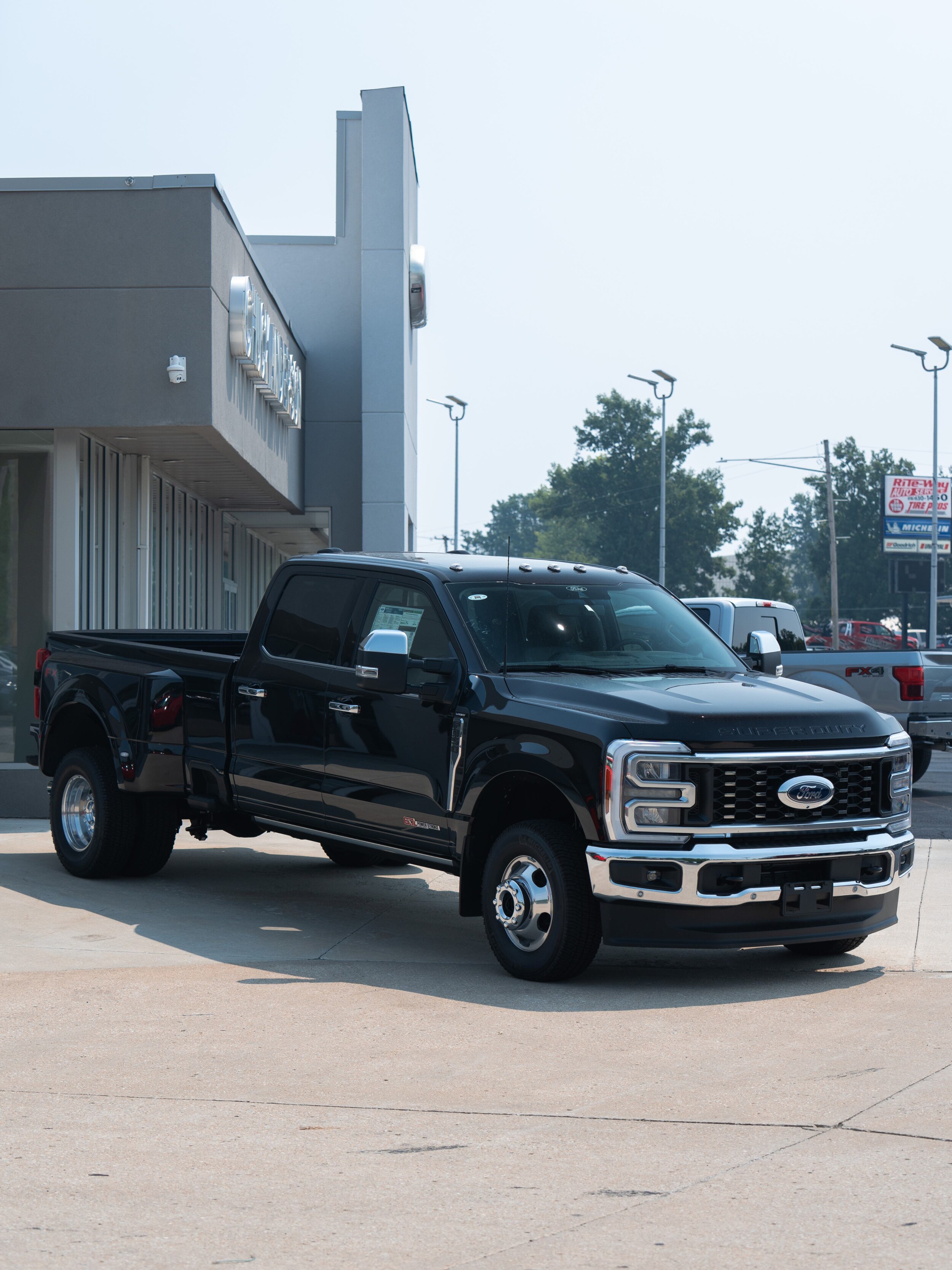
Ford Super Duty Engine Comparison
``` Ford 6.7 Power Stroke vs 7.3 Gas: Which Is Better?
Ford's 7.3L gas V8 and 6.7L Power Stroke turbo diesel are both built for serious Super Duty work, but they solve different problems. The 7.3L emphasizes straightforward gas-engine ownership and strong heavy-duty capability, while the Power Stroke delivers substantially more low-rpm torque for frequent heavy towing.
The Short Answer
The 7.3L gas V8 makes sense for many Super Duty owners who need a powerful heavy-duty truck but do not routinely tow extremely heavy trailers. It avoids diesel-specific fuel and emissions systems, has a naturally aspirated design and can provide substantial towing capability in a properly configured truck.
The 6.7L Power Stroke is the stronger choice when heavy towing is frequent. Its biggest advantage is not simply horsepower. It produces dramatically more torque at low engine speed, and diesel configurations add exhaust-braking capability that can be especially valuable when controlling large trailers on grades.
The question is not whether the Power Stroke is more powerful—it is. The question is whether your workload justifies paying for and maintaining that additional capability.
```7.3 Gas vs 6.7 Power Stroke

7.3L Gas V8
Simple, Strong Heavy-Duty Gas Power
Ford's 7.3L V8 is a large-displacement naturally aspirated gasoline engine designed specifically for heavy-duty truck use. It delivers strong power without a turbocharger or diesel-specific emissions equipment.
- Gasoline V8
- Naturally aspirated
- Strong heavy-duty towing capability
- No diesel exhaust fluid
- No diesel particulate filter
- Generally lower initial engine cost
- Well suited to intermittent and moderate heavy towing
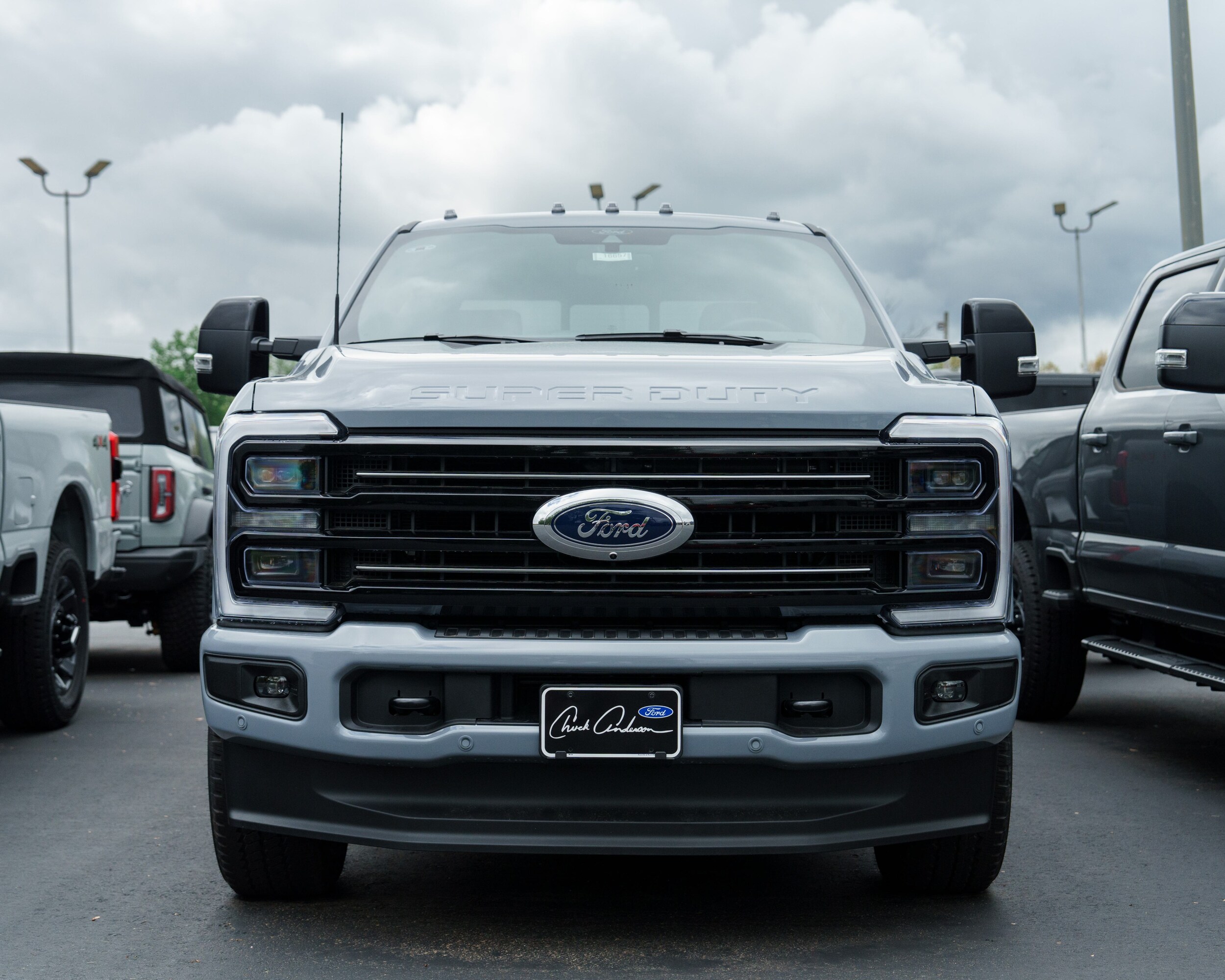
6.7L Power Stroke
Built Around Massive Low-RPM Torque
Ford's 6.7L Power Stroke V8 Turbo Diesel is designed for demanding towing and commercial workloads. Depending on model year and truck configuration, Ford has offered both standard-output and High-Output versions of the 6.7L Power Stroke.
- Turbocharged diesel V8
- Substantially greater low-rpm torque
- Diesel exhaust brake
- Excellent for frequent heavy towing
- Strong fit for large fifth wheels and goosenecks
- Higher initial purchase cost
- Additional diesel emissions and fuel-system complexity
6.7 Power Stroke vs 7.3 Gas Comparison
| Category | 7.3L Gas V8 | 6.7L Power Stroke |
|---|---|---|
| Fuel | Gasoline | Diesel / compatible diesel blends depending on model year |
| Induction | Naturally aspirated | Turbocharged |
| Torque | Strong for a gas heavy-duty engine | Dramatically higher, especially at low rpm |
| Heavy Towing | Very capable when properly configured | Better suited to frequent extreme towing |
| Fifth-Wheel Use | Suitable for many properly matched trailers | Especially attractive for larger and heavier fifth wheels |
| Exhaust Brake | No diesel exhaust brake | Yes |
| DEF | Not required | Required on modern diesel Super Duty trucks |
| Initial Cost | Typically lower | Typically higher |
| Routine Maintenance Cost | Generally lower | Generally higher |
| Fuel Economy | Gas-engine consumption | Diesel can offer better efficiency under many conditions, especially under load |
| Best Fit | Heavy-duty use without routinely requiring extreme diesel torque | Frequent heavy towing, high annual towing mileage and demanding work |
Why Choose Gas?
The 7.3 Gas V8 Is More Capable Than Many Buyers Need
Diesel gets much of the attention in heavy-duty trucks because of its huge torque numbers, but that does not make gas the lesser choice for every Super Duty owner.
The 7.3L V8 was designed as a heavy-duty truck engine. In the right F-250 or F-350 configuration, it can handle substantial conventional, fifth-wheel and gooseneck trailers.
The naturally aspirated gas design also eliminates several systems associated with modern diesel ownership. There is no diesel exhaust fluid to refill and no diesel particulate filter regeneration process to consider.
If the truck spends much of its time driving unloaded, working around town or towing only periodically, the 7.3L can provide the capability you actually use without requiring you to pay for diesel performance you rarely need.
Why Choose Diesel?
The Power Stroke Changes the Truck Under Heavy Load
The argument for the 6.7L Power Stroke gets stronger as trailer weight, towing frequency and towing mileage increase.
Diesel engines are particularly effective in heavy trucks because they produce tremendous torque at relatively low engine speeds. That allows the Power Stroke to pull large loads without relying on the higher engine speeds a gasoline engine may use under similar demand.
The difference becomes much more noticeable with a large fifth wheel, loaded gooseneck trailer, heavy equipment trailer or other substantial load.
Diesel exhaust braking is another major advantage. When descending grades with a heavy trailer, it can help control vehicle speed and reduce reliance on the service brakes.
Which Engine Is Better for Towing?
If the only criterion is maximum heavy-towing performance, the 6.7L Power Stroke has the advantage.
Its low-rpm torque, turbocharged power delivery and diesel exhaust brake are valuable when a Super Duty regularly works near the upper end of its towing capability.
But that does not mean you need a diesel simply because you tow.
A properly configured 7.3L gas Super Duty can tow substantial trailers. For someone pulling a travel trailer, equipment trailer, boat, horse trailer or moderate fifth wheel a limited number of times per year, the 7.3L may provide more than enough capability.
The Better Question: How Heavy and How Often?
A buyer towing 12,000 pounds every weekend has a very different use case from a buyer towing the same weight six times per year. Trailer weight matters, but towing frequency and annual towing mileage matter too.
6.7 Power Stroke or 7.3 Gas for a Fifth Wheel?
Both engines can be used in properly configured Super Duty trucks towing fifth-wheel trailers. The diesel becomes increasingly attractive as the fifth wheel becomes heavier and towing becomes more frequent.
For occasional towing with a moderate fifth wheel, a 7.3L-equipped F-250 or F-350 may provide the capability required without the added cost of the diesel.
For a large fifth wheel that travels thousands of miles each year, the Power Stroke's low-rpm torque and exhaust brake can materially change the towing experience.
Engine choice is only part of the equation. Fifth-wheel pin weight places substantial load directly into the truck, so payload, GVWR, rear-axle rating and SRW versus DRW configuration must also be considered.
Read more: What is the best Ford truck for towing a fifth wheel?
```Does the 6.7 Power Stroke Get Better Fuel Economy?
Diesel engines can be more fuel efficient than comparable gasoline engines, particularly when working under load, but Super Duty fuel consumption varies significantly with truck configuration, gearing, trailer weight, speed, terrain, weather and driving style.
Fuel economy alone should not determine whether you pay for the diesel. Diesel fuel prices can differ from gasoline, and any fuel savings should be considered alongside the engine's higher purchase price and potentially higher maintenance costs.
Buyers who travel long distances while towing may have more opportunity to benefit from diesel efficiency than owners whose trucks accumulate relatively few annual miles.
```Is the 7.3 Gas Cheaper to Maintain?
In general, the 7.3L gas V8 provides a simpler ownership and maintenance experience.
A modern Power Stroke diesel includes a high-pressure diesel fuel system, turbocharger and emissions-control equipment such as diesel particulate filtration, selective catalytic reduction and DEF.
Diesel engines also use more engine oil than the gas V8, and some routine maintenance items can cost more.
That does not mean the diesel is a poor ownership choice. For an owner who regularly benefits from its towing capability, those additional costs are part of operating a more capable powertrain.
The important distinction is whether you're paying those costs in exchange for capability you actually use.
```Which Lasts Longer: 6.7 Power Stroke or 7.3 Gas?
Both engines are designed for heavy-duty service, and either can accumulate substantial mileage when properly maintained.
Diesel engines have traditionally been attractive to high-mileage commercial operators because they are engineered around high-load use, but engine type alone does not guarantee longevity.
Maintenance history, cold starts, idle time, towing load, operating temperature, fuel quality and how the truck is driven can all affect long-term durability.
A lightly used diesel that receives poor maintenance is not automatically going to outlast a properly maintained gas truck.
For more diesel-specific information, see how long does a 6.7 Power Stroke last?
```Which Engine Is Better if You Don't Tow Every Day?
The 7.3L gas V8 deserves strong consideration if much of the truck's life consists of commuting, local driving, jobsite travel and occasional towing.
Modern diesel emissions systems are designed to operate in a vehicle that regularly reaches appropriate operating conditions. Owners who primarily make short trips may find a gasoline powertrain better matched to their driving pattern.
If the truck frequently travels long distances, spends substantial time under load or routinely pulls a heavy trailer, the Power Stroke's strengths become much easier to justify.
```Is the Power Stroke Worth the Extra Money?
It can be—but horsepower and torque numbers alone should not make that decision.
Think of the diesel premium as purchasing additional heavy-towing capability, low-rpm torque and exhaust-braking performance.
If you regularly use those advantages, the diesel can be easy to justify. If your trailer is comfortably handled by the 7.3L and only gets connected a few times each year, the extra diesel capability may provide limited practical return.
That is why the answer changes from owner to owner.
Continue with our full guide: Is a diesel truck worth the extra money?
```Should You Buy the 7.3 Gas or 6.7 Power Stroke?
Consider the 7.3L Gas V8 If...
You want serious Super Duty capability but your truck does not routinely pull extremely heavy loads.
It is particularly worth considering if you tow intermittently, drive many unloaded miles, want to avoid diesel-specific ownership systems or prefer a lower initial powertrain cost.
Consider the 6.7L Power Stroke If...
Heavy towing is a normal part of the truck's life rather than an occasional event.
The diesel becomes increasingly compelling for large fifth wheels, heavy goosenecks, equipment trailers, commercial use, substantial annual towing mileage and drivers who regularly tow through hilly or mountainous terrain.
Four Questions to Answer Before Picking an Engine
1
What Will You Tow?
Determine the realistic loaded trailer weight, not just the advertised dry weight.
2
How Often?
Towing every week changes the gas-vs-diesel calculation compared with towing several times per year.
3
How Far?
Long-distance towing puts more value on diesel torque, efficiency and exhaust braking.
4
How Much Truck?
Engine choice cannot replace the correct F-250, F-350, SRW, DRW or F-450 configuration.
A Diesel Engine Does Not Increase Every Other Rating
Installing the strongest engine does not automatically make an F-250 capable of handling a trailer that requires an F-350 or F-450.
Payload, GVWR, rear-axle rating, GCWR, wheel and tire ratings, hitch equipment and the truck's specific trailer rating all remain important.
In fact, the heavier diesel powertrain itself can affect available payload because payload is based partly on how much the truck weighs before passengers, cargo and trailer pin weight are added.
Always match the complete truck to the trailer. Engine torque cannot compensate for exceeding payload, axle, tire, hitch or vehicle weight ratings.
``` More Ford Super Duty Questions
Gas vs Diesel Super Duty: Which Should I Buy? Is a Diesel Truck Worth the Extra Money? Is the 6.7 Power Stroke Reliable? How Long Does a 6.7 Power Stroke Last? Which Ford Super Duty Is Best for Towing? Do I Need an F-250 or F-350 for a Fifth Wheel? Best Ford Truck for Fifth-Wheel Towing Ford Super Duty Research Center
``` 6.7 Power Stroke vs 7.3 Gas FAQ
Is the 6.7 Power Stroke better than the 7.3 gas?
The 6.7L Power Stroke provides substantially more low-rpm torque and is better suited to frequent, extremely heavy towing. The 7.3L gas V8 can be the better ownership fit when the truck does not routinely require maximum diesel capability.
Which is better for towing, 6.7 diesel or 7.3 gas?
For maximum heavy-towing performance, the 6.7L Power Stroke has the advantage because of its high low-rpm torque and diesel exhaust brake. A properly configured 7.3L gas Super Duty can still tow substantial trailers and may be sufficient for many owners.
Is the 7.3 gas good for towing?
Yes. The 7.3L V8 is a heavy-duty gasoline engine designed for Super Duty applications and can provide substantial conventional, fifth-wheel and gooseneck towing capability when paired with the correct truck configuration.
Which costs more to maintain, the 6.7 Power Stroke or 7.3 gas?
Diesel maintenance is generally more expensive. The Power Stroke uses more engine oil and includes additional diesel fuel, turbocharging and emissions-control systems. Actual maintenance costs vary with mileage, use and service requirements.
Does the 7.3 gas require DEF?
No. The 7.3L is a gasoline engine and does not use diesel exhaust fluid.
Does the 6.7 Power Stroke have an exhaust brake?
Modern Ford Super Duty Power Stroke configurations include diesel exhaust-braking capability, which can help manage vehicle speed when towing heavy trailers downhill.
Is diesel worth it if I only tow occasionally?
It may not be necessary if the trailer is comfortably within the capability of a properly configured 7.3L gas truck. The diesel becomes easier to justify as trailer weight, towing frequency and annual towing mileage increase.
Which is better for a fifth wheel, 7.3 gas or 6.7 diesel?
Either can work depending on the fifth wheel and truck configuration. The Power Stroke becomes increasingly attractive for larger trailers, frequent towing and long-distance travel because of its low-rpm torque and exhaust braking. Payload and fifth-wheel pin weight must also be considered.
Does every 6.7 Power Stroke make the same horsepower and torque?
No. Ford has offered different versions of the 6.7L Power Stroke, including standard-output and High-Output configurations. Horsepower, torque and availability can also change by model year, so specifications should be verified for the exact truck being considered.
The Bottom Line: Match the Engine to How Hard You Actually Tow
The Power Stroke wins the torque contest, but that does not automatically make it the right engine for every Super Duty owner.
If you want a capable heavy-duty truck and only occasionally put a major load behind it, the 7.3L gas V8 deserves serious consideration. If large trailers, long towing distances and demanding workloads are part of normal life, the 6.7L Power Stroke's massive low-rpm torque and exhaust braking become much easier to justify.
Start with the trailer and workload first. Then choose the engine, truck class, axle and rear-wheel configuration that safely handles the job.
Continue to the Ford Super Duty Research Center for more towing, engine and F-250, F-350 and F-450 research from Chuck Anderson Ford.
```