

Gas vs Diesel Super Duty: Which Should I Buy?
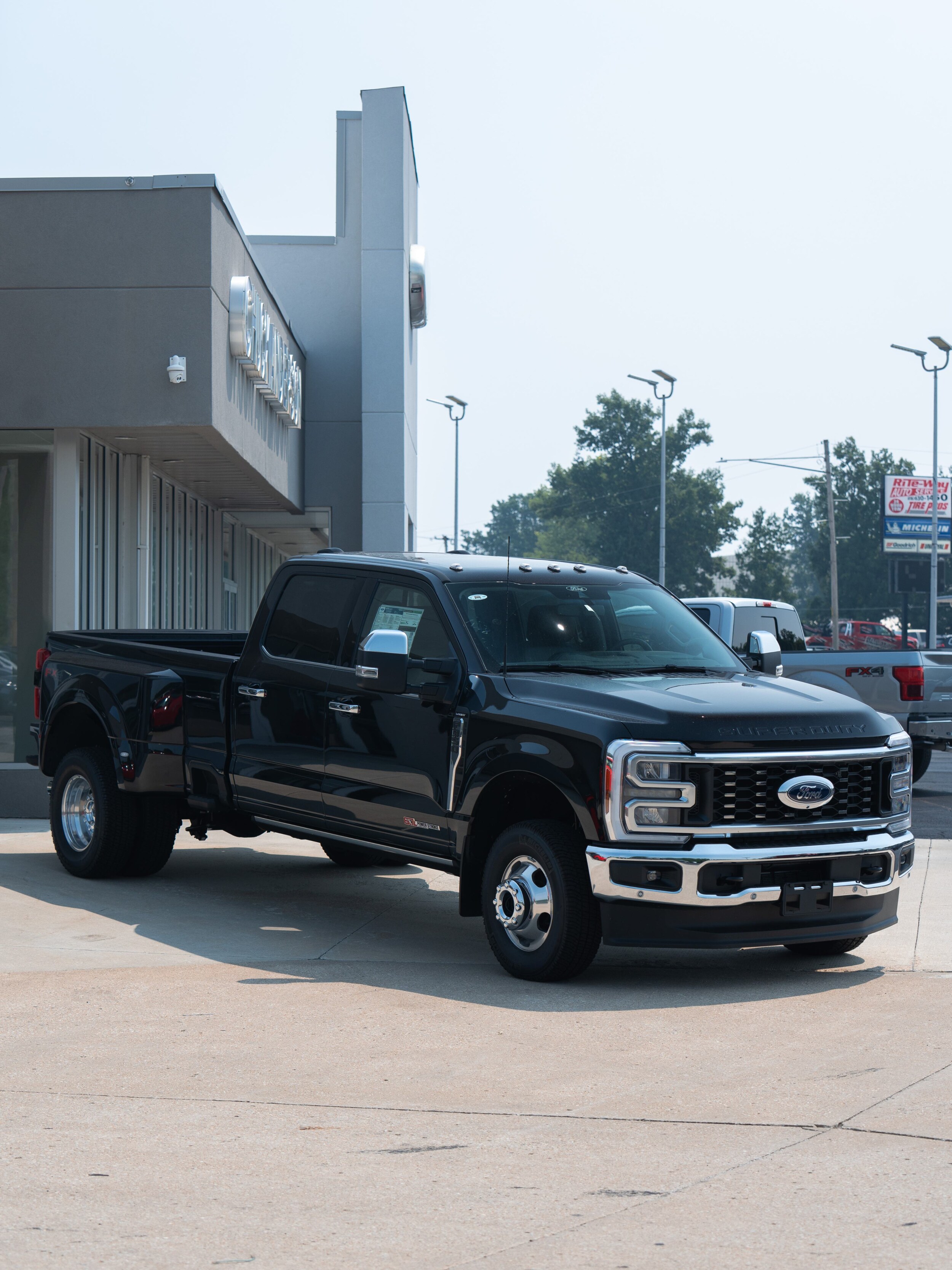
Ford Super Duty Engine Guide
``` Gas vs Diesel Super Duty: Which Should I Buy?
A diesel Super Duty gives you enormous low-rpm torque and access to Ford's highest towing ratings, but that does not make diesel the right answer for every heavy-duty truck buyer. The 7.3L gas V8 can deliver substantial towing capability with a simpler ownership experience and a lower initial powertrain cost.
The Short Answer
Choose a gas Super Duty if you need a heavy-duty truck but tow moderate loads, tow only occasionally, drive many unloaded or short-trip miles, or value simpler and generally less expensive maintenance.
Choose a diesel Super Duty if you regularly tow heavy trailers, accumulate substantial towing mileage, pull large fifth wheels or goosenecks, travel through significant grades, or need the highest towing ratings Ford offers.
Diesel wins decisively in torque and maximum towing capability. Gas can win on simplicity, initial cost and operating fit for owners who do not regularly use all of the diesel's capability.
The best answer starts with what the truck will actually do—not with which engine has the biggest numbers.
```7.3L Gas V8 vs 6.7L Power Stroke Diesel

7.3L Gas V8
The Simpler Heavy-Duty Choice
Ford's 7.3L gas V8 is a naturally aspirated engine engineered for heavy-duty truck use. It can tow substantial trailers without the additional fuel and emissions systems required by a modern diesel.
- 420 horsepower in the current 2027 Super Duty
- 445 lb-ft of torque
- Naturally aspirated gas V8
- No diesel exhaust fluid
- No diesel particulate filter
- Lower initial engine cost in comparable configurations
- Strong fit for intermittent towing and mixed-use trucks
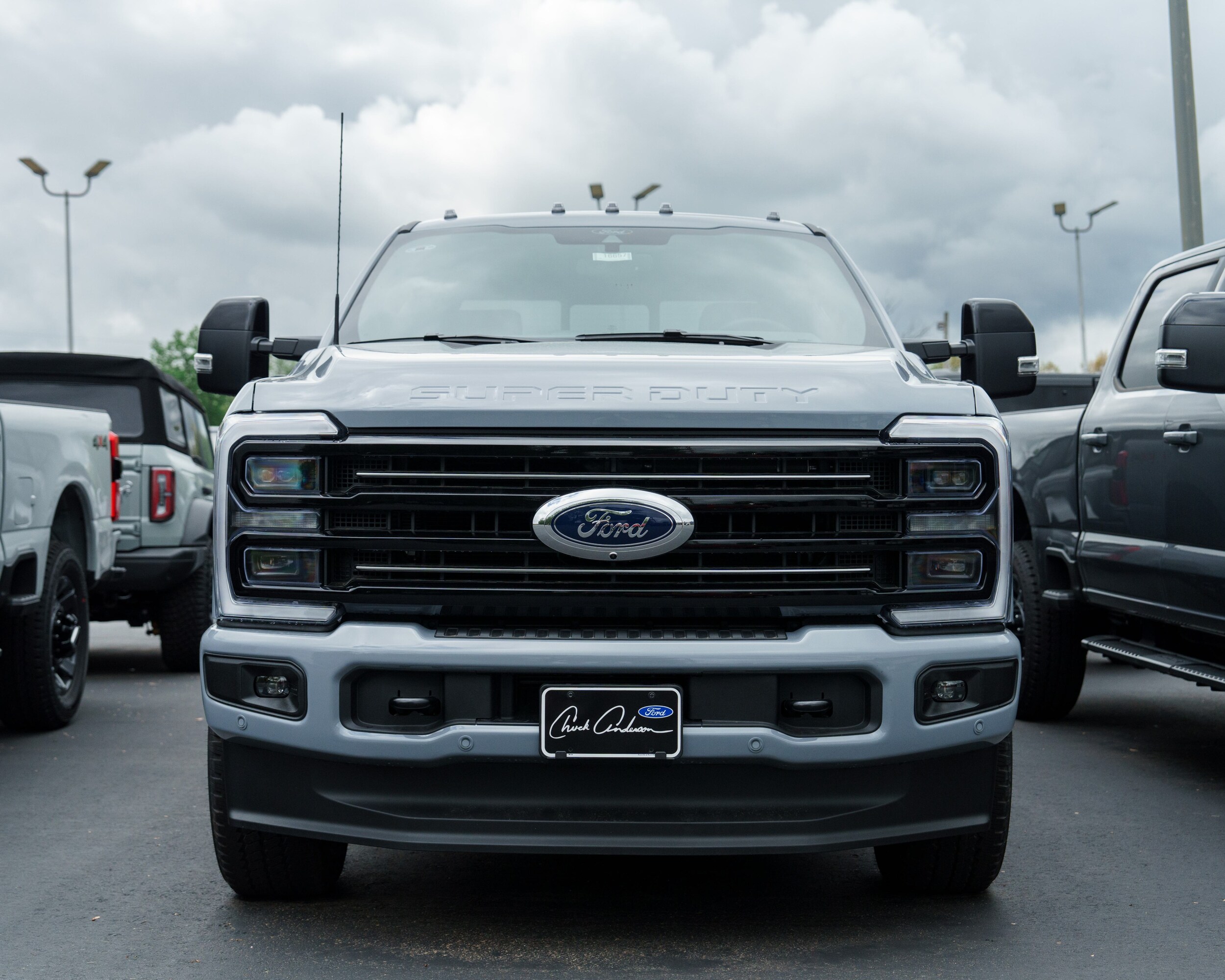
6.7L High-Output Power Stroke
The Heavy-Towing Choice
Ford's High-Output 6.7L Power Stroke is a turbocharged diesel designed around extremely demanding towing and hauling workloads.
- 500 horsepower in the current 2027 Super Duty
- 1,200 lb-ft of torque
- Turbocharged diesel V8
- Diesel exhaust brake
- Access to Ford's highest towing ratings
- Exceptional low-rpm pulling power
- Strong fit for frequent, high-weight towing
Gas vs Diesel Super Duty Comparison
| Category | Gas Super Duty | Diesel Super Duty |
|---|---|---|
| Best Use | Mixed driving, occasional towing, moderate heavy-duty workloads | Frequent heavy towing, long-distance towing and maximum capability |
| Low-RPM Torque | Strong | Dramatically higher |
| Maximum Towing | More than 20,000 lbs. in certain properly equipped configurations | Up to 40,000 lbs. in the current Super Duty lineup |
| Initial Cost | Generally lower | Generally higher |
| Routine Maintenance | Generally simpler and less expensive | More oil, diesel fuel filters and additional diesel systems |
| DEF Required? | No | Yes |
| Diesel Exhaust Brake | No | Yes |
| Short-Trip Use | Generally well suited | Longer operating cycles are better suited to diesel aftertreatment operation |
| Heavy Fifth-Wheel Use | Capable depending on trailer and configuration | Increasingly advantageous as weight and towing frequency rise |
| Fuel Efficiency Under Load | Gas engine typically uses more fuel under heavy load | Diesel often provides better fuel efficiency under sustained heavy towing |
| Payload Effect | Lighter engine can leave more capacity available in some configurations | Heavier diesel powertrain can reduce available payload compared with a similar gas truck |
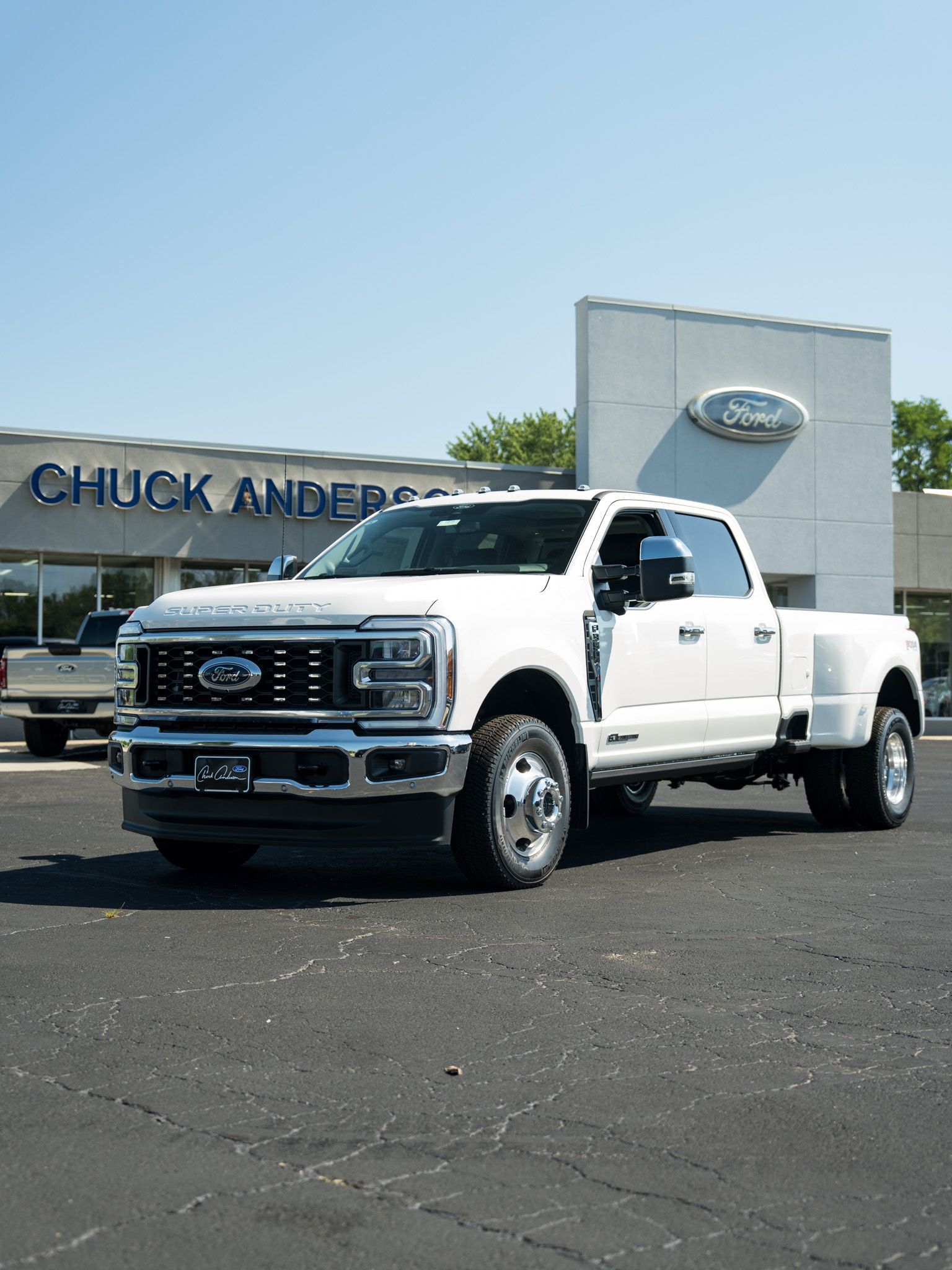
Why Buy Gas?
A Gas Super Duty Can Be the Better Choice Even if Diesel Is More Powerful
A heavy-duty pickup does not automatically need a diesel engine.
Ford's 7.3L gas V8 can tow substantial trailers and handle demanding work while avoiding several systems associated with modern diesel ownership.
There is no DEF tank to fill, no diesel particulate filter and no high-pressure diesel fuel system to maintain.
Gas can therefore make a lot of sense for a contractor, recreational tower, property owner or heavy-duty truck buyer who needs Super Duty capability without spending most of the truck's life under an extremely heavy load.
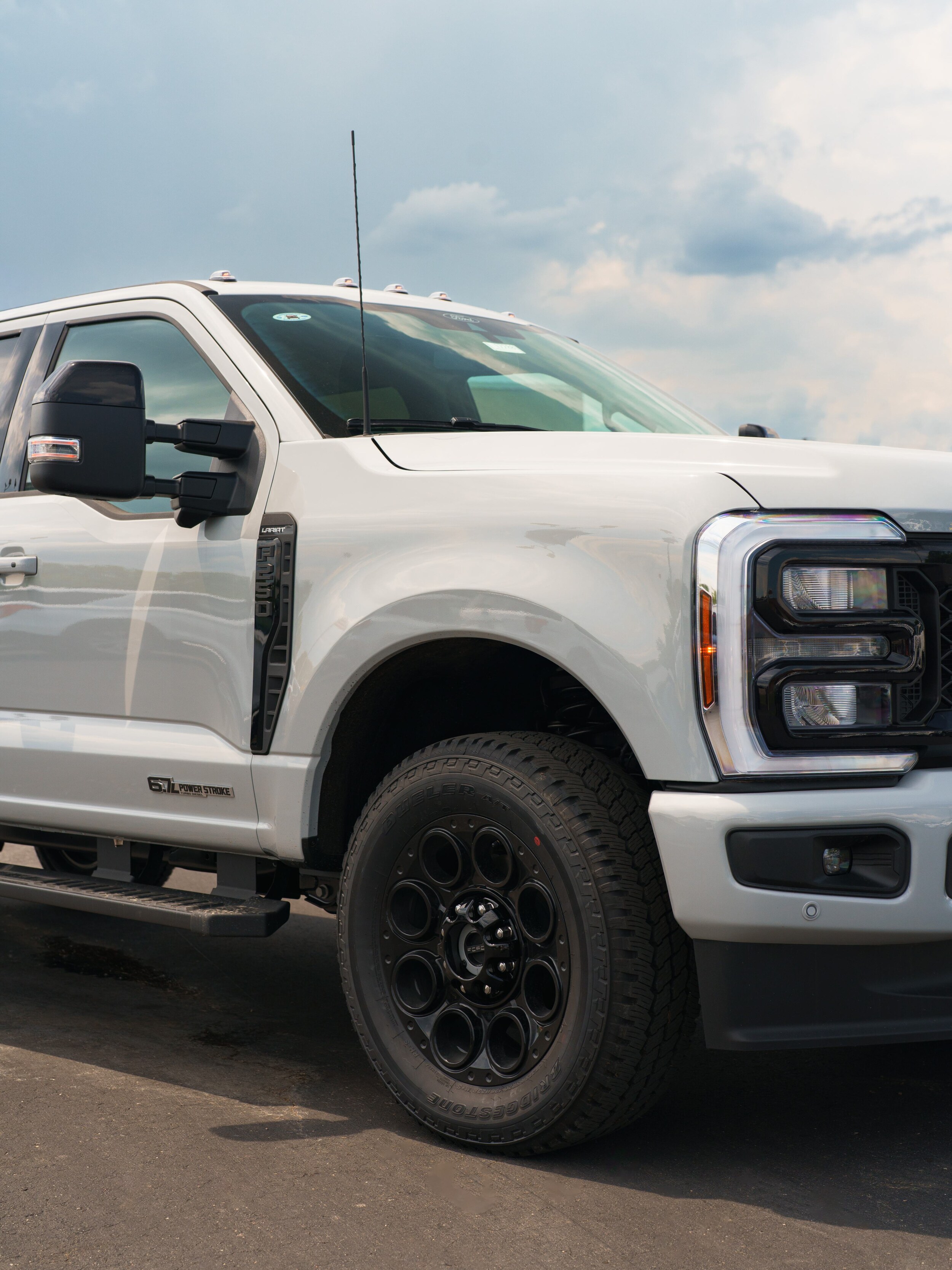
Why Buy Diesel?
The Diesel Advantage Gets Bigger as the Trailer Gets Heavier
The Power Stroke's biggest advantage is torque.
The current High-Output 6.7L produces 1,200 lb-ft of torque at low engine speed. That changes the way a Super Duty behaves when a large trailer is connected.
Heavy loads require less engine speed to get moving and maintain momentum, especially on grades.
Ford also equips diesel Super Duty trucks with an exhaust brake, which helps control truck-and-trailer speed when descending hills and reduces reliance on the service brakes.
Those advantages become much easier to appreciate when towing a large fifth wheel or equipment trailer for hundreds of miles.
How Often You Tow May Matter as Much as How Much You Tow
Consider two owners pulling the same 15,000-pound trailer.
One owner moves it six weekends per year. The other moves it several hundred miles every week.
Both trucks need to be properly rated for the load, but their ideal engine choice may be very different.
Occasional Towing
If the 7.3L gas truck comfortably handles the trailer and spends most of its life unloaded, the gas engine may offer a better balance of capability, purchase cost and ownership simplicity.
Frequent Towing
If the truck regularly pulls a major load, diesel torque, exhaust braking and fuel efficiency under load can become much more valuable.
At What Trailer Weight Should You Buy Diesel?
There is no universal trailer-weight number where gas suddenly stops making sense and diesel becomes mandatory.
A properly configured gas Super Duty can tow more than 20,000 pounds in certain applications, while many diesel owners tow considerably less.
As a practical shopping approach, the diesel deserves increasing consideration when:
The Trailer Is Consistently Heavy
You're regularly operating toward the upper range of gas-engine Super Duty capability.
Towing Is Frequent
The truck spends a meaningful portion of its annual mileage connected to a trailer.
Trips Are Long
Highway and interstate towing gives you more opportunity to benefit from diesel operating characteristics.
Terrain Is Demanding
High torque climbing grades and diesel exhaust braking on descents become more valuable in hilly or mountainous terrain.
Gas or Diesel for Fifth-Wheel Towing?
Either can be appropriate.
A gas F-250 or F-350 can handle many fifth wheels when the complete combination remains within the truck's ratings.
The diesel becomes increasingly attractive as fifth-wheel weight and towing frequency increase. A large fifth wheel places substantial load on the truck and can create sustained aerodynamic drag even when the trailer's weight remains below the maximum tow rating.
For owners who travel extensively with a large fifth wheel, Power Stroke torque and exhaust braking can materially change the driving experience.
Remember that diesel does not solve a payload problem. Fifth-wheel pin weight must still fit within the truck's payload, GVWR, rear-axle and tire ratings.
Continue with: Do I need an F-250 or F-350 for a fifth wheel?
```Is Diesel Worth the Higher Initial Cost?
That depends on whether you use what you're paying for.
The diesel option increases the cost of a comparably equipped Super Duty, but it also buys significantly more torque, access to higher towing configurations and diesel exhaust braking.
If the truck regularly performs work where those advantages matter, the added cost can be easier to justify.
If the truck spends most of its time commuting, running errands or pulling a moderate trailer a handful of times per year, the gas engine may provide nearly all of the capability you actually use.
Read the full guide: Is a diesel truck worth the extra money?
```Which Costs More to Maintain: Gas or Diesel?
Diesel ownership generally involves higher routine maintenance costs.
A Power Stroke uses substantially more engine oil than the gas V8 and has diesel-specific fuel filters and aftertreatment equipment.
Modern diesel systems also include components such as:
High-Pressure Fuel Injection
Diesel fuel is delivered at extremely high pressure, making clean fuel and filter maintenance especially important.
Turbocharger
The Power Stroke uses forced induction to create its enormous torque output.
Diesel Particulate Filter
The DPF captures soot and periodically regenerates as part of normal diesel aftertreatment operation.
DEF & SCR
Modern Power Stroke trucks use diesel exhaust fluid and selective catalytic reduction as part of the emissions system.
The additional complexity does not make the Power Stroke a poor engine. It simply means diesel capability comes with different maintenance and repair considerations than a naturally aspirated gas V8.
```Does Diesel Get Better Fuel Economy?
Diesel Super Duty trucks often use less fuel than comparable gas trucks while performing sustained heavy work, but the actual difference varies tremendously with trailer weight, speed, gearing, terrain, wind, drivetrain and driving style.
Fuel economy should not be considered in isolation.
The diesel powertrain costs more to buy, diesel fuel prices fluctuate, DEF is an additional operating expense and maintenance costs differ from the gas engine.
High-mileage owners who tow frequently have more opportunity for diesel efficiency to matter financially than low-mileage owners who mostly drive unloaded.
```Gas May Make More Sense for Mostly Local Driving
Modern diesel engines are designed to reach normal operating temperature and periodically complete diesel-particulate-filter regeneration.
Frequent short-trip operation, extended low-speed use and extensive idling can create a different duty cycle than long-distance towing and highway work.
If a Super Duty will spend most of its life making short local trips, commuting a few miles at a time and rarely towing heavily, a gas engine may better match the actual use case.
If the truck regularly travels long distances under load, the Power Stroke is operating much closer to the workload it was designed around.
```Can a Gas Super Duty Have More Payload Than a Diesel?
It can.
Payload is determined in part by the truck's empty weight. A diesel engine and its associated components add weight to the truck before passengers, cargo or trailer pin weight are added.
That means a similarly configured gas truck can sometimes have more available payload than its diesel counterpart.
This distinction can matter with fifth-wheel towing, slide-in campers, heavy bed loads and other applications where the truck's carrying capacity is just as important as its ability to pull a trailer.
More Torque Does Not Automatically Mean More Payload
Engine choice affects power and towing capability, but payload depends on the entire truck. Always check the payload label of the actual Super Duty you are considering.
Does Diesel Last Longer Than Gas?
A properly maintained Power Stroke can accumulate very high mileage, but diesel does not come with a guaranteed lifespan advantage for every owner.
Long-term durability depends on maintenance, fuel quality, operating temperature, engine hours, idle time, towing load and how the truck is driven.
A gas Super Duty that receives excellent maintenance can provide many years of service. A neglected diesel can become expensive long before its internal engine reaches the end of its potential life.
Learn more: How long does a 6.7 Power Stroke last?
```Does Diesel Have Better Resale Value?
Diesel-equipped heavy-duty trucks often command higher used-vehicle prices than comparable gas trucks, particularly in markets where towing and commercial use create strong demand for diesel power.
But a higher resale price does not necessarily mean the diesel was cheaper to own.
The diesel also cost more when new, and maintenance, fuel and repair costs differ throughout ownership.
Resale should be one factor in the decision—not the reason to buy a diesel you otherwise do not need.
```Who Should Buy Gas and Who Should Buy Diesel?
Consider Gas If...
You tow occasionally, operate mostly locally, spend many miles unloaded, want simpler maintenance, need substantial but not maximum towing capability, or want to keep the initial truck cost lower.
Consider Diesel If...
You tow heavy frequently, travel substantial distances with a trailer, own a large fifth wheel or gooseneck, drive mountainous routes, need Ford's highest towing ratings or regularly put the truck's torque to work.
How to Decide Between Gas and Diesel
1
What Are You Towing?
Determine the realistic loaded trailer weight and pin or tongue weight.
2
How Often?
Six towing trips per year is a very different workload from towing every week.
3
How Far?
Long-distance towing places more value on diesel torque, efficiency and exhaust braking.
4
How Will You Drive Unloaded?
Consider commute length, local driving, annual mileage and how often the truck will operate without a trailer.
The Correct Engine Cannot Fix the Wrong Truck
Engine choice is only one part of building the correct Super Duty.
An F-250 diesel is not automatically more capable for every load than an F-350 gas truck.
You also need to choose the correct:
F-250, F-350 or F-450
Truck class determines the broader range of available GVWR, payload and towing configurations.
SRW or DRW
Rear-wheel configuration becomes increasingly important as payload, pin weight and trailer weight rise.
Axle Ratio
Axle gearing affects Gross Combined Weight Rating and towing capability.
Cab, Bed & Drivetrain
Cab size, wheelbase, 2WD or 4WD and equipment all affect final truck ratings.
Always match the complete truck to the load. Horsepower and torque cannot compensate for exceeding payload, GVWR, axle, tire, hitch or combined-weight ratings.
More Ford Super Duty Engine & Towing Questions
6.7 Power Stroke vs 7.3 Gas Is a Diesel Truck Worth the Extra Money? Is the 6.7 Power Stroke Reliable? How Long Does a 6.7 Power Stroke Last? Which Ford Super Duty Is Best for Towing? Do I Need an F-250 or F-350 for a Fifth Wheel? Best Ford Truck for Fifth-Wheel Towing Ford Super Duty Research Center
``` Gas vs Diesel Super Duty FAQ
Should I buy a gas or diesel Ford Super Duty?
Gas is often a strong fit for buyers who tow occasionally, drive many unloaded or local miles and do not require Ford's highest towing ratings. Diesel becomes increasingly attractive for frequent heavy towing, long-distance towing and very large fifth-wheel or gooseneck trailers.
Is diesel better than gas for towing?
Diesel provides substantially more low-rpm torque and access to higher maximum towing ratings. It also adds exhaust braking. Gas Super Duty trucks can still tow substantial trailers and may be sufficient for owners who tow less frequently or at lower weights.
How much can a gas Super Duty tow?
Properly configured current Super Duty trucks with the 7.3L gas V8 can provide more than 20,000 pounds of available towing capability, with certain configurations reaching approximately 22,500 pounds. The exact rating depends on the truck and trailer type.
How much can a diesel Super Duty tow?
The current Super Duty lineup can reach up to 40,000 pounds of gooseneck towing capability when a qualifying F-450 is equipped with the High-Output 6.7L Power Stroke.
Is gas cheaper to maintain than diesel?
Gas Super Duty maintenance is generally simpler and less expensive. Modern Power Stroke diesels use more engine oil and include diesel fuel filters, turbocharging, DEF and emissions-aftertreatment components.
Does diesel get better fuel economy than gas?
Diesel often uses less fuel than a comparable gas heavy-duty truck under sustained heavy loads, but actual fuel consumption varies significantly with trailer weight, terrain, speed, gearing, drivetrain and driving conditions.
Is gas better for short trips?
Gas can be a better fit for an owner whose truck primarily makes short, unloaded local trips. Modern diesel aftertreatment systems benefit from operating conditions that allow the engine and exhaust system to reach normal temperatures.
Do I need a diesel to tow a fifth wheel?
No. A properly configured gas Super Duty can tow many fifth-wheel trailers. Diesel becomes increasingly attractive as fifth-wheel weight, towing frequency and annual towing mileage rise.
Does a diesel Super Duty have more payload?
Not automatically. The diesel powertrain itself is heavier, so a similarly configured gas truck can sometimes have more available payload. Always check the payload rating of the individual truck.
Does diesel have better resale value?
Diesel heavy-duty trucks often sell for more on the used market than comparable gas trucks, but they also cost more when new. Resale value should be considered alongside purchase price, maintenance, fuel and actual workload.
Is diesel worth it if I only tow a few times per year?
It may not be necessary if a properly configured gas Super Duty comfortably handles the trailer. The diesel becomes easier to justify as trailer weight, towing frequency, towing distance and terrain become more demanding.
The Bottom Line: Buy Diesel for the Work—Not Just the Torque Number
The 6.7L Power Stroke is the clear choice when you need Ford's highest towing capability, frequently pull major loads or want diesel torque and exhaust braking for long-distance heavy towing.
But the 7.3L gas V8 is a legitimate heavy-duty engine—not a compromise simply because it burns gasoline. For many Super Duty owners, it can provide all the towing and hauling capability they need with a simpler ownership experience and lower initial powertrain cost.
Start with the trailer, payload, towing frequency, annual mileage and how the truck will be used when the trailer is disconnected. Then choose the engine that matches that workload.
Continue to the Ford Super Duty Research Center for more F-250, F-350, F-450, Power Stroke and towing research from Chuck Anderson Ford.
```