

How Long Does a 6.7 Power Stroke Last?

Ford Power Stroke Longevity
``` How Long Does a 6.7 Power Stroke Last?
A properly maintained Ford 6.7L Power Stroke can be a very high-mileage engine. Reaching 250,000 to 300,000 miles is a realistic expectation for a well-cared-for truck, many examples continue beyond 300,000 miles, and 400,000 miles or more is possible when maintenance, operating conditions and usage are favorable.
The Short Answer
A well-maintained 6.7L Power Stroke can reasonably reach 250,000 to 300,000 miles, and many engines continue well beyond 300,000 miles.
Some trucks reach 400,000 miles or more, particularly vehicles that accumulate large amounts of highway mileage and receive consistent maintenance. That should be viewed as achievable rather than guaranteed.
There is no single mileage at which a 6.7L Power Stroke suddenly wears out. How long one lasts depends heavily on oil and fuel-filter maintenance, fuel quality, towing load, idle time, engine hours, operating temperature, modifications and how the truck has been driven.
It is also important to distinguish between engine lifespan and the lifespan of every component attached to the engine. A Power Stroke's internal engine can remain healthy while a turbocharger, injector, emissions component, sensor, cooling-system part or other accessory requires replacement.
```What Does High Mileage Mean on a 6.7 Power Stroke?
100K
Still Relatively Early
A properly maintained 6.7L with around 100,000 miles can still have a large portion of its potential service life ahead of it.
200K
High Mileage, Not End of Life
At 200,000 miles, condition and maintenance history become much more important than the odometer number by itself.
300K
Very High Mileage
Reaching 300,000 miles is entirely possible, but buyers should expect more age- and mileage-related component replacement around the engine and truck.
400K+
Possible, Not Guaranteed
Some well-maintained Power Stroke trucks continue beyond 400,000 miles. At this mileage, service history and duty cycle matter far more than averages.

Mileage Isn't Everything
A 200,000-Mile Truck Can Be Healthier Than a 100,000-Mile Truck
Mileage is easy to compare, but it tells only part of the story with a heavy-duty diesel.
Consider two trucks. One has 200,000 miles accumulated primarily on long highway trips with regular oil and fuel-filter service. The other has 100,000 miles but spent thousands of hours idling on jobsites, making short trips and receiving inconsistent maintenance.
The lower-mileage truck is not automatically the better engine.
That is why engine hours, idle hours, maintenance records and operating history deserve almost as much attention as the odometer when evaluating a Power Stroke.
Why Engine Hours Matter on a Diesel Truck
Mileage measures how far the truck has traveled. Engine hours measure how long the engine has actually been running.
That distinction matters because work trucks may spend significant time idling while powering equipment, heating or cooling the cab, waiting on jobsites or operating in stationary applications.
An engine continues accumulating wear and operating time while the truck is sitting still, even though the odometer is not moving.
Think in Miles and Hours
When evaluating a used Super Duty, check both the odometer and engine hours if that information is available. A truck with unusually high engine hours relative to its mileage may have spent a substantial portion of its life idling.
Six Things That Can Make a 6.7 Power Stroke Last Longer
1. Consistent Oil Changes
Clean oil is critical to the bearings, turbocharger and other lubricated engine components. Follow the maintenance requirements appropriate for the truck's model year and duty cycle.
2. Fuel-Filter Maintenance
Clean diesel fuel is particularly important because the Power Stroke uses a high-pressure common-rail injection system with extremely tight operating tolerances.
3. Good Fuel Quality
Water, DEF or other contamination in the diesel fuel system can create extremely expensive problems. Fuel quality matters more in a high-pressure diesel than many owners realize.
4. Proper Warm-Up & Operating Temperature
A truck that regularly reaches normal operating temperature is generally better suited to modern diesel emissions-system operation than one used almost exclusively for very short trips.
5. Sensible Towing Practices
The Power Stroke is built to tow, but continuously overloading the truck or operating beyond manufacturer ratings places unnecessary stress on the engine, transmission, cooling system and drivetrain.
6. Keeping the Truck Close to Factory Configuration
Additional power can increase cylinder pressure, exhaust temperature, transmission load and cooling demand. A stock or responsibly modified truck is generally easier to evaluate for long-term durability.
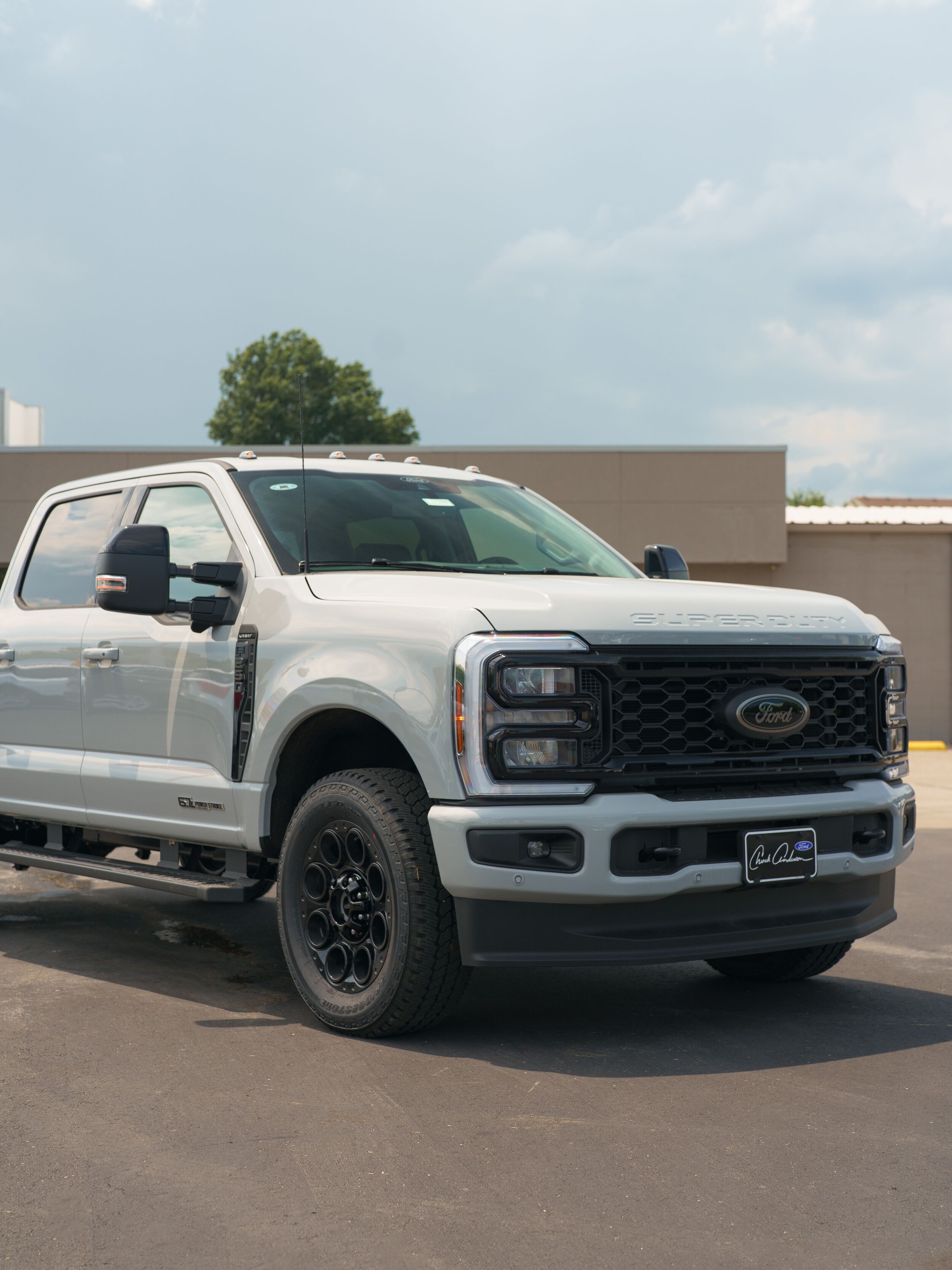
Heavy Towing
Does Towing Shorten a 6.7 Power Stroke's Life?
Towing is exactly what the Power Stroke was designed to do, so pulling a trailer does not automatically mean the engine will have a short life.
What matters is how hard the truck is worked and whether maintenance matches the workload.
Regular towing increases heat and load on the engine, transmission, cooling system, axles, brakes and other components. Trucks used under severe conditions may require more frequent maintenance than trucks driven primarily unloaded.
A Power Stroke that tows regularly but stays within its ratings and receives appropriate maintenance can still accumulate substantial mileage.
The Engine May Outlast Some of the Components Around It
When discussing whether a diesel can reach 300,000 or 400,000 miles, it is important not to assume the truck will get there without repairs.
High-mileage ownership often means replacing components while the basic internal engine remains serviceable.
| Component | Why It Matters at Higher Mileage |
|---|---|
| Fuel Injectors | Injection components operate at extremely high pressure and can wear or become contaminated over time. |
| High-Pressure Fuel System | Clean fuel and proper filtration are critical. A fuel-system failure can be one of the more expensive diesel repairs. |
| Turbocharger | Turbochargers operate under heat, speed and load and should be evaluated as mileage accumulates. |
| DPF & Emissions Equipment | Sensors, EGR components and aftertreatment equipment may require service even when the internal engine remains healthy. |
| Cooling System | Hoses, pumps, thermostats, radiators and related components age along with the truck. |
| Transmission & Drivetrain | A long-lived engine does not mean transmissions, U-joints, differentials and other drivetrain parts last forever. |
Is 100,000 Miles a Lot for a 6.7 Power Stroke?
Not necessarily.
On a properly maintained heavy-duty diesel, 100,000 miles does not automatically indicate that the engine is approaching the end of its useful life.
The bigger questions are how those miles were accumulated and whether the truck received proper maintenance.
A 100,000-mile truck with complete service records, reasonable engine hours and no evidence of fuel contamination or neglect can still have a significant amount of useful life remaining.
```Should You Be Afraid of a 200,000-Mile Power Stroke?
Mileage around 200,000 should make you more careful, not automatically make you walk away.
At this point, documentation becomes increasingly valuable. Ideally, you want to know whether the truck received regular oil service, fuel filters, cooling-system maintenance and other scheduled work.
You should also consider whether major wear components have already been replaced or may be approaching replacement.
A professional pre-purchase inspection becomes especially valuable on a high-mileage diesel because one expensive fuel, turbo or emissions repair can quickly erase the savings from buying a cheaper truck.
```Can a 6.7 Power Stroke Reach 300,000 Miles?
Yes. A well-maintained 6.7L Power Stroke can reach 300,000 miles, and high-mileage examples beyond that point exist.
By 300,000 miles, however, the discussion should not be limited to whether the engine still runs.
The truck has also accumulated 300,000 miles on its transmission, steering, suspension, axles, cooling system, HVAC equipment, electronics and body components.
A 300,000-mile truck can still be useful and dependable, but owners should expect maintenance and component replacement to be part of the equation.
```Can a 6.7 Power Stroke Last 400,000 Miles?
Yes, 400,000 miles is achievable for some 6.7L Power Stroke engines. It should not be treated as a guaranteed lifespan for every truck.
Trucks that reach this mileage generally benefit from consistent maintenance, favorable operating conditions and owners willing to repair or replace supporting components as they wear.
Highway and long-distance commercial use can also accumulate mileage very differently from a truck that spends years idling, working off-road or making short trips.
Don't buy a high-mileage diesel based on the odometer alone. At 300,000 or 400,000 miles, maintenance history and current mechanical condition matter more than stories about how far someone else's truck traveled.
``` What Matters More Than Mileage?
Service Records
Documented oil changes and fuel-filter replacement are much more reassuring than an owner simply saying the truck was maintained.
Engine & Idle Hours
Hours provide additional context about how hard the engine worked to accumulate its mileage.
Cold-Start Behavior
Starting quality, smoke, unusual noise and idle behavior can reveal conditions that may be less obvious after the engine warms up.
Modification History
Determine whether the truck has been tuned, heavily modified or returned to stock before being sold.
Fuel-System Condition
Ask about injector, high-pressure pump, filter and contamination history.
Diagnostic Scan
Stored faults, regeneration history and live engine data can provide information that a visual inspection cannot.
Does Model Year Affect How Long a 6.7 Power Stroke Lasts?
Yes, because Ford has continued developing the engine since introducing the 6.7L Power Stroke for the 2011 model year.
Early 2011–2014 engines use some hardware that differs from later versions, including the original turbocharger arrangement. Ford made significant changes for later model years and has continued refining the engine, fuel system, emissions controls, cooling and power output.
That does not mean every early truck is a bad purchase or every newer truck will automatically last longer.
A carefully maintained older truck can still be preferable to a newer truck with poor service history, extensive idle time or questionable modifications.
For a broader look at the engine's track record, read is the 6.7 Power Stroke reliable?
```The Best Way to Get 300,000 Miles Is to Maintain It Like a Diesel
Owners interested in maximum engine life should follow Ford's maintenance recommendations for their specific model year and pay attention to severe operating conditions.
Heavy towing, extensive idling, dusty environments, temperature extremes and other demanding conditions can change the appropriate maintenance schedule.
Fuel-filter maintenance deserves particular attention. The high-pressure diesel injection system depends on a clean fuel supply, and contamination can turn an inexpensive maintenance item into an extremely expensive repair.
The same principle applies to oil, coolant and air filtration: extending service intervals to save a small amount of money can be a poor trade when the goal is several hundred thousand miles of engine life.
```Does Long Diesel Life Automatically Make the Power Stroke the Better Buy?
No.
The Power Stroke's ability to accumulate high mileage is valuable, but buyers should still consider whether diesel ownership fits their actual use.
A diesel generally costs more to purchase and includes more complex fuel, turbocharging and emissions equipment. Owners who regularly tow heavy trailers or accumulate substantial annual mileage have more opportunity to benefit from those systems.
Someone who drives relatively few miles and rarely tows heavy may be better served by a gas Super Duty even if the diesel has greater high-mileage potential.
Compare them directly: 6.7 Power Stroke vs 7.3 gas: which is better?
```More Ford Super Duty Diesel Questions
```6.7 Power Stroke Lifespan FAQ
How many miles will a 6.7 Power Stroke last?
A properly maintained 6.7L Power Stroke can reasonably reach 250,000 to 300,000 miles, and many engines continue beyond 300,000. Some reach 400,000 miles or more, but actual lifespan depends heavily on maintenance, duty cycle, engine hours and operating conditions.
Can a 6.7 Power Stroke last 300,000 miles?
Yes. Reaching 300,000 miles is achievable for a properly maintained 6.7L Power Stroke. Owners should expect supporting components around the engine and truck to require maintenance and replacement as mileage accumulates.
Can a 6.7 Power Stroke last 400,000 miles?
Yes, some 6.7L Power Stroke engines reach 400,000 miles and beyond. That mileage should be considered possible rather than guaranteed. Maintenance history and operating conditions become especially important at very high mileage.
Is 100,000 miles high for a 6.7 Power Stroke?
Not necessarily. A properly maintained 100,000-mile Power Stroke can still have significant useful life remaining. Service history, engine hours and condition are more informative than mileage alone.
Is 200,000 miles too many for a used 6.7 Power Stroke?
Not automatically. At 200,000 miles, buyers should place greater emphasis on maintenance records, engine and idle hours, fuel-system condition, modification history and a professional inspection.
What shortens the life of a 6.7 Power Stroke?
Poor oil maintenance, neglected fuel filters, contaminated fuel, excessive idling, repeated short-trip operation, improper modifications, overheating and operating beyond the truck's ratings can all contribute to increased wear or expensive failures.
Does towing shorten Power Stroke engine life?
Towing itself does not automatically shorten engine life because the Power Stroke is designed for heavy-duty operation. Regular heavy towing increases load and heat, however, so maintenance should match the truck's duty cycle and the truck should remain within its manufacturer ratings.
Are engine hours important on a used diesel?
Yes. Engine hours show how long the engine has been running, including time spent idling when the odometer was not increasing. Mileage, engine hours and idle hours together provide a better picture of how a truck has been used.
What is more important on a high-mileage Power Stroke: mileage or maintenance?
Both matter, but maintenance and condition become increasingly important as mileage rises. A higher-mileage truck with documented service and favorable operating history can be a better purchase than a lower-mile truck that was neglected.
The Bottom Line: 300,000 Miles Is Achievable—But Maintenance Gets You There
The Ford 6.7L Power Stroke was designed for heavy-duty use and can provide a very long service life. A well-maintained engine reaching 250,000 to 300,000 miles is realistic, and properly cared-for examples can continue well beyond that.
There is no magic mileage number, however. Fuel quality, oil and filter maintenance, towing load, engine hours, idling, operating conditions and modification history all influence how long an individual engine lasts.
If you're shopping for a high-mileage Power Stroke, don't ask only, "How many miles are on it?" Ask how those miles were accumulated and what maintenance was performed along the way.
Continue to the Ford Super Duty Research Center for more Power Stroke, F-250, F-350, F-450 and towing research from Chuck Anderson Ford.
```