
Ford Super Duty Research Questions & Answers
 ```
``` Ford Truck Research
``` Ford Super Duty Questions & Answers
Research F-250, F-350 and F-450 trucks, Power Stroke diesel engines, towing capacity, fifth-wheel towing, gas vs diesel, dually configurations and the questions that matter before choosing a Ford Super Duty.
Start With What the Truck Needs to Do
```Ford Super Duty covers a wide range of heavy-duty pickups, and the right truck for one buyer may be completely wrong for another. An F-250 used for occasional trailer towing has different requirements from an F-350 carrying substantial fifth-wheel pin weight or an F-450 built around serious gooseneck towing.
This Super Duty Research Center from Chuck Anderson Ford is designed to answer the questions truck shoppers ask most often. Use the guides below to compare truck classes, engines, towing capability and configurations before deciding which Super Duty best matches your workload.
```Not Sure Which Super Duty You Need?
```Start with the actual loaded weight of what you plan to tow, then consider tongue or fifth-wheel pin weight, passengers, cargo and how frequently the truck will operate under load. Once those requirements are clear, it becomes much easier to compare F-250, F-350 and F-450 models, gas and diesel engines, and single- versus dual-rear-wheel configurations.
```
Choose the Truck Class
F-250 vs F-350 vs F-450
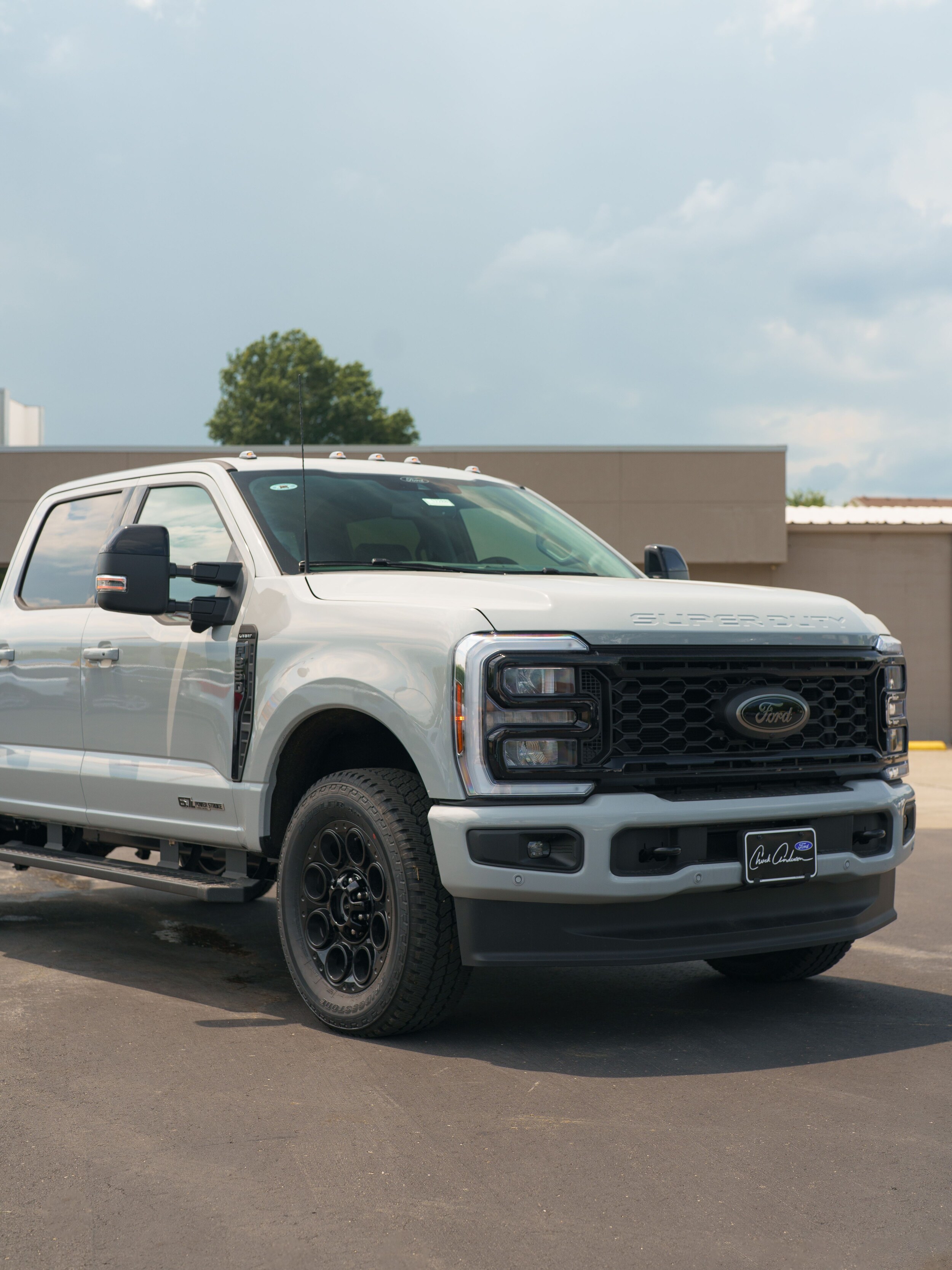
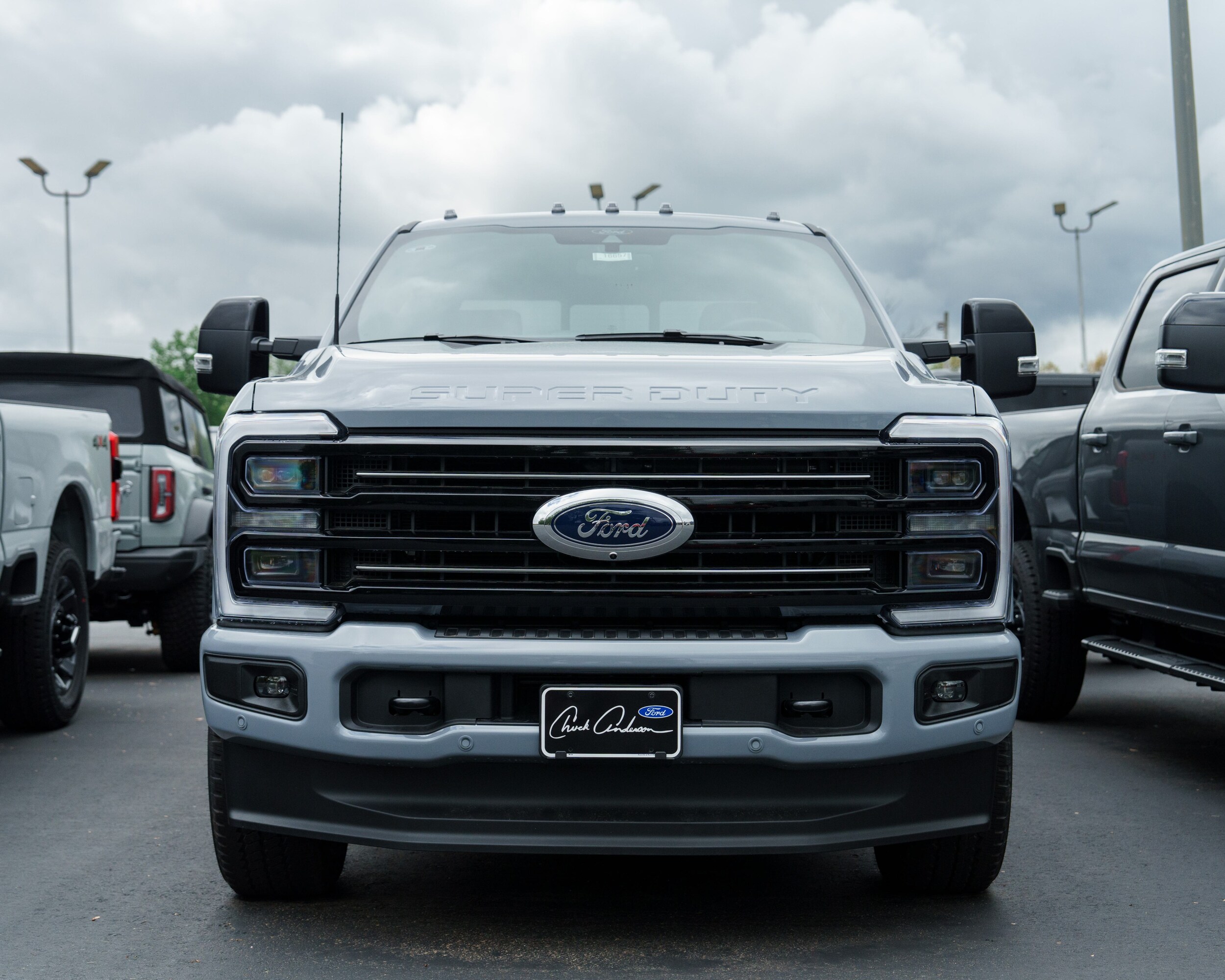
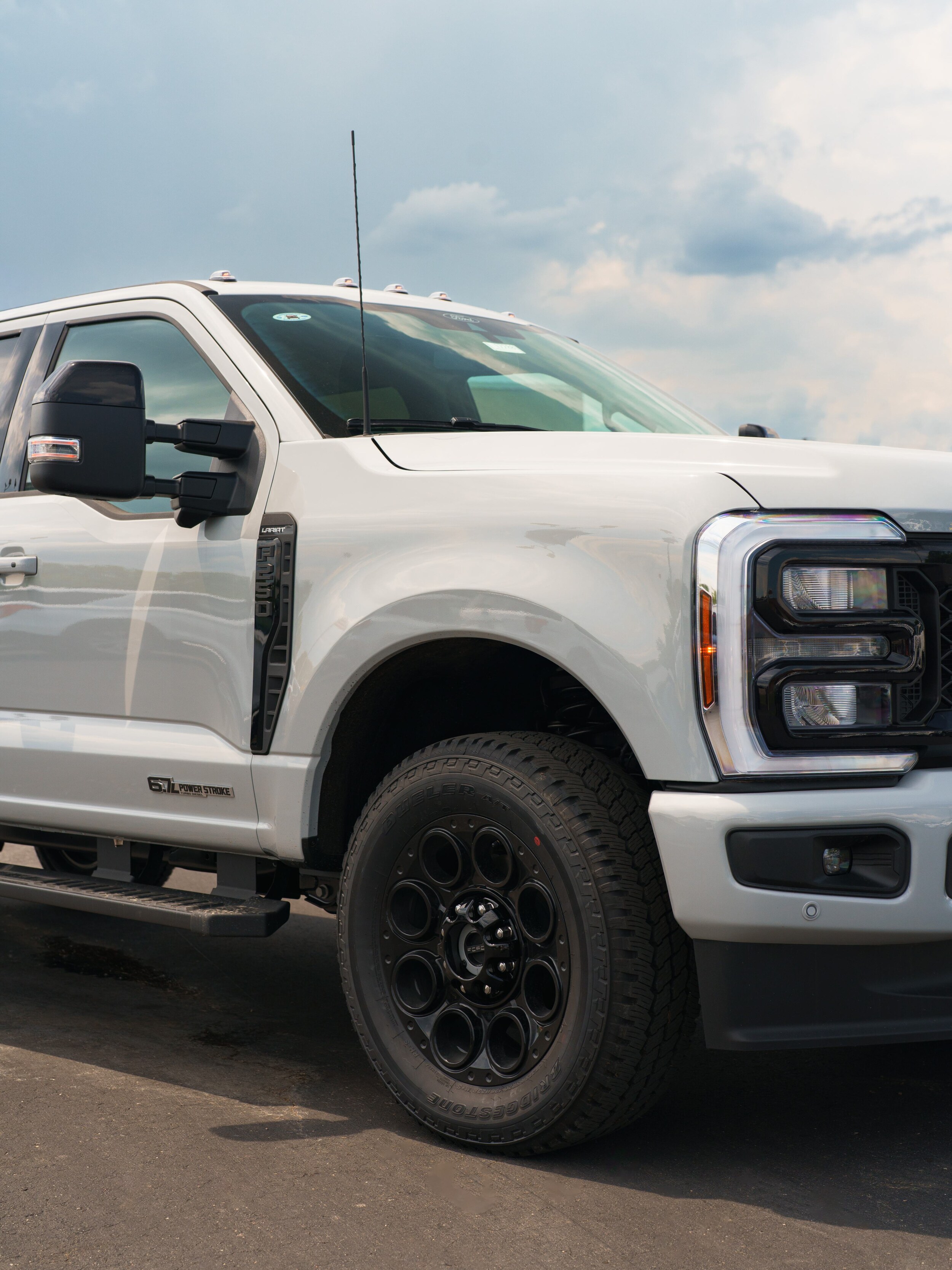
The badge on the front fender represents more than a model name. Moving through the Super Duty lineup can change available payload, rear-axle capability, towing configurations and the types of trailers the truck is best suited to handle.
Start by determining whether an F-250 provides enough capability or whether your workload points toward an F-350 or F-450.
F-250 vs F-350: What's the Difference? Compare two of the most commonly cross-shopped Super Duty models and learn where their capabilities begin to separate. F-350 vs F-450: Which Should I Buy? Compare F-350 and F-450 pickups for heavy trailers, payload, fifth-wheel use and serious towing applications.
``` 
Gas or Power Stroke?
Ford Super Duty Engine Questions
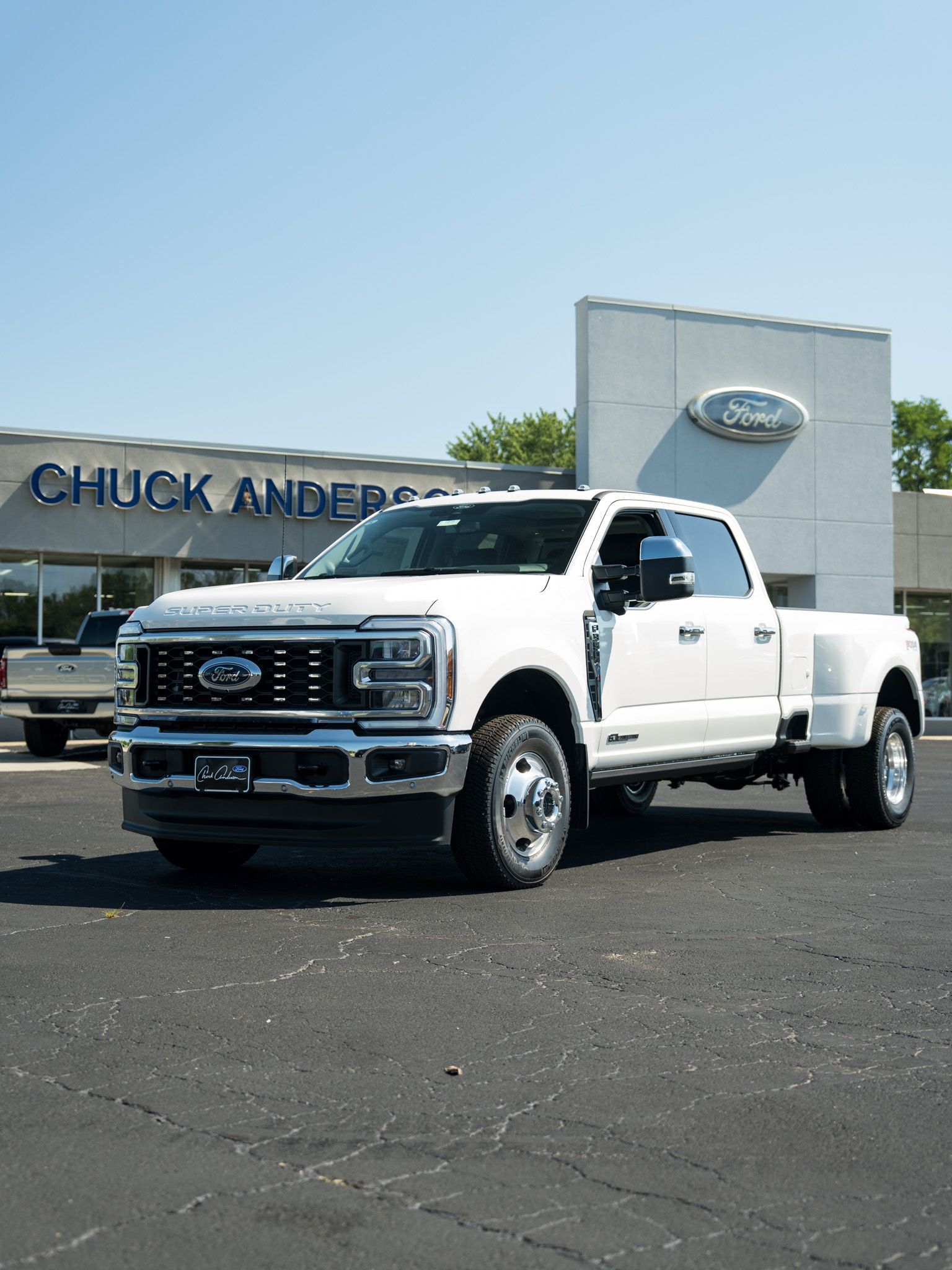
Choosing the engine can have a major effect on how a Super Duty feels, what it costs to own and how well it fits a particular workload. Buyers frequently compare Ford's large gas V8 with the 6.7L Power Stroke diesel when shopping for an F-250 or F-350.
The right answer depends on more than maximum torque. Towing frequency, trailer weight, annual mileage, purchase cost, maintenance and everyday driving all deserve consideration.
Ford 6.7 Power Stroke vs 7.3 Gas: Which Is Better? Compare Ford's popular Super Duty gas and diesel choices for towing, work, ownership cost and everyday use. Is the 6.7 Power Stroke Reliable? Research the reliability of Ford's 6.7L Power Stroke and the factors that affect long-term diesel ownership. How Long Does a 6.7 Power Stroke Last? Learn what can influence Power Stroke longevity, including maintenance, towing workload and operating conditions. Gas vs Diesel Super Duty: Which Should I Buy? Compare gas and diesel ownership when choosing an F-250, F-350 or other heavy-duty Ford truck. Is a Diesel Truck Worth the Extra Money? Look beyond horsepower and torque to purchase price, towing frequency, fuel, maintenance and how long you expect to own the truck.
``` 
Match the Truck to the Trailer
Ford Super Duty Towing Questions
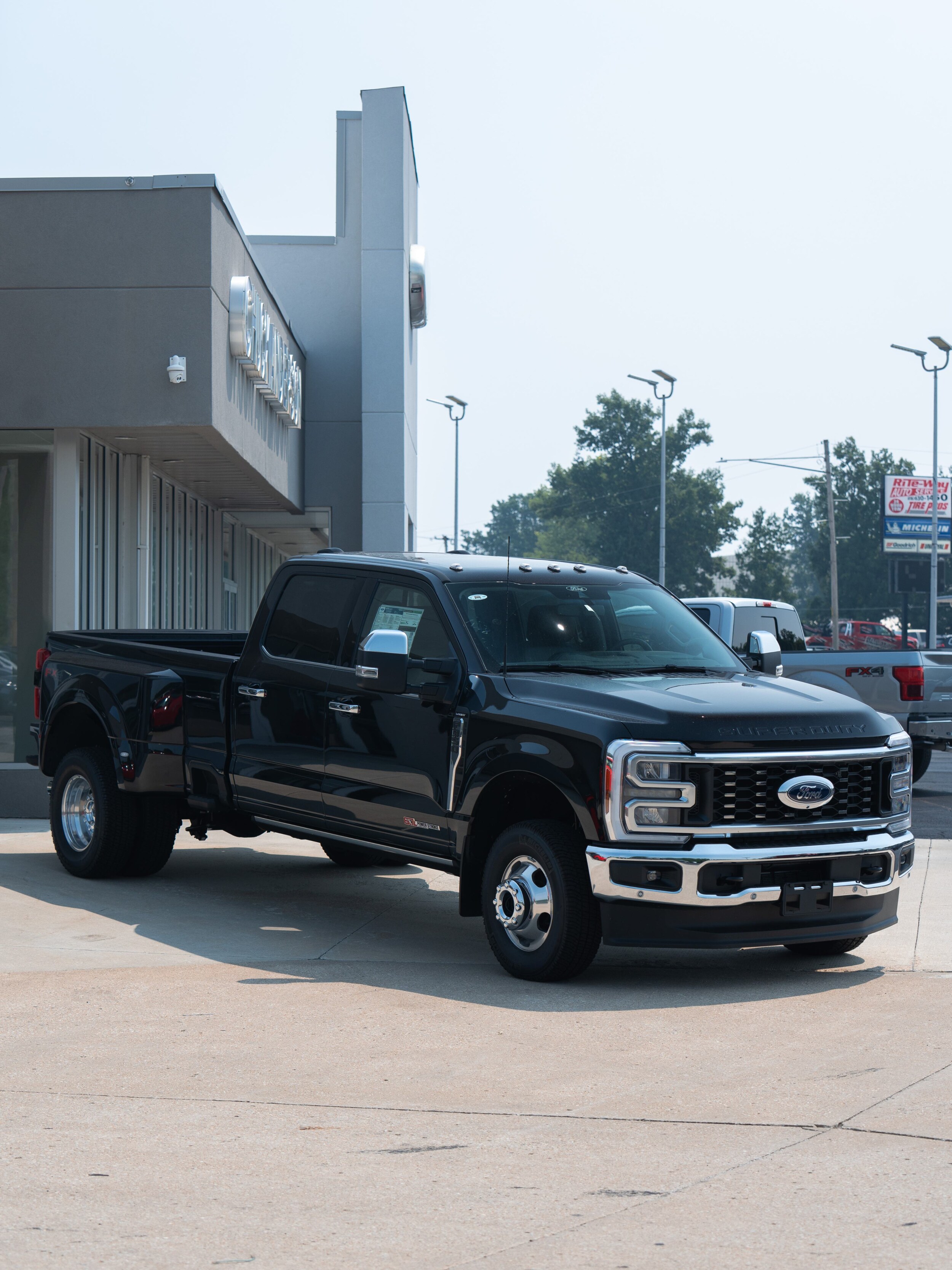
A Super Duty's tow rating is determined by the complete configuration, not simply whether the truck says F-250, F-350 or F-450 on the side. Engine, cab, drivetrain, axle ratio, bed configuration, rear-wheel setup and towing equipment can all matter.
Use these guides to narrow your search before verifying the rating of the exact truck you plan to use.
How Much Can an F-250 Tow? Research Ford F-250 towing capacity and the equipment and configuration choices that can affect the final rating. How Much Can an F-350 Tow? Learn how F-350 configurations can differ when selecting a truck for larger conventional, fifth-wheel or gooseneck trailers. How Much Can an F-450 Tow? Explore Ford F-450 towing capability and why this truck is often considered for demanding heavy-trailer applications. Which Ford Super Duty Is Best for Towing? Compare F-250, F-350 and F-450 towing applications based on the trailer and workload rather than the badge alone. What Ford Truck Can Tow 20,000 Pounds? Find out which Ford truck configurations should be researched when trailer weight reaches the 20,000-pound range.
``` 
Heavy Trailer Research
Fifth-Wheel, Gooseneck & Dually Questions
Fifth-wheel and gooseneck towing requires buyers to think about more than a headline maximum tow rating. Trailer pin weight is carried by the truck, making payload and rear-axle capability especially important.
This is also where the difference between single-rear-wheel and dual-rear-wheel Super Duty trucks can become much more significant.
Do I Need an F-250 or F-350 for a Fifth Wheel? Compare the two truck classes with special attention to trailer weight, fifth-wheel pin weight and available payload. Single-Rear-Wheel vs Dually: Which Do I Need? Compare SRW and DRW Super Duty trucks for towing, payload, stability, maneuverability and daily driving. What Is the Best Ford Truck for Towing a Fifth Wheel? Learn how trailer weight, pin weight and truck configuration determine which Ford pickup should be on your fifth-wheel shopping list.
``` How to Choose a Ford Super Duty
Instead of starting with a trim level or engine, work backward from what the truck actually needs to carry and tow.
1
Know the Trailer
Determine the trailer's realistic loaded weight rather than relying only on an empty or dry-weight number.
2
Calculate Truck Load
Account for tongue or pin weight, passengers, tools, cargo, accessories and anything else the truck must carry.
3
Choose the Truck Class
Decide whether those requirements point toward an F-250, F-350 or F-450 before choosing luxury features or appearance.
4
Choose the Configuration
Compare gas vs diesel, SRW vs DRW, cab, bed, drivetrain, axle and towing equipment for the job.
Super Duty Research Center
Research the Truck Before You Buy It
Heavy-duty truck shopping is one area where buying more truck than you need can add unnecessary cost, while buying too little truck can create payload or towing limitations later.
The goal of these guides is to help you understand the differences before you begin comparing individual trucks.
Common Ford Super Duty Questions
What's the difference between an F-250, F-350 and F-450?
F-250, F-350 and F-450 pickups represent different levels of Super Duty capability. The differences become particularly important as trailer weight, payload and fifth-wheel or gooseneck pin weight increase. Configuration matters, so compare the specifications of the actual trucks under consideration.
Should I buy a gas or diesel Super Duty?
Both can make sense. Gas can be attractive for buyers who want heavy-duty capability without routinely demanding maximum diesel performance. Diesel becomes increasingly appealing when heavy towing is frequent. Purchase price, maintenance, annual mileage and intended use should all be considered.
Do I automatically need a dually for a fifth wheel?
No. The correct configuration depends on the fifth wheel's loaded weight and pin weight along with the payload, axle and towing ratings of the truck. Some applications fit within an SRW configuration while larger trailers may point toward a DRW truck.
Is maximum towing capacity the only rating that matters?
No. Payload, axle ratings, gross vehicle weight, combined weight ratings, hitch limits and the ratings of the exact vehicle can all matter. Fifth-wheel and gooseneck owners should pay particular attention to the load placed directly on the truck.
Find the Ford Super Duty That Fits the Job
Once you understand the trailer, payload and workload, choosing the right Super Duty becomes much easier. Use the research guides above to compare F-250, F-350 and F-450 models, gas and Power Stroke diesel engines, fifth-wheel towing, dually configurations and more.
Chuck Anderson Ford can also help you compare specific Super Duty configurations once you know what the truck needs to accomplish.
```