

Single-rear-wheel vs dually: Which Do I need?
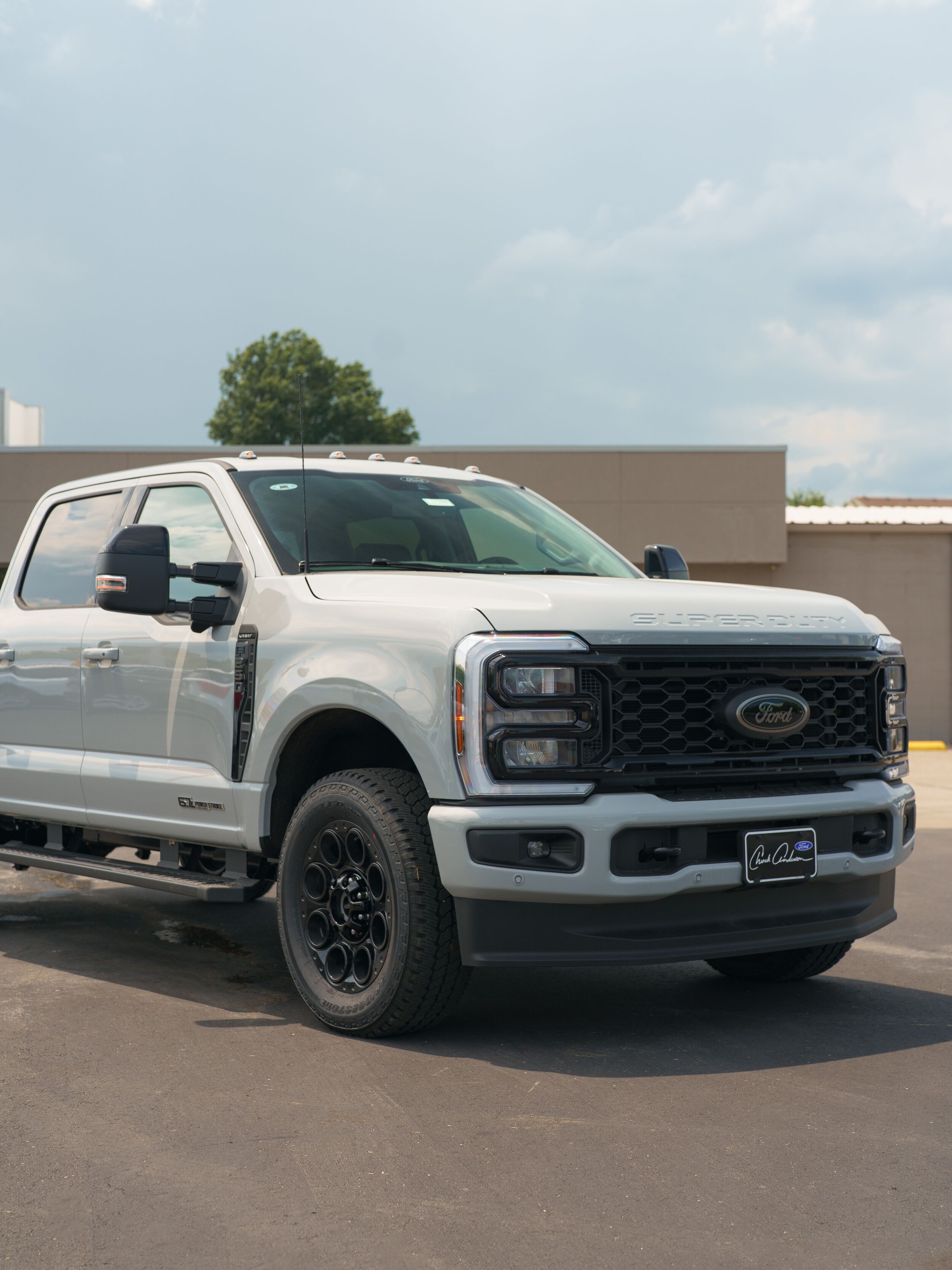
Ford Super Duty Towing Guide
``` Single-Rear-Wheel vs Dually: Which Do I Need?
A single-rear-wheel Super Duty is easier to live with every day and can still tow extremely heavy trailers. A dually adds two additional rear tires and opens the door to higher-capacity towing, payload and rear-axle configurations. The right answer depends primarily on how much weight your truck must carry—not simply how large your trailer looks.
The Short Answer
Choose a single-rear-wheel truck if its towing, payload, GVWR and rear-axle ratings comfortably handle your loaded trailer and truck cargo. SRW is generally narrower, easier to park and easier to use as an everyday vehicle.
Choose a dually when trailer pin weight, payload requirements or total trailer weight push beyond the comfortable capability of an SRW configuration. Dual rear wheels provide four rear tires instead of two, support higher-capacity configurations and create a wider footprint beneath the rear of the truck.
Fifth-wheel and gooseneck owners should pay especially close attention to payload and pin weight. Those loads can make the case for a dually before the trailer reaches the truck's published maximum towing capacity.
```What Is SRW vs DRW?

Single Rear Wheel — SRW
Two Rear Tires Total
A single-rear-wheel truck has one tire on each side of the rear axle.
- Narrower rear body
- Easier parking and maneuvering
- Fewer tires to replace
- Strong towing capability
- Available on F-250 and F-350 pickups
- Often a strong fit for mixed daily-driving and towing use

Dual Rear Wheel — DRW
Four Rear Tires Total
A dual-rear-wheel truck places two tires on each side of the rear axle.
- Higher-capacity configurations available
- Greater rear tire capacity
- Wider footprint under the rear of the truck
- Excellent for high fifth-wheel pin weight
- Available on F-350 and F-450 pickups
- Designed around demanding towing and hauling applications
SRW vs Dually Comparison
| Category | Single Rear Wheel | Dual Rear Wheel |
|---|---|---|
| Rear Tires | 2 total | 4 total |
| Truck Width | Narrower rear body | Wider rear fenders |
| Everyday Driving | Easier to park and maneuver | Requires more space |
| Available Payload | Substantial in properly configured trucks | Higher-capacity configurations available |
| Maximum Towing | Very high in qualifying F-350 SRW configurations | Highest F-350 and F-450 ratings require DRW configurations |
| Fifth-Wheel Pin Weight | Works when pin weight fits truck ratings | Better suited to very high pin-weight applications |
| Rear-Tire Capacity | Two tires carrying rear load | Four tires sharing rear load |
| Tire Replacement | Four road tires on the truck | Six road tires on the truck |
| Best Fit | Heavy towing plus regular daily use | Very heavy towing, high payload and substantial pin weight |
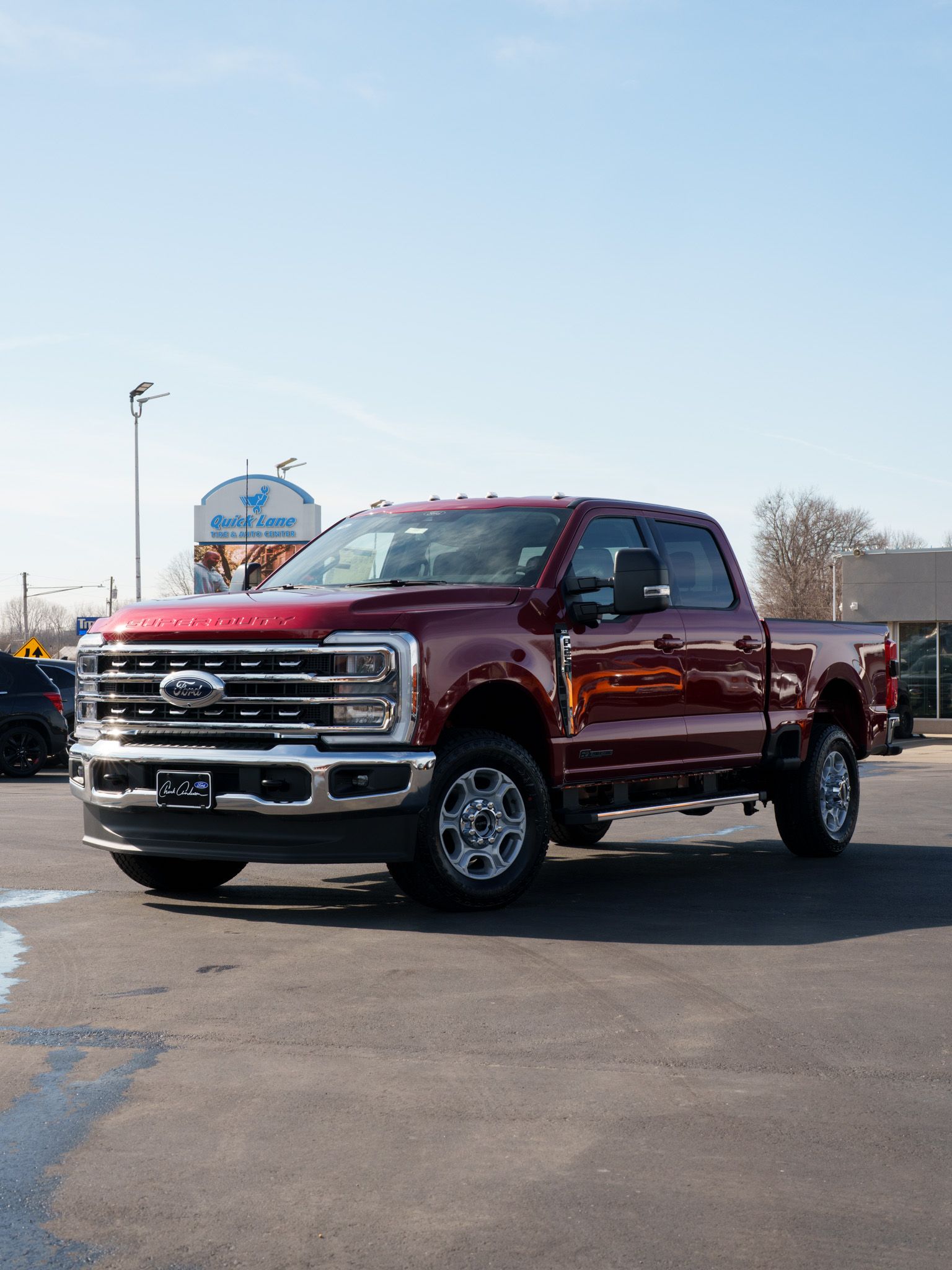
The Biggest Factor
Payload Often Determines Whether You Need a Dually
Maximum trailer weight receives most of the attention, but the decision between SRW and DRW is often made by the amount of weight the truck must physically carry.
A fifth-wheel or gooseneck trailer transfers part of its loaded weight directly into the pickup bed.
Ford's current towing guidance uses approximately 15% trailer king-pin load for fifth-wheel and gooseneck towing calculations. Actual trailer pin weight can vary, so use the real loaded trailer whenever possible.
That pin weight must share the truck's capacity with passengers, cargo, hitch equipment, tools and accessories.
A Fifth Wheel Can Be Under the Tow Rating and Still Need More Truck
Imagine a truck with enough published trailer capacity to pull a particular fifth wheel.
The trailer may technically fall several thousand pounds below the truck's maximum trailer rating.
But the truck also has to carry:
Fifth-Wheel Pin Weight
The portion of loaded trailer weight transferred directly into the bed.
Hitch Weight
The fifth-wheel hitch itself consumes part of available payload.
Passengers
Driver and passenger weight is carried by the truck and must be included.
Tools & Cargo
Luggage, generators, coolers, tools and other equipment all consume remaining payload.
The Important Question Isn't Just "Can It Pull It?"
Ask whether the truck can carry the trailer's pin weight, hitch, passengers and cargo without exceeding its payload, GVWR, rear GAWR or tire ratings. That calculation often determines whether SRW or DRW is appropriate.
When Should You Choose a Single-Rear-Wheel Truck?
Your Trailer Fits Comfortably Within the Ratings
If trailer weight, pin or tongue weight, passengers and cargo remain comfortably within an SRW truck's ratings, there may be no need to move to a dually.
You Drive the Truck Every Day
The narrower rear body makes SRW easier to park, maneuver and use in tighter spaces.
You Tow a Moderate Fifth Wheel
Many fifth wheels can be properly matched with an F-250 or F-350 SRW when loaded pin weight remains within the truck's ratings.
You Do Not Need Maximum Capacity
Buying a dually provides little practical benefit if the load already fits comfortably within an appropriate SRW truck.
When Should You Choose a Dually?
Your Fifth Wheel Has High Pin Weight
Large fifth wheels can transfer thousands of pounds into the truck bed, making higher-capacity DRW configurations increasingly relevant.
You Need Maximum Towing Capacity
Ford's highest F-350 and F-450 towing ratings are found in dual-rear-wheel configurations.
You Carry Heavy Bed Loads
Tools, equipment, auxiliary tanks and trailer pin weight can make payload and rear-axle capacity more important than horsepower.
The Truck Is Primarily a Tow Vehicle
The width and additional tires are easier to justify when the truck's main job is moving a substantial trailer.
Why Four Rear Tires?
What Does a Dually Actually Do Better?
Adding another tire on each side of the rear axle does not create more engine power.
It changes how the rear of the truck supports a heavy load.
Four rear tires provide greater available tire capacity and create a wider contact footprint beneath the back of the truck. Ford combines DRW configurations with higher-capacity chassis, axle, payload and towing combinations.
This is particularly useful when a large fifth wheel or gooseneck places substantial weight directly over the rear axle.
Can You Get an F-250 Dually?
The Ford F-250 pickup is a single-rear-wheel truck.
If your towing or payload requirements point toward dual rear wheels, you're generally moving into an F-350 DRW or F-450 pickup.
That is one reason the jump from F-250 to F-350 can be significant for a large fifth-wheel owner. The F-350 gives you the option to remain SRW or move to DRW as the load increases.
Compare the two: F-250 vs F-350: what's the difference?
```F-350 SRW vs F-350 DRW
The F-350 is where the SRW-vs-dually decision becomes especially important because Ford offers both configurations.
An F-350 SRW can provide significant capability while retaining a relatively conventional pickup footprint.
An F-350 DRW moves the truck into much heavier towing territory. Current properly equipped F-350 DRW trucks can reach up to 35,000 pounds of fifth-wheel towing and 38,000 pounds of gooseneck towing.
Those are maximum ratings for specific configurations, not universal ratings for every F-350 dually.
Learn more: How much can an F-350 tow?
```Is an F-450 Always a Dually?
The current F-450 pickup uses a dual-rear-wheel configuration.
The F-450 takes the towing-focused concept farther with specialized hardware including 19.5-inch wheels and tires and a wide-track front axle.
It is designed around exceptionally heavy trailer use and offers the highest maximum towing capability in the current Super Duty pickup lineup.
If an F-350 DRW already handles the trailer comfortably, however, you do not automatically need to move to an F-450.
Compare them: F-350 vs F-450: which should I buy?
```Do You Need a Dually to Tow a Fifth Wheel?
No. A fifth-wheel hitch by itself does not require dual rear wheels.
Many fifth-wheel trailers can be properly matched with an F-250 or F-350 SRW.
The dually decision becomes more relevant as loaded fifth-wheel weight and especially pin weight increase.
A large fifth wheel may remain below an SRW truck's published trailer rating while its pin weight causes the truck to approach payload, rear GAWR or GVWR limits.
That is the point where moving to an F-350 DRW deserves serious consideration.
```Is a Dually More Stable When Towing?
Dual rear wheels create a wider footprint beneath the rear of the truck and distribute rear load across four tires rather than two.
Ford specifically positions DRW configurations for heavier towing and hauling where greater stability and load capacity are priorities.
That does not mean an appropriately rated SRW truck is unstable or unsafe. A properly matched F-250 or F-350 SRW is designed to tow within its published ratings.
The advantage of DRW becomes increasingly relevant as trailer weight, pin weight and rear-axle load rise.
```What Are the Downsides of a Dually?
The extra capacity comes with everyday compromises.
Extra Width
The rear fenders are substantially wider than an SRW pickup, which requires more attention in parking spaces, drive-throughs and narrow roads.
More Tires
A dually has six road tires instead of four, increasing the number of tires you eventually need to maintain and replace.
Parking & Garages
The wider rear body can make some parking spaces and residential garages less convenient.
Unloaded Use
A DRW truck is optimized around higher-capacity work. If it spends nearly all of its life unloaded, some owners may prefer the simpler footprint of an SRW truck.
Does a Dually Cost More in Tires?
There are six tires on the road instead of four, so there are more tires to inspect, rotate where applicable and eventually replace.
Tire type and replacement cost depend on the truck. F-350 DRW trucks use different wheel and tire configurations than an F-450 with its commercial-style 19.5-inch package.
Tire maintenance is especially important on a heavy tow vehicle because rear-tire capacity is part of the truck's load-carrying system.
Never use the presence of four rear tires as permission to exceed the truck's factory GVWR, GAWR or payload limits.
```Is an SRW Easier to Drive?
For most drivers, the biggest everyday advantage of SRW is the narrower rear body.
The truck fits more naturally into standard parking spaces and requires less attention when passing through narrow entrances.
This can matter significantly for someone who uses an F-350 as both a tow vehicle and a daily driver.
If the trailer can be properly handled by SRW, there is no requirement to accept the extra width of a dually merely because DRW has higher maximum ratings.
```Does a 40-Foot Fifth Wheel Automatically Need a Dually?
No.
Trailer length by itself does not tell you loaded trailer weight or pin weight.
Two fifth wheels with similar overall lengths can have substantially different GVWRs, cargo capacities and pin weights.
Instead of choosing SRW or DRW based on length, use:
1
Loaded Trailer Weight
Use actual or realistic travel weight rather than brochure dry weight.
2
Loaded Pin Weight
Determine how much weight the trailer transfers directly to the truck.
3
Truck Payload
Add hitch equipment, passengers, cargo and pin weight.
4
Verify All Ratings
Check trailer rating, payload, GVWR, rear GAWR, GCWR, tires and hitch capacity.
When a Dually Can Make Sense Even Though an SRW Can Pull the Trailer
Suppose a large fifth wheel falls below the published trailer rating of an F-350 SRW.
At first glance, the SRW truck appears to be enough.
But then you add loaded pin weight, a fifth-wheel hitch, two passengers, a generator, tools, luggage and additional bed cargo.
The truck may now be approaching its payload, rear-axle or tire ratings even though the fifth wheel remains below the maximum trailer rating.
An F-350 DRW can provide access to higher-capacity configurations that better accommodate that combination.
This is why you should never choose SRW or DRW using maximum tow rating alone. With a fifth wheel, the weight placed on the truck can be just as important as the weight being pulled behind it.
A Simple SRW vs DRW Decision Guide
| If This Describes Your Use... | Configuration to Investigate First |
|---|---|
| I tow a travel trailer and all weights fit comfortably. | SRW |
| I tow a moderate fifth wheel and have plenty of payload remaining. | SRW |
| I use the truck as my daily driver. | SRW if its ratings cover the load |
| My fifth-wheel pin weight is pushing my SRW payload limit. | Compare F-350 DRW |
| I tow an extremely heavy fifth wheel regularly. | DRW deserves serious consideration |
| I need maximum F-350 towing capability. | F-350 DRW |
| I need maximum Super Duty pickup towing capability. | F-450 DRW |
| I carry substantial tools or cargo in addition to trailer pin weight. | Compare actual SRW and DRW payload ratings |
| I almost never tow and primarily commute. | SRW usually provides easier everyday use |
Not Every SRW or Dually Has the Same Capacity
Rear-wheel configuration is important, but it does not determine every rating by itself.
Capacity also changes with:
Engine
Gas and Power Stroke diesel configurations have different truck weights, torque output and towing ratings.
Axle Ratio
Rear gearing affects GCWR and maximum trailer capability.
Cab & Bed
Cab size, wheelbase and bed length affect truck weight and available configurations.
4x2 vs 4x4
Four-wheel-drive equipment adds weight and can alter payload and towing ratings.
More Ford Super Duty Towing Questions
```SRW vs Dually FAQ
What is the difference between SRW and DRW?
SRW stands for single rear wheel and uses one rear tire on each side of the axle. DRW stands for dual rear wheel and uses two tires on each side, giving the truck four rear tires in total.
Do I need a dually to tow a fifth wheel?
Not necessarily. Many fifth wheels can be properly towed by an F-250 or F-350 SRW. A dually becomes increasingly relevant when loaded pin weight, payload demand or total trailer weight move beyond comfortable SRW capacity.
Is a dually better for towing?
A dually provides access to higher-capacity towing and payload configurations and distributes rear load across four tires. An SRW truck can still be an excellent tow vehicle when the complete load remains within its ratings.
Is a dually more stable when towing?
Dual rear wheels create a wider rear footprint and distribute rear load across four tires. Ford positions DRW trucks for heavier towing and hauling applications where additional capacity and stability are beneficial.
Does a dually tow more than a single-rear-wheel truck?
In the Ford Super Duty lineup, the highest F-350 towing ratings come from dual-rear-wheel configurations. Exact ratings still depend on engine, axle ratio, cab, drivetrain and other equipment.
Does a dually have more payload?
Higher-capacity payload configurations are available with F-350 DRW. Actual payload varies substantially by truck configuration, so buyers should check the payload label of the individual vehicle.
Can an F-250 be a dually?
The Ford F-250 pickup is a single-rear-wheel truck. Buyers who require a dual-rear-wheel Super Duty pickup generally move to an F-350 DRW or F-450.
Can an F-350 be single rear wheel?
Yes. Ford offers F-350 pickups in both single-rear-wheel and dual-rear-wheel configurations, allowing buyers to choose based on towing, payload and everyday-use requirements.
Is an F-450 a dually?
The current F-450 pickup uses dual rear wheels and is designed around very high towing capability.
What are the disadvantages of a dually?
A dually has a wider rear body, six road tires instead of four and can require more room for parking, garages, drive-throughs and narrow roads. Those tradeoffs can be worthwhile when the additional capacity is needed.
Should I buy a dually just for extra safety margin?
Extra capacity can be useful, but the appropriate truck should be selected using the trailer's realistic loaded weight and pin or tongue weight along with truck payload, GVWR, axle, tire, hitch and GCWR ratings. If an SRW truck comfortably handles the complete load, a dually is not automatically required.
At what trailer weight do I need a dually?
There is no universal trailer-weight threshold. The decision depends on the specific truck's ratings and the trailer's pin or tongue weight. Fifth-wheel pin weight can cause an SRW truck to reach payload or rear axle limits before it reaches its maximum trailer rating.
The Bottom Line: Buy the Dually When the Load Calls for It
A single-rear-wheel Super Duty can tow extremely heavy trailers and is generally easier to use when the truck also serves as everyday transportation.
A dually becomes valuable when high pin weight, heavy payload or extreme trailer weight requires the higher-capacity configurations available with four rear tires.
For fifth-wheel owners, payload is often the deciding factor. A trailer can be below an SRW truck's published tow rating yet place enough pin weight in the bed to make an F-350 DRW the more appropriate configuration.
Start with the trailer's realistic loaded weight and pin or tongue weight. Add the hitch, passengers and cargo. Then compare those numbers with the actual ratings of the SRW and DRW trucks you're considering.
Continue to the Ford Super Duty Research Center for more F-250, F-350, F-450, fifth-wheel and heavy-towing research from Chuck Anderson Ford.
```