

How Much Can an F-350 Tow?
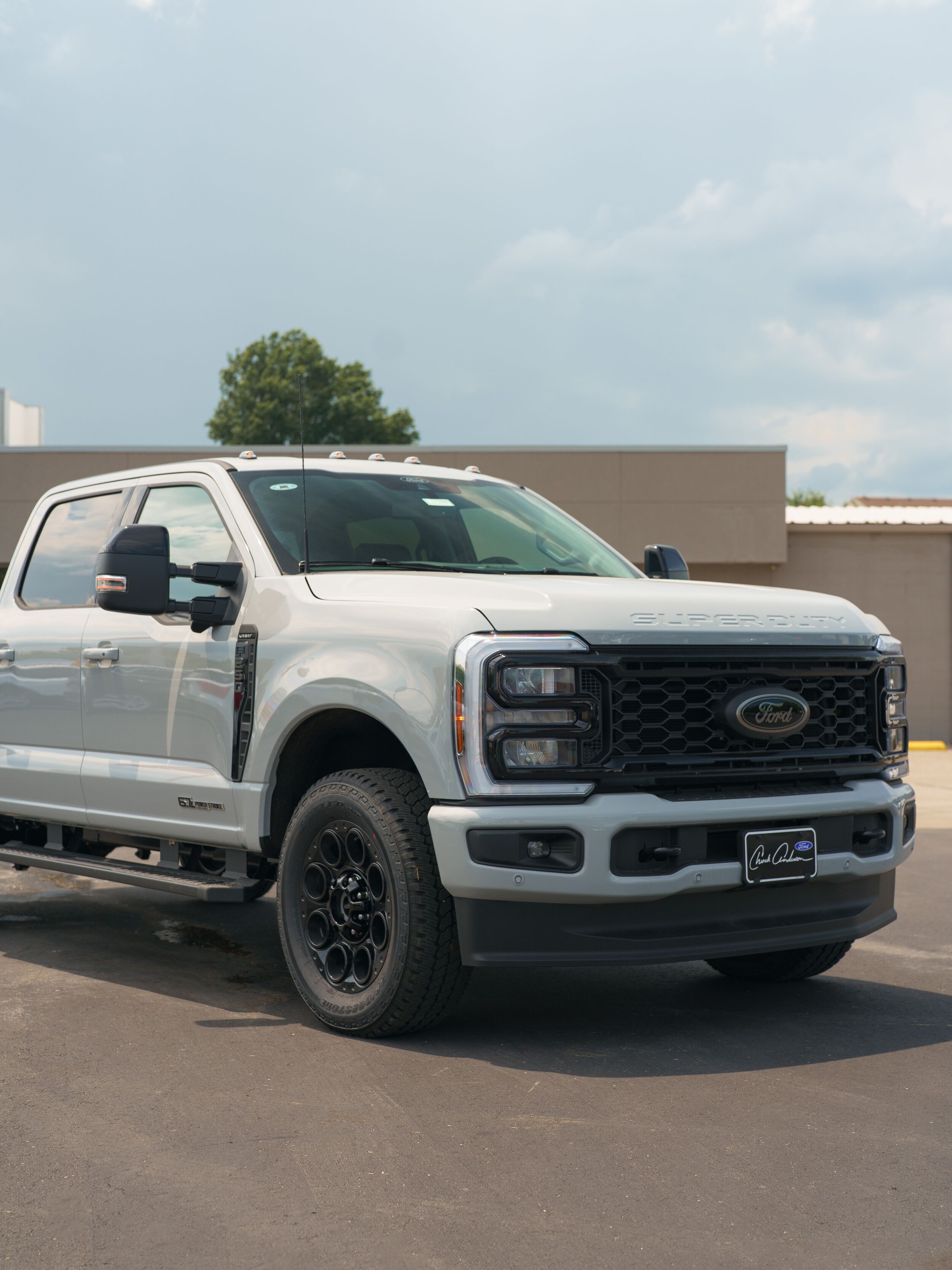
Ford F-350 Towing Guide
``` How Much Can an F-350 Tow?
A properly equipped Ford F-350 can tow well over 30,000 pounds with a fifth-wheel or gooseneck trailer, but F-350 towing capacity varies dramatically depending on whether the truck is single rear wheel or dual rear wheel, gas or diesel, 4x2 or 4x4, and how the rest of the truck is configured.
The Short Answer
For the current 2027 model year, a properly equipped Ford F-350 can tow up to 28,000 pounds conventionally, 35,000 pounds with a fifth-wheel trailer and 38,000 pounds with a gooseneck trailer.
Those maximum ratings come from specific dual-rear-wheel F-350 configurations. An F-350 single-rear-wheel truck, gas-powered F-350 or differently equipped truck may have a considerably lower trailer rating.
The F-350's greatest strength is the enormous range of configurations it offers. It can be built as a relatively maneuverable SRW truck or as a serious DRW tow vehicle capable of handling some of the heaviest trailers in the Super Duty lineup.
```2027 Ford F-350 Maximum Towing Capacity
28,000 lbs.
Conventional Towing
Maximum available conventional trailer rating for a properly equipped current F-350 DRW.
35,000 lbs.
Fifth-Wheel Towing
Maximum available fifth-wheel trailer rating for a properly equipped current F-350.
38,000 lbs.
Gooseneck Towing
Maximum available gooseneck trailer rating for a properly equipped current F-350 DRW.
Maximum ratings change by model year. If you own an older F-350, use the Ford towing guide for that specific model year rather than applying current-model numbers to your truck.
```
The First Decision
F-350 SRW vs F-350 DRW Makes a Big Difference
Unlike the F-250, the F-350 can be configured with either single rear wheels or dual rear wheels.
An F-350 SRW keeps one rear tire on each side of the axle. It offers increased capability over many F-250 configurations while retaining a narrower rear body that is easier to park and maneuver.
An F-350 DRW places two tires on each side of the rear axle. The additional rear-tire capacity, wider footprint and higher-capacity configurations make it much better suited to substantial fifth-wheel pin weight, gooseneck trailers and heavy bed loads.
If you're shopping anywhere near the F-350's maximum towing numbers, you're generally looking at a properly configured dually rather than an SRW truck.
How F-350 SRW and DRW Towing Differ
F-350 SRW
F-350 SRW is a strong choice for buyers who need more capability than an F-250 but still want a truck that is relatively easy to drive, park and use without a trailer attached.
It can handle substantial conventional, fifth-wheel and gooseneck trailers when properly configured, but it does not reach the F-350 DRW's maximum payload and trailer ratings.
F-350 DRW
F-350 DRW is the configuration to investigate when heavy trailer pin weight, payload and maximum F-350 towing capability are priorities.
Dual rear wheels increase the rear tire footprint and support the higher-capacity configurations responsible for the F-350's headline towing numbers.
For a deeper comparison, read single-rear-wheel vs dually: which do I need?
```What Determines F-350 Towing Capacity?
SRW vs DRW
Rear-wheel configuration is one of the largest capability differences within the F-350 lineup. The maximum F-350 ratings come from specific dual-rear-wheel trucks.
Engine
Gas and Power Stroke diesel engines have different torque output, GCWR limits and maximum trailer ratings. The highest current F-350 towing numbers require the High-Output Power Stroke diesel.
Axle Ratio
Rear-axle gearing changes the mechanical advantage available when moving a heavy trailer and plays an important role in Ford's towing ratings.
Cab & Wheelbase
Regular Cab and Crew Cab configurations differ in truck weight, wheelbase and available towing combinations.
2WD vs 4WD
Four-wheel-drive components add weight and can change available trailer and payload ratings compared with a similar 4x2 truck.
Payload & Equipment
Passengers, cargo, accessories, hitch equipment and trailer tongue or pin weight must all remain within the truck's applicable ratings.
How Much Can an F-350 Tow Conventionally?
A properly configured current Ford F-350 can tow up to 28,000 pounds conventionally.
Conventional towing uses a receiver hitch behind the rear bumper rather than a hitch mounted inside the pickup bed. Travel trailers, equipment trailers, enclosed trailers, boats and many commercial trailers use this type of connection.
The F-350 SRW factory receiver is rated for up to 25,000 pounds in qualifying configurations, while the F-350 DRW receiver can be rated for up to 28,000 pounds. The actual truck's maximum loaded trailer rating may still be lower.
A hitch rating is not the same thing as the truck's tow rating. The truck must remain within its maximum trailer weight, GCWR, GVWR, axle ratings, payload and hitch limits at the same time.
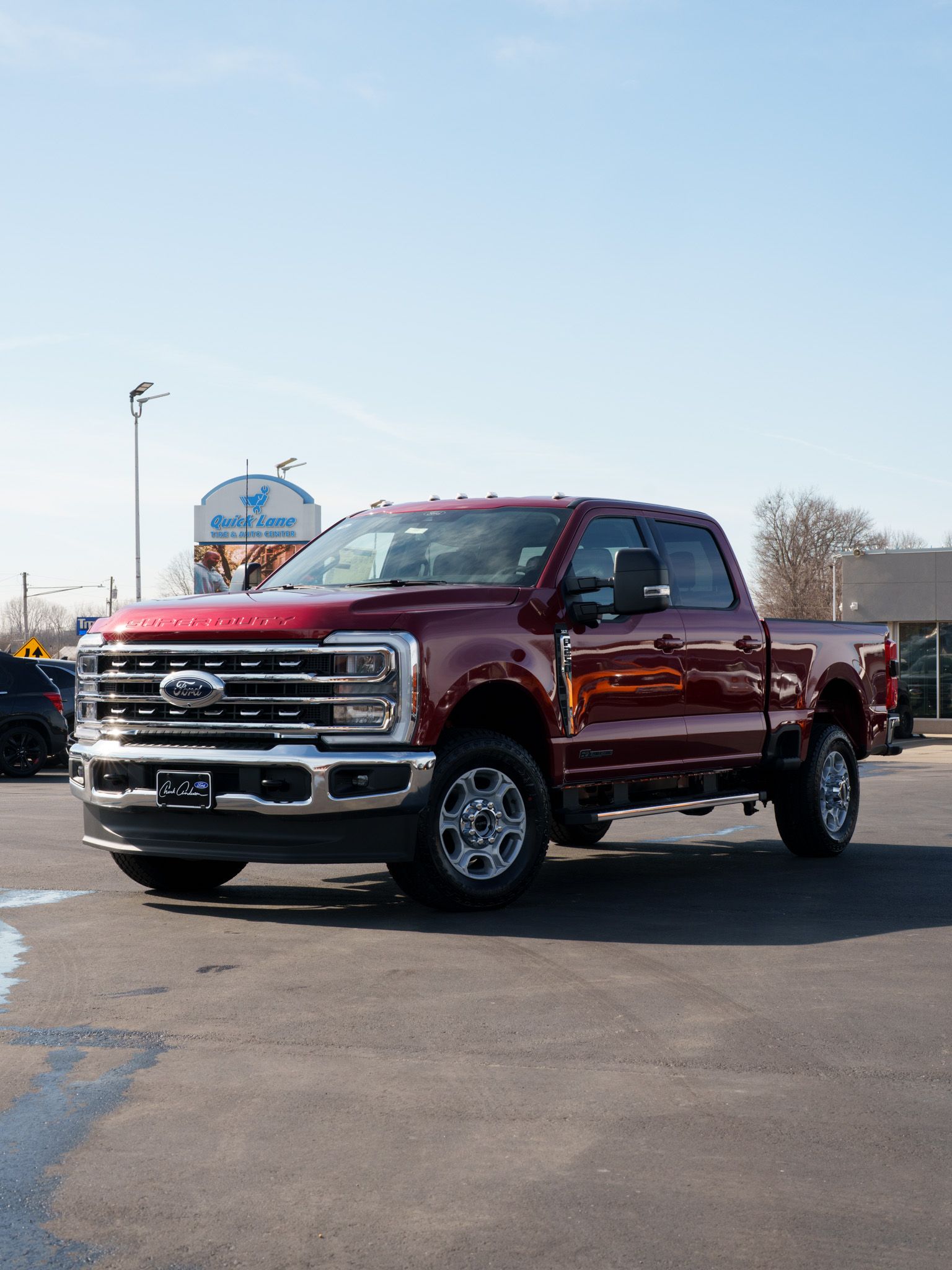
Bed-Mounted Towing
How Much Can an F-350 Tow With a Fifth Wheel?
A properly equipped current F-350 can tow up to 35,000 pounds with a fifth-wheel trailer.
Fifth-wheel towing moves the hitch into the truck bed, placing the trailer's king pin near or ahead of the rear axle. That arrangement is common with large RVs and other heavy trailers.
Fifth-wheel trailers can place substantial pin weight directly onto the truck. That makes payload and rear-axle capacity just as important as the advertised trailer rating.
This is one of the areas where an F-350 DRW can have a major advantage over an F-250 or F-350 SRW.
How Much Can an F-350 Tow With a Gooseneck?
The current F-350's highest available trailer rating is 38,000 pounds with a gooseneck trailer when properly configured.
A gooseneck trailer connects to a ball mounted in the pickup bed and is widely used for equipment, livestock and commercial hauling.
The 38,000-pound maximum requires a very specific F-350 DRW configuration with the High-Output Power Stroke diesel and appropriate axle, drivetrain and towing equipment.
It should not be treated as the rating of every diesel F-350 or every F-350 dually.
38,000 Pounds Is an F-350 Maximum, Not an F-350 Average
Most F-350 trucks will have a lower rating. Always identify the exact model year, engine, axle ratio, cab, drivetrain, wheelbase and rear-wheel configuration before determining how much an individual truck can tow.
How Much Can a Gas F-350 Tow?
A gas-powered F-350 can still be a serious tow vehicle.
Current F-350 configurations with the 7.3L gas V8 can reach approximately 22,500 pounds of maximum available trailer capability depending on configuration and trailer type.
That means a buyer does not automatically need a diesel simply because the truck will tow a large trailer.
Gas can make sense for buyers who tow less frequently, want lower initial powertrain cost or do not need the extreme trailer ratings made possible by the diesel.
```How Much Can a Diesel F-350 Tow?
The highest F-350 towing ratings come from properly configured trucks equipped with Ford's High-Output 6.7L Power Stroke diesel.
In the right F-350 DRW configuration, the current truck can reach 38,000 pounds of gooseneck towing and 35,000 pounds of fifth-wheel towing.
The diesel's advantage extends beyond the headline maximum. Its high low-rpm torque and exhaust-braking capability are valuable when moving substantial loads over long distances or through changing grades.
Compare the engines in: Ford 6.7 Power Stroke vs 7.3 gas: which is better?
```Why F-350 Buyers Need to Watch Pin Weight
The ability to pull a heavy trailer is only half of the towing equation.
Fifth-wheel and gooseneck trailers transfer a meaningful portion of their loaded weight directly into the truck bed. That pin weight consumes the truck's available payload.
Payload must also accommodate:
Passengers
Driver and passenger weight counts against the truck's available carrying capacity.
Trailer Pin Weight
Fifth-wheel and gooseneck pin weight can place thousands of pounds directly over the rear axle.
Hitch Equipment
Fifth-wheel hitch assemblies and other installed towing equipment have weight of their own.
Bed Cargo
Tools, generators, auxiliary tanks, coolers, luggage and other cargo all use available payload.
A trailer can be under the F-350's maximum tow rating and still overload the truck. Always verify GVWR, rear GAWR, payload and tire ratings in addition to maximum trailer weight.
When Does an F-350 Make More Sense Than an F-250?
The F-350 becomes especially attractive when the trailer's weight is only part of the challenge.
An F-250 can tow more than 20,000 pounds in certain current configurations. But as fifth-wheel pin weight, bed cargo or passenger load increases, the F-350's higher-capacity GVWR and payload configurations can become more important than the difference in headline tow rating.
F-350 also gives buyers access to a dual-rear-wheel configuration that is not offered on the F-250 pickup.
Read the full comparison: F-250 vs F-350: what's the difference?
```When Should You Move From an F-350 to an F-450?
An F-350 DRW already provides extraordinary towing capability. For many fifth-wheel, gooseneck and commercial users, there may be no need to move beyond it.
The F-450 becomes most relevant when maximum trailer capability is the priority. Current properly equipped F-450 pickups can reach a higher maximum gooseneck rating than the F-350 and add specialized hardware such as 19.5-inch wheels and a wide-track front axle.
The F-350 can actually be the truck to investigate first when maximum payload is a greater concern than maximum trailer weight.
Compare them directly: F-350 vs F-450: which should I buy?
```Is an F-350 Good for Towing a Fifth Wheel?
Yes. Fifth-wheel towing is one of the areas where the F-350 makes the most sense.
F-350 SRW can be an excellent match for many fifth wheels while preserving the narrower dimensions of a single-rear-wheel truck.
F-350 DRW becomes increasingly attractive as loaded trailer weight and pin weight rise. Four rear tires provide a wider footprint and allow higher-capacity rear-axle and payload configurations.
Which configuration you need depends on the trailer's actual loaded weight and actual or realistically estimated pin weight—not simply trailer length.
Continue with: What is the best Ford truck for fifth-wheel towing?
```How Do You Know Exactly How Much Your F-350 Can Tow?
1
Identify the Configuration
Record model year, engine, axle ratio, cab, wheelbase, drivetrain and whether the truck is SRW or DRW.
2
Check Truck Ratings
Verify GVWR and front and rear axle ratings on the vehicle certification label.
3
Use the Ford Towing Guide
Find the exact truck configuration in Ford's towing chart for that model year.
4
Add Real-World Weight
Account for passengers, cargo, hitch equipment and actual trailer tongue or pin weight.
F-350 Towing Ratings You Should Understand
| Rating | What It Means | Why It Matters |
|---|---|---|
| Maximum Trailer Weight | The rated maximum loaded trailer for a specific configuration. | The trailer should remain within this limit. |
| Payload | The amount of weight the truck itself can carry. | Passengers, cargo, hitch equipment and pin weight all consume payload. |
| GVWR | Gross Vehicle Weight Rating. | The fully loaded truck should not exceed this number. |
| Rear GAWR | The maximum rated load on the rear axle. | Especially important with heavy fifth-wheel and gooseneck pin weight. |
| GCWR | Gross Combined Weight Rating. | The loaded truck and trailer together must remain within this rating. |
| Hitch Rating | The capacity of the installed hitch system. | The hitch and related equipment must also support the intended load. |
Why a 30,000-Pound Trailer May Point Toward an F-350 Dually
Suppose you're shopping for a fifth wheel or gooseneck with a loaded trailer weight around 30,000 pounds.
The total trailer weight is only the beginning. A substantial portion of that load may be transferred into the truck bed as pin weight.
Add the hitch, driver, passengers, tools and other cargo and the amount being carried by the truck can become significant.
At that point, an F-350 DRW may provide advantages beyond simply having a higher maximum trailer rating. Its dual-rear-wheel configuration provides additional rear-tire capacity, payload potential and a wider footprint for controlling a very heavy trailer.
```More Ford Super Duty Towing Questions
```Ford F-350 Towing Capacity FAQ
What is the maximum towing capacity of a Ford F-350?
For the current 2027 model year, a properly equipped Ford F-350 can tow up to 38,000 pounds with a gooseneck trailer, 35,000 pounds with a fifth-wheel trailer and 28,000 pounds conventionally. Actual capacity varies by configuration.
How much can an F-350 tow conventionally?
A properly equipped current F-350 DRW can tow up to 28,000 pounds using a conventional receiver-hitch trailer. SRW and differently configured trucks may have lower ratings.
How much can an F-350 tow with a fifth wheel?
A properly configured current F-350 can tow up to 35,000 pounds with a fifth-wheel trailer. Fifth-wheel pin weight must also remain within the truck's payload, GVWR and rear-axle ratings.
How much can an F-350 tow with a gooseneck?
The current F-350 can tow up to 38,000 pounds with a gooseneck trailer when properly configured. This maximum requires a specific dual-rear-wheel diesel configuration and appropriate equipment.
Can an F-350 tow 30,000 pounds?
Yes. Certain properly equipped F-350 DRW configurations have fifth-wheel and gooseneck ratings of 30,000 pounds or more. The exact truck must also remain within its payload, axle, GVWR and GCWR limits.
Can an F-350 tow 35,000 pounds?
Yes. Specific properly equipped current F-350 configurations can tow up to 35,000 pounds with a fifth-wheel trailer and more with a gooseneck. This is not the rating of every F-350.
Does an F-350 dually tow more than an F-350 SRW?
The highest F-350 towing ratings come from dual-rear-wheel configurations. DRW trucks also provide greater rear-tire capacity and are better suited to substantial fifth-wheel or gooseneck pin weight.
How much can a gas F-350 tow?
Current properly equipped F-350 trucks with the 7.3L gas V8 can provide towing capability above 20,000 pounds, with certain configurations reaching approximately 22,500 pounds depending on trailer type and equipment.
How much can a diesel F-350 tow?
A properly configured current F-350 DRW with the High-Output 6.7L Power Stroke can tow up to 38,000 pounds with a gooseneck trailer and up to 35,000 pounds with a fifth wheel.
Is an F-350 good for fifth-wheel towing?
Yes. The F-350 is particularly well suited to fifth-wheel towing because buyers can choose between SRW and DRW configurations. The right choice depends on total trailer weight, pin weight, payload and how the truck will be used when not towing.
Should I buy an F-350 or F-450 for heavy towing?
An F-350 DRW provides substantial towing and payload capability and can handle many extremely heavy trailers. F-450 is more specialized around maximum trailer capability and becomes more relevant as loads approach the upper end of the Super Duty pickup range.
Where can I find my F-350's exact towing capacity?
Identify the model year, engine, axle ratio, cab, wheelbase, drivetrain and SRW or DRW configuration, then match the truck to Ford's towing guide. Also verify the vehicle certification and payload labels and account for passengers, cargo and trailer pin or tongue weight.
The Bottom Line: F-350 Towing Ranges From Serious to Extreme
The Ford F-350 covers an unusually wide range of towing jobs. A single-rear-wheel F-350 can provide substantial heavy-duty capability while remaining relatively easy to use every day, while an F-350 dually can move into extremely heavy fifth-wheel and gooseneck territory.
Properly configured current F-350 trucks can reach 28,000 pounds of conventional towing, 35,000 pounds of fifth-wheel towing and 38,000 pounds of gooseneck towing.
Those maximums are only useful if the complete truck-and-trailer combination also stays within payload, GVWR, axle, GCWR, tire and hitch ratings.
Start with the trailer's real loaded weight and pin or tongue weight, then choose the F-350 configuration that provides appropriate capacity for the complete load.
Continue to the Ford Super Duty Research Center for more F-250, F-350, F-450 and Super Duty towing research from Chuck Anderson Ford.
```